DD
MM
YYYY

PAGES

DD
MM
YYYY

spot_img

PAGES

Home Blog Page 5308

Obi Cubana and his philanthropy

0

Mr. Obinna Iyegbu has been actively winning the love and support of the public through his philanthropic acts recently; shutting up his critics asking him that  he ought to have used the money he lavished and squandered in his mother’s burial to engage in a venture that will benefit the general  public the most.

It made the news at first that he gave a million Naira each to a huge number of youths in his village to support their businesses and hustles.  He also built and dedicated a church, a mansion of a building for his community. He also picked an interest in a boy hawking sachet water but was gracious enough to share money out of the little he had to prisoners in transit. 

The last news trending of Obi Cubana’s philanthropy is the building of the “Afor Oba Road” linking the city center to his village. 

Recall that Mr. Obinna Iyegbu, the founder and chief executive officer of the Cubana Group, a conglomerate that engages in entertainment and hospitality business and also real estate and hotels became the subject of public discuss for the whole of second quarter of 2021 after he hosted the burial of his later mother. Since then, he has been both the subject of praise and admiration and also the subject of criticism and investigation.

He has been and is still being investigated for financial fraud and money laundering by the men of the Economic and Financial Crimes Commission (EFCC), he is still a subject of an ongoing investigation for drug trafficking and running of a drug empire by the men of the National Drug Law Enforcement Agency (NDLEA). 


Reviewing Government Agencies In Nigeria Towards Greater Nationhood

0

The last time I thoroughly checked, numerous federal cum state government’s agencies and commissions in Nigeria were earnestly yearning for a holistic review toward ensuring that the respective prime essence of establishing them are duly actualized.

Such lapses, if not adequately addressed, are liable to bedevil the anticipated manifestation of the genuine transformation agenda of any administration at the helm of affairs in the country.

Before commenting on the above topic, it’s imperative to present a background analysis of the essence and functions of government agencies established in various jurisdictions in any country across the world.

A government agency or commission is a permanent or temporary arm, which is often peculiar to a democratic setting, that’s responsible for the administration and oversight of specific functions.

In any country across the globe, there are quite a number of government agencies set up for different unique purposes. A given government agency is usually distinct both from a department or ministry, and other kinds of public structures established by the government.

The functions of a government agency are mainly executive in character since different forms of agencies or commissions are most commonly constituted for an advisory role.

It’s noteworthy that, a government agency may be set up by either a federal government or state government within a federal system. The term is not commonly used for a body or an organization established by the powers of a local government otherwise known as the ‘third-tier government’.

Agencies can be set up via legislation or by executive immunity. Moreover, the autonomy, independence and accountability of government agencies also vary based on the ground or principle on which they were constituted.

Similarly, a regulatory agency is a governmental body whose establishment is solely approved by a legislature to implement and thereafter enforce specific laws.

A regulatory agency or commission has quasi-legislative, executive and judicial functions, in the sense that while exercising its obligatory functions, it can in some occasions act like a legislature, an executive arm, or a judicial body, as the case may be.

For instance, a regulatory agency can set up a special court via the government’s approval. In such a case, it can exercise the statutory functions of the judiciary with the aid of the judicial custodians employed by the establishment. This is why a regulatory agency is expected to, in all circumstances, be made up of individuals that have no trace of any criminal record or questionable background.

If you own or run a business venture, you probably know it is subject to a cornucopia of laws. Undoubtedly, your business is subject to laws that govern social and economic matters including income taxation, payroll taxation, occupational health, as well as environmental, safety, real estate, employment, and criminal laws, coupled with other laws that are specifically related to your particular industry.

With the help of regulatory agencies, the government could handle or oversee the aforementioned civic responsibility. Regulatory agencies exercise two basic roles namely, implementation of laws and enforcement of laws.

Regulations are the means by which a regulatory agency implements laws enacted by the legislature of the country or province in question, as the case may be. Thus, regulations can be described as formal rules based upon the laws of the affected country/state that govern specific social and economic activities.

Regarding implementation of laws, regulatory agencies use a specific procedure to create and implement regulations. The federal process, for instance, abides by a procedure comprising advance notice, proposed regulation, public comments, review of comments, as well as final regulation.

It’s worth noting that an agency that is about to commence drafting new regulations would publish advance notice of its proposed rulemaking in the Federal Register.

The proposed regulations are published and the public would be therein invited to comment. Thereafter, the agency is expected to review the public comments and may or may not make any changes in this regard.

Consequently, the completed regulation is published in the Federal Register and will eventually be added to the Code of Federal Regulation, which is essentially a list of all extant federal

regulations broken up into titles and chapters. Finally, the regulation is implemented or made effective, and enforcement commences immediately.

Regulatory enforcement, which is often abused in a country like Nigeria, is another rudimentary role exercised by regulatory agencies. Agencies have a responsibility to monitor businesses or individuals to ensure they are complying with regulations.

Though agencies vary on how they perform their respective enforcement responsibilities, generally they abide by investigation, decision, and appeal. If an agency has reason to believe that a certain business or an individual has violated its regulations, the agency is meant to commence an investigation without much ado.

The FFK forgery saga: What you should know about the crime of forgery

0

Femi Fani-Kayode has been in a legal brawl with the Economic and financial commission (EFCC). He along with former Minister of State for Finance, Nemadi Usman, were facing trial for alleged money laundering and diversion of N4.9 billion at a Federal High Court in 2018.

During the course of the case, the prosecution alleged that the former minister had allegedly brought several forged medical reports to stall the case and the case of purported forgery led to the EFCC instituting another case against the former minister for the offense of forgery, uttering of medical reports and fabrication of evidences at the special offences court on the 17th day of December, 2021 while the substantive case of money laundering and fraud is still ongoing at the Federal High Court.

The offense of forgery is provided for in the criminal code, hence it is a crime by the reason of it being provided for as an offense under the criminal code. 

What is forgery:

S.465. of the Criminal Code defined forgery thus:

  1. A person who makes a false document or writing knowing it to be false, and with intent that it may in any way be used or acted upon as genuine, whether in the State or elsewhere, to the prejudice of any person, or with intent that any person may, in the belief that it is genuine, be induced to do or refrain from doing any act, whether in the State or elsewhere, is said to forge the document or writing.
  2. A person who makes a counterfeit seal or mark, or makes an impression of a counterfeit seal knowing the seal to be counterfeit, or makes a counterfeit representation of the impression of a genuine seal, or makes without lawful authority an impression of a genuine seal, with intent in either case that the thing so made may in any way be used or acted upon as genuine, whether in the State or elsewhere, to the prejudice of any person, or with intent that any person may, in the belief that it is genuine, be induced to do or refrain from doing any act, whether in the State or elsewhere, is said to forge the seal or mark.

The term “make a false document or writing” includes altering a genuine document or writing in any material part, either by erasure, obliteration, removal, or otherwise; and making any material addition to the body of a genuine document or writing; and adding to a genuine document or writing any false date, attestation, seal or other material matter.

It is immaterial in what language a forged document or writing is expressed.

It is immaterial that the forger of anything forged may not have intended that any particular person should use or act upon it, or that any particular person should be prejudiced by it, or be induced to do or refrain from doing any act.

It is immaterial that the thing forged is incomplete or does not purport to be a document, writing, or seal, which would be binding in law for any particular purpose, if it is so made, and is of such a kind, as to indicate that it was intended to be used or acted upon.

With the advancement of ICT in Nigeria today, the definition of forgery has been made to include electronic documents; soft copies of documents, hence not just physical documents can be forged, electronic documents can be forged too.

 S.359 of the criminal law of Lagos state, 2011 and 84 & 258 of the Evidence act, 2011 recognizes and includes electronic generated documents to the purview of documents as provided in s.465 of the criminal code. 

In the case of Nigerian Air Force v. James (2002) 18 NWLR (Pt.798)295, the court held that the central theme that runs through the provisions of the statute in terms of the offense of forgery and what makes a document forged is that the document must tell a lie about itself. The false statement must relate to the authenticity of the document. 

Therefore, a document is forged when the document lies about itself as to the genuineness of the document. 

The punishment for the offense of forgery is provided for in s.467 of the criminal code and it provides that the crime is declared a felony and it carries a punishment of not less than 3 years imprisonment term. But when the forger forges a seal of the government the punishment is life Imprisonment. 

Unfortunately, Mr. Femi Fani Kayode May be looking at 3 years jail term if the court finds him guilty of the crime of forgery according to s.467 of the criminal code.

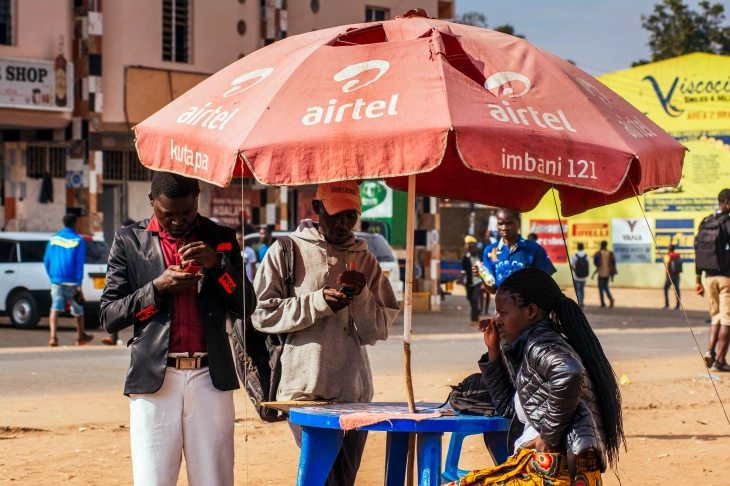
Spurred by Growth in Nigeria, Airtel Africa Recorded $3.492m Revenue and 125.8m Customer Base in Nine Months

0

Last year, Airtel Africa initiated some growth-focused changes in Nigeria, its biggest market in Africa, that included divestment to payment service with SMARTCASH Payment Service Bank Limited and approval in principle by the Central Bank of Nigeria for Airtel Commerce Nigeria Limited’s super-agent license.

These moves are believed to have buoyed its recent ground-breaking growth that puts the telecom company at the top of the Nigerian stock market.

Airtel Africa operates in 13 other African countries, but Nigeria, which leads the continent in tech and digital innovation, is key to its growth. Yesterday, in a financial report the telco said had been prepared based on International Accounting Standard 34 (IAS 34) issued by the International Accounting Standards Board (IASB) and approved for use in the UK by the UK Accounting Standards Endorsement Board (UKEB), released its nine months financial statement for the year ended December 31, 2021, with a revenue growth of $3,492 million and a customer base of 125.8 million.

Compared to other regions in Africa, Airtel recorded about 5% more revenue in Nigeria. In Nigeria, the telecoms company’s growth is up 29.0%; East Africa up 24.4% and Francophone Africa up 19.0%. Its revenue across all key services in voice is up 16.1%, while data and mobile money were both up 37.2%.

According to the statement, Airtel recorded strong growth across all key metrics, and would unlock further mobile money opportunity, given the Payment Service Bank (PSB) approval in principle that it got from Nigeria.

The telco’s aim at diversification into financial services is a game changer spurring its growth in an unprecedented manner.

The statement said the underlying EBITDA was $1,703m, growing by 31.3 per cent in reported currency with an EBITDA margin of 48.8 per cent, an increase of 326 basis points led by both revenue growth and improved operational efficiencies.

Operating profit grew by 43.1 per cent to $1,146 million in reported currency, while Profit after tax almost doubled to $514 million as higher profit before tax more than offset associated tax charges.

Basic EPS was 11.7 cents, an increase of 113.8 per cent, largely as a result of higher profit. EPS before exceptional items increased to 11.5 cents, up from 5.0 cents in the previous period.

Operating free cash flow grew by 42.2 per cent to $1,271 million and net cash generated from operating activities was up 23.1per cent to $1,499 million.

The customer base expanded to 125.8 million, growing by 5.8 per cent, with increased penetration across mobile data and mobile money services.

The growth has come on the heels of the federal government’s directive mandating Nigerian telcos to link National Identification Number (NIN) to registered SIM lines. Airtel said the new regulatory policy, which for some time, prohibited the purchase of new lines, impacted its customer base growth.

Commenting on the growth, Chief Executive Officer of Airtel Africa, Segun Ogunsanya said:  “A strong third quarter has contributed to a pleasing nine-month financial performance across all key metrics.

“Operationally we have continued to execute on our network and distribution expansion plans, driving continued strong growth in ARPUs across voice, data and mobile money. We have also seen further improvement in our customer growth trends for the Group with Nigeria returning to strong customer growth after a period affected by the implementation of new ‘know your customer’ requirements, posting 1.9 million net additions in the third quarter, taking total Group customer additions to 3.1 million.

“I am particularly pleased with developments in Nigeria, where in November we received approval in principle for both a payment service bank (mobile money) license and a super-agent license. We are now working closely with the Central Bank of Nigeria to meet all its conditions to receive the final operating licenses and commence operations. This will enable us to expand our digital financial products and reach the millions of Nigerians that do not have access to traditional financial services.

“We continued to strengthen our balance sheet, with our leverage ratio now 1.4 times underlying EBITDA, thanks both to continued increases in operating cash flow delivery and to over $550m of cash that has now been received from minority investments into our mobile money business.”

However, there is concern that Airtel’s growth could be scuttled in the near future when the 5G network becomes operational. In October, Airtel lost to MTN and Mafab in Nigeria’s 5G auction. The winners, who paid $273.6m for the licenses, are believed to be in a better position to lead the telecom industry’s growth.

But with its financial diversification moves, Airtel will likely make up for the 5G loss.  Ogunsanya said the company will focus on expanding its services, focusing on financial and digital inclusion across Africa.

“We will continue to invest in expanding and evolving our platform to further deepen both financial and digital inclusion across Africa. I continue to see huge growth potential across voice, data and mobile money and our strategy is delivering against this opportunity. Our sustained investments in both network and distribution expansion will help to ensure that both the communities and economies across our footprint will continue to benefit from increased and affordable connectivity and financial inclusion. We are committed to continue to improve the delivery of our services to our customers, with sustainability at the heart of our continued purpose to transform lives across Africa,” he said.

Airtel Africa has a market capitalization of N4.78 trillion, putting it in leadership position in Nigeria’s capital market.

Join Me Today With FUTO Alumni 2001 On “The Wealth in Nations”

0
FUTO is a top technical university in Nigeria

It is always an  honour whenever alumni groups of FUTO (Federal University of Technology Owerri, Nigeria) invite me to speak to them. Yes, never going to be a greater honour than the one which comes from home. Two years ago, I was to visit Abuja and got to Hilton and realized that 3 people paid reservations in my name and one put a note “his bills on me”. I came here to write: “pray that you have rich alumni friends who own big companies”.

My classmate, Chidi Nwosu will always write “Prof, you cannot spend money in Abuja when we’re here”. And you know what? They pay 100% of my bills. Pray that you are a teacher.

If you can make it today, join FUTO Alumni class of 2001. I will be having a conversation with them on Zoom. For all questions, connect with Kingsley C. Umege. MBA, SBD, BEng.

  • Join Zoom Meeting
  • Meeting ID: 881 114 8938
  • Passcode: Wf7xvX
  • Time: 7pm WAT
  • Topic: The Wealth in Nations

Great FUTOITES , I salute and thanks for the honour, as always.