DD
MM
YYYY

PAGES

DD
MM
YYYY

spot_img

PAGES

Home Blog Page 5313

“Super cop” Abba Kyari and Nigerian Police’s Funny Attempt to Whitewash Impunity

0

The arrest of Nigeria’s hero “super cop” Abba Kyari over his involvement in drug trafficking has once again, put the Nigerian Police Force (NPF) on the spotlight. Kyari, who was under investigation for his involvement in a $1.1 million internet scam, was suspended by the Police in July. His ability to still run a team that  intercepted a drug deal while under suspension has put a question mark on anything integrity left with the Nigerian Police.

To many, it is not surprising though. The NPF has overtime, by its actions and inactions, refused to put on the image that will earn it public trust. There are more stories of police involvement in criminal activities than there are of actual criminals in Nigeria – the reason the EndSARS protest happened.

So when Kyari, one of the most decorated police officers in Nigeria was indicted by the FBI last year, for aiding a high-profile fraudster Ramon Abbas aka Hushpuppi, it only added to the multiple allegations of criminal misconduct already trailing his illustrious career. But it also fortified the belief that the Nigerian Police thrives on impunity, which shields its personnel from punishment every time they’re caught in misconduct. Almost every episode of police misconduct proves this public’s belief true – and the drug trafficking incident isn’t an exception.

On Monday, when the Nigerian Drug Law Enforcement Agency (NDLEA) issued a statement declaring Kyari wanted over his inability to honor the invitation the Agency had extended to him over his involvement with a drug cartel, many wondered why. The question was: what happened to the synergy that should have existed between federal law enforcement agencies?

The answer to this question became known days after the police said that they have arrested and handed Kyari over the NDLEA. It was later revealed that Kyari was arrested last week, and had been in the police custody while the NDLEA was frantically looking for him for interrogation. The narcotic Agency helplessly knew this, and understood what was playing out. So it resorted to the only avenue it could use to effectively bring the suspect in – the public.

On Monday, the NDLEA’s press briefing took only a few minutes to go viral. Issuing a public statement accompanied by a video evidence, declaring one of the most decorated officers of the Nigerian Police Force wanted for drug trafficking, is a humiliating development beyond the police control, which has casted further stench on the entire Nigerian criminal justice system. So the police was forced to hand one of its own over – one of its best this time.

The NDLEA’s plan did not only work, it also put the police on the spot. So the NPF embarked on damage control. In an attempt to save whatever is left of the integrity in its possession, the police issued a statement accusing some of the Agency personnel of being the drug cartel mule.

“… the Police investigation also established that the international narcotics cartel involved in this case have strong ties with some officers of the National Drug Law Enforcement Agency (NDLEA) at the Akanu Ibiam International Airport, Enugu who are on their pay roll.

“The two arrested drug couriers confirmed that the modus is for the transnational drug barons to conspire with the NDLEA officers on duty and send them their pre-boarding photographs for identification, seamless clearance, and …unhindered passage out of the airport with the narcotics being trafficked.

“The two arrested drug couriers also confirmed that they have been enjoying this relationship with the NDLEA officers at the Akanu Ibiam International Airport since 2021 and …had in this instant case of 19th January, 2022, been identified and cleared by the NDLEA officers as customary, having received their pre-departure photographs and other details prior to their arrival in Enugu, and …were on their way out with the narcotics when they were apprehended by the Police,” the aftermath statement by the police said.

The next paragraph of the police statement blinks with pointers that contradict the police’s claims, especially on ‘inter-agency collaboration’ as the NDLEA highlighted in its response.

“The Inspector General of Police assures the public of his administration’s commitment to upholding the tenets and values of policing in line with the agenda of ethical regeneration, restoration of professional standard, …enhancement of the anti-corruption drive, respect for the rule of law and inter-agency collaboration in the drive to stabilize the internal security order of the country,” the police said.

From the response of NDLEA to the above claims, Nigerians could read through the lines on what is brewing.

“To correct some inaccuracies in the information in the public space that NDLEA officers at the Enugu Airport were the ones who received from the cartel details about the mule coming from Addis Ababa, the agency wishes to quote from the transcript of Abba Kyari’s recorded conversation with our undercover officer and a portion of ASP James Bawa’s statement to the police as documented in the police investigation report, a copy of which was made available to the agency, to state that it’s an established fact that it’s the Abba Kyari’s team that was contacted by the cartel and without doubt, the records clearly show how their ring works,” the agency said.

It went further to reveal how Kyari and his team had been in contact with the cartel while they transit through the Brazil-Ethiopia-Nigerian route.

“In his own recorded conversation with our undercover officer, Abba Kyari also said the following: ‘They are greedy, seriously greedy (referring to his informants), we tried to have them accept 40% but they refused, except 50%, they know the rudiment of the deal very well, they are the ones that do the packing.

“From Brazil, one of the informants accompanied it to Ethiopia. You understand; one of the informants accompanied the goods to Ethiopia, one of the informants that give us information. He is the boy of the big baron.

“From Addis, it will be given to those to proceed further with it, he will get their snapshots without their knowledge. Yes, he will reveal those that are conveying it further, get snapshots of theirs without their knowledge and send them to us (Abba Kyari’s team). So, we already know the goods, pictures and the clothes they are wearing, hope you understand, we know your name, he will give us everything. So, automatically my team will just be waiting, they will just see you and arrest you,” the statement said.

As the two agencies accuse each other of playing a bigger role in the drug deal, the public has, without application, become the umpire. However, they judge based on the antecedents of both the police and the NDLEA.

The police in its statement has assured the general public that every one of personnel involved in the drug deal will be brought to justice, and so has the NDLEA. But given the police’s record in matters like this, its statement has become hard to believe.

The NPF has been noticed on several occasions being lenient with its personnel at the expense justice. Some of them caught in heinous crimes like armed robbery and murder get transferred to other locations, and subsequently get promoted. Hundreds of petitions were filed against the police for various degrees of misconduct during the EndSARS judicial panel hearing across Nigerian states. Out of this staggering number, only a few responsible police officers have been brought to book.

In August, findings submitted by a police panel investigating Kyari’s involvement in cyberfraud was rejected by the Police Service Commission (PSC), and a new investigation was ordered on the advice of the Attorney General of the Federation. The panel had dismissed the indicting evidence provided by the FBI, describing it as “circumstantial”, and recommended that Kyari be demoted from Deputy Commissioner for Police (DCP) to Assistant Commissioner for Police (ACP), for fraternizing with fraudsters as it violates the police professional ethics.

This means, by the virtue of the NPF’s tradition to shield its erring personnel from punishment, Kyari was never going to be extradited to the US as requested by the FBI, even though, as the Attorney General pointed out; “there exists a prima facie case of conspiracy, collaboration, receipt, conversion, transfer and/or retention of proceeds of unlawful activities contrary to the provision of section 15, 17 & 18 of the Money Laundering (prohibition) Act, 2004 and section 17 of the Economic and Financial Crimes Commission (Est) Act, Cap El Laws of the Federation of Nigeria, 2004 against DCP Abba Kyari and other suspects in view of the overwhelming evidence showing the nature of his disguised financial transactions and activities with Hushpuppi and others.” Many believe that Kyari was on his way to becoming the Inspector General of Police, if not for the video evidence presented by the NDLEA.

But that would have been just one upon many cases that have been buried under the mammoth impunity in the NPF. A retired Assistant General of Police (AIG) Austin Iwar said on Channels TV programme ‘Sunrise Daily’, on Wednesday, that the arrest of Kyari shows that there are many more Abba Kyaris in the Nigerian Police system and there may be others committing even worse crimes.

Kyari was arrested with four other officers who were living flamboyantly above their police paycheck, a situation notable also in other government agencies. Kyari is said to be building a multimillion naira mansion on Jemina road Damboa, Maiduguri, and had offered a neighbor, whose house is obstructing a straight access way to his mansion, N70 million for his house.

The impunity in the NPF is believed to be visible in its doing and undoing, but especially in condoning officers who are wealthy beyond their means of livelihood. Against this backdrop, the NPF’s attempt to whitewash itself whenever its personnel is exposed for corruption is a joke that Nigerians are no longer laughing at.
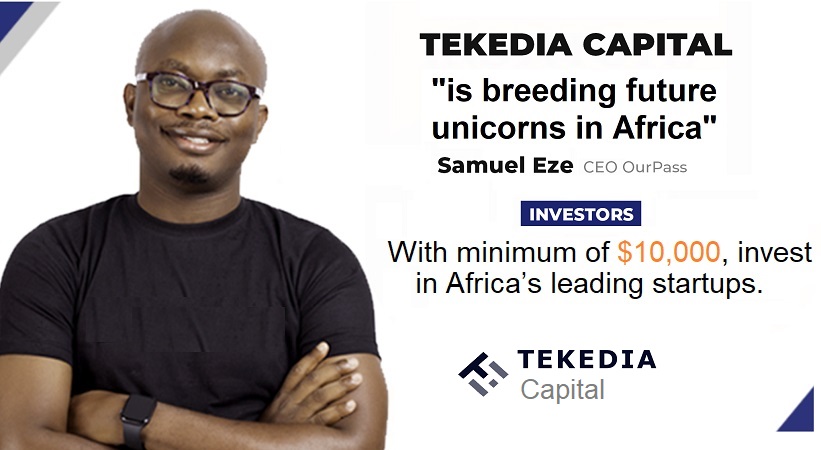

Tekedia Capital is Breeding Unicorns in Africa

0

Yes, we’re breeding unicorns (startups worth at least $1 billion)  in Africa. Join Tekedia Capital Syndicate and co-own a piece of Africa’s empires of the future. We have the data. We understand the patterns. And we make friends with generation-shaping innovators. 

Join our membership for $1,000 or N430k; it gives you access to four cycles of deal flow. The next investment cycle begins next month. 

Would you not like to see the startups I invest in? I know you do – register and be part of this investment community. Begin here 

Tekedia Capital offers a specialty investment vehicle (or investment syndicate) which makes it possible for citizens, groups and organizations to co-invest in innovative startups and young companies in Africa and around the world. Capital from these investing entities are pooled together and then invested in a specific company or companies. For more, click here.

Why We Invest in African Startups – Flutterwave’s Data Shows Infancy in Decades-Long Transformation

1

In Flutterwave’s press statement, as it announced the $250 million raise at $3 billion valuation, this line was included” “The new funds will drive Flutterwave’s ambitious expansion plan to accelerate customer acquisition in existing markets and growth through M&A, and develop complementary products while encouraging new innovations in its products and services development.“ In other words, expect more than organic growth: Flutterwave will be buying anything on its path. Those asking for exits in African startups should be ready because exits at secondaries (i.e. during higher rounds) and pure acquisition have a new actor.

In just five years, the company has “processed over 200M transactions worth over USD $16B to date across 34 countries in Africa. It also follows a year of rapid growth for the brand which now serves over 900,000 businesses across the globe.”

Then, “this latest fundraising has seen Flutterwave’s valuation more than triple since its last funding round in March last year “. Simply, it moved from $1 billion to $3 billion in less than a year! This is a huge redesign.

At Tekedia Capital, we expect this redesign to be massive as Africa goes through decades-long digital transformation. Flutterwave is doing it in the financial services sector. Other startups are doing something similar in logistics, agriculture, real estate, retail, etc. We expect at least 15 unicorns by Dec 2023 in Africa, up from the current 6.

This is a cambrian moment of entrepreneurial capitalism. It would be a massive opportunity era. Tekedia Capital is fully into this moment and we expect along with our syndicate-investors to capture significant value.

The opportunities ahead are massive: Flutterwave has not scratched the surface. Why?  “According to research done (Feb 2018) by The Fletcher School and Mastercard Center for Inclusive Growth, of the $301 billion of funds flows from consumers to businesses in Nigeria, 98 percent is still based on cash.” You can move that to say 80% now. 

If you use Flutterwave total $16 billion in five years, on average, it is doing $3.2 billion per year. That $3.2 billion covers 34 countries. If we assume that it is doing 50% in Nigeria, the implication is that every year, Flutterwave processes less than $2 billion worth of transactions in Nigeria. (Note: this is average)

So, if you have $301 billion (which might have grown to $320 billion) and the largest firm is doing $2 billion, what does that tell you? Nothing has happened. We can have ten Flutterwaves! Keep building people and Tekedia Capital will be here to support.

Tekedia Capital invests in technology-anchored early stage startups and companies. Our opportunity antenna and grassroot connections with innovators enable us to see patterns as they develop.  We invite you to partner with us as we nurture and build category-king companies in Africa and beyond, and in the process advance citizens, communities and nations. At Tekedia Capital, we fund the foundations of the NEXT African economy.

The Impact of Online Marketing on a Business

0

Looking at the way the world has evolved, not having an online business presence is tantamount to business failure. Gone are the days when businesses solely rely on traditional marketing channels. There has been a paradigm shift in the area of marketing with businesses opting for online marketing which delivers better results and revenues. Unlike traditional marketing, online marketing has a wider reach to consumers because it is not confined to the limitations of a physical place. Any product can be sold in any part of the world, without even having an outlet there.

From research findings, it was revealed that online marketing is effective in the integrated marketing communication strategy of the organization by increasing brand awareness, improving customer satisfaction, easy integration and management, and facilitating automation of marketing activities. Digital Marketing has forever changed the way companies operate and communicate with their customers.

Let’s look at some impacts of Online marketing on business;

Establish An Online Presence: Gone are the days when businesses solely rely on traditional methods. With almost everyone in the world having access to the Internet, businesses must establish an online presence. Modern customers these days rarely read newspapers, flyers, or magazines. Instead, they are mostly active online on different social media platforms, Google, and other digital platforms. A business without an online presence will greatly miss out. The average person spends more than two hours on social media daily, so putting your business online will give you the sales and traffic you desire.

A few things to note when putting a business online is that it must have recognized social media profiles, it must always be active and updated, that way you will attract more audience to your page. Another important thing to note is that businesses must have their google business listing where they input things like the location of the business, phone number, etc. As Google is the most popular search engine, this will assist in bringing customers to their platform. Without a social media presence, a potential client will feel reluctant to do business with such a company because they do not have the proper info.

Utilize Tools To Target Core Customers: One beautiful thing about online marketing is that it makes you aware of the people who relate and interact with your content. With the help of data analysis, you can know who interacts with your content where and when. What this means is that you can adjust the content channels that you use to display to target your core audience.

There are a few tools you can use to help you know your target audience, some of which are Social Media Analytics, Surveys, Website Analytics, CRM platforms, etc. With these tools, you can get to look at your customer base and know why they want to buy from you and also consider the specific demographics to target. In other to build a solid foundation for the business, companies must first identify their typical customers and tailor their marketing pitch accordingly.

Showcase Content That Matters To Potential Customers: With an online presence, businesses have the opportunity to showcase content that matters to their potential customers. A large part of digital marketing strategy is content marketing. Businesses could share content that includes blog posts, pictures, videos, web copy, etc. By doing any of these, the business is providing content for viewers as regards what they want to see. For example, a business may post picture content, showing various steps on how to use a particular product. Consumers are more likely to buy from a brand after seeing or viewing informative content on their site or website.

Personalize Your Brand And Control The Messaging: Online media is one place where a business is fully in control of the message and the response to consumers. Once a business has created different social media channels, they are 100% in control of every content on it. They get to debunks things about their brands that are not true and also get to attest to the ones that well describe them.

Final Thoughts

The impact of online marketing on a business cannot be overemphasized. It offers a whole lot of advantages to businesses. Lack of an online presence will severely affect a business’s ability to communicate with existing customers and find new ones.

Why the Growth and Proliferation of Fintechs May Not be a Lethal threat to Traditional Banks

0

This article likely veers away from the normal zeitgeist and common thinking of the moment; that fintechs are going to disrupt banks, that banks may not even exist in the next couple of years from now, and that fintechs may even begin to acquire banks.

While it is clear that fintechs are definitely disrupting our conventional payment and finance ecosystem and giving the banks a run for their money, understanding the value proposition of banks, what really matters to them and what makes them tick is key to understanding the role banks play in our emerging ecosystem.

The reports of my death have been greatly exaggerated – Mark Twain

Retail Banking

Let’s start by understanding who and what banks are really in the business of serving. The growth of digital banks has largely created some kind of seemingly assumed exodus of customers from everyday banks to digital banks (neobanks). While the value proposition and strategy of most digital banks is clear, it is important to note that traditional banks are not weak players that should be underestimated.

For starters, only DMBs can issue BVNs, therefore digital banks cannot necessarily go for the unbanked and will likely target those with some kind of bank account or the other. In other words, most digital banks are largely relying on a displacement strategy.

Digital Banks like Kuda Bank, Sparkle, etc hold certain promises; some promise to free you from the shackles of conventional banking, while others are focused on a kind of “Business banking for SMEs” proposition.

A key move some digital banks have decided to embrace is the idea of free transfers. Free transfers is a strategy designed to lure in a crop of users who are seemingly tired of paying transfer fees on transactions and would prefer to have that jettisoned. While conventional thinking postulates that a user who is drawn to the idea of free transfers is likely broke and may not be the ideal user a digital bank may be looking for, this may certainly not be the case. Kuda Bank which is one of the key promoters of the free transfers strategy is more than just a “free brand” it has leveraged a compelling brand strategy (coupled with the millions of US dollars it has raised in venture capital) to position itself among other things as some kind of bank for millennials and the “cool kids” bank. There are a good number of people who literally downloaded the Kuda Bank app primarily because of this.

Digital banks also allow users download, signup, and get a bank account without the need to visit a banking hall or make any physical interactions with any person. While, it is likely that the majority of banking in the future will take after this manner, and users definitely appreciate the convenience this brings, customers also desire the ability to walk into a banking hall, hold a teller/customer care rep by the shirt and cause a scene when they receive a strange debit alert on their bank account they can’t understand. How else will the bank know you’re serious without you displaying some degree of madness here and there right? The challenge with doing this with digital banks like Kuda Bank and the likes is that proper anger cannot be dissipated over a phone call or an email, and by the time you drive down from Lekki to Kuda’s office in Yaba, the anger would have likely dissipated.

The core purpose and value of retail banking to banks is access to cheap deposits for loan/credit purposes. Fees from card maintenance/usage, bank transfers, bill payments, and other services feed the bottom line no doubt, but the real business is corporate banking, that’s what the banks are focused on, and that’s where the money really flows.

If you have N200,000 (Two hundred thousand Naira) in your bank account, your bank may not care too much about you. N200 million and your bank has likely assigned a dedicated person to handle your account in case you need to reach someone. Add one or two more zeros to that and you can call your bank manager in the middle of the night because you don’t like the way your pet cat Milo is meowing and he’ll give you a listening ear. You’re a valuable customer (at least from the float perspective), and the bank doesn’t want to lose you.

The majority of other services (Insurance, credit, Investments, proper savings) fintechs offer bank customers are largely offerings banks could have offered their retail users to bolster ARPU (Average Revenue Per User) but decided not to because they felt it may not have been profitable to do so.

Banks and Innovation

One of the major reasons banks tend to be slower in adopting innovative offerings isn’t because they aren’t smart, it’s primarily because of the inherent culture in banking. Banks (DMBs and the likes) are heavily regulated entities (one of the reasons it would be somewhat foolhardy for a startup to think of acquiring one) and are therefore forced to adopt the “ask for permission” route to innovation as against the ‘”beg for forgiveness” route which the majority of startups choose to adopt.

While banks may not always appear in the media for their innovative solutions, they do have the ability to innovate. Those that can’t usually end up acquiring smaller startups that can give them the much-needed technical talent they may require to execute certain strategies.

The truth remains that banking in Nigeria is really some kind of copy and paste game, one bank starts it, the others follow, and it becomes the industry norm. Fidelity Bank and GTBank were the first to launch USSD channels in 2014, followed by FirstBank, then Stanbic IBTC, it has now become the industry standard today. Diamond bank first allowed users to deposit money in one bank branch, and withdraw it in another before the majority of banks followed suit, and the first bank to launch an Internet banking application was First Atlantic Bank (which got merged twice and is now a part of FCMB).

Banks will not disrupt themselves, and neither will fintechs. While savings apps (PiggyVest, CowryWise, etc) are poised to have a negative effect on bank floats as more users adopt their solutions, mental models and the pre-requisite confidence (not trust) users have in institutional banks may see less user attrition and a good number of people sticking with these more predictable ways of holding money as against fintechs for years.

The truth is the only entity that can really disrupt the banks is the CBN. CBN did it in 2005 (Banking industry consolidation) and reduced the number of DMB (Deposit Money Banks) from 89  to 25, and then 23. CBN also did it in 2014 when they introduced the BVN as a means to curb money laundering and to promote transparency in the banking industry, the CBN is also largely responsible for banks morphing into holding companies to offer non-banking services and will continue to have an overarching effect on the banks till kingdom come. CBN has a protracted interest in seeing the banking system work, they’re not going to fold their hands and let upstarts destroy their crown jewels. If your claim as a fintech is the total and complete disruption of the banking system, be rest assured that the Central Bank (who also regulates you) is paying close attention to you. Be guided.

Subjective Valuations

The next key thing people have identified as a way fintechs disrupt banks is valuations. In 2021 alone, more than US$4.7 billion was raised by startups in the African space building for all kinds of problems. Fintech represented around 62% of that number. In Nigeria alone, the total disclosed funding for fintech startups in 2021 was more than US$400million. While these numbers are definitely impressive and signal the sporadic growth of the ecosystem, it is also clear that valuations are subjective and do not necessarily represent the value of a business.

Kuda Bank raised US$55million in August 2021 to secure a US$500 million valuation. Kuda’s Post-Money valuation of US$500 million makes it the third biggest bank in Nigeria by market capitalization. While on paper Kuda’s valuation is impressive, the idea that Kuda could be worth more in real terms than Sterling Bank and UBA combined sounds a little bit outlandish. NeoBanks tend to be unprofitable for a while, so while Kuda Bank may likely not be profitable, It’s unclear whether it generates up to seven-figure USD in revenues and if it does what its path to profitability (beyond lending) may look like. To be clear, I consider Kuda to be a great product (I am a Kuda user myself and a big advocate too), I however disagree with the idea that Kuda Bank is worth more than FBN Holdings (in real terms).

VC Valuations also do not speak to the true value of businesses. One clear indicator of this is the fact that both Flutterwave* and Interswitch are valued as US$1billion companies. While Flutterwave is a great company that offers payment infrastructure for businesses and has an international remittance solution, Interswitch Group has one of the most dominant transaction switch’s in Nigeria (responsible for switching almost 60 – 70% of all ATM transactions in Nigeria), the most dominant card scheme in Nigeria (Verve) and the second most visited Biller Aggregation Portal in Nigeria (second to Remita.net off course). Valuing these two businesses as the same may not necessarily speak to the true value of these businesses. Pegging the value of a fintech when compared to a bank based on its valuation alone may not necessarily speak to the true value of either entity being compared.

Banks As Infrastructure Providers

I wrote an article sometime last year on why companies fail at forward integration, you can read that here, Banks are largely required to integrate forward (become more consumer-facing) to be able to compete in this new era of fintechs, however, banks still have certain inherent advantages, one of which is their native ownership of millions of users who may (or may not) have more confidence in them than they do in third party solutions. Native ownership of millions of users creates a huge cross-sell opportunity for the banks and is one I expect them to take.

As an infrastructure provider, banks hold the APIs that allow for interoperability and promote financial inclusion and better credit access by allowing users “carry” their financial data from one player to another. The growth of the non-bank (alternative) lending market creates an opportunity for banks to profit off exposing APIs to fintechs building in this space and allowing them to spool their user’s transaction data while the bank gets a fee per API call for doing nothing more than providing APIs. Between the three major players in the OpenAPI space, more than 200million API calls have been made from 2020 to date. That goes to show you how much the banks are making on API calls for just providing APIs and doing nothing.

Banks are also key players and benefactors in the digital payments space. While the majority of banks don’t necessarily own payment gateways, banks are poised to profit off the growth of digital payments based on their static position as issuers, acquirers, and in some cases payment terminal providers in the digital transaction chain.

If you’re aware of how card payments work (web payment), you’re aware that your average card payment costs around 1.5% standard (cost usually carried on by the merchant). The value chain for card payments involves but isn’t limited to:

  • Issuer Bank (The Bank that issued you a card),
  • Payment Gateway/Processor
  • Card Network (VISA, MasterCard, etc.),
  • Transaction Switch
  • NIBSS (for settlement purposes)
  • Acquirer Bank (The bank that holds the funds for settlement at the stipulated time).

Banks are positioned to benefit from being issuer and acquirer banks, whether directly or indirectly, and will continue to generate revenue from card transactions and also charge the card-holder monthly/quarterly maintenance fees (for a card he keeps in his pocket and maintains himself)

Consolidation

The truth is that the fintech industry in Nigeria is gradually getting bloated with multiple companies offering similar solutions. Some reports stipulate an estimated 200 fintech startups in Nigeria alone, the endgame will eventually be market consolidation where bigger players (banks, telcos, institutional companies, other fintechs) thinking of playing or expanding their play in the fintech space begin acquiring players in the hopes of bolstering their positions and market capitalization. This is actually good for the market, acquisitions of this sort reduce market and data silos and also enrich founders and investors from successful acquisitions to build the next big thing (or at least buy new white Bentleys).

While banks are largely risk-averse and have cultures that don’t allow them take on too much risk in the name of innovation, I half expect the banks to begin to integrate forward by morphing certain aspects of their businesses to become more fintech oriented. Who are you more likely to take a loan from? Your bank at a 1.5% interest rate or an alternative lender? Banks naturally have the native advantage in this space if they decide to push it. And for the banks who may not embrace an organic growth strategy, they may just go ahead and acquire some fintech creating the kind of solutions they need to embed in their offerings to better serve their customers.

The truth is that banks are actually more likely to acquire fintechs than the other way around, and that’s a reality most people will need to learn to embrace. The market will eventually begin to consolidate, and nothing is stopping the banks from playing an active role in that consolidation.

Conclusion

While the growth of fintechs may look like a serious threat to the growth of banks in the long run (especially from a retail perspective), the banks are in no way sitting ducks or handicapped. They have a lot in their arsenals to position themselves to recapture and be not just formidable, but profitable players in the fintech ecosystem.

Inspired By The Holy Spirit


*Flutterwave announced its US$250million Series D today (16/02/22) valuing it at US$3billion, 3 times its previous US$1billion valuation. Part of Flutterwave’s Series D will be used to feed its inorganic growth strategy (M&A). We may see the fintech market consolidation we talked about happen earlier than we think.