DD
MM
YYYY

PAGES

DD
MM
YYYY

spot_img

PAGES

Home Blog Page 5363

Russia Plans to Ban Cryptocurrency

0

In the latest government’s threat to the crypto market that suggestively contributed to its current plunge that has put the market capitalization at below 40%, the lowest since July, Russia is wielding the amour.

Russia’s central bank on Thursday proposed banning the use and mining of cryptocurrencies on Russian territory, citing threats to financial stability, citizens’ wellbeing and its monetary policy sovereignty. The report was first made by Reuters.

The move is the latest in a global cryptocurrency crackdown as governments from Asia to the United States worry that privately operated and highly volatile digital currencies could undermine their control of financial and monetary systems.

Russia has argued for years against cryptocurrencies, saying they could be used in money laundering or to finance terrorism. It eventually gave them legal status in 2020 but banned their use as a means of payment.

In a report published on Thursday, the central bank said speculative demand primarily determined cryptocurrencies’ rapid growth and that they carried characteristics of a financial pyramid, warning of potential bubbles in the market, threatening financial stability and citizens.

The bank proposed preventing financial institutions from carrying out any operations with cryptocurrencies and said mechanisms should be developed to block transactions aimed at buying or selling cryptocurrencies for fiat currencies.

The proposed ban includes crypto exchanges. Cryptocurrency exchange Binance told Reuters it was committed to working with regulators and hoped the report’s release would spawn dialogue with the central bank on protecting the interests of Russian crypto users.

Restrictions on owning cryptocurrency are not envisaged, said Elizaveta Danilova, head of the central bank’s financial stability department.

Active cryptocurrency users, Russians have an annual transaction volume of about $5 billion, the bank said.

Shadowing China?

The central bank said it would work with regulators in countries where crypto exchanges are registered to collect information about the operations of Russian clients. It pointed to steps taken in other countries, such as China, to curb cryptocurrency activity.

In September, China intensified its crackdown on cryptocurrencies with a blanket ban on all crypto transactions and mining, hitting bitcoin and other major coins and pressuring crypto and blockchain-related stocks.

“For now there are no plans to ban cryptocurrencies similar to the experience of China,” Danilova said. “The approach we have proposed will suffice.”

Joseph Edwards, head of financial strategy at crypto firm Solrise Group, played down the report’s significance, saying no one outside Russia would be losing sleep over it.

“Moscow, like Beijing, is always rattling its saber over ‘crypto bans’, but Russia has never been a pillar of any facet of the industry in the same way as China has been at times,” he said.

Crypto mining

Russia is the world’s third-largest player in bitcoin mining, behind the United States and Kazakhstan, though the latter may see a miner exodus over fears of tightening regulation following unrest earlier this month.

The Bank of Russia said crypto mining created problems for energy consumption. Bitcoin and other cryptocurrencies are “mined” by powerful computers that compete against others hooked up to a global network to solve complex mathematical puzzles. The process guzzles electricity and is often powered by fossil fuels.

“The best solution is to introduce a ban on cryptocurrency mining in Russia,” the bank said.

In August, Russia accounted for 11.2% of the global “hashrate” – crypto jargon for the amount of computing power being used by computers connected to the bitcoin network.

Moscow-based BitRiver, which operates data centers in Siberia hosting bitcoin miners, said it did not consider a complete crypto ban likely, expecting a balanced position to develop once different ministries have discussed the proposals.

The central bank, which is planning to issue its own digital rouble, said crypto assets becoming widespread would limit the sovereignty of monetary policy, with higher interest rates needed to contain inflation.

Bitcoin fell to $36,000 on Friday, wiping off billions of dollars in investors’ funds, and heightening concern over volatility that has been a major obstacle for cryptocurrency adoption. Russia’s proposed ban, if approved, will mean further harm to the already troubled crypto industry.

The Lessons from IBM Watson Health and Intel

0

IBM Watson Health is dead – the unit will move to the hands of Francisco Partners, a private equity company. In Tekedia Mini-MBA, I had used IBM as a case study on how NOT to build a modern technology company. Sure, who is this village boy complaining over one of America’s finest companies? Fair question!

:”IBM’s Watson Health is being sold for parts. The technology giant has agreed to sell the division’s data and analytics assets to private equity firm Francisco Partners. Terms weren’t disclosed, although Bloomberg values the deal at more than $1 billion. Launched in 2015, Watson Health’s goal was to revolutionize medicine through AI. After years of pricey expansion — it spent more than $4 billion on acquisitions, per Axios — and reports of ineffectiveness, the unit scaled back its ambitions under CEO Arvind Krishna.”

About 15 years ago, IBM, Microsoft and Apple could be seen as peers. The story was always IBM filing most patents. But as I noted in my courseware, IBM was losing the most important driver in modern markets: the right business model which any technology could cushion. Largely, having the technical quality was not enough, deploying the right business model was supreme.

The former CEO of IBM, Rometty, was grossly deficient on that business model redesign. The company lost a decade and will really work hard to thrive. Today, as Apple hits close to $3 trillion, IBM is stock in a market cap of $120 billion. 

But there is hope: the new CEO is transforming the company, to align its model on what the digital age demands. I will explain these deeper in the updated courseware for the next edition of Tekedia Mini-MBA.

As IBM goes through its metamorphosis, Intel is also undergoing its own. I had written how TSMC disintermediated Intel’s business model: “Apple had taken its Mac chips from Intel, and would design and fabricate with possibly TSMC or Samsung since other players like GlobalFoundries remain weak. Other companies will do just that. As that happens, the largely closed system of Intel will begin to make way for the ARM business model. Provided there is TSMC to make the chips after circuit designs, most companies will go all the way to designing internally and sending to TMSC to fab.This was not possible in the past as TSMC was weak, but over the last few years, TSMC has evolved to be as good as Intel, if not better.” 

In other words, TSMC’s business model was better than Intel’s. Interestingly, Intel has since opened its factories even to competitors under a new business model framework called “contract manufacturing”. With the new Ohio investment, it is going all the way to battle with TSMC and Samsung Electronics..

Intel will spend $20 billion to build two new chip factories outside Columbus, Ohio, boosting the company’s status as a maker of cutting-edge semiconductors along with the nation’s production capacity. Demand for chips has grown with the pandemic, exacerbating a supply shortage that began with the shift of manufacturing to lower cost markets in Asia. Intel, overtaken by South Korea’s Samsung Electronics as the biggest chip maker, has already invested almost $100 billion in European manufacturing and plans other U.S. facilities in the Southwest.

— press release

IBM (NYSE: IBM) and Francisco Partners, a leading global investment firm that specializes in partnering with technology businesses, today announced that the companies have signed a definitive agreement under which Francisco Partners will acquire healthcare data and analytics assets from IBM that are currently part of the Watson Health business. The assets acquired by Francisco Partners include extensive and diverse data sets and products, including Health Insights, MarketScan, Clinical Development, Social Program Management, Micromedex, and imaging software offerings.

The transaction is expected to close in the second quarter of this year and is subject to customary regulatory clearances. Financial terms of the transaction were not disclosed.

“Today’s agreement with Francisco Partners is a clear next step as IBM becomes even more focused on our platform-based hybrid cloud and AI strategy,” said Tom Rosamilia, Senior Vice President, IBM Software. “IBM remains committed to Watson, our broader AI business, and to the clients and partners we support in healthcare IT. Through this transaction, Francisco Partners acquires data and analytics assets that will benefit from the enhanced investment and expertise of a healthcare industry focused portfolio.”

Since its launch over 20 years ago, Francisco Partners has invested in over 400 technology companies, making it one of the most active and longstanding investors in the technology industry. Francisco Partners has extensive experience in healthcare technology and its healthcare investments have focused on companies that are leveraging technology to provide innovative products and solutions to the healthcare ecosystem including patients, providers, payers, pharma, life sciences and governments. Select current and past investments in the sector include Availity, eSolutions, Capsule, GoodRx, Landmark, QGenda, Trellis, and Zocdoc.

“We have followed IBM’s journey in healthcare data and analytics for a number of years and have a deep appreciation for its portfolio of innovative healthcare products,” said Ezra Perlman, Co-President at Francisco Partners. “IBM built a market leading team and provides its customers with mission critical products and outstanding service.”

Justin Chen, Principal at Francisco Partners, added, “Partnering with corporations to execute divisional carve-outs has been a core focus of Francisco Partners. We look forward to supporting the talented employees and management team, helping the standalone company focus on growth opportunities to realize its full potential, and delivering enhanced value to customers and partners.”

Under the terms of the agreement, the current management team will continue in similar roles in the new standalone company, serving existing clients in life sciences, provider, imaging, payer and employer, and government health and human services sectors.

Positive Impact of Incentives on Staff Productivity

0

What are Incentives?

Incentives are anything that encourages people to do something. Could be in the form of money or tangible awards. According to research, a new study proves that incentive programs can boost staff performance by as much as 44 percent.

Normally, it is not the duty of the staff of an organization to demand incentives, but any reasonable organization knows that giving incentives to staff can increase interest and devotion to work, which will positively affect the productivity of the organization.

During my research, I came across a study that stated that when incentives are first offered for completing a task, a 15 percent increase in performance occurs. When asked to persist towards a goal, performance increases by 27 percent when motivated by incentives.

When incentive programs are used to encourage staff, “thinking smarter”, performance increases by 26 percent. One major thing to note is that an organization that offers properly structured incentive programs possesses the ability to attract and retain high-quality workers compared to other organizations that do not operate incentive programs.

It is not rocket science, because generally, humans love to be appreciated. They will rather go where they are appreciated for their services rendered than go to those who feel they are doing them a favor by employing them. Companies that offer incentives always grow tremendously and achieve high results because of the devotedness and commitment of their staff.

Asides from just implementing incentive programs, there are researched conditions that ensure its success. This is a study carried out under which incentive program works best;

  1. The goal is challenging but achievable
  2. The desired performance type and level can be quantified
  3. Current performance is inadequate
  4. The focus on promoting a particular behavior does not conflict or override everyday organizational goals.
  5. The cause of the inadequate performance is related to deficiencies in motivation.

All these above-mentioned conditions for the success of incentive programs further prove that there are still conditions where incentives are implemented but its goal is not fully achieved or yields little result. This means that incentive programs must be carefully analyzed and Carried out properly to ensure that it doesn’t go against the performance objective.

Conclusion

Most employees need the motivation to feel good about their work and perform exceptionally well. Introducing incentive programs in a workplace has a lot of benefits on employees.

When employees are recognized for their outstanding performance and productivity, it increases their morale and they give their all which later benefits the employers because they will begin to experience an increase in sales and production.

Bail is Free; the veracity or otherwise in Nigeria

0

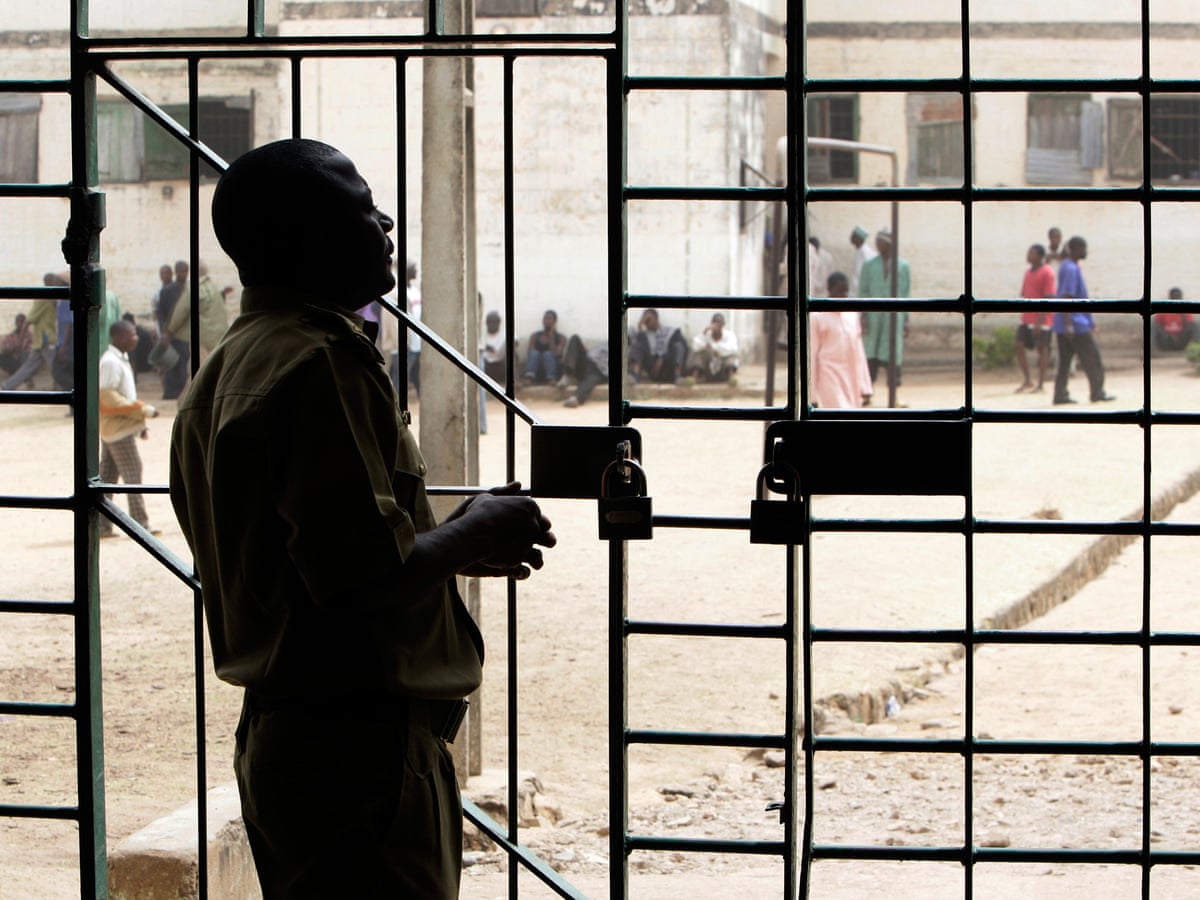
Due to the feedbacks that the last piece: “Mopha in prison for failure to perfect bail; what you should know about bail & it’s conditions” which summarily talked about the concept of “Bail” generated, readers reached out to confirm the veracity of the most used phrase in police stations; “bail is free”. The question posed is; “is bail really free”?.

For the sake of leaving no stone unturned, we’d redefine the term “bail” here:

Bail is the temporary release of an accused person who is awaiting trial while he guarantees that he will be appearing in court or reporting to the police whenever his presence is needed and he also guarantees that he won’t won’t run away or go into hiding. In the case of  Onyebuchi v FRN & ORS (2007) LPELR- 4135 (CA) Bail was defined as the process by which an accused person is temporarily released from the state custody to sureties on conditions given to ensure his attendance in Court whenever he is required until the determination of the case against him.

By the virtue of s.35(4) of the constitution,  any person who is arrested by the law enforcement agency for commission of crime must be brought before court within a reasonable time. Reasonable time in this regard is “24-48 hours”. Therefore, it is illegal, unlawful, unconstitutional and breach of fundamental human right for a suspect who has been accused of a crime to be detained in police custody for more than 48hours, hence the reason why there’s room for police bail, which simply means; temporary freedom pending when the police would have made enough case against the suspect  in order to charge him to court.

Readers should note that there are two major types of bail and they are;  Police Bail (administrative bail) and Court Bail but we are going to  pay more attention to police bail in this piece because of our theme, the notorious phrase; “bail is free” which has been a mantra to the police agency and other law enforcement agencies.

Police Bail which is also known as administrative Bail is the bail granted by the police to a suspect who is in their custody. It is a temporary freedom the investigating police officer(s) grants a person suspected of committing a crime pending when they obtain enough evidence to charge such a person to court.

Police bail is statutorily provided for in s.62 (2) of the police act which is in line with the proviso of s.35(4) of the constitution and in no statute or any written law in force in Nigeria was it provided that a suspect should pay a fee for his bail.

This phrase “bail is free” with it’s syndicate phrase “police is your friend” are the most unbelievable sentences in the history of the Nigeria police system.

Fortunately, as paradoxical as it may sound; the phrase “bail is free” is right, accurate and true as bail is actually very free in Nigeria as of today.

We are not ignorant of the fact that It is a well-known secret that individuals are made to pay scrupulous amount in police stations before they can bail themselves or bail their ward that is in police custody, which is the root of doubt of the accuracy of the “bail is free” slogan, even when it has been incessantly emphasized on by the police agencies themselves. This is no doubt the handiwork of the “black-sheep” police officers bringing the name of the police commission to disrepute.

The take home; Un/fortunate as it may seem, bail is free and don’t hesitate to report a police officer who is asking you for a fee for your bail or your ward’s bail. 

Carry1st, African Game Publisher, Raises $20m in Series A Extension Round

0

Africa is taking a bold step to join the growing game industry that is rapidly attracting the big names in the tech industry as investors.

Carry1st, an African mobile gaming publisher, has announced a $20 million Series A extension round led by Andreessen Horowitz (a16z), its first investment into an African-headquartered company. New participants in the round are Avenir and Google as well as other prominent angel investors including Grammy winner and crypto investor Nas, and founders of Chipper Cash, Sky Mavis, and Yield Guild Games. Riot Games, Konvoy Ventures, Raine Ventures, and TTV Capital, who were also part of the Serie A round, participated in the extension round.

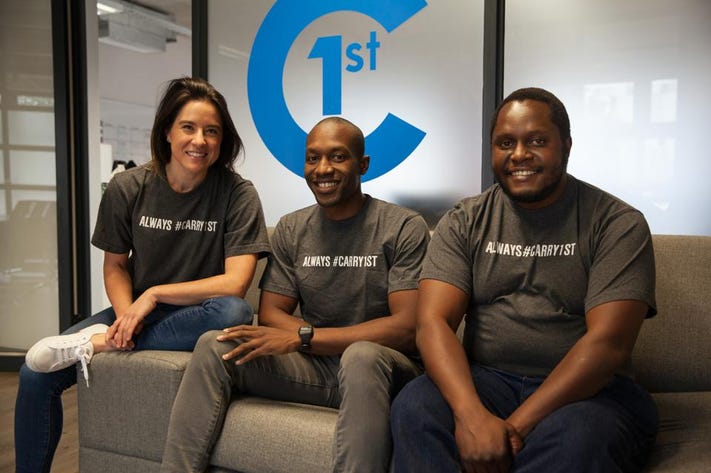
Founded in 2018 by Cordel Robbin-Coker, Lucy Hoffman, and Tino Mundangepfupfu, Carry1st is a publisher of social games and interactive content with a focus on frontier markets like Africa.

“We’re excited to partner with this world-class group of investors who, in addition to capital, bring expertise across gaming, fintech, and web3,” said Cordel Robbin-Coker, Carry1st’s CEO and co-founder.

“In 2021 we launched multiple games and digital commerce solutions achieving really strong growth. Together we can accelerate this growth and achieve our goal of becoming the leading consumer internet company in the region.”

Since launching its game publishing platform last May, Carry1st has grown by over 90% month-over-month, Robbin-Coker said. “Our team nearly doubled in 2021 in order to support and build on the growth. This funding from some of the world’s most renowned investors will allow us to take the next step forward.”

“We have an incredible market opportunity; coupled with a clear strategy and the resources to realize this potential. In short, we have a chance, which is very exciting,” he added.

Carry1st partners with mobile games studios and content owners around the world to enable them to “launch their content profitably in the region. We’ve developed a payments platform which allows users to purchase using their preferred method of payment, and a marketplace for digital products”.

Having recently partnered with online payments provider PayPal and Chipper Cash, its users can now also pay for digital services like Tinder subscriptions, mobile data, and gaming currency.

Robbin-Coker believes connecting international content owners with “a large, engaged, aspirational user base” is a way to help solve Africa’s notorious connectivity problems.

“Due to app distribution and digital payment problems in the region, it’s extremely difficult for studios to make money off their games – and for consumers to pay for the content they want,” he said.

“As a result, consumers across Africa are underserved. We work with international publishers to access the world’s fastest-growing market. Our publishing solution, which handles user acquisition, live operations, community management, and monetization for our partners, is the solution to this.”

Andreessen Horowitz general partner David Haber said the firm was “delighted to be making our first investment in an Africa-headquartered company” in the mobile games and fintech platform. “We see immense opportunity for the company to mirror outstanding successes we’ve seen in markets like India, China, and Southeast Asia. We couldn’t be more thrilled to partner with founders Cordel, Lucy, Tino, and the Carry1st team on their mission to build the Garena of Africa.”

Gaming has recorded rapid year-on-year growth to become a $200+ billion industry, attracting the flotsam and jetsam in the tech industry as the number of game players jump globally 3 billion. In 2021 alone, the total number of video game releases was up 64% compared to 2020.

The U.S leads the pack with 51% of players reported spending more than 7 hours per week playing across console, PC and mobile. Though China’s recent regulatory framework targeting its game market has resulted in decline in the number of players, there has been an uptick in other countries. The number of gamers is expected to grow to 4.5 billion by 2030.