DD
MM
YYYY

PAGES

DD
MM
YYYY

spot_img

PAGES

Home Blog Page 5376

Diaspora Remittances Are Increasing, But Can it Save Nigeria from Its Forex Crisis?

0
Naira USD

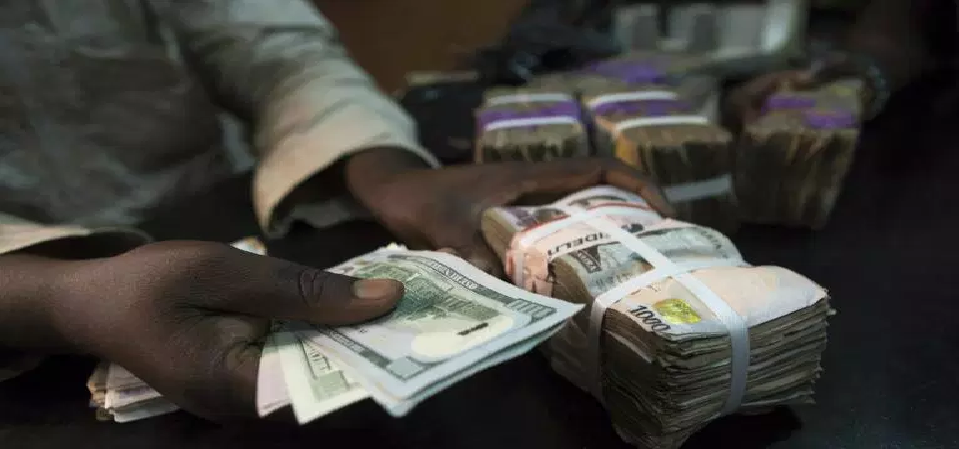
There has been some improvement in diaspora remittances since 2020, augmenting dollar liquidity in the Nigerian market.

Nigeria, Africa’s largest economy, has been hit with a forex crisis that has seen its currency, the naira, dwindled to N413/$1 in the official Import & Export (I&E) window and over N570/$1 in the parallel market. It has been a long battle for the Central Bank of Nigeria (CBN), pushing to tame the tide that has largely impacted economic growth of the country.

The naira has been repeatedly devalued as the CBN pushes to contain the impact of the accelerating FX crisis. Against this backdrop, economists have kept pointing at poor dollar liquidity as the root cause of the naira’s woes. However, the CBN, besides pointing accusing finger at the wrong places, including cryptocurrency operators and FX rates aggregator-platforms, has announced many policies aimed at saving the naira. A significant one among them is the ‘Naira 4 Dollar Scheme’, which offers recipients of diaspora remittances through CBN’s licensed International Money Transfer Operators (IMTOs), N5 for every $1 received as remittance inflow.

Diaspora remittances have receded greatly since 2015, adding to Nigeria’s plummeted oil revenue compounding the issue of dollar liquidity. Data from the CBN shows $116 billion to be the total dollar inflow to Nigeria’s economy in 2020, which indicates 20% and 30% drop in dollar inflow when compared to 2019’s $142 billion and 2014’s $160 billion respectively.

However, the situation is improving. Recent data from the CBN shows that diaspora remittances rose by 5.1% quarter-on-quarter to $4.28 billion in the first quarter of 2021, from $4.07 billion in the fourth quarter of 2021.

There is optimism that the inflow will increase to more than $18 billion in 2022. The World Bank had, in its ‘Migration and Development Brief 35,’ projected 2.5% increase in Nigeria’s diaspora remittances in 2021. That would see dollar inflow to Nigeria move from $17.2 billion in 2020 to $17.6 billion in 2021. The current trend supports the belief that Nigeria will see more dollar liquidity from diaspora remittances in 2022, as the global economy keeps recovering from the pandemic.

However, amidst the optimism, concern over naira’s stability remains high as the increase in diaspora remittances has yielded little impact – the naira has kept falling. The latest naira devaluation (from N411/$1 to N413/$1) came into play early this year. The naira closed at N416.25/$1 in the official market, appreciating 4.3% from the previous week’s N435/$1. Inflation is currently at 15.40% – all indicating that the problem is far from over.

The central bank had late last year blamed Nigeria’s low dollar liquidity on petrol import. The apex bank said import of petroleum products gulps around 40% of Nigeria’s forex, notably depleting the country’s external reserve which is at $40.49 billion as of Jan 7.

The CBN also fingered excessive borrowing by the Federal Government from the CBN’s Means and Ways Advances window. The financial industry watchdog said it frustrates its monetary policies.

“Yes when the Federal government exceeds its revenue, the CBN finance government deficit through Ways and Means Advances subject (in some cases) to the limits set in the existing regulations, which are sometimes disregarded by the Federal Government.

“The direct consequences of the central bank’s financing of deficits are distortions or surges in the monetary base, leading to an adverse effect on domestic prices and exchange rates i.e macroeconomic instability because of excess liquidity that has been injected into the economy,” the CBN said, answering “Can the Federal Government frustrate the Central Bank of Nigeria from pursuing its monetary policy?” question on its FAQ page.

Despite the blames being thrown around by the CBN, the lasting solution to Nigeria’s forex crisis hinges mainly on, asides exporting enough non-oil products, the mammoth task of cutting the country’s petroleum products import, which will increase Nigeria’s dollar liquidity by more than 30%. But the hope to achieve this lies solely on Dangote Refinery, which is expected to launch in mid-2022.
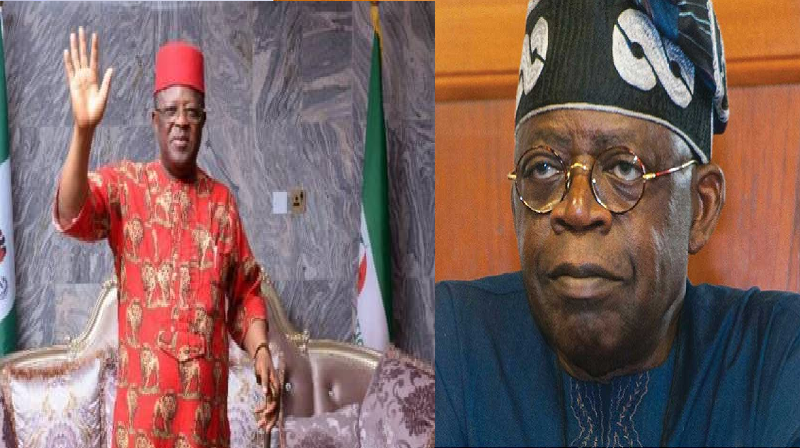
As Predicted, Ebonyi State Governor Umahi Declares for Nigerian Presidency

0

On Oct 1, 2018, I wrote: “By this time in 2022, APC will select Bola Tinubu as the presidential flagbearer of the party for Election 2023. Mr. Tinubu will select a retiring governor from the southeast as his running mate. The main goal is to quench any agitation that 2023 will be the turn for southeast.

“The present governor of Ebonyi state will likely be his running mate. Engr David Umahi will win with PDP in 2019 but will decamp to APC shortly. His “friendship” comment on President Buhari was not a lapse.

“Largely, the best time to decamp as a governor is during the second term as you may not have to face any regional election. Decamping will be very popular because in my model, I expect Buhari to win in 2019 if he continues to show physical energy as he has recently demonstrated.”

The Governor of Ebonyi State, Dave Umahi, has declared for the Presidency. I extended that prediction in Nov 2020 thus: ‘ Engr Umahi will run for the presidency on the APC platform. He will lose. Then Tinubu will select him as his running mate. As I wrote in 2018, “Tinubu/Umahi will be formidable”. And from all indications, APC will move power to the southwest.’

(I will modulate that ticket now because Borno state Governor Zulum seems positioned depending on what the party does. I expect him to get a Vice Presidential slot depending on what happens between Tinubu and Umahi. I consider both the frontrunners in the South)

Please note, when I write, it does not mean that I support or endorse; I am simply making calls based on my understanding of Nigerian politics.  In university, I ran an election and WON. Sure, Nigerian politics is complex. See this as academic for a political junkie!

After Tinubu, Ebonyi State Gov. Dave Umahi Informs Buhari of His Intention to Run for President

0

As the 2023 presidential election draws close, politicians are beginning to declare their intentions to hold the most important office in Nigeria.

On Monday, the All Progressive Congress (APC) chieftain, Bola Ahmed Tinubu said he has duly informed President Muhammadu Buhari of his intention to succeed him come 2023. Barely 24 hours after Tinubu made this known, his party member, the governor of Ebonyi state, Dave Umahi, said he has also told the President that he would run for the presidency.

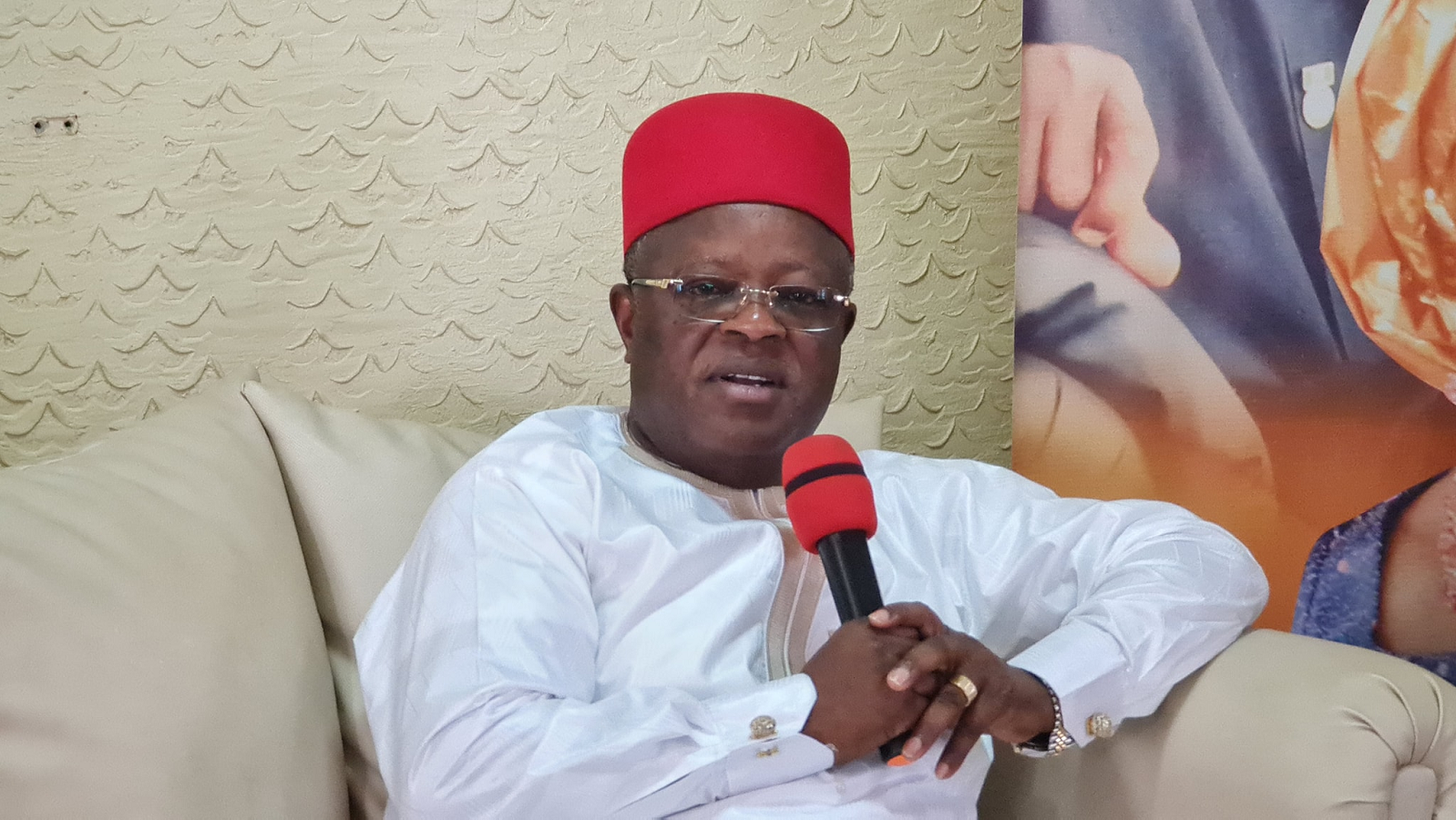
Umahi made this known on Tuesday while speaking to State House correspondents after meeting behind closed doors with the President at the Presidential Villa, Abuja. He said Buhari had asked him to seek the support of the people after discussing the matter with him.

Umahi, whose desire to become either the president or the vice president, was suspected after he decamped from Peoples Democratic Party (PDP) to APC, citing the former’s unreadiness to cede the presidential ticket to the Southeast, said he is not bothered that Tinibu, a leader of his new party, has declared his intention to run.

“I told Mr President, that without prejudice to whatever will be the decision of the party, which we shall abide by, that if the party throws the ticket open or zoned to southern part of Nigeria that I believe that with what I have put in place in the past six years plus, that I’ll be running for presidency, on the platform of APC.

“So I told him and of course, he believes that whoever wants to run for president of this country must have to consult widely, go to all the leaders and that we must do everything to remove ethnicity and religion in our politics. So that this country can grow,” Umahi said.

When asked what his chances of emerging as the presidential candidate of the APC are, given Tinubu’s declared intent to run and the fact that he is a newbie in the party. He said he was not in the contest with anybody but himself.

“The Bible that I swore with a section of in 1 Samuel says that by strength shall no man prevail, and power and might belong to God. He chooses whomever he wills and he will do that in 2020.

“I’m not in contest with anybody I’m in contest with myself,” he answered.

He also said he needed to clear with the president first, when asked whether he has consulted widely as Buhari had suggested to him.

“I wouldn’t have done that without first come in to clear with Mr. President that there is this feelings in Southeast that have not been president and that people feel that those of our leaders in the various political parties should indicate interest to contest.

“And this is fair, this is important. But at the end of the day, it is God Almighty and the political parties that will also decide,” he said.

On the needed support of the people from the Southeast, Umahi was asked if he has informed the apex Igbo socio-cultural organisation, Ohaneze Ndigbo of his ambition, and he said: “Ohaneze leadership should not play politics. Yes, they can speak for the interest of the southeast, they can speak for fair treatment to southeast as people but as a matter of equity, justice and fairness, and leaving a level playing field for all the political parties and the aspirants.

“They should not dabble into politics or whom to support or whom not to support. I think that they will hear it just like they heard from the other political parties’ aspirants. We will also write them to notify them that yes, they have capable sons and daughters that if God wills, that could do this job.”

On the question about what Nigerians should expect from his presidency if he contests and wins, Umahi said: “Yeah. God willing, and if it’s the wish of the people of this country, Umahi’s presidency, we’ll be looking at the same thing we did in Ebonyi state.

“Before we came on board, we were a state written off, we had nothing to write home about in infrastructure. But I must commend the first two civilian governors Dr. Sam Egwu and Chief Martin Elechi, they did quite a lot, because they came in the midst of the dust of the nation, Ebonyi State. And so they had quite a lot of challenges. So I can say that they laid the foundation upon which I started to build. And so there are a lot of things that we have done in Ebonyi.

“We have the best government house, you can see anyway, we have the best Exco chamber and the largest you cannot see anyway. And so we intend to replicate the same thing.

“And I believe that with the little resources we have and people have been asking us how did you do it? Or how do you do it? And it’s all about patriotism. It’s all about fear of God, it’s all about bringing in our experience to be bear.

“I have been into construction since I graduated. So I have a lot to give in terms of how to run governance as business because you have to have the heart to help the people and that’s what we’ve demonstrated in Ebonyi.

“So we want to treat the nation if God permits, that what we’ve done becomes a microcosm of the macrocosm, of which we expect. We also believe strongly that we’ll be able to continue with what Mr. President has done. One of the greatest problems we have in this country is ethnicity, religion, and unpatriotic features of a lot of people. And I think that there is a need to engage starting from where Mr. President would have stopped.”

All New Tekedia Programs; Next Tekedia Mini-MBA Begins Feb 7

0

Greetings. Happy New Year from Tekedia Institute. We hope that you are rejuvenated for the promises of 2022. Thank you for your partnership in 2021; we sincerely appreciate it.

With the year up and running, we’re excited to share that the7th edition of Tekedia Mini-MBA will begin on Feb 7 2022. Registration has since started for the 12-week program, taught by business leaders from companies we all admire. Check the curriculum here; we’ve refreshed it with many new courses. Register here or forward to a friend or associate for $170 or N90,000 naira with many payment options provided.

Meanwhile, we have many other programs we have launched. Among others, the Tekedia Startup Masterclass: from start-up to unicorn is helping founders, CEOs, entrepreneurs, builders, project champions, etc to master the mechanics of starting and scaling enterprises and ideas.

It runs for 8 weeks and includes one-on-one Zoom sessions, besides pre-recorded courseware,  with the lead faculty, Prof Ndubuisi Ekekwe. The cost is $400 or N200,000; register here and begin immediately as it is on-demand, no delay.

For all Tekedia programs and associated costs, click here 

The cost of a perfect business plan

1

Every startup needs to have a business plan, whether in a sketchy or detailed form. Fortunately, there are lots of tips on writing a business plan, so much that the problem is no longer that of writing a business plan, but actually getting the business started.

Some would-be founders and entrepreneurs spend months (maybe even years) working on and perfecting their business plans because they want to get every single detail right. They want all the I’s dotted, and all the T’s crossed. They work on this perfect plan for so long and later discover that it has caused them a lot of precious resources – especially time. Here are some things the perfect business plan could cost you.

Competition

You could spend months working on the perfect business plan only to find out that the competition has gone way ahead of you, and has probably made an entry into the market while you were waiting for the perfect plan. In the end, even if you do launch as planned, you now look like the imitation even though you had an original idea when you started out.

Timing

In business, timing is everything and time is one of the most expensive resources that you may lose while planning your big entry on your perfect business plan.

Adaptability

The earlier post about flexibility in business has said much about being ready to adapt to the realities which you will find in the market. Oftentimes, the service you start out to render could be completely different from what you end up selling in the market. It could be influenced by customer feedback and other market realities. If you have spent months and years working on your perfect business plan, you are more likely to be inflexible and stuck on it. Diverging from a plan you spent so long working on, may not seem wise to you because then it would seem like the entire time spent on it was wasted.

This is another reason you should not spend forever working on the business plan. A lot will change as soon as operations start. A lot of your assumptions will turn out wrong and you will have to make a lot of modifications to keep pushing.

You may never even get started

The world is evolving and new trends are emerging daily. What was true about the consumer’s problem yesterday may no longer be true today. The same solution customers were dying to have yesterday could be the same solution they would despise tomorrow. While working on your business plan, you will keep observing these changes, and probably try modifying your plan to suit them. The frustrating thing is that you will wake up every morning to a new plan, and probably need to update your plan again.

Don’t worry about getting the perfect plan and don’t wait till you get the perfect plan before getting started. So many people wait so long, spend so much time analyzing that they get paralyzed and end up not taking any action. They give up because they can’t figure the perfect plan.

If you are honest to yourself, you can probably remember one business idea you had that you never executed because you kept waiting to plan everything out perfectly. Most people have one or two of such ideas. You will never get started waiting for the perfect plan

The perfect plan could get you stuck. You need to be flexible. The ideal thing is to Plan a little and start. Either ways, you will have to make modifications as you get started and start getting customer feedback. So, why not just get started and get the feedback as soon as possible. You will never have the perfect plan at the start, so start.