DD
MM
YYYY

PAGES

DD
MM
YYYY

spot_img

PAGES

Home Blog Page 5381

Adapt or go out of business

0

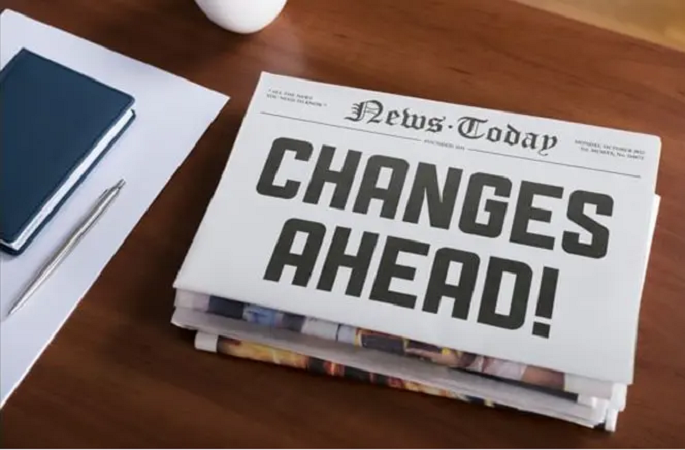
One of the features of living things is irritability which biologists explain as the ability to respond to stimuli. In animals, it could be recoiling into a shell during the dry season to conserve moisture. In humans, it could be the opening of the sweat pores during the hot season to let sweat out. In business, this feature is called adaptability.

Every founder, every entrepreneur, every business owner starts out with an assumption or group of assumptions. You assume the customer has a problem. You assume that you have a solution that will address the problem. You assume that the customer would be willing to pay a certain price for that solution. You assume that you will break even in a year. You assume that you will become profitable in two years. You assume that your idea is novel enough to get investors to break their safes and give you all their monies.

Assumptions! Assumptions! Assumptions!

Often the service you go in thinking you are going to render is not the service you end up doing. It will change based on customer needs.

As soon as you get started, the scales will begin to fall off one after the other and you will come face to face with the reality. How ready or prepared are you to adapt to whatever reality the business reveals to you? What if you don’t break even in a year? What if it takes 10 years before you get any form of funding? What if the market rejects your product? Are you ready to change strategy but remain focused on the goal? Or will you close shop at the first sign of reality?

This is what we call adaptability. It is the reason we always emphasize that your business plan is not cast in stone. A lot of things could and probably would change. This does not mean that you should completely change your business direction at any and every sign of a divergence in the reality. It means that you should stay flexible.

If you get to the market and discover that although the customer needs your solution, he is not ready to pay your market price, what would you do? Will you stick to that price and start retargeting a high-income section of the market? Or would you go back to the production room and find a way to beat down the cost of production to get a better price? Or would you go for more aggressive marketing?

What if the customers’ reality shows that what you thought to be a problem worth solving, is something the customer does not even see as a problem? What if the customer/market has another problem that requires immediate solving? Are you ready or able to change your strategy?

To be fair, it is easier for service-based businesses to be flexible and make modifications as they go. For product-based businesses, a lot has often gone into production already and this makes it more difficult to make a sudden change. Even then, the product-based business has to remain flexible and adaptable, changing to suit changes in the market needs and preferences.

Be ready to close up your sweat pores when the business weather gets chilly, and open them up when it gets hot. If you will remain in business, you should be prepared to make modifications and adapt at every stage of the business.

IPOB Bans the Nigerian National Anthem in South East region

0

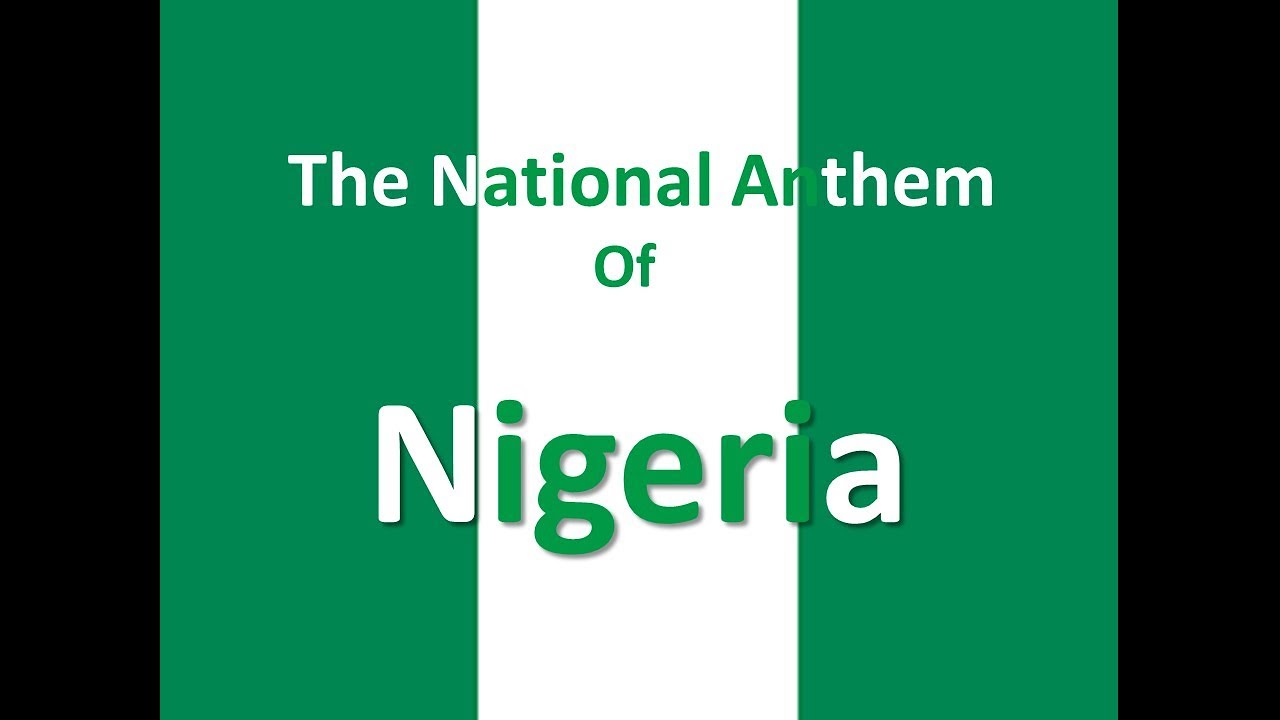
In the recent press release by the Indigenous People of Biafra (IPOB), amongst other things, one of the highlights is the outright ban of the Nigerian National anthem in schools and public gatherings in the region and ban of cows which are said to be Fulani cows in the region. In a press statement made by Mr. Chika Edoziem, The Head of Ipob  Directorate of State he succinctly stated; “Beginning from Monday, January 3, 2022, no more Nigerian national anthem in all schools in Biafraland. Our children must no longer be reminded daily that they are under oppression by singing the national anthem of the oppressor”.

This press release which said to be long overdue by the supporters of the movement, others who are against the modus operandi of how the members of the IPOB are going about the struggle for self determination stated that the above press release is tantamount to an act of treasonable felony. Treasonable felony is a capital offense in most nations of the world including our country Nigeria and some are worried that the top leaders of the movement may attract the wrath of the government again.

Treason is an act to depose or levy war against the sovereign nation and to forcefully compel changes of policy in government, forcefully take over government  or to intimidate or overrun the parliament and it is usually punished with life imprisonment or death sentence.

The antagonist of the IPOB modus operandi chastised the leaders of the movement saying that the Nigerian National anthem is a symbol of unity, a national heritage and an identity, a code of conduct that every Nigerian should abide by and live by. The Nigerian National anthem is said to serve as an eternal representation of the core values and spirit of our Founding Fathers (the heroes’ pasts) and everyone who calls our country home thereafter. It has the same significance with the Nigerian flag, Nigerian currency, the coat of arms and every other national symbol of unity. Every one, who calls Nigeria home and is living within the geographical demography mapped out as Nigeria is to abide by these symbols of national unity and respect these symbols of identity; save and except that region have officially and legally  broken away from the country Nigeria, if not every act which undermines the national symbols of unity of Nigeria is tantamount to treasonable felony (so they said).

Be it as it may, this piece by reporting this news is not in by any means advocating against agitation for independence and self governance, the reporter is fully in support of every region of Nigeria who yearns for independence to achieve freedom, an average human believes that people have the right to self determination, to determine if they still want to be part of a union or they want to go their way. We can’t keep lying for ourselves with the narratives of “one Nigeria” when the one Nigeria union is clearly not working out.

Although, the antagonist of the IPOB modus operandi claims that the outright ban of the national anthem by the member of the indigenous people of Biafra is an act of treason and it attracts a heavy punishment in Nigeria, it is for our readers and an average Nigerian  to form their opinion about how the whole situation is turning out.

The 2011 Prediction and the Eventual End of Blackberry

0

In 2011, I wrote “We understand that Blackberry is popular today in Nigeria, but Android will eclipse it within the next few months”. And then asked developers to forget Blackberry and move to Android. In that same piece, I also added another  bold statement “In the next 6 months, the number of Android devices in Nigeria will eclipse all the Apple and Blackberry combined.”

That was the time Nigeria was running on Blackberry. It was not a tough call as simple indicators made Blackberry’s position hopeless. Read the web archive here.

For the 2011 piece (available in web archive, reproduced below) which was titled “Nigerian Developers – Fasmicro says Focus on Android Platform”, we have the following predictions right:

  • We wrote thus: “We understand that Blackberry is popular today in Nigeria, but Android will eclipse it within the next few months”.
    • That turned out to be completely correct. We used that conviction, based on our model, to ask Nigerian developers to move into Android from Blackberry and Windows: “Now, you are a young graduate or a freelance who wants to get into the App business. You want to know what platform to build”
  • In our analysis, we focused on affordability of the product: “Another reason has to do with market. Apple and Blackberry are premium…Android gadgets are more affordable simply because you do not have to pay for any software – it is free by default”We correctly predicted that cost will help Android adoption in Nigeria and that was what happened.
  • Then we made a very bold statement:

In the next 6 months, the number of Android devices in Nigeria will eclipse all the Apple and Blackberry combined. Our studies show that customers MTN will make this possible with its advertising power and brand. Etisalat did not make much impact with Galaxy Tab because of the cost. Even myPad from Starcomms is built on Android. Of course, Fasmicro and Microscale new Ovim Plus and Ovim MiE are all Android devices. Encipher Inye and Inye 2 are also Android. They will compete against the high premium Blackberry and will surely win. The notion that iPad can do well in Nigeria is not supported by any data. It is expensive and that brand is not structured for the Nigerian market

But the news today is that Blackberry is gone: creative destruction in markets. The last innovator is always the one standing. Read the piece from Samuel

RIP Blackberry, 1999-2021. Long, long ago, all the way back in the mid-2000s, Blackberry ruled the land. You could hardly pry that sleek, curved, QWERTY-enabled device from the hands of hip executives and a certain 44th president. But alas, the Blackberry is no more. The bygone relic goes out of commission Tuesday, with Blackberry formally shutting down the phone’s operating system and software. The Blackberry obituary was written long ago, authored by rivals Apple and Google. But consider this a final goodbye to a true trendsetter. We knew thee well—and then ditched you for something better. (Fortune)

Comment on LinkedIn Feed

Comment: “1st Mover advantage, is not a sustainable advantage ”

My response: Temporary monopoly comes via first-mover but what matters is FIRST-SCALER advantage. Android scaled mobile internet better than BB and that was the issue. Irrespective of who started, what matters is this: who scales FIRST. In our program, I explained this on how Apple has NEVER pioneered any sector but is always coming later to win via massive scaling. Before iPhone, Blackberry; before iPod, Walkman; Before Apple Watch, Pebble. Keep going…

End of an Era: Blackberry’s Unfortunate Demise

0

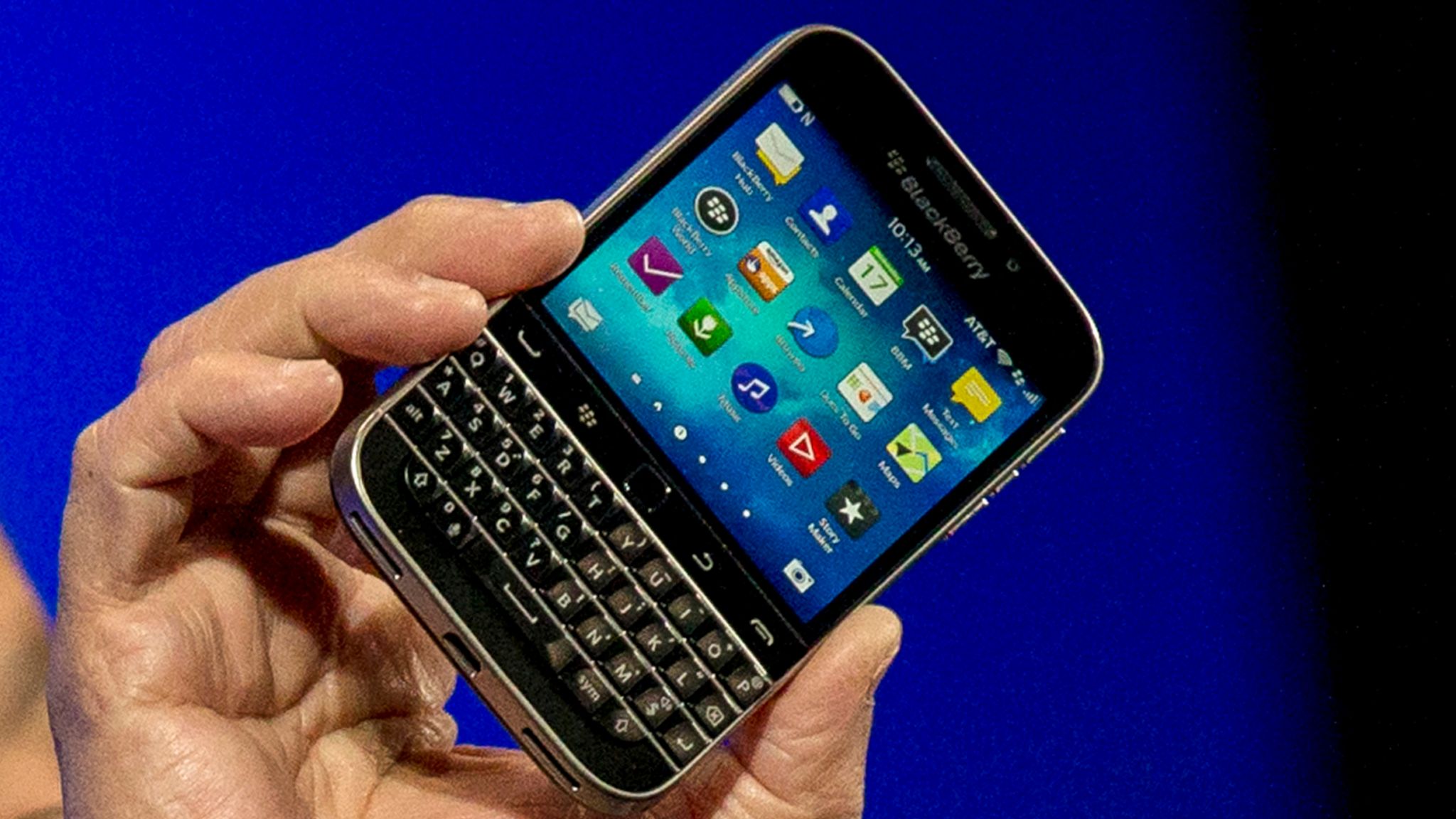
It used to be the best smartphone, with its email and other features, giving users the ability to do so many things new to mobile phones. There was the pin and ping feature connected to the Blackberry Messenger – bubbling and buzzing with consumers across its global markets.

About a decade into its short-lived era, BlackBerry was at the center of smartphone sales around the world. But its glorious days were abruptly disrupted, and the Canadian company didn’t see that coming nor was it prepared for it. Apple’s iPhones and Google’s Android usurped Blackberry’s smartphone’s market leadership with such an ‘ease’ buried in enticing new features forming part of emerging smartphones.

In 2016, Blackberry became a once-upon-a-time smartphone company that reigned supreme in the smartphone market but lost its reign to Apple and Google OS. The newcomers are not ready to give up a piece of their dominion and Blackberry’s only choice, which had been narrowed to remaining in the market, began to wane until the company called it quits.

BlackBerry reached the end of an era today, having pulled the plug on support for its classic smartphones some 22 years after the devices first hit the market.

This means, the smartphone’s support system will no longer function reliably. DailyMail reports on how the decision will affect consumers still using Blackberry.

The move will impact devices running BlackBerry 7.1 and earlier, BlackBerry 10 and BlackBerry PlayBook OS 2.1 — although Android-powered models will be unaffected.

Unsupported systems will stop receiving software updates and, as a result, will ‘no longer reliably function’, the firm warned in a statement released last September.

This, the Canadian company added, has the potential to affect core operations like the ability to send and receive calls (including to emergency services) and texts.

Data usage may also be affected, while applications like BlackBerry Link, Desktop Manager, World, Messenger and Blend will have ‘limited functionality’.

BlackBerry first hit the market in 2000 and became a must-have for professionals, as the smartphone allowed users to easily write and send emails.

The smartphones saw a dramatic increase in popularity from 2001 to 2007, as they made their way to new markets across the globe.

However, BlackBerry’s supremacy was topped in 2016, losing the title of top device to that of Apple’s ascendant iPhone.

The last version of the BlackBerry OS the firm released dated back to 2013, so the devices set to lose support are very old, Ars Technica have reported.

‘The termination of these service offerings and infrastructure will also impact functionality for applications,’ BlackBerry said in a statement.

These, they added, will include Enhanced Sim Based Licensing, Identity Based Licensing, BlackBerry-hosted email addresses and the original BlackBerry Protect, which let users locate, lock and wipe BBOS and BlackBerry 10 devices remotely.

‘There is no impact to the new BlackBerry Protect which is an AI-based endpoint security solution,’ the firm said.

In 2020, a Texas firm named OnwardMobility announced that it would be making a 5G Android-powered BlackBerry device with a full QWERTY keyboard to release in 2021 — however, the promised smartphone has yet to actually materialize.

‘Enterprise professionals are eager for secure 5G devices that enable productivity, without sacrificing the user experience,’ OnwardMobility CEO Peter Franklin said.

‘BlackBerry smartphones are known for protecting communications, privacy, and data. This is an incredible opportunity for OnwardMobility to bring next-generation 5G devices to market with the backing of BlackBerry and FIH Mobile.’

The OnwardMobility website still mentions the Android-powered Blackberry, but still only lists it as being at the pre-order stage, with no suggestion as to when it will actually be released.

In the end, it was arguably BlackBerry’s failure to adapt, lack of consumer insight and poor design that led to its demise in 2018 — when the company announced that it would no longer be producing the smartphone.

Blackberry’s premature death presents other companies with a valuable lesson. As you enjoy your reign, pay attention to market changes, anticipate disruptions, prepare to handle them by adapting, and build what it takes to keep your crowd.

Mediating Between Nigeria And ‘Biafra’

0

The last time I painstakingly checked, the ongoing struggle for a sovereign state of Biafra by most aggrieved personalities in the Southern part of Nigeria, particularly the Igbos, remained a cause that required the attention of anyone who truly means well for the country.

It suffices to say that the said scenario isn’t something to be played with or laughed over, considering its socio-economic cum political implications.

Biafra was a secessionist State in the Eastern part of Nigeria that existed from the 30th of May, 1967 to 8th of January 1970. The name was extracted from the Bight of Biafra otherwise known as ‘Bight of Bonny’, the Atlantic bay situated at the Southern pole of the region.

The inhabitants were mostly the Igbo people who led the secession due to economic, cultural, ethnic as well as religious tensions among the various peoples of Nigeria. Other ethnic groups that constituted the republic were the Ijaw, Ibibio, Efik, Ibeno, Eket, Annang, and the Ejagham, among others.

It could be recalled that the emergence of the Nigerian Civil War popularly recognized as the ‘Biafran War’ in 1967 was occasioned by the secession of the Biafra region by its major leaders, especially the Late Lt. Col Chukwuemeka Odumegwu Ojukwu who was then the Governor General of the Nigeria’s Eastern Protectorate.

After the said war that lasted for almost three years, Biafran forces under the slogan ‘No victor, No vanquished’ surrendered to the Nigerian federal military government and therein Biafra was reintegrated into Nigeria, which was its original territory.

Thereafter, peace was duly restored in every nook and cranny across the federation, thus Nigerians in their entirety became ostensibly united again.

Though the colossal injury incurred during the duel remains an indelible experience, the Igbos, et al, who were the prime Biafran agitators had over the years been strongly mingling with people from the other part of the country, just as in the case of the ever famous Alaba and Ladipo markets as well as the International Trade Fair, all in Lagos State.

Owing to their enterprising and promising nature, the Igbos can make anywhere look like paradise overnight, provided the place is business-oriented. This is one quality that makes the world attracted to the Igbos, thereby making them gain a renowned respect from all and sundry across the global community.

The Igbos, to say the least, have really carved a niche for themselves and their generations yet unborn when it calls for commerce and industry. This feat is widely verifiable.

In spite of this overwhelming feature, one may boldly assert that, in the socio-political terrain, they have not really gotten a fair share of the ‘national cake’, mostly in the area of appointments or recognitions.

For instance, since the emergence of the ongoing democratic era which kicked off in 1999, no Igbo man had been in Aso Rock as the President of Nigeria, neither had any individual of Igbo extraction emerged as the substantive National Chairman of any of the domineering political parties, if not Prince Vincent Ogbulafor of the PDP whose tenure was yet truncated. That of the Vice-Presidency isn’t left out.

In most cases, they end up receiving mere pledges whose fulfillment often eventually become far-fetched, as if they were destined to blow the air while others do the dancing.

This pitiable physiognomy of the Igbo nation that has been a thing of tremendous concern to many genuine stakeholders could be one of the reasons that reignited the renewed vehement agitation for a sovereign state of Biafra, which was seemingly forgotten over the past decades.

This very uncontrollable agitation has claimed several lives, maimed many, as well as rendered hundreds of persons homeless, mainly occasioned by physical combats between security agents and the agitators during series of riots staged by the latter.

This, coupled with the ongoing security threats from other groups including the Fulani Herdsmen, Boko Haram sect, the bandits, and the Niger-Delta militants, has contributed enormously in overheating the polity.

At this point, the government alongside other concerned groups, is expected to be deeply concerned about how to tackle these unbearable issues once and for all, taking into cognizance that no existing society can strive effectively and efficiently if its security is threatened.

I’m of the view that the best way to holistically confront any anomaly is by ascertaining its prime origin, and the Biafran agitation isn’t an exception.

I have often times categorically stated that the Boko Haram is a terrorist sect having understood its origin, thus have instructed Nigerians and the security agencies to always go by the name ‘terrorism’ whenever they are addressing or referring to the group; such approach alone would enable us to get the ongoing fight right.

On the contrary, the Biafran agitation likewise the Niger-Delta militancy is an insurgent group, thus ought to be treated as such. Insurgency has to do with when one or a group is fighting a just cause, contrary to terrorism that’s about an uncalled inconsequential and irrational violent rebellious act.

Unlike a terrorist group, an insurgent set that’s crying foul over a sensed maltreatment deserves a dialogue. The United Nations’ (UN) law likewise that of Nigeria, painstakingly highlights the fundamental human rights which include the right to fairness and the right to freedom, hence the Biafran agitators deserve a fair hearing since their fight was apparently informed by grievance.

In other words, the government is required to have a rethink towards creating harmony, which is the most required factor in this aspect. There are absolutely no two ways about it.

What the Igbos need is just a sense of belonging. The South-East zone, currently, can only boast of five states whilst each of the other zones can boast of at least six states. They ought to be brought closer to the helm of affairs.

An average Igbo man wants to participate actively in anything he/she is part of, and they are naturally endowed to do wonders. I bet you, give an Igbo man a little space, he would make heavens before you realize what’s happening.

Unequivocally, the Igbos, particularly those from the South-East, have over the decades been relegated to the background and this is the apt time for redress.

On their part, I enjoin the Biafran agitators to be more logical. They must employ logic as they agitate. More so, they must redeem their oneness, which obviously has been lost; such can only be actualized if they desist from attaching politics to socio-cultural affairs.

Only Ohanaeze Ndigbo is enough to bring formidable unity among the Igbos if its members concentrate only on the needful. The Ohanaeze Ndigbo, to say the least, isn’t supposed to take orders from the elected governors in the zone as it’s presently witnessed; rather, the reverse is meant to be the case.

This piece however, as the title implies, is targeted at settling a lingering dispute, thus I’m more interested in harmonization in regard to the conflict in question.

Hence, the Nnamdi Kanu’s case ought to be revisited or reviewed with a view to making a consequential adjustment. Leniency is invariably a welcome approach if necessary. In some cases, neither prosecution nor persecution is consequential.

We are not unaware that no one or group is indispensable, but we must as well note that the Igbos, likewise others, aren’t expendable.