DD
MM
YYYY

PAGES

DD
MM
YYYY

spot_img

PAGES

Home Blog Page 5389

Time To Walk The Talk In Nigeria’s Power Sector

0

Penultimate week, precisely on 6th January 2022, in a televised interview when asked about the government’s plan for the dwindling Nigeria’s power sector, President Muhammadu Buhari said his administration was ready to invest in solar panels towards boosting electricity generation in the country.

Aside from this avowal, it’s noteworthy that so many other announcements and moves had been made by the government towards revamping Nigeria’s power sector, yet the maltreated baby still cries woefully in the backyard.

Nigeria’s power sector has over time been obviously politicized by the country’s leaders at various quarters, many have wondered if the anomaly is being enjoyed by those meant to solve it.

Just recently, the President sacked the Power Minister and instantly replaced him with another. This perhaps was born out of his intent to see a better Nigeria as regards electricity generation cum consumption.

Last year, the 9th House of Reps led by Mr. Femi Gbajabiamila, recently, announced its deep determination to commence investigations into the power sector, perhaps with a view to ascertaining why the huge spending so far was unable to address the country’s electricity conundrum.

But unfortunately, till date, nothing tangible has been heard from the Green Chamber concerning the awaited investigations as was announced by its leadership. It sounds ridiculous, but is real and true.

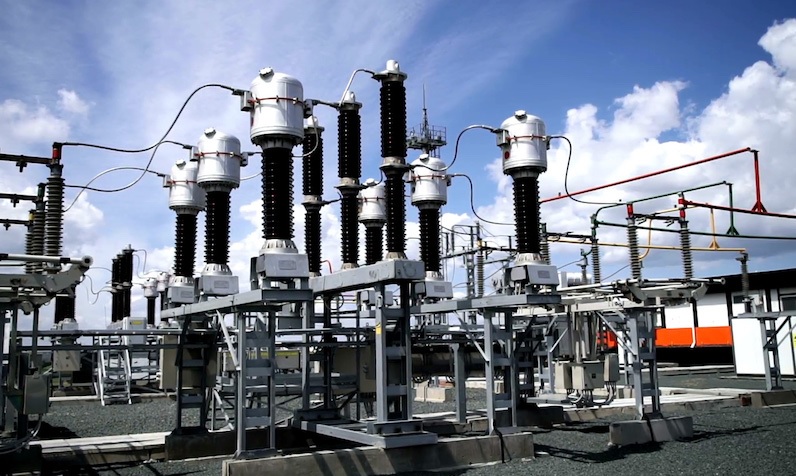
The country’s generation sub-sector comprises about 23 grid-connected generating plants. These plants are in operation around the country with a total installed capacity of 10,396MW, with available capacity of 6,056MW.

The thermal-based generation has an installed capacity of 8,457.6MW, with available capacity of 4,996MW. The hydro-based generation possesses a total installed capacity of barely 1,938.4MW, with available capacity of 1,060MW.

It’s noteworthy that the thermal segment has been sold to the private sector, except the Sapele Power Plc – generating about 414MW – that is 51% sold. Similarly, the hydro segment is under long-term concession.

In its effort to increase the level of power generation in the country, the Federal Government (FG) in 2004 under the leadership of Chief Olusegun Obasanjo, incorporated the Niger-Delta Power Holding Company (NDPHC) as a public sector funded emergency intervention scheme.

The NDPHC was imbued with the mandate to manage the National Integrated Power Projects (NIPP), which essentially involved the construction of identified critical infrastructure in the generation, transmission, and distribution as well as the natural gas supply sub-sectors of the electric power value chain.

In total, the NIPP power stations were targeted to add about 4,774MW of electricity to the national grid network. Some of these stations have been privatized while plans are underway to sell the remaining ones to interested investors towards increasing private-sector participation in the power sector, thereby improving the ongoing reform programme of the FG.

In furtherance of the reform policy direction, the Nigerian Electricity Regulatory Commission (NERC) has in the past licensed many private Independent Power Producers (IPPs). Some of the IPPs are reportedly at various stages of project development.

This analysis implies that the generation sub-sector is currently operating under the Public-Private Partnership (PPP), with almost 97% participation of the private investors. But the transmission segment is completely managed by the FG, whilst the distribution sub-sector is being operated and managed by private investors.

It’s imperative to acknowledge that, even if all these generating plants are in good form, or functioning as expected, their total installed capacity will still not generate the needed Megawatts (MW) of electricity across the federation.

Recently, by implementing reforms, Nigeria targeted 40,000MW generating capacity by 2020. Going by the estimate, she needed to expend approximately $10bn per annum on the power sector, to achieve the motive.

Taking a painstaking cognizance of the abridged survey or review, as presented above, we would understand that the country’s lingering power crisis ought to be blamed on the epileptic policies guiding the sector, not the ability of the minister as being perceived.

The fact is that, even if the best brain and most active technocrat is in charge of the Power Ministry, the sector will continue to wail and bleed. This shows that the country’s power anomaly needs to be addressed from the background.

The FG needs to, as a matter of urgency, decentralize the transmission grid, thereby giving room for each region or zone to manage their respective grids. This measure would help to eliminate the unending burden occasioned by theft, criminality, and corruption being experienced by the national grid. Hence, the private sector ought to be allowed to invest in the power transmission. There’s a need for candid legislation in this regard.

In the same vein, healthy policies should also be created to encourage generation of electricity from renewable energy sources such as solar. This wouldn’t need to be connected to the national grid, hence the various states can see to its operations and management on a daily basis.

The policy should equally create an enabling environment to enable our trained technologists or engineers to manufacture the needed devices for the generation. We as a country can currently boast of the needed manpower; what is then required is just a sincerity of purpose to trigger the needed change.

So, as the President is apparently in a move to invest in renewable energy such as Solar, he ought to engage the cognoscenti to educate him on the nitty-gritty in respect of the tech-driven measure.

More so, formidable policies must be formulated by the FG to discourage the endless rampant importation of conventional household/industrial power generating devices whose operations depend solely on fuel, diesel, or gas, as the case may be. The importers of the equipment won’t live to see a functional power sector in Nigeria, hence the need for a policy or legislation to tame their unwholesome activities in the country.

The political will must be worn like clothing to actualize the people’s aim. We must therefore look inwards towards solving our collective problem, rather than being myopic or shying away from the truth.

It’s imperative for the government to acknowledge that Nigeria’s power conundrum cannot only be tackled practically, but politically. It’s therefore time to walk the talk.
US Court Rules FTC Will Proceed with Suit Seeking to Force Meta to Sell WhatsApp and Instagram

0

Meta’s push to halt the Federal Trade Commission (FTC)’s attempt to force it to sell Instagram and WhatsApp has suffered setback, after a District judge ruled that the watchdog’s lawsuit will proceed.

The social media company had asked for the case to be thrown out, but Judge James Boasberg ruled on Tuesday that the FTC case deserves to be heard.

Though Judge Boasberg had in June thrown out the antitrust complaint, saying the FTC prosecutors had not provided enough evidence to prove that Facebook held a monopoly in social networking, he left the door open for the antitrust agency to resubmit its complaint when it has enough proof.

Meta’s move to quash the case was based on the pedigree of the current FTC’s chairperson, Lina Khan, who was a fierce critic of the Big Tech. Meta said her ability to base her judgment on facts is under question.

In August, the FTC refiled its case. Boasberg said on Tuesday it had supplied much more evidence and allowed the suit to proceed. The New York Times reported Boasberg said the facts provided by the FTC this time round were “far more robust and detailed than before, particularly in regard to the contours of defendant’s alleged monopoly.”

The Big Tech has been fighting to ward off attempts to break it up, which have been intensified since Khan was appointed to head the FTC last year. Meta has been at the forefront of the struggle due to its acquisition of rival platforms that is believed to be anticompetitive. But Amazon, Google, Apple and Microsoft have all had antitrust cases to answer.

The FTC had argued in an August press release that Facebook’s acquisition of Instagram and WhatsApp was illegal and monopolistic. The Commission said the social media company went on “anticompetitive shopping spree” to “maintain its monopoly.”

However, on Tuesday, Boasberg rejected one of the antitrust agency’s central claims, that Facebook had anticompetitively controlled how third parties could access the company’s data. The Judge said the alleged abuses happened too long ago for the FTC to bring a claim now, and the agency does not allege that any similar harms are about to occur.

Responding to the Tuesday’s ruling, Meta told Insider in a statement that Boasberg’s ruling had dismissed one specific claim around Facebook cutting off rivals including Vine from data and features on its platform.

“Today’s decision narrows the scope of the FTC’s case by rejecting claims about our platform policies,” a Meta spokesperson told Insider.

“We’re confident the evidence will reveal the fundamental weakness of the claims. Our investments in Instagram and WhatsApp transformed them into what they are today. They have been good for competition, and good for the people and businesses that choose to use our products,” the spokesperson added.

While it’s going to be a long legal battle, the Tuesday’s ruling sets Meta up for a potential breakup that will see the social media behemoth selling off its two most crucial subsidiaries.

The Nigerian Government finally lifts Twitter Ban

0

The government of Nigeria sometime in June 2021 suspended the use of twitter in the country after the social media platform deleted a tweet made by the handle of President Muhammad Buhari about punishing the Biafra separatists.

Twitter in its user policy delete tweets that promote violence, spread false information, spread hate speech and promote abuse of persons and in enforcing this user policy they go as much as blocking or suspending and deleting accounts that don’t comply.

Their act of deleting the tweet of the president of Nigeria in June, 2021 which according to them conflicts with their users’ policy was not the first time they are coming after a tweet made by a president of a country. They have in numerous occasions deleted tweets made by President Donald Trump the former president of the United States and go as far as deleting his account and banning him for life in the platform for his failure to comply with their user policy.

The Nigerian government in a retaliatory measure banned the use of the platform in the country and the government gave out conditions the social media company must meet before the ban can be lifted; one of the conditions is that Twitter inc should apologize to the Nigerian government for embarrassing and insulting the president of Nigeria by deleting his tweet off their platform.

After months of back and forth between the Nigerian government and the management of Twitter Inc, we can only presume that the social media platform have meet with some of the conditions given to them by the Nigerian government to warrant the government lifting the ban on the platform.

Nigerian Government Lifts Twitter Suspension After 222 Days

Join Tekedia Capital And Invest and Breed Great Startups in Africa

0

We believe in Africa and are building the architecture of its future through entrepreneurial capitalism. Nations rise when pioneering entrepreneurs emerge; the problems in nations are opportunities in markets.

At Tekedia Capital, we’re fixing frictions across market sectors through category-king companies. As we plan for the next edition of Tekedia Capital Syndicate where you can invest in great companies operating in Africa. Citizens, companies, investment clubs, families, VCs, etc are invited.

Register here and become a unicorn breeder.

Come to The Temple – Register for Tekedia Startup Masterclass

0

Builders, innovators, entrepreneurs, founders, project champions, etc – come to the temple where we master how to design, build and scale companies. Tekedia Startup Masterclass is on-demand which means you can enroll and begin anytime. Begin here today https://school.tekedia.com/course/masterclass/

Tekedia Startup Masterclass: from Start-Up to Unicorn is designed to help founders, entrepreneurs, and those generally working in the startup ecosystems, to master the mechanics of building category-king startups. The program runs for 8 weeks and it includes an hour-long one-on-one Zoom session every week, per participant, with Tekedia Institute’s Lead Faculty, Prof Ndubuisi Ekekwe.  

This program is on-demand which means you can enroll and begin anytime. In other words, there is no specific start date as it is customized for the learner via the one-on-one Zoom sessions. If you pay today, you will begin  immediately. 

The goal of the Masterclass is to help the participant master modern business mechanics which are used to scale and blitzscale ideas into unicorns (startups with a minimum of $1 billion in valuation).