DD
MM
YYYY

PAGES

DD
MM
YYYY

spot_img

PAGES

Home Blog Page 5398

EV makers need to invest in the human aspect of using their products

0

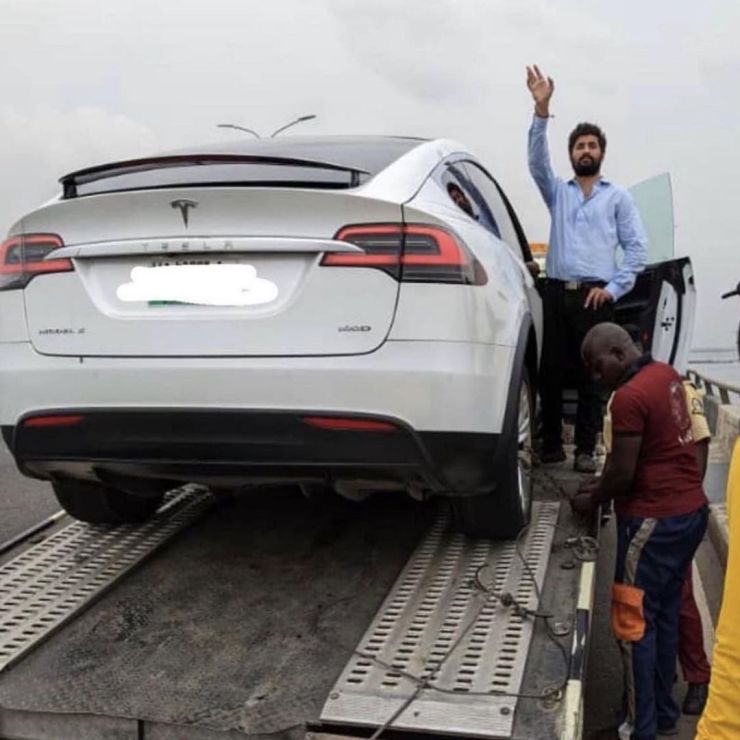
I pity this car owner who forgot to charge his Tesla  before leaving home in Lagos. The car died on the 3rd Mainland Bridge and had to be towed. Note that this is not a problem of Tesla running out of electrons to keep going because of non availability of charging stations, the real issue here is that many people just forget to charge.

Tesla and other EV (electric vehicle) makers need to invest in the human aspect of using their products.

If you drive an EV, here is one tip that may help: program your phone to send a reminder every 3 days depending on your mileage/trip. Yes, don’t just rely on those dashboard indicators because some people do forget. You need something that interrupts your sequence and tells you to go and recharge.

Of course, if your life is run in a way that you cannot see those warnings, I will suggest you hire a driver and stop driving as you can put others at risk.

Remember: unlike gasoline where someone can bring the fuel in a can to refuel your car, for EVs, the only option is to tow the car since charging stations are not portable!

Comment on LinkedIn Feed

Comment 1: Respectfully Prof Ndubuisi Ekekwe, I want to beg to defer from this comment: “Tesla and other EV (electric vehicle) makers need to invest in the human aspect of using their products.”

As much as Apple, Samsung, Teckno, etc., does tell us to charge our mobile phones nor remind us to because usage differs, I don’t see why Tesla and other EV makers need to invest in the human aspect of using their products.

The responsibility and accountability is on us based on usage.

I 100% agree with your suggestions that users should set a reminder on their phones or hire/get a driver.

IMHO.

Response 1: Every manufacturer, infact product designer should “invest” in the human aspect of using their product.

It’s more like a KPI issue for me.

If your brand doesn’t find that investment worthy, I walk away from it.

Response 2: I agree with you and Prof. Such Investments further build and increase your “brand trust” in the emotional bank account of the customers and others within its value chain…(and other discerning bystanders)

I feel that there should be investments in such as EVs come with a totally different usage mind set… not only about the charging aspect.

Africa and the developing world would need “out of the box investments” going into the future especially as we get more early adopters witout commiserate on-the-ground supporting infrastructure – remember, the governments of the originating EVs have a timeline for phasing out non-EVs over there and that would pose a challenge for us: dumping grounds for non EVs etc

I remember the stories of how a great and popular car company we “rode to school in etc???” lost its market and value share when (amongst others) the knowledge gap between its older versions and the modern ones grew wider – with little or no support to bridge that gap etc.

Investments towards increasing awareness and knowledge on “What, Why, When, Where and How” of products and services (especially disruptive ones) is VERY worthwhile & ensures the brand’s sustainability and respect for it!

Response 3: Recently studied the story of Burberry who were almost phased out of the market because among other things they began to loose their place at the heart of the customer.

Among the transformation efforts driven by the then CEO Angela Ahrendts was re-connecting with the customer. According to her, “We established strong sales and service programs to put #product #education front and center.”
China’s Tech Crackdown Erases $80 Billion in Personal Wealth of Tech Tycoons

0
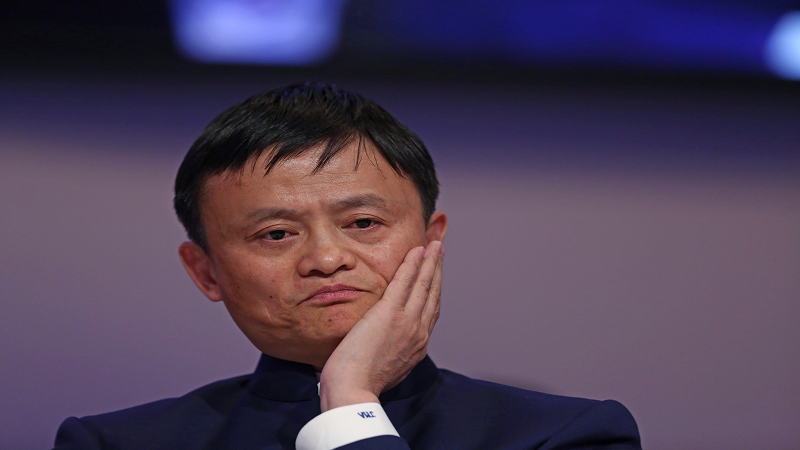
Alibaba Jack Ma

The consequences of China’s tech crackdown have left an indelible mark on its economy, wiping off billions of dollars as the tech industry comes under a new regulatory framework.

Beijing, keen on bringing the burgeoning internet industry under control, outlined new regulatory policies which have impacted all sectors of the internet market, from fintech to edtech.

As expected, the impact of the crackdown did not stop at depleting the value of Chinese tech companies, it also extended to individual wealth of the country’s tech top guns. Apart from ByteDance founder Zhang Yiming, who has managed to avoid all forms of indictment by the authorities, others have paid dearly with their personal fortune.

Bloomberg reports below that many of China’s billionaires have lost their places in the Billionaires Index.

The country’s 10 richest tech tycoons lost $80 billion in combined net worth in 2021, according to the Bloomberg Billionaires Index. The drop represents almost a quarter of their total wealth and is the largest one-year decline since 2012, when the index started tracking the world’s richest people.

Pinduoduo Inc. founder Colin Huang lost the most this year — $42.9 billion, or two-thirds of his fortune — as shares of the e-commerce platform plunged nearly 70%. Alibaba Group Holding Ltd’s Jack Ma, who has been keeping a low-profile since authorities clamped down on his sprawling business empire, has seen his wealth cut by about $13 billion.

In the weeks before Didi’s U.S. listing in June, investors snapped up stakes in secondary-market trades, pushing the ride-hailing giant’s valuation to $95 billion and sending the value of founder Cheng’s stake to $6.7 billion.

The euphoria was short-lived. The Beijing-based company’s shares have plummeted more than 60% since Chinese officials announced an investigation and asked it to delist from the New York Stock Exchange, leaving Cheng’s fortune at $1.7 billion.

Increased antitrust scrutiny from Chinese regulators has become increasingly common since the surprising halt of Ant Group Co.’s initial public offering last year. Tech companies including Alibaba, Tencent Holdings Ltd., Meituan and Pinduoduo have seen their once lofty valuations trimmed after being fined for reasons ranging from monopolistic practices to disrupting market orders to under-reporting deals.

‘Best Days’

China is also paying more attention to the so-called VIE structure — a loophole long used by the country’s technology industry to get past some government restrictions and raise capital from foreign investors. Uncertainty prevails even after China unveiled sweeping regulations governing overseas share sales by the country’s firms, threatening to amp up scrutiny over IPOs abroad that had proceeded virtually unchecked for two decades.

At the same time, the Securities and Exchange Commission this month announced its final plan for a new law that mandates Chinese companies open their books to U.S. scrutiny or risk being kicked off the New York Stock Exchange and Nasdaq within three years. That could mean hundreds of Chinese companies delisting from the U.S. markets and relisting in Hong Kong or mainland China.

“The best days for China’s tech sector are behind us for now,” said Chen Zhiwu, director of the Asia Global Institute at the University of Hong Kong. “Without access to American capital markets, the history of China’s tech sector would have been very different.”

Zhang Yiming is a rare Chinese internet tycoon to see his fortune grow this year, gaining $19.5 billion based on a valuation in a SoftBank Group Corp. filing this year. That’s partly due to his keeping the parent of TikTok, a closely held company, insulated from the swings of market turbulence. But Zhang has also strived to keep a low-profile during the regulatory crackdowns. In May, he announced he was stepping down as chief executive officer and then quit the board last month.

Many tech executives have made similar moves. Su Hua, co-founder of livestreaming app Kuaishou Technology, ceded the CEO role in November only nine months after the company’s IPO in Hong Kong. In September, JD.com Inc. named a new president, saying that Chairman Richard Liu will focus on long-term strategies.

Strategizing to fit into the new regulatory framework has become a survival technique that most of the companies are adopting. Beijing is adamantly pushing its regulatory goals in addition to President Xi’s newly introduced “common prosperity”, not minding the economic consequences.

Investors are becoming increasingly wary of the turbulence the regulatory crackdown is unleashing on the market, greatly limiting their willingness to put money in Chinese companies. As the situation spills over into the near future, Chinese tech companies and their billionaire founders are bracing up for further losses.

In 2022, Master The Victory of Time

0

There is no greater liberation than owning your TIME, and no great success has been achieved without knowing that time is scarce even in its limitless form. But managing time does not mean spending less time on something; it’s simply knowing what to spend time on.

Do not be like the lifeless feather which when tossed into the stream wanders wherever the stream current moves it. Be like the dragonfly which even though enjoying the mild current, defines its path. Master the victory of time.

Determine to OWN your time and control the path of 2022. I wish you a great NEW YEAR ahead.

Master The Victory of Time

2022 is the Year of Accelerated Entrepreneurial Growth in Nigeria

0

2022 is the Year of Growth in Nigeria. I am feeling the indicators everywhere. There are massive shifts after sectors. Yes, there is abundance in the future and diasporas are increasingly investing in the homeland, fueling the power of entrepreneurial capitalism.

Innovators will have those first $30,000 or $50,000 to begin new missions on fixing frictions which exist in our markets. Open your mind, do not allow dogmas of disbelief to cloud your awareness and observation on emerging patterns and opportunities; tomorrow has a promise.

No matter what you are doing, leading, servicing, working or founding, let’s put our best efforts for the nation. A working Nigeria is good business for everyone. #BeReady4Year2022.

At Tekedia Institute, we will provide the tools to make that 2022 super-amazing. Early bird registration for Tekedia Mini-MBA (Feb 7 – May 7, 2022) ends tomorrow Friday. Begin here to unlock the early benefits.

Revisiting Babatunde Fashola’s Gimmick On 2023

0

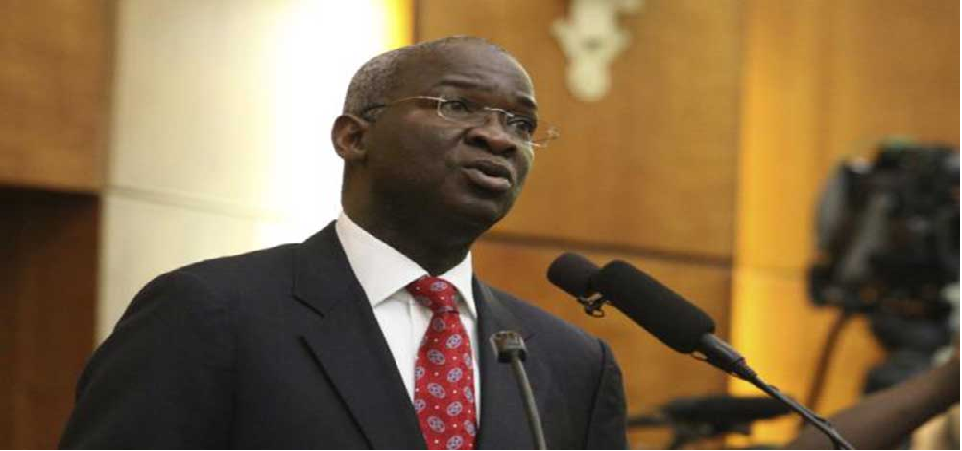
On Thursday, 25th October, 2018, the erstwhile Lagos State Governor and present Minister of Works and Housing, Mr. Babatunde Fashola enjoined his people of the Nigeria’s South-West Zone to vote for President Muhammadu Buhari in the 2019 elections towards guaranteeing a return of power to their zone in 2023.

The minister tendered this in Ibadan, the Oyo State capital at a special town hall meeting on infrastructure organized by the Federal Ministry of Information and Culture headed by Alhaji Lai Mohammed in collaboration with the National Orientation Agency (NOA).

Alhaji Lai led three other ministers including Fashola as well as the then Ministers of Transportation and Water Resources in the persons of Messrs Rotimi Amaechi and Suleiman Adamu, respectively, to the meeting which had in attendance key stakeholders from the area.

Mr. Fashola opined that besides the massive investment by the Buhari-led government on infrastructure across the country, South-West in particular, the zone would benefit politically by re-electing Buhari at the 2019 polls.

He stated in Yoruba language “Do you know that power is rotating to the South-West after the completion of Buhari’s tenure if you vote for him in 2019? A vote for Buhari in 2019 means a return of power to the South-West in 2023. I am sure you will vote wisely.”

It wasn’t news that on several occasions, some leaders of the All Progressives Congress (APC) in the South-East had boasted that President Buhari would be handing over power to the zone in 2023 if he gets votes from the people of the area at the 2019 Presidential election.

By the statement from Mr. Fashola, he had inadvertently concurred with the line of action of his predecessor, Chief Bola Tinubu. Prior to the outing, the latter had been putting up behaviours that indicated he was aspiring to take over power from President Buhari. His body language suggested he’s warming up to succeed the sitting president whenever his service expires.

It’s quite intriguing that Mr. Fashola never minded the political implications of such an utterance before letting it out. This implied that the people of the South-West under the auspices of the APC cannot afford to allow any other zone or region to succeed Buhari when he bows out from Aso Rock after the expiration of his second term in office.

If my thought is as good as yours, then you would agree with me that the APC’s gladiators of the South-East extraction have been deceiving themselves by going about telling their kinsmen and beyond that power would freely return to them after the tenure of Buhari.

One may even assert that the aforementioned set of people isn’t only deceiving but making ‘fool’ of itself. This is so, because, the way and manner they parade themselves as regards who, or which zone, succeeds Buhari appear as if a Memorandum of Understanding (MOU) had already been reached and duly signed by the overall leadership of the APC.

This categorically informs that the Igbos need to wake up from slumber. It’s indeed high time they began thinking of how to become more politically aware in Nigeria’s sphere. It’s obvious that overtime the people from the Igbo nation have been used as sacrificial lamb whenever it calls for acquiring power within the country’s political terrain.

They must realize to the fullness that power is taken, not given. No rational politician ought to expect power, no matter how lowly placed, to be granted or released to him/her on a platter of gold.

Everyone is expected to ‘fight’ towards acquiring power or assuming any political post. Thus, one who believes that such a position would willingly and freely be ceded to him is simply daydreaming.

However, Mr. Fashola would have at least considered the consequences of such an announcement especially at the era when the ruling party was making frantic efforts to remain in power. Also, acknowledging that the major opposition party – the People’s Democratic Party (PDP) – had been damn prepared to reclaim the country’s seat of power, which they regrettably vacated in 2015.

Mr. Fashola, therefore, ought to have understood that such an avowal was liable to make the APC massively lose its prospective voters, particularly from the South-East. He should have realized that it is a sentence that had the tendency of causing the ruling party a grievous harm in the nearest future.

Having made the statement in vernacular, he might had thought that outsiders wouldn’t take note of it, forgetting the country at large is at the moment in a heat period regarding politics, hence an average Nigerian is currently far more socio-politically aware than he/she was.

The utterance in question may have been erroneously and carelessly tendered by the honourable minister, but the point remains that it ought to be considered as an eye-opener by the members of the APC of the Igbo extraction. Even if it’s eventually retracted, it had already sent the message being required by the Igbos at such a critical time like this.

Notwithstanding, whatever the case might be, it’s time our politicians started being very mindful of what they utter in the public domain especially when campaigning for votes.