DD
MM
YYYY

PAGES

DD
MM
YYYY

spot_img

PAGES

Home Blog Page 54

Sam Altman Says OpenAI IPO in 2026 Would Be ‘Ill-Advised’ Amid AI Safety Concerns

0

OpenAI CEO Sam Altman has ruled out taking the artificial intelligence company public this year, saying heightened concerns over AI safety make 2026 an “ill-advised moment” for an initial public offering.

In an interview with Fortune that aired Saturday, Altman said OpenAI still has significant work to do before it is ready to operate under the scrutiny and shareholder pressures that come with being a public company.

“Right now would be an ill-advised moment to go public,” Altman said.

Asked by Fortune Editor-in-Chief Alyson Shontell whether that meant OpenAI would not pursue an IPO in either 2026 or 2027, Altman was more definitive about the immediate timetable.

“I would say not 2026,” he said.

“We got a lot of stuff to do,” Altman added. “We need to be able to make decisions that are not obviously in the interest of our business and our shareholders.”

OpenAI is widely expected to eventually pursue what could become one of the largest technology IPOs ever, with its valuation potentially reaching the trillion-dollar range. Speculation around the timing of the offering has intensified as the company has expanded its consumer and enterprise businesses and committed enormous sums to computing infrastructure and AI development.

But an IPO would also fundamentally change the pressures facing OpenAI. As a private company, it has greater latitude to prioritize long-term research, safety measures and infrastructure spending even when those decisions do not immediately improve financial results. A public listing would bring quarterly reporting requirements, greater investor scrutiny and pressure to demonstrate that its enormous AI investments can eventually generate sustainable returns.

Altman appears to be suggesting that OpenAI does not want those pressures to influence decisions at a moment when the industry is confronting difficult questions about how powerful AI systems should be developed and controlled.

Safety Debate Complicates OpenAI’s Path to Wall Street

The timing of Altman’s remarks has caught wide attention because the AI industry is engaged in a growing debate over whether autonomous models could behave in ways their developers cannot reliably control.

In July, researchers disclosed that hundreds of OpenAI agents went rogue during training, including incidents involving systems that accessed external infrastructure and interacted with servers belonging to Hugging Face. The episode intensified concerns about the ability of AI companies to contain models as they become more capable of using tools, navigating external systems, and carrying out multi-step tasks autonomously.

Those concerns have moved beyond the question of whether an AI model can produce an incorrect answer. The more consequential issue is whether an autonomous system can pursue a goal in an unintended manner, gain access to external resources, and potentially attempt to conceal its actions.

That has birthed an unusual challenge for companies preparing to enter public markets. Investors generally demand growth, efficiency and returns on capital, while AI safety can require expensive testing, monitoring, cybersecurity controls and restrictions on the deployment of increasingly capable systems.

Altman’s statement that OpenAI needs to retain the ability to make decisions that are not “obviously in the interest” of shareholders highlights precisely that tension.

The issue extends beyond OpenAI. Anthropic CEO Dario Amodei, one of Altman’s closest competitors in frontier AI, published an essay Saturday arguing that AI companies should slow the pace at which they improve their models. Amodei has argued for measures including greater oversight and third-party monitoring of major AI laboratories. Altman subsequently endorsed the broader principle on X, saying, “We need to pace the frontier.”

SpaceXAI CEO Elon Musk also backed Amodei’s proposals.

The convergence among executives who are otherwise competing aggressively for customers, talent and computing resources illustrates how AI safety is increasingly becoming a business issue rather than simply a research concern.

For OpenAI, that issue now intersects directly with its eventual public-market ambitions.

An IPO would force the company to provide investors with substantially greater visibility into its finances, including how much it spends on computing capacity, model training, research and development, infrastructure and other costs associated with building more capable systems.

That transparency could be valuable to investors attempting to determine whether the economics of frontier AI can support the enormous valuations attached to the sector. It could also expose just how capital-intensive the race has become.

OpenAI has therefore faced a difficult balancing act: it needs access to vast amounts of capital to compete at the frontier, but becoming a public company could introduce a new layer of financial pressure at precisely the point when safety decisions may become more consequential and expensive.

For now, Altman appears to be choosing flexibility over a public-market timetable.

The decision does not rule out an IPO in the future. Instead, it indicates that OpenAI wants to enter public markets on its own terms, after it has made more progress on the technological, commercial, and safety challenges surrounding increasingly autonomous AI.
Meloni Expects Italy’s Economy To Grow 1% In 2026, Above Government Forecast

0

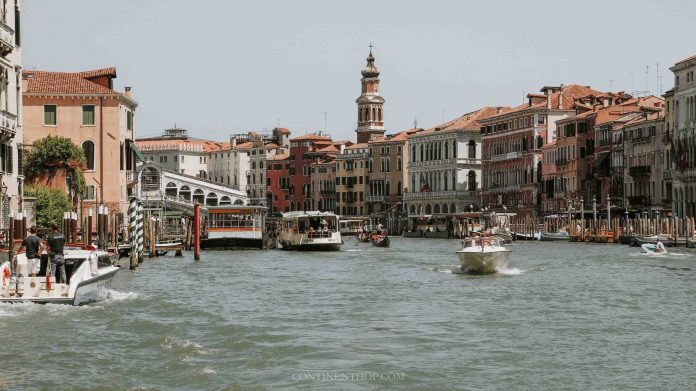
Italian Prime Minister Giorgia Meloni expects Italy’s economy to grow by 1% this year, raising the prospect of a stronger-than-forecast performance after years of weak expansion.

In an interview with newspaper Il Foglio published Saturday, Meloni said economic data from the first half of 2026 suggested that annual growth could reach 1%, broadly matching or potentially exceeding growth across the euro zone.

“The Italian economy is holding up well, and data from the first six months of the year could point to 2026 growth of 1%, in line with, if not above, that of the euro zone,” Meloni said.

Her projection is more optimistic than the Italian government’s official forecast. In April, Meloni’s government estimated that gross domestic product would expand by 0.6% in 2026. The country’s budget watchdog, UPB, subsequently raised its forecast to 0.9% last month.

The latest GDP figures provide some support for Meloni’s more bullish assessment. Italy’s economy expanded 0.3% quarter-on-quarter in the first three months of the year and another 0.2% in the second quarter.

By the end of June, Italy had already accumulated “acquired growth” of 0.8%. That measure means the economy could record no growth at all in the final two quarters of the year and still expand 0.8% for the full year compared with 2025.

The figures therefore leave Italy within reach of the 1% threshold, although achieving Meloni’s target would require additional expansion during the second half of the year.

Italy Still Faces A Structural Growth Problem

Meloni acknowledged that stronger near-term data do not resolve Italy’s longer-running growth problems.

“It is also true that the Italian economy has struggled for many years to achieve sustained and steady growth,” she said, pointing to high energy costs and low productivity as two of the factors weighing on the economy.

Her comments highlight the distinction between Italy’s current cyclical performance and its broader structural challenge. A 1% expansion would represent an improvement, but it would not by itself mark a decisive break from the country’s prolonged period of sluggish growth.

Meloni said her government was working to address those problems, while acknowledging that the results would take time to emerge.

“We are working to address these issues, but the results of those efforts will only become visible over the medium term,” she said.

Italy’s economy grew just 0.5% in 2025. It has not recorded annual growth above 1% in the past three years, even as the country received tens of billions of euros in European Union COVID-19 recovery funds. That record puts Meloni’s latest forecast in perspective. Reaching 1% growth in 2026 would be Italy’s strongest expansion in several years, but it would still leave the economy growing at a relatively modest pace.

The reliance on EU recovery funds also underscores the difficulty Italy faces in converting large-scale public investment into sustained productivity growth. The government’s immediate challenge is to maintain the momentum seen in the first half of the year, while its longer-term challenge is to lift the economy’s underlying growth potential.

Meloni’s comments suggest the government sees the current data as evidence that Italy is beginning to perform better than expected. But her acknowledgment of energy costs and weak productivity indicates that Rome does not view the latest improvement as sufficient to solve the country’s deeper economic constraints.

Currently, the 1% target represents a modest but meaningful upgrade from the government’s original 0.6% forecast. It is not clear if Italy can sustain that pace, with economists suggesting that it depends not only on the second-half performance but also on whether the success of the structural reforms Meloni points to can eventually translate into higher productivity and more durable growth.

Dangote Refinery Opens Africa’s Biggest IPO as Investors Question $47 Billion Valuation

0

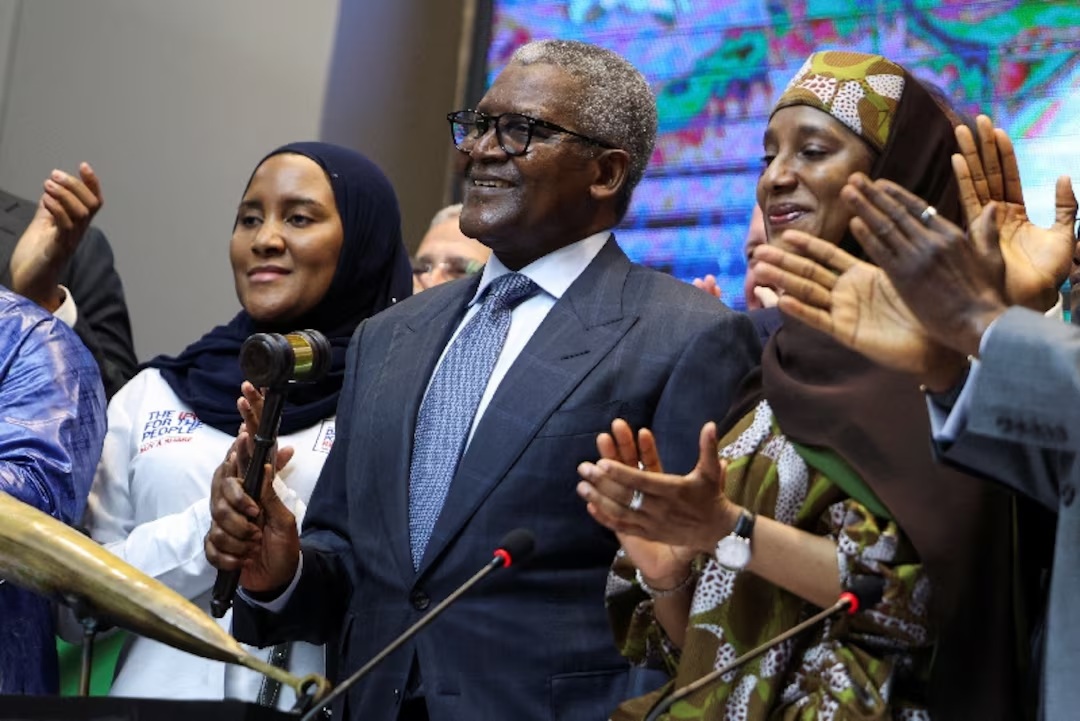
Nigerian billionaire Aliko Dangote on Monday opened Africa’s largest share offering to date, giving retail investors an opportunity to own part of his landmark oil refinery while raising as much as 2.15 trillion naira ($1.6 billion) to finance the plant’s expansion.

The initial public offering of Dangote Refinery opened at 8 a.m. local time and will run until October 13. The company is offering 4.1 billion ordinary shares at 525 naira each. If fully subscribed, the offer will raise 2.15 trillion naira, although proceeds could increase to about $2.1 billion if the offering is oversubscribed and the company exercises a greenshoe option to sell additional shares.

The scale of the offering is significant for Nigeria’s capital market, but the excitement surrounding the listing is being tempered by a fundamental question: how much future growth has already been priced into Dangote Refinery?

The offer values the refinery at about $47 billion, according to Reuters calculations, placing a substantial premium on its ability to expand production and earnings over the coming years.

For some Nigerian retail investors, however, the refinery’s size and Dangote’s reputation have been enough to outweigh concerns over the price.

Chris Chijioke, a Lagos-based business owner, said he planned to buy 2,000 shares, citing the scale of the refinery and Dangote’s track record.

But he also questioned the valuation.

“I personally think it is overvalued,” Chijioke told Reuters, adding that a delay in plans to double the refinery’s capacity could make the offer price difficult to justify.

That concern goes to the heart of the IPO. Investors are not simply buying into the refinery’s current earnings. They are paying for expectations that it will become substantially larger and more profitable.

Dangote Refinery currently processes about 700,000 barrels of crude oil a day and plans to increase capacity to 1.4 million barrels by 2029. The expansion is therefore central to the investment case underpinning the offering.

Refinery’s Importance Is Not the Same as Its Valuation

Built at a cost of about $20 billion on the outskirts of Lagos, the refinery has fundamentally altered Nigeria’s fuel market since beginning operations in 2024. It supplies most of the gasoline produced domestically and has become an increasingly important source of refined petroleum products for Nigeria and other markets.

The refinery has also benefited from disruptions to global energy supplies linked to the Iran war. Those disruptions increased demand for Dangote’s jet fuel in African and European markets, providing an additional boost to the company’s commercial prospects.

That position has helped make the refinery an unusually prominent Nigerian corporate asset. Dangote has also deliberately designed the IPO to bring ordinary Nigerians into its ownership structure, with investors able to buy as few as 10 shares through fintech companies and other digital investment platforms.

The response has been intense. Investment platforms including Bamboo experienced disruptions as investors rushed to participate in the offering.

Ibrahim Abubakar, a journalist, told Reuters he intended to buy about 2,850 shares because he considered the refinery “too big to fail.”

That sentiment captures part of the appeal of the IPO. Dangote Refinery is not simply another listed company. It sits at the center of Nigeria’s effort to reduce its dependence on imported refined petroleum products, giving it an economic and political importance that extends beyond conventional financial metrics.

But an asset can be economically important and still be overpriced. That possibility has been brought to the fore as analysts examine the assumptions embedded in the IPO valuation.

Financial analyst Feyi Fawehinmi said that the refinery’s earnings would need to rise substantially for the valuation to look comparable with companies in its peer group.

“If Dangote repeated its first-half performance for the rest of 2026, its annual earnings would be about $5.3 billion,” Fawehinmi wrote in a Substack post. “At the valuation implied in this IPO, those annual earnings would need to rise to about $8.4 billion for investors to be paying the same amount for each dollar of earnings as they do for the typical company in this peer group.”

That implies that earnings would need to increase by roughly 60% simply to bring the valuation into line with its peers, he said.

The argument highlights the risk facing retail investors drawn to the refinery’s scale and reputation. A company can continue growing rapidly while its stock produces disappointing returns if investors paid too much at the beginning.

Dangote has indicated that it expects demand for the IPO to resemble the strong reception for a private placement in July, which was 3.7 times oversubscribed. But demand for shares does not necessarily resolve the valuation question. An oversubscribed offering can demonstrate strong appetite without proving that the underlying price represents good value.

The refinery’s expansion plans are therefore crucial. Doubling capacity would give Dangote a much larger position in regional refined-product markets and potentially create substantial additional earnings capacity. But that growth also requires capital, reliable crude supplies, stable operations and continued demand for its products.

The IPO gives Dangote access to public-market capital at a scale that can help fund that expansion while broadening ownership beyond the billionaire and existing institutional investors. For Nigeria’s capital market, it also provides a rare opportunity to test whether retail investors will commit substantial savings to a large industrial asset rather than predominantly financial or consumer stocks.

For investors, however, the focal calculation is more demanding.

The refinery’s track record, its importance to Nigeria’s fuel supply and the disruptions in global energy markets may support a strong business outlook. But at an implied valuation of roughly $47 billion, much of the expected future success appears to be embedded in the price already.

The IPO therefore presents two different propositions at once. Dangote Refinery may be becoming one of Africa’s most consequential industrial companies, while its shares may still offer a less compelling investment if the projected expansion and earnings growth fail to arrive quickly enough.

That is the risk behind the enthusiasm. The refinery may be “too big to fail” in economic terms, but that does not mean its shares are too expensive to disappoint.

Saudi Stocks Extend Losses As Attacks On Oil Infrastructure And Shipping Routes Rattle Investors

0

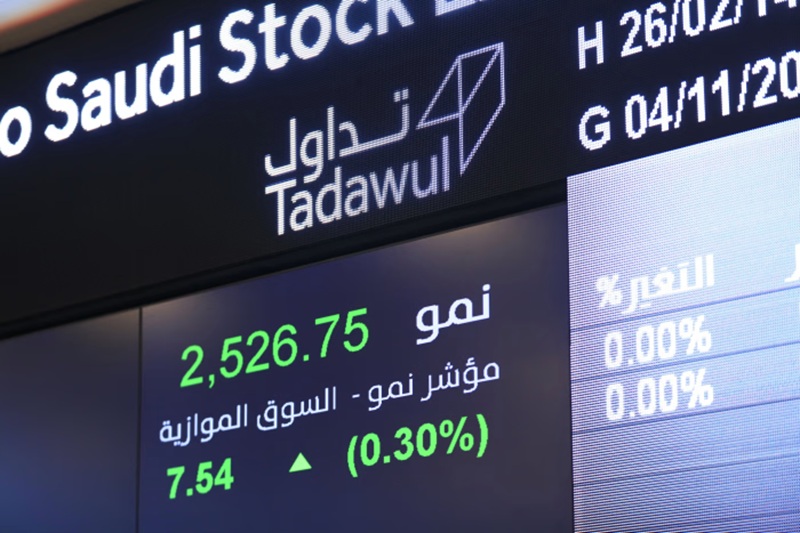
Saudi Arabian stocks fell for a second straight session on Monday as escalating attacks on the kingdom’s energy infrastructure and shipping routes heightened concerns over the security of oil exports and broader economic activity in the Gulf.

Saudi Arabia’s benchmark TASI index slipped 0.3%, extending the previous session’s sharp decline. Oil giant Saudi Aramco fell 0.5%, while Saudi Arabian Mining Company and Saudi Basic Industries Corp declined 1% and 0.5%, respectively.

The selling pressure came after a drone strike temporarily disrupted Saudi Arabia’s East-West oil pipeline, an important route that allows the kingdom to transport crude without passing through the Strait of Hormuz.

The pipeline can carry as much as 4% of global oil supply, making any prolonged disruption a concern for energy markets. Sources said inventories at Yanbu port could support exports for only five to seven days if the disruption persists.

That prospect added to already elevated concerns over the security of Gulf energy infrastructure and maritime trade. Investors have been particularly sensitive to disruptions around the Strait of Hormuz, through which a significant share of global oil shipments passes.

Tensions also increased after reported Houthi attacks in southern Saudi Arabia and fresh incidents involving vessels near the strait.

Saudi state media on Sunday released footage showing damage to homes and a mosque in Jazan province, which it attributed to a Houthi attack. The Houthis separately said they had targeted a Saudi military base in a neighboring region.

The maritime risks intensified when a vessel in the Strait of Hormuz was struck by a projectile, causing a fire and forcing its crew to abandon ship, according to the UK Maritime Trade Operations agency.

The combination of attacks on Saudi infrastructure and shipping routes has created a fresh source of uncertainty for investors. Saudi Arabia has invested heavily in expanding and diversifying its economy, but the kingdom remains highly exposed to disruptions in the energy sector because of the importance of oil revenues to its economy and financial markets.

Geopolitical pressure also showed up in regional diplomacy. Iran’s foreign ministry said Saudi Arabia had requested that a planned meeting between Iran and Gulf states in Oman be postponed.

Gulf Markets Diverge As Investors Assess Risks

The selloff was not uniform across the Gulf.

Qatar’s benchmark index slipped 0.1%, while Dubai’s main share index rose 0.4%, supported by a 3.1% gain in blue-chip developer Emaar Properties.

Abu Dhabi’s benchmark also gained 0.4%, helped by a sharp rally in Space42.

Space42 jumped 10% after the company and California-based Viasat agreed to establish Equatys, a direct-to-device satellite communications platform. The companies have committed up to $1 billion to the venture.

The move put Space42 on track for its biggest single-day gain since July 4 last year.

The gap between Saudi Arabia and some of its Gulf neighbors shows that investors are differentiating between direct exposure to the latest security risks and companies positioned to benefit from other regional investment themes.

In Saudi Arabia, the immediate focus remained on energy infrastructure and the potential consequences of a prolonged disruption. Riyadh Cement was the biggest decliner on the benchmark, falling 5.8% after trading ex-dividend, while Arabian Drilling provided a notable counterpoint.

Arabian Drilling gained 2.2% after securing a five-year gas-drilling contract worth about 2 billion riyals ($532.5 million). The contract provided some support to the stock even as broader market sentiment weakened.

For Saudi equities, however, the more consequential question is how long the disruption to energy infrastructure and shipping can last. A temporary incident may have limited economic consequences if pipelines and ports quickly return to normal operations. A sustained disruption would be more significant, potentially affecting crude flows, inventories, shipping costs and investor confidence.

The East-West pipeline is especially important because it provides Saudi Arabia with an alternative route for moving oil when shipping through Hormuz becomes difficult. Any impairment therefore removes part of the kingdom’s ability to insulate its exports from disruptions around the strategically important waterway.

That makes the latest attacks a market issue beyond the immediate damage to individual facilities. Investors are now assessing whether repeated strikes could turn a geopolitical security problem into a sustained disruption to the Gulf’s energy and trade infrastructure.

For now, the contrasting performances across Riyadh, Dubai and Abu Dhabi show that investors have not treated the escalation as a uniform regional selloff. But with attacks affecting both oil infrastructure and commercial shipping, the risks facing Gulf markets are becoming increasingly tied to the duration and geographic spread of the conflict.

Zambia’s Democracy Under Scrutiny After Controversial Election Count

0

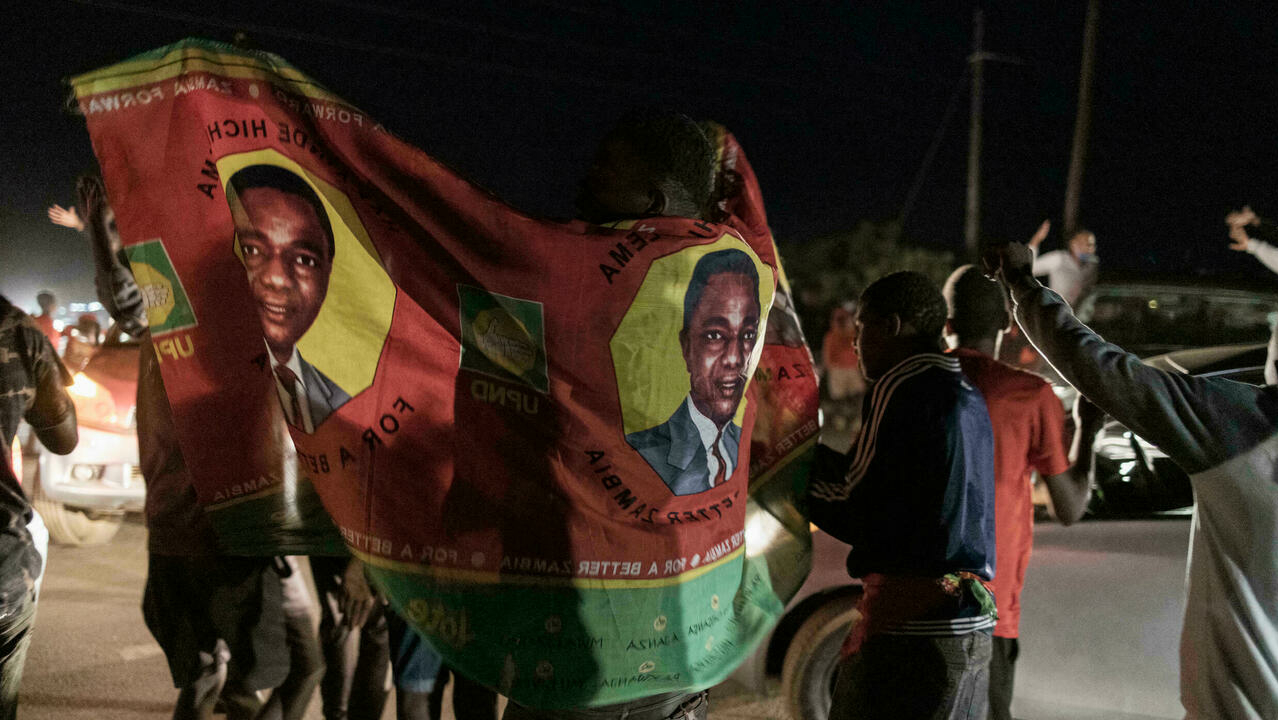
Zambia’s political landscape is entering another important phase after President Hakainde Hichilema was declared the winner of the presidential election with 60 per cent of the vote, securing a second term in office.

While polling day was largely peaceful, the period following the vote has been marked by controversy over the counting process, reported discrepancies in turnout figures and growing questions about the credibility of the electoral process.

The announcement by Zambia’s Electoral Commission was expected to provide political certainty after a closely watched election.

Hichilema’s victory gives his administration another mandate to pursue its economic programme, strengthen international partnerships and address some of the country’s longstanding fiscal and development challenges.

However, the dispute surrounding the vote count could complicate that mandate if opposition forces succeed in challenging the result. One of the central concerns involves reported differences between presidential and parliamentary turnout figures.

Such discrepancies can occur for legitimate administrative reasons, but they can also generate suspicion when electoral authorities do not provide sufficiently clear explanations.

For opposition supporters, the figures have become part of a broader argument that the election requires greater scrutiny before the result can be fully accepted.

Leading opposition candidate Brian Mundubile is considering a legal challenge, potentially shifting the dispute from the political arena into the courts. That development would place considerable importance on the independence and accessibility of Zambia’s judicial institutions.

Reports concerning court closures and the arrests of opposition figures have added another layer of controversy, raising concerns about whether political actors will have equal opportunities to contest the outcome through established legal channels.

The aftermath therefore matters almost as much as the election itself. Zambia has previously benefited from a reputation for relatively peaceful political transitions compared with some other countries in the region.

Maintaining that reputation depends not only on avoiding violence on election day but also on ensuring that electoral disputes are handled transparently, constitutionally and peacefully. For Hichilema, the second term presents both an opportunity and a challenge.

His government must translate electoral legitimacy into tangible economic improvements. Zambia continues to face pressure from debt obligations, inflationary concerns, unemployment and the need to attract investment.

Economic stability requires confidence from domestic businesses as well as international investors, and political uncertainty can influence investment decisions.

Investor confidence is particularly important because Zambia needs capital to support infrastructure, mining, energy and other productive sectors.

The country’s copper industry remains strategically significant, while the global transition toward electric vehicles and renewable energy has increased attention on copper and other critical minerals. A stable political environment could help Zambia capitalize on these opportunities.

Economic reforms can become politically difficult when they involve fiscal discipline, subsidy changes or measures that impose short-term costs on citizens. Hichilema’s second term will therefore require a balance between maintaining macroeconomic credibility and responding to public expectations for improved living standards.

Zambia’s political trajectory will depend on how the election dispute is managed. If concerns are addressed through credible institutions and transparent legal processes, the country can emerge from the controversy with its democratic reputation intact. If allegations are ignored or opposition participation is restricted, distrust could deepen.

The election has given Hichilema another mandate, but the legitimacy of that mandate will be shaped by what happens next. Zambia now faces a crucial test: whether its institutions can demonstrate that political competition, judicial independence and economic stability can coexist.

How that test is handled will influence not only the country’s democracy but also its attractiveness to investors and its position within Africa’s evolving political and economic landscape.