

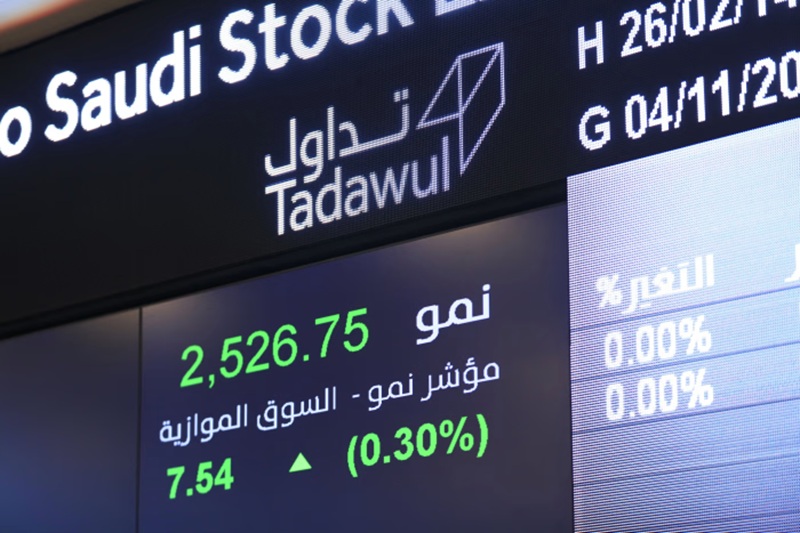
Saudi Arabian stocks fell for a second straight session on Monday as escalating attacks on the kingdom’s energy infrastructure and shipping routes heightened concerns over the security of oil exports and broader economic activity in the Gulf.
Saudi Arabia’s benchmark TASI index slipped 0.3%, extending the previous session’s sharp decline. Oil giant Saudi Aramco fell 0.5%, while Saudi Arabian Mining Company and Saudi Basic Industries Corp declined 1% and 0.5%, respectively.
The selling pressure came after a drone strike temporarily disrupted Saudi Arabia’s East-West oil pipeline, an important route that allows the kingdom to transport crude without passing through the Strait of Hormuz.
Register for the next Tekedia Mini-MBA.
Register for Tekedia AI in Business Masterclass.
Join Tekedia Capital Syndicate and co-invest in great global startups.
The pipeline can carry as much as 4% of global oil supply, making any prolonged disruption a concern for energy markets. Sources said inventories at Yanbu port could support exports for only five to seven days if the disruption persists.
That prospect added to already elevated concerns over the security of Gulf energy infrastructure and maritime trade. Investors have been particularly sensitive to disruptions around the Strait of Hormuz, through which a significant share of global oil shipments passes.
Tensions also increased after reported Houthi attacks in southern Saudi Arabia and fresh incidents involving vessels near the strait.

Saudi state media on Sunday released footage showing damage to homes and a mosque in Jazan province, which it attributed to a Houthi attack. The Houthis separately said they had targeted a Saudi military base in a neighboring region.
The maritime risks intensified when a vessel in the Strait of Hormuz was struck by a projectile, causing a fire and forcing its crew to abandon ship, according to the UK Maritime Trade Operations agency.
The combination of attacks on Saudi infrastructure and shipping routes has created a fresh source of uncertainty for investors. Saudi Arabia has invested heavily in expanding and diversifying its economy, but the kingdom remains highly exposed to disruptions in the energy sector because of the importance of oil revenues to its economy and financial markets.

Geopolitical pressure also showed up in regional diplomacy. Iran’s foreign ministry said Saudi Arabia had requested that a planned meeting between Iran and Gulf states in Oman be postponed.
Gulf Markets Diverge As Investors Assess Risks
The selloff was not uniform across the Gulf.
Qatar’s benchmark index slipped 0.1%, while Dubai’s main share index rose 0.4%, supported by a 3.1% gain in blue-chip developer Emaar Properties.
Abu Dhabi’s benchmark also gained 0.4%, helped by a sharp rally in Space42.
Space42 jumped 10% after the company and California-based Viasat agreed to establish Equatys, a direct-to-device satellite communications platform. The companies have committed up to $1 billion to the venture.
The move put Space42 on track for its biggest single-day gain since July 4 last year.
The gap between Saudi Arabia and some of its Gulf neighbors shows that investors are differentiating between direct exposure to the latest security risks and companies positioned to benefit from other regional investment themes.
In Saudi Arabia, the immediate focus remained on energy infrastructure and the potential consequences of a prolonged disruption. Riyadh Cement was the biggest decliner on the benchmark, falling 5.8% after trading ex-dividend, while Arabian Drilling provided a notable counterpoint.
Arabian Drilling gained 2.2% after securing a five-year gas-drilling contract worth about 2 billion riyals ($532.5 million). The contract provided some support to the stock even as broader market sentiment weakened.
For Saudi equities, however, the more consequential question is how long the disruption to energy infrastructure and shipping can last. A temporary incident may have limited economic consequences if pipelines and ports quickly return to normal operations. A sustained disruption would be more significant, potentially affecting crude flows, inventories, shipping costs and investor confidence.
The East-West pipeline is especially important because it provides Saudi Arabia with an alternative route for moving oil when shipping through Hormuz becomes difficult. Any impairment therefore removes part of the kingdom’s ability to insulate its exports from disruptions around the strategically important waterway.
That makes the latest attacks a market issue beyond the immediate damage to individual facilities. Investors are now assessing whether repeated strikes could turn a geopolitical security problem into a sustained disruption to the Gulf’s energy and trade infrastructure.
For now, the contrasting performances across Riyadh, Dubai and Abu Dhabi show that investors have not treated the escalation as a uniform regional selloff. But with attacks affecting both oil infrastructure and commercial shipping, the risks facing Gulf markets are becoming increasingly tied to the duration and geographic spread of the conflict.