

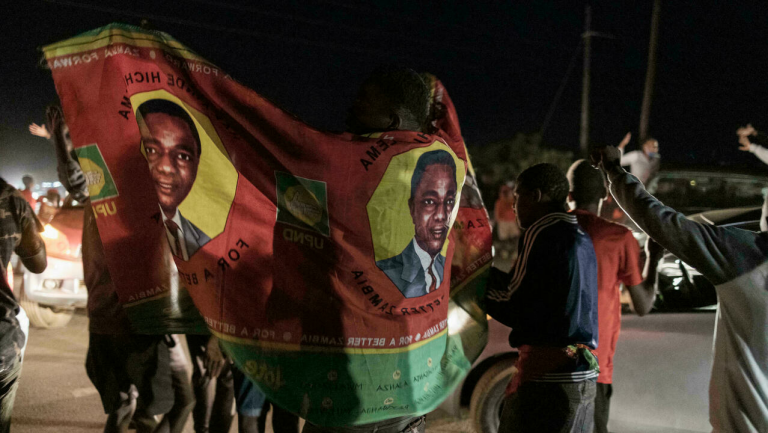
Zambia’s political landscape is entering another important phase after President Hakainde Hichilema was declared the winner of the presidential election with 60 per cent of the vote, securing a second term in office.
While polling day was largely peaceful, the period following the vote has been marked by controversy over the counting process, reported discrepancies in turnout figures and growing questions about the credibility of the electoral process.
The announcement by Zambia’s Electoral Commission was expected to provide political certainty after a closely watched election.
Hichilema’s victory gives his administration another mandate to pursue its economic programme, strengthen international partnerships and address some of the country’s longstanding fiscal and development challenges.
Register for the next Tekedia Mini-MBA.
Register for Tekedia AI in Business Masterclass.
Join Tekedia Capital Syndicate and co-invest in great global startups.
However, the dispute surrounding the vote count could complicate that mandate if opposition forces succeed in challenging the result. One of the central concerns involves reported differences between presidential and parliamentary turnout figures.
Such discrepancies can occur for legitimate administrative reasons, but they can also generate suspicion when electoral authorities do not provide sufficiently clear explanations.
For opposition supporters, the figures have become part of a broader argument that the election requires greater scrutiny before the result can be fully accepted.
Leading opposition candidate Brian Mundubile is considering a legal challenge, potentially shifting the dispute from the political arena into the courts. That development would place considerable importance on the independence and accessibility of Zambia’s judicial institutions.

Reports concerning court closures and the arrests of opposition figures have added another layer of controversy, raising concerns about whether political actors will have equal opportunities to contest the outcome through established legal channels.
The aftermath therefore matters almost as much as the election itself. Zambia has previously benefited from a reputation for relatively peaceful political transitions compared with some other countries in the region.
Maintaining that reputation depends not only on avoiding violence on election day but also on ensuring that electoral disputes are handled transparently, constitutionally and peacefully. For Hichilema, the second term presents both an opportunity and a challenge.

His government must translate electoral legitimacy into tangible economic improvements. Zambia continues to face pressure from debt obligations, inflationary concerns, unemployment and the need to attract investment.
Economic stability requires confidence from domestic businesses as well as international investors, and political uncertainty can influence investment decisions.
Investor confidence is particularly important because Zambia needs capital to support infrastructure, mining, energy and other productive sectors.
The country’s copper industry remains strategically significant, while the global transition toward electric vehicles and renewable energy has increased attention on copper and other critical minerals. A stable political environment could help Zambia capitalize on these opportunities.
Economic reforms can become politically difficult when they involve fiscal discipline, subsidy changes or measures that impose short-term costs on citizens. Hichilema’s second term will therefore require a balance between maintaining macroeconomic credibility and responding to public expectations for improved living standards.
Zambia’s political trajectory will depend on how the election dispute is managed. If concerns are addressed through credible institutions and transparent legal processes, the country can emerge from the controversy with its democratic reputation intact. If allegations are ignored or opposition participation is restricted, distrust could deepen.
The election has given Hichilema another mandate, but the legitimacy of that mandate will be shaped by what happens next. Zambia now faces a crucial test: whether its institutions can demonstrate that political competition, judicial independence and economic stability can coexist.
How that test is handled will influence not only the country’s democracy but also its attractiveness to investors and its position within Africa’s evolving political and economic landscape.