Finally, it has happened: Union Bank shifts hands. In March 2021, I predicted that Atlas Mara would not survive 2021 without selling its stakes in Union Bank. I had looked at their financials and concluded that it was hopeless going into 2022 without fixing its many paralyses via Union Bank disposal.
Union Bank wrote and dismissed the “rumours”. I shared here: “Union Bank Plc has updated me after the piece on a rumoured deal …. The bank has clearly noted that it was all rumour and nothing there. I have posted the full feedback. Please take note accordingly. Yet, I will not delete the piece …!”. (I do not write such insightful pieces these days to avoid making people feel bad. This one was easy as Atlas Mara was struggling and to become whole, it must sell assets – and Union Bank was the only important asset left.)
But today, the lender has put a notice: “Titan Trust Bank Limited (TTB) has become the majority shareholder in Union Bank of Nigeria Plc. This followed an agreement by Union Global Partners Limited, Atlas Mara Limited and other majority shareholders to divest 88.39 per cent shareholding in Union Bank to TTB….subject to regulatory approvals and other financial conditions, would upon completion transfer 89.39 percent of Union Bank’s issued share capital to TTB.”
The full press release below..
Chair, Union Bank, Mrs. Beatrice Hamza Bassey said:
“On behalf of the Board, we congratulate all the parties involved in reaching this phase of the transaction and the Board looks forward to supporting the next steps to ensure a seamless completion of the process following regulatory approvals. We are grateful to our current investors whose significant and consequential
investments over the past nine years facilitated the transformation of Union Bank, one of Nigeria’s oldest and storied institutions. Today, the Bank is well-positioned with an innovative product offering, a growing customer base of over six million and consistent year on year profitability. This is a solid foundation for our incoming investors to build on as we move into a new era for the Bank.”
Chair, Titan Trust Bank, Mr. Tunde Lemo, OFR said:
“The Board of Titan Trust Bank and our key stakeholders are delighted as this transaction marks a key step for Titan Trust in its strategic growth journey and propels the institution to the next level in the Nigerian banking sector. The deal represents a unique opportunity to combine Union Bank’s longstanding and
leading banking franchise with TTB’s innovation-led model which promises to enhance the product and service offering for our combined valued customers.”
In my ranking of capabilities for starting a tech startup, experience ranks behind passion, determination, intelligence and resourcefulness.
Modern digitech firms thrive on patterns, cushioned by mobile internet: more than 80% of the largest 10 run the same business model (aggregation).
At the start-up phase, there is limited core transferable experience from a CEO of BankA to a CEO of FintechA. However, at scale-up (massive growth phase), experience becomes extremely important as the company attains stability.
An inexperienced founder either makes way at scale-up (Google founders/Eric Schmidt) or brings in an experienced person (Mark Zuckerberg/Sheryl Sandberg). AsSamuel Ajiboyede noted, there are 3 phases at play: entrepreneurial leadership (at start-up), managerial leadership (at scale-up), and corporate leadership (at maturity).
Comment 1: Yes the hardest stage is at start up ..More than 50% fail in the first 5 years. All linked directly to experience. Most times only about 10-20% of the team has the requisite experience .
An inexperienced team makes executions harder. It takes a longer time to explain what the the vision ,the mission,strategy and consumer marketing tactics are . An inexperienced team pays attention to all the wrong subjects . They aren’t used to a cohesive work style . They are mostly trying to outdo each other; profitability and the customer is lost in the maze. After natural passion ,experience is the next key capability for a startup to thrive.
Comment 1b: I share the same view on this Moses Daniel Nwaokete although passion and intelligence and resourcefulness are adequate at start-up phase, experience cannot be underrated. There are many innovative Startups that did not sail above the initial phase due to lack of experienced people in handling vital aspects for day-to-day operations.
My response to both: Note that I wrote “startup”, not “small business”. That data you quoted lumped small businesses. The Nigerian government or World Bank may write that Nigeria has 4 million startups and that about x% fail; that is not true. Nigeria may not even have up to 5,000 startups. Real startups which have genes of scalability and growth will not fail in Nigeria at that percentage.
Now, if you look at real startups, using samples of those which we can refer to, the most successful ones were NOT started by those who have experiences in their sectors. Google boys did not work in advertising. Paypal “mafia” did not work in finance. Mark Zuckerberg did not work as a community organizer. Paystack boys did work not in finance. The Ulesson founder was not a teacher. In all these digitechs, experience in those sectors did not stop them.
But as they began to grow, they went and hired those with experiences in those areas. Check the top 10 digital startups, those who started them were NEVER employed in their sectors.
Comment 2: Professor Ndubuisi Ekekwe, the examples of Eric Schmidt and Sheryl Sandberg are spot on. At the beginning, passion is a necessary fuel for the innovations that start ups tend to being to the table. Once a business model has been established though and there are many moving parts, people with good MBA type education and business administration experience are often required to keep the ship sailing as required. Thank you.
Comment 3: Not to be a kill joys, but many a times, the discussions here tend to be biased towards digital only firms (in a way that focuses on software as a product firms, rather than digital only as a business model principle, eg. Xiaomi’s marketing strategy) while completely disregarding everything else that is obtainable within the vast expanse of the technology ecosystems and this kind of limits the discussions we’re able have.
Since the fundamental idea here is that the discussions revolve around technology innovations, it would be really helpful if a clear definition of a typical tech company is established as it pertains to this space so that we can adequately evaluate any adjustments we may need to make on our expectations and relate accordingly.
Eg, why would Nike have the guts to classify itself, a mere shoe brand, as a Tech Company? Why, on the other hand, would Tesla as a Tech Company have same or more idolising repute here as the likes of Google and Facebook even though it’s not an Aggregator like they are? Are the discussions to be niched to digital tech only or are they to be holistic, because presently, tech is largely FinTechs and Facebook? Can we have a taxonomy of tech companies as it pertains to this space?
My response:… when I make a point, I am always careful where necessary to classify. This particular construct applies to digital techs as noted. If you are starting a semiconductor business, you need experience. Data does not lie; most of the leaders in digital techs were started by those without prior experiences in the fields. But that does not apply to say semiconductors, etc.
Comment 4 : Does this movement or transition hold for Elon Musk? The man Musk can easily make nonsense of all the corporate management and leadership frameworks on show out there, yet still delivers and captures massive value, because he’s Musk! Ordinary rules don’t hold in his case, but you still need to pay attention when he speaks or tweets.
In my Nation of Entrepreneurs piece, we have builders, managers and experts; the builders pioneer or found, the managers step in as CEOs and C-suite band to advance and stabilize the mission, of course the experts create those products on offer.
Ingenuity doesn’t need experience, but to run things and bring others to work like a well choreographed band, you need experienced managers.
My response: Elon Musk is peerless. Not sure there is any reason to compare him with any human.
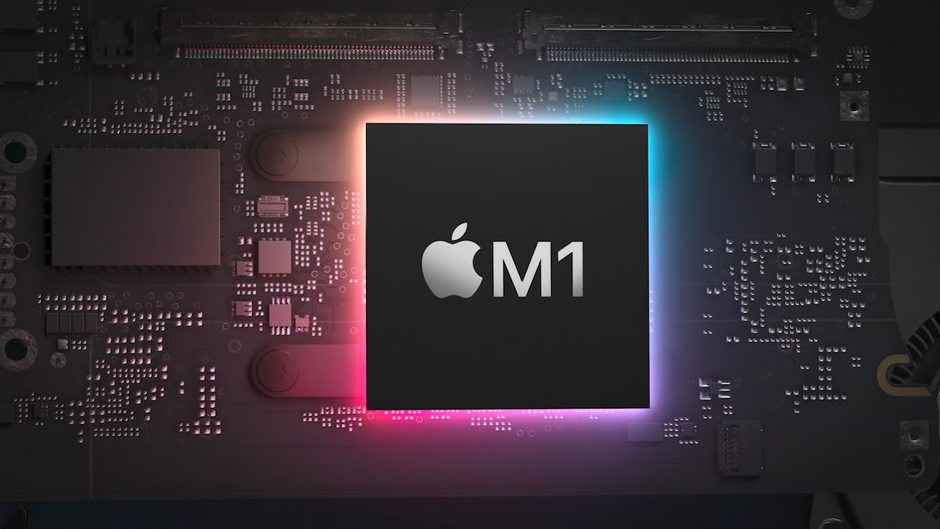
This is very interesting indeed: Apple has opened a big playbook to run its own semiconductor business by making some of the critical components it uses in its products,notes LinkedIn news. Of course, Apple has been designing some of its chips.
What is new here is that it is expanding into the auxiliary components like MODEM. Expect a big shift in the semiconductor sector since Apple is one of the most important clients to the likes of Qualcomm and Broadcom.
Apple is looking to hire dozens of engineers to develop its own semiconductors. The company is recruiting workers in Irvine, Calif., where major chipmakers, including providers Broadcom and Skyworks, have offices. The move furthers Apple’s ambitions to design its own technology, per Bloomberg. Two years after the tech giant began hiring engineers in San Diego, Calif. — the headquarters of Apple’s then-modem supplier Qualcomm — it built its own in-house modem. A similar trajectory would hurt Broadcom and Skyworks, which currently supply Apple with wireless chips.
Apple makes up a respective 20% and 60% of Broadcom and Skyworks’ revenue, Bloomberg reports.
The job listings are part of a broader push to open more satellite offices, enabling Apple to hire specialized workers who might not want to move to Silicon Valley.
What has been on the lips of every Nigerian and those genuinely interested in governance for the past few days is the president Buhari’s failure to assent “The Electoral Act Amendment bill”. The bill in summary seeks to resolve issues regarding the use and adoption of modern technologies in the electoral process; the use of electronic voting technologies and the transmission of election results from polling units and the bill also prescribes a particular mode of primary election which is direct primaries for political parties to choose candidates seeking elective offices from their political parties.
Everyone has been asking constitutional lawyers and students of Nigerian law the one million dollar question “if the president has the constitutional power to not assent every bill sent to him after the bill has gone through the rigorous legislative process and what’s the next line of action after the bill has been vetoed”.
This is what the law says:
After the bill was passed by the law makers, the bill was sent to the Mr. President for assent. The bill was sent to the presidency for assent on the 19th of November, 2021 and this opens the president’s 30 days window to either assent the bill or decline his assent ie, the president had up till 19th of the December to either assent the bill and pass it into law or reject the bill. Mr. President failed to do so and the one month window (30 days) the president had to pass the bill has closed.
The constitution of the federal republic of Nigeria, 1999 (as amended) provides in s.58(4) that the president of Nigeria has the period of 30 days to either assent or decline a bill sent to him by the legislative house. When the president declines to assent the bill he should communicate his reason(s) for refusal to assent the bill to the law makers.
Section 58 went further to provide in (5) that when the president fails to exercise this constitutional power of assenting a bill and passing a bill sent to him by the law makers into law for the period of 30 days as granted him the power by s.58(4), the National Assembly can and shall override that power of the president by passing the bill into law by themselves but by passing the bill again by two-third (2/3) majority.
Now, as you can see that the Mr. President has the power or either assent a bill or decline his assent to a bill and that power was granted him constitutionally in section 58(4) and the lawmakers also have the power to pass a bill into law when the president fails to assent a bill within 30 days and this power was constitutionally granted to the law makers by s.58(5).
The excerpts of s.58(4&5) of the constitution of the federal republic of Nigeria, 1999 (as amended) is hereby reproduced here for your perusal:
S.58(4. Where a bill is presented to the President for assent, he shall within thirty days thereof signify that he assents or that he withholds assent.
S.58(5. Where the President withholds his assent and the bill is again passed by each House by two-thirds majority, the bill shall become law and the assent of the President shall not be required.
Oracle has announced the acquisition of Cerner, a leading provider of digital information systems used to enable medical professionals to deliver better healthcare to individual patients and communities, in an all-cash tender offer worth about $28.3 billion.
The transaction is subject to regulatory approvals and is expected to close in calendar year 2022, as Cerner stockholders are expected to tender a majority of Cerner’s outstanding shares in the tender offer.
Oracle said the $28.3 billion is immediately accretive to Oracle’s earnings and will continue on a non-GAAP basis in the first full fiscal year. It is expected to contribute substantially more to earning in the second fiscal year and thereafter, the company said, adding that Cerner will be a huge additional revenue growth engine for Oracle for years to come as Oracle expands Cerner’s business into many more countries throughout the world.
“Working together, Cerner and Oracle have the capacity to transform healthcare delivery by providing medical professionals with better information—enabling them to make better treatment decisions resulting in better patient outcomes,” said Larry Ellison, Chairman and Chief Technology Officer, Oracle.
Oracle is a leader in cloud technology, driving digital modernization that has helped to lower the cost of cloud infrastructure and IT in many sectors.
Before venturing into the health sector with the acquisition of Cerner, Oracle covered industries such as Financial Services, Telecom, Utilities, Pharmaceuticals, Hospitality, Retail, Food & Beverage, Construction & Engineering, Manufacturing and Government. Oracle provides industry solutions that run the core operations for customers in the world’s largest industries.
On the other hand, Cerner is a leader in the healthcare IT industry with over four decades of experience in modernizing electronic health records, improving the caregiver experience, and streamlining and automating clinical and administrative workflows.
Both companies believe they complement each other and will work together to protect customer investments, transform healthcare and accelerate revenue growth.
“Healthcare is the largest and most important vertical market in the world—$3.8 trillion last year in the United States alone. Oracle’s revenue growth rate has already been increasing this year—Cerner will be a huge additional revenue growth engine for years to come as we expand its business into many more countries throughout the world. That’s exactly the growth strategy we adopted when we bought NetSuite—except the Cerner revenue opportunity is even larger,” said Safra Catz, Chief Executive Officer, Oracle.
Growing frictions in the healthcare industry present huge challenges to speed and efficiency of medical practitioners. A Mayo Clinic1 study quoted by Oracle says that physicians spend 1 to 2 hours on EHRs and desk work for every hour spent in face-to-face contact with patients, as well as an additional 1 to 2 hours of personal time on EHR related activities.
These companies believe, among other challenges, they work together.
“Oracle’s Autonomous Database, low-code development tools, and Voice Digital Assistant user interface enables us to rapidly modernize Cerner’s systems and move them to our Gen2 Cloud,” said Mike Sicilia, Executive Vice President, Vertical Industries, Oracle.
“This can be done very quickly because Cerner’s largest business and most important clinical system already runs on the Oracle Database. No change required there. What will change is the user interface. We will make Cerner’s systems much easier to learn and use by making Oracle’s hands-free Voice Digital Assistant the primary interface to Cerner’s clinical systems. This will allow medical professionals to spend less time typing on computer keyboards and more time caring for patients.”
Cerner’s acquisition is Oracle’s biggest transaction in 40 years. It also marks its ground-breaking move into healthcare.