DD
MM
YYYY

PAGES

DD
MM
YYYY

spot_img

PAGES

Home Blog Page 5428

The Stop and Search, and Impounding Vehicles by VIO officers is Illegal in Nigeria

11

Every state and city in Nigeria have men in orange uniform who are called Vehicle Inspection Officers. They are often mistaken to be the men of the Road Safety Corp but they are distinct from the road safety officers and they carry out distinct although overlapping duties with the men of the Road Safety Corps. 

Their duties according to their enabling  acts are highlighted to include:

  • Training and testing of applicants for Driver’s license 
  • Testing and training of applicants for Rider’s card 
  • Organizing seminars and public lectures. 
  • Carrying out inspection of vehicles involved in accidents 
  • Certification of driving schools 
  • Co-operating with other agencies to enforce traffic rules and regulations 
  • Providing accessible emergency services 
  • Co-operating with relevant agencies engaged in road safety activities or in the prevention 

of accidents on the highways 

  • Preparing and keeping statutory registers and a database of all certificates issued and revoked.

It is the position of the court that the functions and duties of the Vehicle Inspection Officers as clearly spelt out didn’t give them the power to carry out the duty of the judiciary like imposing punishments and impounding of vehicles of alleged traffic offenders.

They have been held to be acting above their power in many instances by the court, the latest of which is the 2021 fundamental rights enforcement suit no. HU/FHR/171/2021 filed by Edidiong Akpanuwa, Esq., the high court of Akwa Ibom state declared that the act of the Vehicle Inspection Officers (VIO) conducting stop and search and impounding peoples’ vehicle for alleged break of traffic rules is illegal and unconstitutional. The court in their resounding wisdom went ahead to state that Vehicle Inspection Officers (VIO) acting on the instructions of the state government cannot  in accordance with s.36 of the constitution of the federal republic of Nigeria (1999) and in every struct sense of it assume the duties of the judiciary to impose penalties and impound vehicles of motors users who they have alleged to have committed traffic offense.

They have the power to prosecute but they will be acting ultra vires when they impose penalties to alleged traffic offenders.

By the reason of this recent case, no Vehicle Inspection Officer has the power to impound any user’s car for any reason whatsoever and will be acting in illegality when they impose punishment to anybody for alleged breach of traffic offense.

Africa’s Empires of the Future And Owning A Piece of Leading Tech Startups

0

Two updates. (1) “SoftBank founder and CEO Masayoshi Son said the Japanese firm has invested about $14 billion over the past decade in India, making it the country’s largest foreign investor”. (2) “China is said to be drawing up a blacklist that will make it harder for new technology companies to raise foreign funding and list overseas, according to the Financial Times.”

People, I have good news for you: Africa welcomes investors and in the world of SoftBank, there is a way you can play. Through Tekedia Capital, a US-based operating entity which focuses on syndicating capital from people, companies, investment clubs, etc into tech-anchored companies, we will help you own a piece of the future global empires.

We invest in global companies and anywhere there is an opportunity.

We just concluded our Q4 2021 investment cycle and have opened for new members to join the syndicate ahead of the next cycle. The 4-cycle membership (i.e. four investment cycles) costs $1,000 or N550,000.

For prospective investors & startups looking for funds: capital@fasmicro.com

The Flutterwave Market And Nigeria’s Urgency for A Postal Service

1
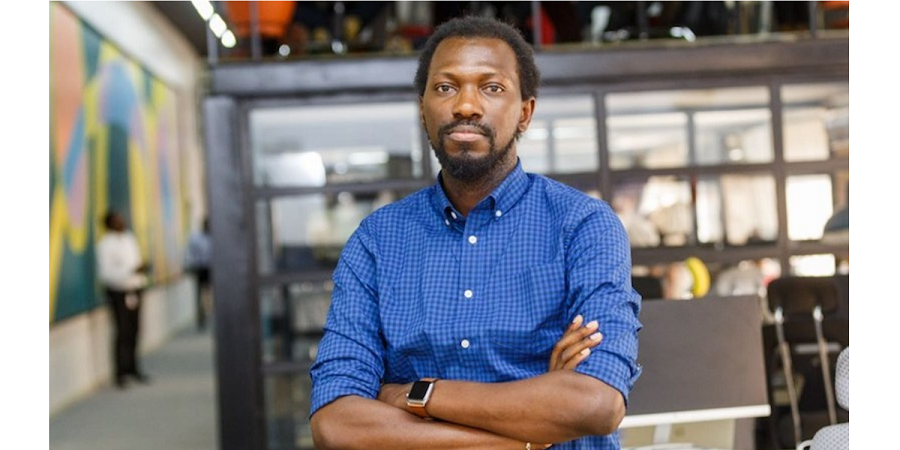
CEO of Flutterwave

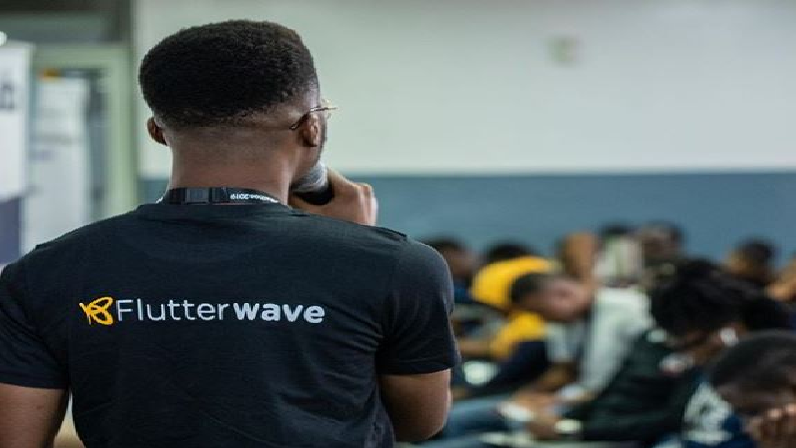
Brilliant piece by Samuel Nwite here: “Since attaining unicorn status in March, Nigerian fintech startup, Flutterwave, has through partnership and acquisition, onboarded other businesses – expanding its services in unified diversification. Now, the payment company is adding e-commerce to its brand of services.”

The paytech category-king has a chance but this B2C ecommerce business is never really going to move the needle that much until someone can figure out logistics at scale. And that is where I expect the nation to take action for the sake of its digital economy.

If I get Nigeria’s postal service up and lose $100 million yearly but that loss stimulates economic activity of say $50 billion  which brings cumulative VAT and tax of $200 million, it may not be a bad strategy. If I do that, rural Nigeria will get back to action and digital commerce will move faster. The tax is used to capture value at the edges while the NIPOST builds at the center of the smiling curve.

Something for Nigeria’s policy architects to think about.

Flutterwave’s E-commerce, Flutterwave Market, A New Bait for Investors

Flutterwave’s E-commerce, Flutterwave Market, A New Bait for Investors

0

Since attaining unicorn status in March, Nigerian fintech startup, Flutterwave, has through partnership and acquisition, onboarded other businesses – expanding its services in unified diversification. Now, the payment company is adding e-commerce to its brand of services.

The company, which has in a short period, distinguished itself as a leader in the African fintech market, announced the launch of its new e-commerce service, Flutterwave Market – an extension of its Flutterwave Store service – that will bring together a collection of merchant stores in one place.

The aim of the Flutterwave Market is to bring e-commerce a step closer to the brand’s merchants and their customers, helping merchants reach new customers and ultimately increase sales and revenue.

The company said the Market will make it easier for customers to shop from a range of Store merchants as well as enable customers to seamlessly shop across a variety of products from different businesses at their convenience.

The Flutterwave Market will display Flutterwave stores across various product categories and countries. It will include features such as product search, category display, and country filter to help enhance the shopping experience. The solution will display product categories such as men’s and women’s fashion, beauty, and food—in line with the preferences of most shoppers on Flutterwave Store. Shoppers will be able to order products and have the products delivered to their preferred locations.

Though some companies have struggled to run profitably in Nigeria’s e-commerce space, the market remains widely open for growth. With Nigeria’s booming population and the increase in digital inclusion, online shopping is set to become a multi-billion naira market in the near future.

Recent data from Statista shows that as of 2020, the number of digital buyers in Africa experienced an increase to 281 million. The number of e-commerce users in the continent is also estimated to grow significantly, reaching over 334 million in 2021. By 2025, they could be roughly 520 million, almost doubling the number in 2019.

Flutterwave has been leveraging its dominance in the African market to sell its other services, and will count on it to push its e-commerce services.

Olugbenga ‘GB’ Agboola, Founder and Chief Executive Officer of Flutterwave, said the aim is to take the Marketplace global.

“This is an exciting next chapter for the brand, and we’re excited to introduce this new marketplace experience to our merchants worldwide. Flutterwave Market is a fully functional e-commerce service that serves as a megastore where buyers can purchase a variety of goods from multiple sellers under one roof.

“Since the successful launch of Flutterwave Store, we have listened to our customers and acted on what they need to scale their businesses. Launching the new marketplace will transform their business, taking it to the next stage of growth. Flutterwave Market is for us a way to create endless possibilities for our Flutterwave Store users. We’re not merely aggregating existing stores, we’re positioning them to make more sales,” he said.

Flutterwave Store was launched in April 2020 with the aim of keeping the lights on for small businesses following lockdown due to the Covid-19 pandemic across various countries. The ecommerce solution has grown to over 30,000 businesses to date while adding features like discount codes and multiple product uploads. The Market provides an additional opportunity for shoppers to discover and shop from these businesses as opposed to only following their store link.

Bloomberg reported in October that Flutterwave will hit $3 billion valuation after fresh funding, making it the biggest payment company out of Africa. The new service additions, especially the e-commerce, is a bait that is likely going to attract more investors to the fast-growing startup.

UAE Shifts Weekends to Saturday and Sunday

0

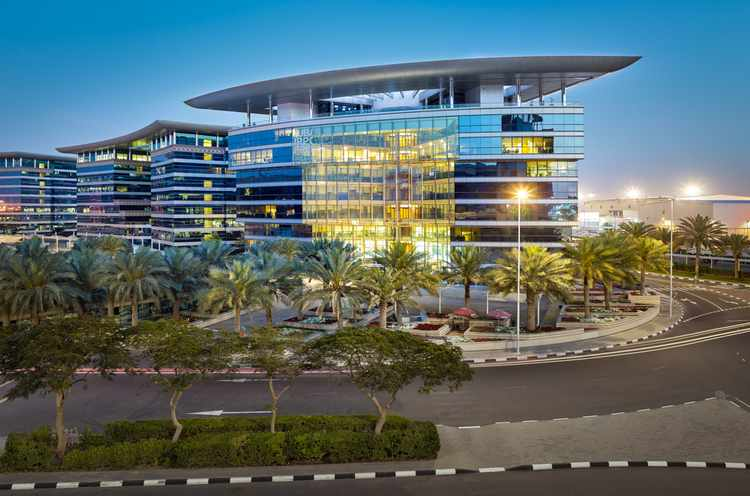
The United Arab Emirates (UAE), in a significant shift from the Gulf tradition, will move its weekend to Saturday and Sunday starting next year, according to a tweet by the UAE media on Tuesday.

Most countries in the Muslim-dominated Gulf have Friday to Saturday weekends because Friday is a day of worship for Muslims.

The new shift is billed to begin next year according to UAE Media. The weekend will start on Friday afternoon and lasts until Sunday, marking a four and half days working week.

The UAE has been leading the transformation of the Gulf to align with global practices. The government’s media office said the longer weekend is meant to “boost productivity and improve work-life balance.” But there is more to that.

Abdulkhaleq Abdulla, a retired professor of political science based in the UAE, told CNBC that the move was widely expected and is in line with the country’s plan to go global.

“21st century UAE is not the same as [the] UAE of 20th century,” Abdulla said, describing the shift as a quiet “revolution.”

Last year, the UAE announced changes in Islamic personal laws. The new rules allows unmarried couples to stay together, abolishing the long-held tradition that forbade unmarried couples from cohabiting or sharing a hotel room. The changes, which went into effect immediately, also decriminalizes alcohol consumption, though it leaves the legal age at 21.

The weekend days’ changes will kick in from Jan. 1, 2022, and will apply to federal government entities. Friday working hours will be from 7:30 a.m. to 12 p.m., the government media office said. Working hours from Monday to Thursday will start at 7.30am and end at 3.30pm.

“Adopting an agile working system will enable the UAE to rapidly respond to emerging changes and enhance wellbeing in the workplace,” CNBC quoted state news agency WAM saying in a report.

“From an economic perspective, the new working week will better align the UAE with global markets, reflecting the country’s strategic status on the global economic map,” and is designed to smooth trade, financial and economic transactions with other countries, it added.

The country will also be hoping the move boosts “not only trading opportunities but also add to the flexible, secure and enjoyable lifestyle the UAE offers to its citizens and residents,” according to WAM.

CNBC also quoted Christopher Payne, chief economist at Abu Dhabi-based Peninsula Real Estate, saying that shifting the weekend sends a clear message that the UAE is a “leader in the Gulf and the Middle East, taking bold decisions to change ahead of other countries.”

“In the broader context, this measure is part of a larger number of public policy changes … that will continue to make the UAE a highly attractive destination for foreign investment and expats,” he said, pointing to the relaxation of laws on cohabitation and changes in visa rules.

It is not the first time the UAE is making such a bold move. Years back (around 2005), the UAE government shifted the weekends from Thursdays and Fridays to Fridays and Saturdays. This was to accommodate Western lifestyle and increase business activities as starting the weekend from Thursday means losing four working days. The UAE has large business dealings with people from outside the Gulf, who use Western calendar.

The consistent changes to would-be rigid rules the country has undergone in recent years is seen as a sign of its determination to make economic progress, and also an example for other Muslim-dominated regions.

Experts have urged northern Nigeria, where alcohol is still forbidden, to learn from the UAE and undo many of the rigid rules that have hampered economic growth in the region.