DD
MM
YYYY

PAGES

DD
MM
YYYY

spot_img

PAGES

Home Blog Page 5462

Confusion is a business somewhere in Africa

0

In the world of business systems, there are certain ways to conclude a business transaction in order to earn. This method is also known as business skills which are 100% necessary to apply in any business model for effectiveness and promotion of the business in order to generate sales.

However, there’re essential business skills around the world, and these skills are highly important in business and also they’re known as high pay skills which you can learn and practice. The essential skills are listed below:

Essential business skills

  • . Financial management.
  • . Being able to effectively manage your finances is critical.
  • . Marketing, sales and customer service.
  • . Communication and negotiation.
  • . Leadership.
  • . Project management and planning.
  • . Delegation and time management.
  • . Problem solving.
  • . Networking.

These are the essential business skills in this current century and they’re high pay skills, But back to the subject matter “Confusion is a business in Nigeria”. Wow, many will be confused and also ask, why is confusion a business strategy?

What is confusion?

Uncertainty about what is happening, intended, or required has to deal with the state of being bewildered or unclear in one’s mind about something. In Africa, based on my investigation and research, I discovered that this is a trendy business strategy that is used in the labor market in Africa street business to win the league and this seems to be illegal but indirectly is legal because they say “This is a business strategy in closing the transaction”.

So, I looked towards this strategy and I discovered that research is developing slowly in Africa because the consumers are not ready to investigate and carry out research on which product to buy or the specifications and prices of the product before coming to market.

So, this is where ‘confusion’ burst out as business skills in order to win the league by rapid closing. In my conversation with a dude in this field about this strategy he said to me that ‘Confusion is my source of income because I confuse people to make money. This sounds so crazy and I was like what the hell are you saying? Are you kidding me?

During the conversation, l discovered that why confusion is drastically growing as brain business skills is because the consumers are not willing and ready to carry out research on a particular product that’s in their mind cart.

Confusion is a brain formula added to closure that illustrates the theory, not something to learn as a business technique. Trying to persuade customers to buy an iPhone instead of a Samsung is also known as bewilderment, because this would not happen if they researched what they wanted to buy before going to the store and demanding it. This business model is unavoidable in Africa’s street market, which is here to remain until consumers are aware of market developments.

In Search of Users, Clubhouse Onboards Hausa, Igbo, Yoruba As LinkedIn Introduces Support for Hindi

0

As competition grows intense, companies are seeing language as a powerful tool to win more market shares, and they are prioritizing highly populated countries with indigenous languages.

Clubhouse has announced the addition of 3 Nigerian languages, Hausa, Igbo and Yoruba to the audio platform. According to information received from the company, the language localization support is aimed at making the platform more accessible to Nigerians who don’t speak English or who simply prefer local-language alternatives.

It is coming at the same time LinkedIn is introducing Hindi, targeting about 500 million Indians. Hindi is a language spoken or understood by more than half a billion people in India and over 600 million people globally, and will be the first Indian regional language to be supported by the social network.

Hausa, Igbo and Yoruba are the three major ethnic groups in Nigeria, and make up the country’s most spoken languages. But besides the three languages, Clubhouse has rolled out other 10: Arabic, Bengali, Chinese Simplified, Chinese Traditional (Taiwan), Farsi / Persian, Hausa, Igbo, Marathi, Nepali, Somali, Thai, Turkish and Yoruba.

For Clubhouse, the Language localization means that the app experience, such as prompts, notifications, descriptions, topics, and more, will be in Hausa, Igbo and Yoruba when the languages are selected. For example, When someone joins the app, the onboarding language will now be in their local language. If someone wants to start a room, they will see “+Room” prompt and selections all in their local language. This means that people who join clubs like Yoruba Palava, IGBO, Naija House, etc, will not only have discussions about culture and history in their local languages but experience Clubhouse in them too.

LinkedIn service already supports 25 languages, but said in addition, its website and mobile apps will give users the option to access their feed, profile, and messages in Hindi. Users will also be able to create content in Hindi through LinkedIn’s desktop and mobile apps, it said.

Though India is a major market for several global services, LinkedIn has found it hard to win a significant number of users. India accounts for just over 6% of over 1.3 billion visits LinkedIn garners in a month, according to analytics firm SimilarWeb. Out of its 800 million global users, LinkedIn says it has only over 82 million users in India, more than 20 million of whom joined the service in the last three years.

The support of Hausa, Igbo, Yoruba and 10 other languages follows a global trend as the language localisation feature is one of the most requested features on the app outside of the United States. Clubhouse initially rolled out support French, German, Hindi, Indonesian, Italian, Japanese, Kannada, Korean, Malayalam, Portuguese (Brazilian), Spanish, Tamil and Telugu. Overall, the app has support for 26 languages on Android with more on the way.

In the coming months, LinkedIn said it will work towards widening the range of job opportunities available for Hindi speaking professionals across industries. It is also looking to add more Hindi publishers and creators in the coming weeks to boost engagement in Hindi on the platform.

Master that piece – and own a masterpiece!

0

A masterpiece is a great work piece from a master! And every one of us can create a masterpiece if we commit, dedicate and pursue to master something.

As 2022 arrives, think of one thing you will like to master. If you do that very well, you can create a masterpiece. Yes, master that piece – and own a masterpiece!

Become a master!

BoundlessPay Unveils Wallet To Accept Payments in Crypto via Phone Number or Email

0

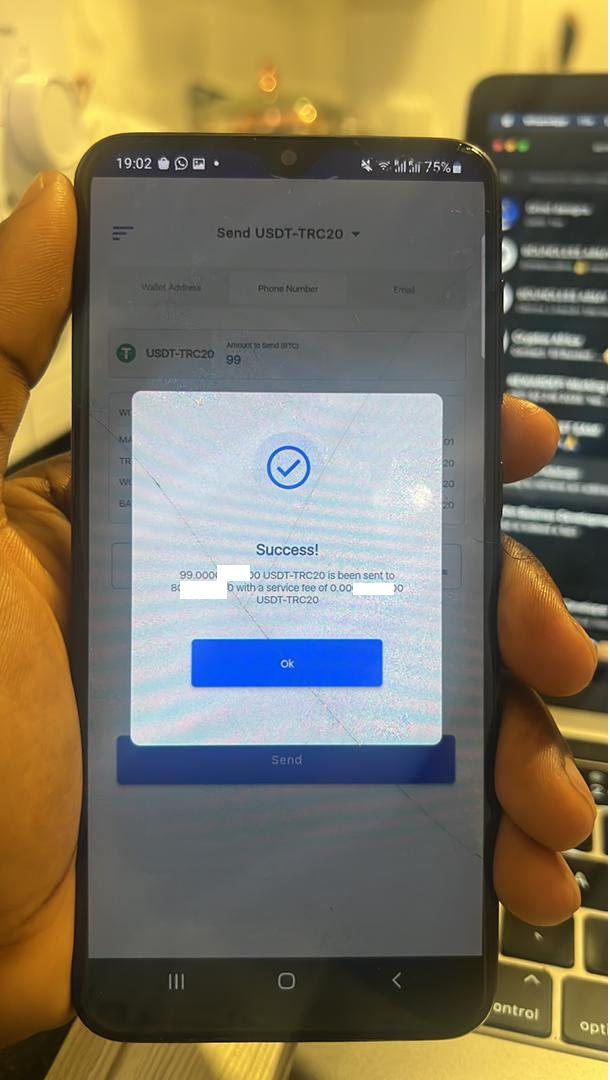
Let me congratulate Tekedia Capital portfolio startup, Boundlesspay, for releasing its blockchain-native app which makes it possible to transfer money at zero fees. Yes, do remittance without any fee. Engineered by my hometown Isuikwuato Abia state boy, Franklin Peters Odoemenam, they have elevated the game with a new dimension:  accept payments in cryptocurrencies through phone number or email address. Yes, no need for a crypto wallet, just email and phone number.

BoundlessPay which began life in Nigeria now operates from Dubai after Nigeria’s policy changes in the crypto world.  Last month, it acquired two companies in London and Mauritius as it begins its global playbook.

Please go and download BoundlessPay and experience the next big deal.

The Cambrian Moment Is Here – Start Building in Africa

0

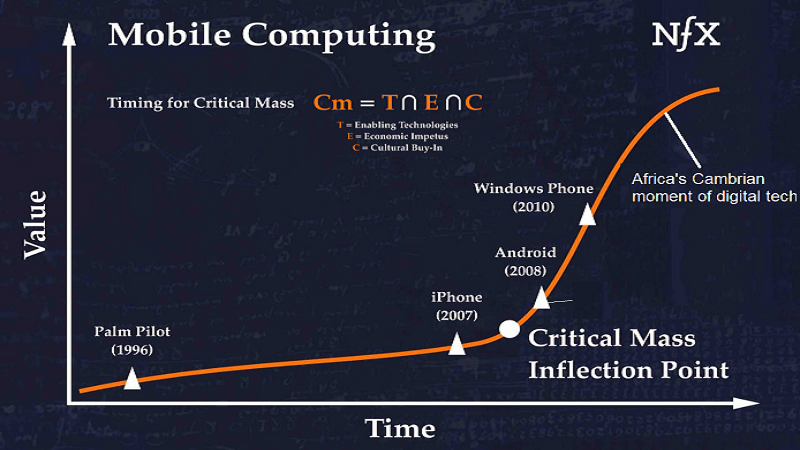
The 2000s provided the voice telephony era in Africa. The 2010s provided the mobile internet era. The 2020s will engineer the application utility era where the combinatorial and re-combinatorial power of cloud computing, mobile internet and software will redesign market sectors across territories in Africa.

This is the cambrian moment of entrepreneurial capitalism and mobile internet is powering it. New business models will be invented and new ordinance in markets will evolve.

It’s here – begin to build because new empires will emerge as market structures will be transformed. Every sector will see changes in Africa.

Comment on LinkedIn Feed

Comment #1: We can’t write our problems away with codes.

I don’t know of a software that can make affordable bread and water. In 2019, Nigerians spent 56.7% of household income on food, this year, there’s a report on Business Day that the number has risen to 101% a month, thanks to underwhelming supply and productivity. Nigerians won’t eat software. We need to read meaning into these numbers.

Startups that are serious about solving Africa’s problems at some point must begin to Resolve Supply, demand is not the problem, you can always aggregate after building supply resolution stacks. Until Innovators begin to Resolve Supply, their Total Addressable Markets will continue to shrink since any increase in price of food (which is only going up and up) will send more and more people below the poverty line eroding the purchasing power of the nation.

We’re not at par with America where Supply is largely Unbounded. Innovators must innovate meaningfully, else it’s all a convoluted head rush.

My Response: xx information improves market inefficiencies. Using software, logistics startups now synchronize when farmers harvest, trucks arrive and move those produce to the processing centers. By doing just that, waste is reduced. Africa does produce decent tonnage of food but the problem is that most are wasted. If you reduce that waste, you have fixed a problem.

If that efficiency improves for wheat, that “affordable bread” will happen. These things are linked. You need to start somewhere. You may not see the connections between a trucking company and the price of bread but those who look at end-to-end logistics do.

In other words, from seeding to harvesting, you can do many things that will reduce the cost of bread even when you are not making bread.

“Startups that are serious about solving Africa’s problems at some point must begin to Resolve Supply, demand is not the problem” – I do not really agree generally. Nigeria has about 30 million who earn income (most minimum wage) and those power the other 180m. No matter how you look at it, that is very small and it is a demand problem because of purchasing power. That is why companies like Shoprite, Mr. Price struggle.