DD
MM
YYYY

PAGES

DD
MM
YYYY

spot_img

PAGES

Home Blog Page 5505

BIG ISSUE: Marginalising Informal Sector in an Informal Driven Continent

0

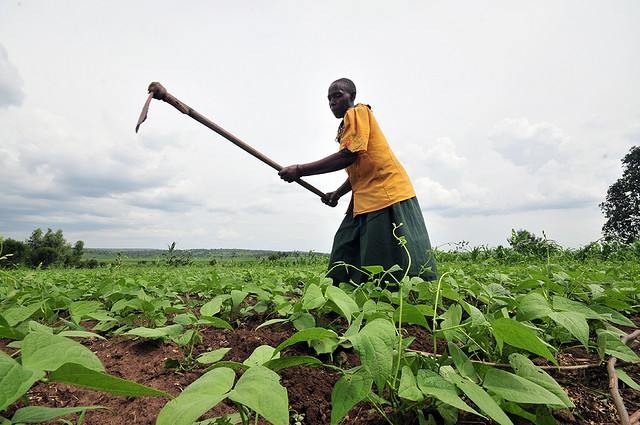
From the West to the South and East to the North parts of Africa, informal sector employs a significant number of people, giving them a means of livelihood. Several reports and statistics indicate that agriculture is the main industry where informal businesses thrive on the continent. Apart from the industry, local manufacturing industry, especially in countries where attention is being paid to indigenous form of production, the industry also employs many Africans.

Our checks show that in both industries, female Africans are more engaged in agriculture than their male counterparts. Despite the government’s failure in quantifying the informal sector as expected by scholars and experts, the sector remains a major contributor to the local economy and invariably to the national economy in many African countries when one looks at indirect taxes being collected from the players and professionals in the sector.

As the debate rages on, some scholars in Africa have put together researches that further reveal the extent to which the sector has been marginalized over the years and possible continuation of the neglect by the concerned stakeholders in the government and non-government cycles if urgent actions are not taken. The researches are recently published in the Journal of African Business, Volume 22, Issue 4 (2021), which was guest edited by Professor Nnamdi O. Madichie and other colleagues in entrepreneurship and business development fields in Africa.

Examination of the editorial of the scholars and articles contributed by others indicate a large call for reengineering processes, people and products/services in the sector towards inclusive and sustainable businesses in Africa. From Nigeria to other countries, cases were made in recognition of the sector in terms of action policy formulation and implementation.

According to the contributors, this is necessary as the continent survival seems to be depended on the sector considering the degree at which it employs many Africans and provide sustainable livelihood. Some of the contributors, specifically made cases for uplifting female entrepreneurs through tailored policies and intervention programmes, most importantly those in the agriculture industry.

Referring to some previous scholars, who have studied the sector, Professor Madichie and other colleagues note that “Firstly, there is a general notion of two sectors of the economy: the private sector and the public sector, neglecting the informal. Secondly, the education systems train students to be employed thus, neglecting self-employment or entrepreneurship.”

Our analyst further notes that since some of the policies and interventions in formal sector are not delivering adequate outcomes, African governments need to do more for the informal sector by moving beyond rhetoric policies creation and implementation when new elections close by. The main thesis, our analyst pinpoints from the contributions to the journal, is that Africa needs informal sector more than the formal sector in its quest for sustainable businesses and economic growth.

As the Guest Editors suggest, the usefulness of the sector in growing ‘the borrowed formal sector’ needs further analysis by academic scholars and independent researchers on the continent. Both the scholars and researchers need to develop more interest in studying strategy, finance, people, process and technology in the sector. These will go in a long way of giving the players and professionals in the sector opportunity to always have access to best practices from the emerging insights.


 

The JAMB’s Big Error for Nigerian Students

9

The Joint Admissions and Matriculation Board (JAMB) has remitted N3.51 billion to the federal government as operating surplus for 2021. The Board registrar, Prof Is-haq Oloyede, continues his turnaround which makes him one of the finest public servants in the nation; well done Prof. He turned a money-losing Board into a surplus-making one.

But as Nigeria celebrates this continuous record from JAMB, I want to be on record as one person who will not commend JAMB. While it is uncommon, in Nigeria, to see a leadership that is prudent to have managed resources and then honestly returned excesses to the Federal Government, I think using data from the last few years, by now, this would not be necessary in JAMB.

Yes, JAMB should reduce fees or waive fees on many things and help Nigerian families instead of keeping its current cost model. It has been declaring surpluses for years, largely due to having top-rate management, but it is time we do the right thing: there is no need to be sending money to that ocean called the Federal Government purse which swallows whatever goes in , with largely nothing to show.

Alternatively, the university system through National Universities Commission and allied regulators should enter an MOU so that JAMB will use the excess funds to offer reduced tuition in all universities, polytechnics and colleges of education, both public and private, in Nigeria.

Nigeria MUST not make JAMB a revenue generating institution like NNPC and Corporate Affairs Commission. That message must be clear! For everything wrong in Nigeria, affordable education remains the only gift – and we can open the entrance phase for more families.

Comment on Feeds (LinkedIn, Facebook)

Comment #1: It’s sad that prospective undergraduates have to rewrite jamb, after passing but couldn’t secure admission into the university. Jamb can create a policy that guides students whose results scale over let’s say 200,have their results valid for 2 or 3 years, should they not be admitted into the higher institution In that current year they wrote the exam.

Not gaining admission in the current year is enough to demoralise any prospective student from rewriting the said exam, also considering the unavailability of space to accommodate new entrants in these universities nationwide.

Comment #2: Prof. JAMB had reduced the application form fee when the same man came on board in his first tenure. Again, the surge in revenue I guess has to do with the continuous yearly increases in enrollees’ population.

Now to me, N3,500 as an application fee is moderate for an annual examination. This fee is not even up to what an average family or even the JAMB candidate spends on data or airtime weekly in Nigeria.

Sometime, I do ask myself what do we really wants in this country, get every government service free?

The same parents we are advocating for, and tag the poor, don’t blink an eyelid when paying for foreign examinations such as IELTS exam , SAT, TOEFL, etc. but we suddenly remember they are poor when it concern’s Nigeria. Previous Registrars charged higher fees in the region of N5,000 with less millions of Naira returned to the Treasury we didn’t complain and we didn’t remember the parents were poor. To me the N3,500 application fee is in order. Now, concerning how the generated fund should be utilized, except we want the exam body, an agency under the ministry of Education to contravene the constitution which will ultra-vire JAMB. The constitution states that all revenues generated must go into the national treasury, and be shared by Federal, State and Local governments in Nigeria.So, how do we want JAMB to go about this when the provisions of the constitution and revenue mobilization law of the federation is cleared and details?
Respond to #2: This comparison is actually faulty. While the current JAMB Management is superb, in the old JAMB, your fees included checking your result. My understanding is that your current fee does not cover scratch card, etc. Also, it would be unfair to compare any system in 2021 with say 2012 since tech has reduced cost of operations. With CBT exam, JAMB does not print papers or hire security to send them to CBN vaults across the nation. There is no transportation, etc to move scripts. JAMB is a software company with improving marginal cost. But its gains should not be sent to government. It can use excess to reduce tuition for all year 1 students in universities, etc.
Comment #2a: I do agree that JAMB is a software company, however, its marginal cost is not perfectly inelastic. I also do agree that other incidental costs such as the scratch card purchases should and as matter of fact be eliminated. Candidate Registration number and Email should suffice in checking the result.
In respect to it’s gain not being sent to the government, Mr President might need to issue executive order to that effect, or a constitutional amendment.
My Response to 2a: There is one thing Mr President can do that will help: JAMB results can last for 3 years. That means, if you take it in 2021 and unable to gain admission, you can use it up to 2023. JAMB costs many rural students money to come to cities to take them. That money is not captured in the form. We can reduce that burden as done in SAT, TOEFL, etc across the globe.

Obi Cubana’s rights are already being violated

0

As Obi Cubana spends the second day in the detention facility of the Economic and Financial Crimes Commission it should be known to all and sundry that the law mandates that nobody should be detained by any security agency in Nigeria for more than 24 hours or at most 48 hours without court order if not the detainee’s right of personal liberty as constitutionally provided is already being violated. 

Mr. Obinna Iyegbu, aka Obi Cubana is said to have been arrested on Monday morning, 1st of November, 2021 for alleged crimes of money laundering and tax evasion. Three days and 2 nights later, the renown businessman is yet to be released by the anti crime agency as he is still being held captive in bondage in the commission’s facility. 

According to S.35 of the constitution of the federal republic of Nigeria, 1999 (as amended) every Nigerian citizen is entitled to his personal liberty and when a person is arrested by any security agency in Nigeria for any offense or alleged crime, he must not be detained longer than 24-48 hours which is considered to be ‘a reasonable time’ without being released on bail or charged to court:

S.35(5) hereby states; In subsection (4) of this section, the expression “a reasonable time” means –

(a) in the case of an arrest or detention in any place where there is a court of competent jurisdiction within a radius of forty kilometres, a period of one day; and

(b) in any other case, a period of two days or such longer period as in the circumstances may be considered by the court to be reasonable.

In as much as the law charged the officers of the Economic and Financial Crimes Commission to go against economic and financial criminals or those they have every reason to believe are breaking the law and make them face the law, they must as well learn to do same in accordance to the law, especially the fundamental human rights of individuals as provided by the constitution which is the ground norm of the society; right to personal liberty of suspect(s)  by respecting the rights and liberties of the alleged cyber criminals or suspect; be it Obi Cubana who has spent 2 cold nights in their facility or any other individual who may have been arrested or will be arrested by the agency at any time.

Young People, Nations Rarely Kaput – Keep Building

0

One of our startups just added new team members in Nigeria. Let me welcome all the new team members. We are truly honoured that you chose us. Thank you. Tekedia Capital https://lnkd.in/evnUEs3  sends one message to young people: the future is one of abundance. And we challenge you to fill your mind with optimism, seasoned with hardwork. The father of  Carlos Slim, a Mexican billionaire, told him one thing: nations rarely kaput.

With that message, even as Mexico was in ruins with currency crises and unbounded inflation, he continued to build. Just decades before him, the stock picker of the century, Templeton, went around buying any stock he could find even at the ascent of  a world war. When others were frightened, these men sojourned and became legends.

As a Scripture Union kid who grew up in the village, one lesson I picked was this: tomorrow will make the praises better because new songs will be discovered.

#believe and #build.


Leadership And The Monster Called Sycophancy

0

In the famous and widely sold William Shakespeare’s play titled ‘Julius Caesar’, which was named after the protagonist, it was the Roman dictator King Julius Caesar who disappointedly exclaimed in Latin, “Et tu, Brute?” meaning literally ‘Even you, Brutus?’ the moment he discovered that one of those who wanted him dead happened to be his protégé and trusted ally in the person of Marcus Brutus.

The last time I checked, the reign of several well celebrated leaders in the past was truncated owing to the invariable insincere gestures or eulogies showcased by most of those they recognized as their friends or brothers, or as might be the case.

This is the reason any leader who actually intends to excel must be extremely conscious of such societal lifestyle commonly known as sycophancy, which I invariably addressed as a monster.

In any leadership setting or life generally, there are factors that tend to be symbiotic. Among them are tyranny and sycophancy, which pervade every level of governance.

The combination of the two aforementioned phenomena, which are dangerous to both institutions and countries, makes any leader blind to even conspicuous pitfalls thereby making them seem miserable if they eventually fell.

There are two major classes of sycophants, namely: genuine sycophants and mercenary/fake sycophants. The former have an inexhaustible capacity to be ‘happy slaves’ and to demean themselves in favour of the master. Somehow, such individuals or followers are at best Spartan-like, in the sense that they do not feel the pain inflicted on them and liable to be dehumanized both morally and mentally.

Instead, they feel the pain for the master, claiming they are the boss’ ‘shock absorber’, and usually struggle to take pleasure at the suffering of those who incur the wrath of any ongoing bad governance. On most occasions, they are likely to be more unfriendly or cruel than the master. This set of sycophants would always make an effort to defend the interest of the boss regardless of the situation at hand.

On the contrary, the mercenary ones are dangerous to the leader unknowingly to him, and they often play a very vital role in the day-to-day running of the administration. They equally possess the ability to play the ‘happy slaves’ role successfully, appear to demean themselves, pretend not to possess minds of their own, and unabated wear a happy physiognomy façade while sulking internally.

A fake sycophant is no doubt skillful in warming his/her way into the bosom of the boss by studying closely the weaknesses of the system and that of the master. Such an individual or so-called ally has no scruples; rather, he/she is Machiavellian.

He definitely knows how to acquire access to power by ingratiating himself with the leader via grant of an assortment of bribery or gratification to the right people, flattery, organized accusations against well-meaning followers or citizens as well as unconditional shedding of crocodile tears.

Furthermore, a mercenary sycophant is relentlessly very intelligent and clever in playing victim and shifting blames. He is so skilled in manufacturing cum painting of misleading services that the leader is often bamboozled by his purported loyalty.

Such a follower capitalizes any opportunity to betray the trust and overthrow the leader. In other words, as such a follower carries out or discharges his duties on a daily basis, he endlessly looks forward to discovering or creating a loophole that would serve as an advantage to his sinister motive.

The paramount challenge to any leader who wishes to have sycophants is to distinguish between genuine and fake ones. However, the bone of contention remains that harbouring sycophants is even more detrimental to the leader in question than to the teeming followers, irrespective of the circumstance.

Hence, there’s no gain reiterating that any sycophant, if discovered, deserves to be discarded without much ado because they are all valueless and useless. Read my lips.

On most occasions, you would notice that these sycophants are allies who usually appear to be extremely hardworking and creative, but realistically, they are doing virtually nothing. They often use noise making or exaggeration to create awareness, thereby luring unsuspecting followers into their net.

It’s noteworthy that sycophancy or undue praise-singing, which is arguably the willing undertaker of any country’s socio-political lost glory, seems to be taking an institutional presence or recognition in several parts of the world, particularly on their political platforms.

Isn’t it preposterous to see able-bodied citizens, even the old, singing and dancing in praise of somebody who has only succeeded in impoverishing his followers in the name of ‘leadership’ or consorting people’s aspirations to chisel his/her self aggrandizement?

In Nigeria today, likewise many other countries across the globe, such a manner of nauseous lifestyle takes place with an embarrassing frequency, yet nobody ostensibly cares to even acknowledge the social ills let alone discussing it.

In spite of the damaging effects of, or dangers inherent in, sycophantic lifestyles cum allied behaviours, most individuals yet have the impetus and audacity to gloat about the unsavoury and inglorious idiosyncrasy, even in a public sphere. This is to say, such kinds of creatures seemingly lack conscience or what have you.

This endemic wave of sycophancy sweeping across the lengths and breadth of our political space with uncontrollable rage of inferno, prosecuting our god-sent democracy and fueling several politically-motivated movements, unarguably needs to be thoroughly considered as well as checkmated by any leader that bears ‘decency and transparency’ as his/her watchwords.