DD
MM
YYYY

PAGES

DD
MM
YYYY

spot_img

PAGES

Home Blog Page 5509

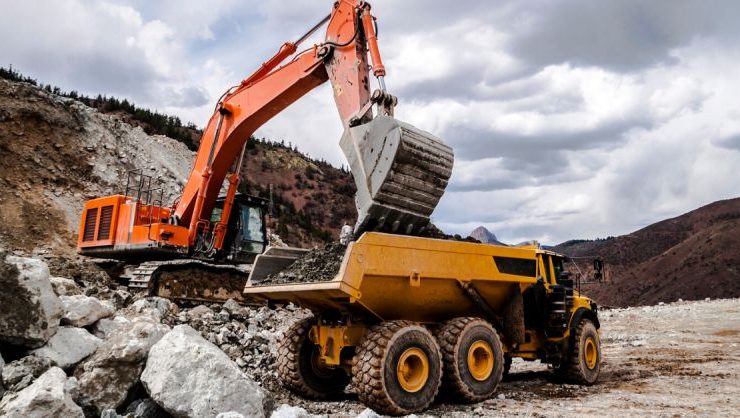
Dissecting Nigeria’s Mining Sector Amid Diversification Mantra

1

It’s obvious and unarguable that the mining sector of the acclaimed Africa’s giant is currently lying fallow, yet the present government is deeply parading the diversification mantra.

Mining is simply the extraction of valuable minerals cum other geological materials from the earth crust, usually from lode, vein, ore-body, seam, reef, placer or deposits.

These deposits constitute a mineralized package that is of economic interest to the prospective miner. Ores obtained via mining activity are gemstones, limestone, coal, oil shale, metals, dimension stone, clay, gravel, potash, and rock salt, among others.

Mining is required to obtain essential commodities that cannot be possibly grown via agricultural processes, or created artificially in a factory or laboratory. Mining of stones and metals has been a well-recognized human occupation since the prehistoric era.

Modern days mining processes involve prospecting for ore bodies, analyzing the profit potential of the proposed mine, extraction of the desired materials, and final reclamation of the affected land after the mine is closed.

The economic importance of mining cannot be overemphasized. In Ghana, for instance, the country’s mining sector is a very vital segment of its economy, and has played a significant role in its socio-economic development since the colonial period. Historically, the Ghanaian mining sector’s contribution to the country’s gross foreign exchange – particularly gold – has only been paralleled by its cocoa sector.

Not only do the products power the family car as well as heat the family home, the manufacturing sector, high tech industries, and even the better known resource industries, are all dependent – in one way or the other – on the mining industry.

The mining industry will continue to be an important support to the economy of any country that embraces it. Aside from boosting Gross Domestic Product (GDP), it encourages a high rate of employment opportunities and equally thrives to ensure that the number of entrepreneurs in the country is increased tremendously.

In spite of the ongoing boom in the sector, Nigeria still lags behind. It’s shocking to note that notwithstanding the unquantifiable solid minerals the country is blessed with, mining presently accounts for barely 0.3 per cent of the country’s GDP, due to the influence of its vast petroleum resources.

The country’s domestic mining industry is conspicuously underdeveloped, leading to importation of minerals such as, but not limited to, iron-ore and salt, that could be domestically produced with ease. It’s a shame that the only material that’s overtime mined across the country is sand.

Rights to ownership of mineral resources is held by the Federal Government (FG) who grants titles to interested organizations to explore, mine, and sell mineral resources, but the business has hitherto been relatively unpopular.

The Chief Olusegun Obasanjo’s administration began a process of selling off government-owned mining corporations to private investors in 1999. It’s pathetic and disheartening to acknowledge that till date, those firms are ostensibly lying moribund.

On assumption of duty, perhaps piqued by the ongoing devastating physiognomy of Nigeria’s mining sector, the President Mohammadu Buhari-led government strongly assured the teeming Nigerians that the administration would rejuvenate the industry.

Little wonder the government recently approved a sum of N12.7 billion solid minerals exploration contract. Yet at the moment, pathetically no serious and practical impact has been recorded, probably owing to lack of policy direction.

It’s therefore high time Nigeria started mining the available solid mineral deposits abound in the country – to include tale, gypsum, lead, zinc, bentonite, gold, uranium, bitumen, coal, rock salt, gemstones, kaolin and barite – all which are highly lucrative and of great economic value. This can only be actualized by deploring the required techniques tactically as well as imbibing viable policies into the system.

Surface mining and subsurface (underground) mining are the available two major forms of mining. The target minerals are generally divided into two categories of materials namely, placer deposits and lode deposits. The former comprises valuable minerals contained within river, gravels, beach sands, and other unconsolidated materials, whilst the latter are those found in veins, layers, or in mineral grains widely distributed throughout a mass of actual rock.

Both classes of deposits could be mined by either of the aforesaid mining types. Moreover, in-situ leaching is another technique mainly used in mining rare earth elements cum soluble minerals like uranium, potash, potassium chloride, sodium chloride, and sodium sulfate. Of all, surface mining is at the moment much more common and viable.

However, it’s pertinent to comprehend that mining, likewise petroleum drilling, is associated with various environmental factors. These include erosion, formation of sinkholes, and loss of biodiversity, coupled with contamination of soil, ground cum surface water by chemicals from mining processes.

In some cases, additional forest logging is done in the vicinity of mines to create space for the storage of the created debris and soil. Basic examples of pollution from mining activities include coal fires, which can last for years, producing severe amounts of environmental damage.

These menaces, as outlined above, can be properly controlled through the effort of the concerned law enforcement agency by implementing stringent environmental and rehabilitation Acts as well as functional policies.

Now that diversification is apparently the only way to revive Nigeria’s troubled and epileptic economy, the governments at all levels ought to endeavour to take the bull by the horn towards ensuring that the mining industry is accorded a well-deserved attention.

Taking into cognizance the impact the said sector stands to create on the country’s economy at large, it’s needless to state that its exploration is long overdue, thus feasible policies and actions are seriously needed.

It’s more interesting to realize that exploring the industry apparently remains one of the prime agenda of the present administration. But for such an agenda to be holistically actualized, hands of fellowship must be duly and sincerely extended to the cognoscenti who can spur the sector to do more even when challenges are enormous.

The Indian spiritual leader Sri Sathya Baba said, “A pure thought from a pure heart is better than a mantra” meaning literally that a mantra is great, but really, pure intentions cum genuine interest matters more.
Have you passed through Tekedia’s “Startup Masterclass: from start-up to unicorn”?

0

Have you passed through Tekedia Institute’s “Startup Masterclass: from start-up to unicorn”?  The program runs for 8 weeks and it includes an hour-long one-on-one Zoom session every week, per participant, with Tekedia Institute’s Lead Faculty, Prof Ndubuisi Ekekwe.

We understand market systems and we have insights across industrial sectors on how value could be unlocked. At Startup Masterclass, we help makers and innovators advance their missions. The program is very lite (we know that you’re busy) but exceedingly impactful.

This is more than a school. I am invested in close to 50 startups and we have created $$millions of value. Via this program, I share lessons on how founders could become growth-makers and builders of the future.

Register and let’s fuel the rocketship to alpha. Cost is $400 or N180,000 naira. BEGIN here

Towards Nigeria’s Cryptocurrency and Blockchain-Based Commerce Framework

0

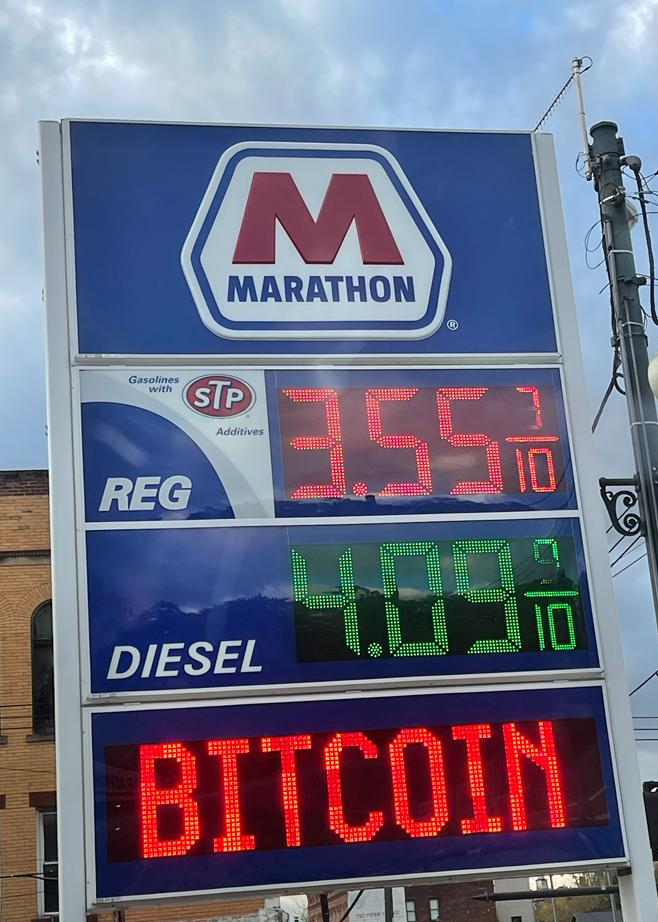
This thing is not going away; gas stations (filing stations as we say in Nigeria) are expanding payment options and the latest innovation is Bitcoin. I took this picture as the station flashes Bitcoin. Yes, spend your Bitcoin on cookies, candies and gas (fuel). Nigeria needs to publish its Cryptocurrency and Blockchain-Based Commerce Framework tomorrow. Anything less is an own-goal.

Nigeria’s Central Bank Bitcoin/Blockchain Moment

Flow like water rather than trying to command the tide not to come in

0

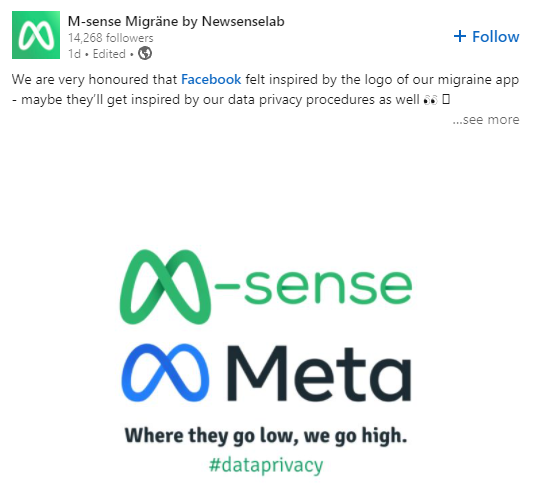
An interesting post appeared in my feed today from a company called M-sense.

Until the post appeared, I had never heard of M-sense. I do get migraine from time to time.. but not with such regularity or intensity that I would seek a special solution or it. On a purely superficial basis, the idea of an ‘app’ somehow solving a killer pain in my head is something I don’t instinctively get, and I’m not motivated enough to dig deeper to find out how it works.

To be honest, it was the pivot to ‘Meta’ that caught my eye, without which, I would have surely cruised past the post.

Excepting those that have been hiding under a rock since before internet existed, there is nobody that hasn’t heard of Facebook.

Even in Nigeria, where less than 1% of the population are ‘sustained’ members of the ‘Connected Community’ people in outlying rural areas with irregular or no access and who have not had the chance of using it themselves have been ‘gisted’. They learn about the ‘Connected Community’  through university students returning on holiday, or their Diaspora (both national and international) returning for ceremonies and cultural events.

About two months ago I saw a short drama video covering a ‘millennial’ being interviewed by a mature leader.

Interviewer: .. Exactly what areas of technology are you proficient?

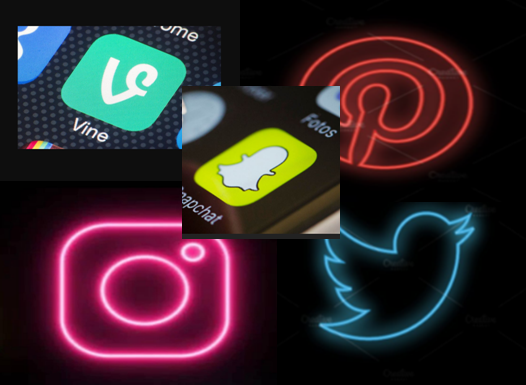
Candidate: .. Snapchat, Pinterest Instragram, Vine, Twitter…. You know… the big ones!’

Interviewer: I’m surprised you didn’t say Facebook.

Candidate: (laughs) .. That’s for old people… like my parents!

While the overall message of the video is something different, I am focusing on the perception of Facebook here.

There is a mathematical relationship here… as technologies have been shown to ramp up exponentially over time, brand resilience in the space is proving to be inversely proportional to rate of technological change.

Facebook has been the dominant brand in the space for a long time, but new technologies bring new UX that disrupts its market.

Even in Nigeria, where brands often come to dominate, and persist long beyond their shelf life in North America or Europe, that does not always translate to revenue and profit.

The tools of the video ‘millennial’ who (on Facebook) said ‘That’s for old people… like my parents!

‘Yahoo Boy’ is a permanent fixture in the colloquial lexicon for an ‘Advance Fee Fraud’ aka ‘419’ perpetrator, but it’s probably been close to twenty years since any ‘Yahoo Boy’ actually used Yahoo Chat as part of the victim grooming toolbox.

With the longevity of product brands in the space continuing to collapse with time, it makes prefect sense instead of an SM technology group building a brand around its flagship product, to build it around a virtual container in which products with shifting fortunes reside.

It seems to me that ‘Meta’ serves to be such a container.

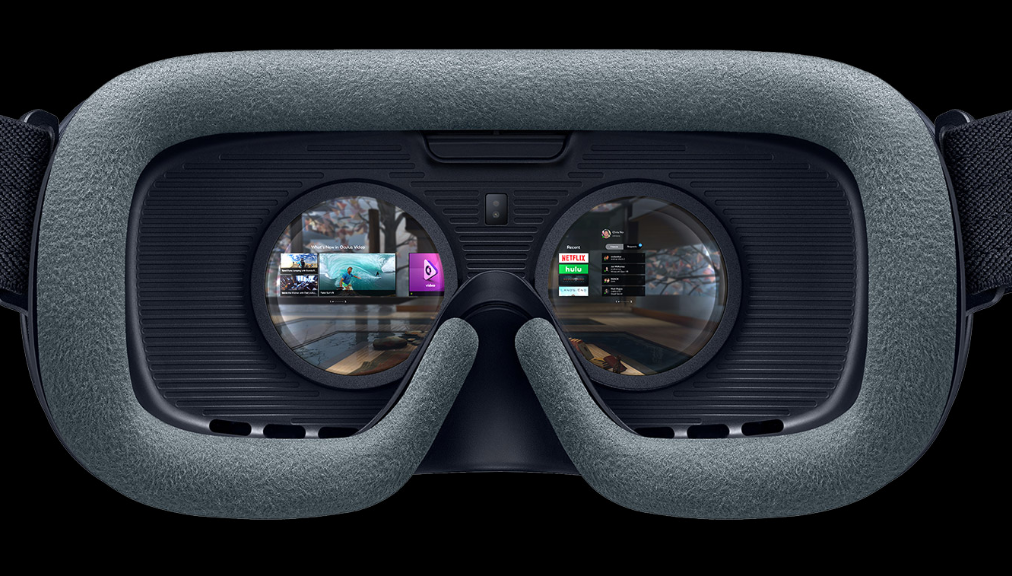
Oculus VR is probably notionally the closest businesses unit within the new ‘Meta’ to the logo concept.

The rear view of the Oculus VR headset is the closest alignment of product with the Meta logo

As  Anne Quito said on Quartz : ‘Many also note its resemblance to virtual reality goggles, which would be a fitting nod to the company’s foray in immersive virtual realms or “metaverse,” as Zuckerberg calls it.’

Facebook web page ‘designing-our-new-company-brand-meta’ says: (The Meta symbol) ‘is designed to be experienced from different perspectives and interacted with. It can resemble an M for “Meta,” and also at times an infinity sign, symbolizing infinite horizons in the metaverse.’

But to me, that seems to be a lot of esoteric twaddle from a bunch of people who slap a few lines and curves together, get a graphics designer to get a bit ‘photoshoppie’ with it and then try to justify their six figure (dollar) salary. My daughter was really good at squiggles when she was 2. Nothing specifically against Meta, because this prevails everywhere right now.

Quito’s article goes on to say: It’s futile to judge a logo’s efficacy at first glance, but early reactions are predictably snarky. Critics are fixated on the infinity symbol, complaining that it’s derivate and unoriginal.

My own take is that the minimalist abstract fad we have in the current logo design ‘moment’ actually heightens the likelihood of unintentional overlap between different design teams who independently come up with the same thing or very similar. There is only a certain number of ways you can put a few lines and curves together.

Until logos go back to actually looking like what they want to represent instead of vaguely implying it, this will continue.

Hats off though to M-sense for how they played this.

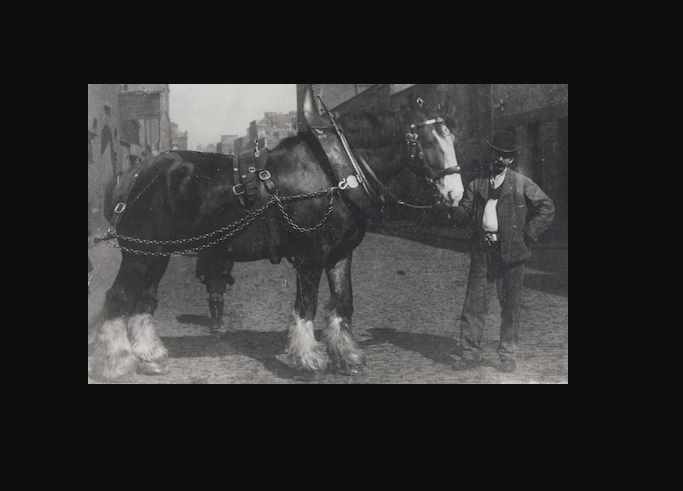
We need to be careful about defining things as a ‘tech’ industry. In the original Guinness brewery in Dublin, Ireland, draught horses were used to haul Guinness casks around the city. Technology evolved. In Nigeria, Diageo has a fleet of vehicles of all shapes and sizes that transport Guinness near and far from breweries, one of the biggest ones being at Ikeja.

Guinness draught horse around Dublin circa 1800

Up to around 35 years ago, architects plans and drawings were done on a draftsman’s board. Then came the computer program, AUTOCAD. However an AUTOCAD user is still an Architect, not an ‘AUTOCAD Practitioner’.

As tools become normalized and generic across professions and sectors, they fade into the background. The ‘app’ may be considered the modern equivalent of the pencil. The sector and profession isn’t defined by the pencil. It is defined by what is done with it.

As apps become more generic, saying apps development is a tech business may be akin to saying Diageo’s core business is not brewing at all.. it is road haulage! So the concept of app as technology moves on is fluid as we shift away from the development of the app itself taking a back seat to what it is intended to be used for.

Is a ‘migraine app’ currently part of ‘Meta’? – no, but could it conceivably be? On the basis of Zuckerberg ‘s aspirations for Meta – for sure. This creates the basis for Intellectual Property litigation.

Meta obviously has deeper pockets than M-Sense, who has decided to turn this into a free publicity triumph.

The jibe ‘Where they go low, we go high’ followed by hashtag ‘data privacy’ implies M-sense is distinguishing themselves from Meta in the data protection stakes.

The use of green, a colour associated with environmental protection, conservation, integrity, approval and ethics is impactful (though the blue of Meta isn’t necessarily a contrast).

M-sense has decided to Flow like water rather than trying to command the (Meta) tide not to come in.

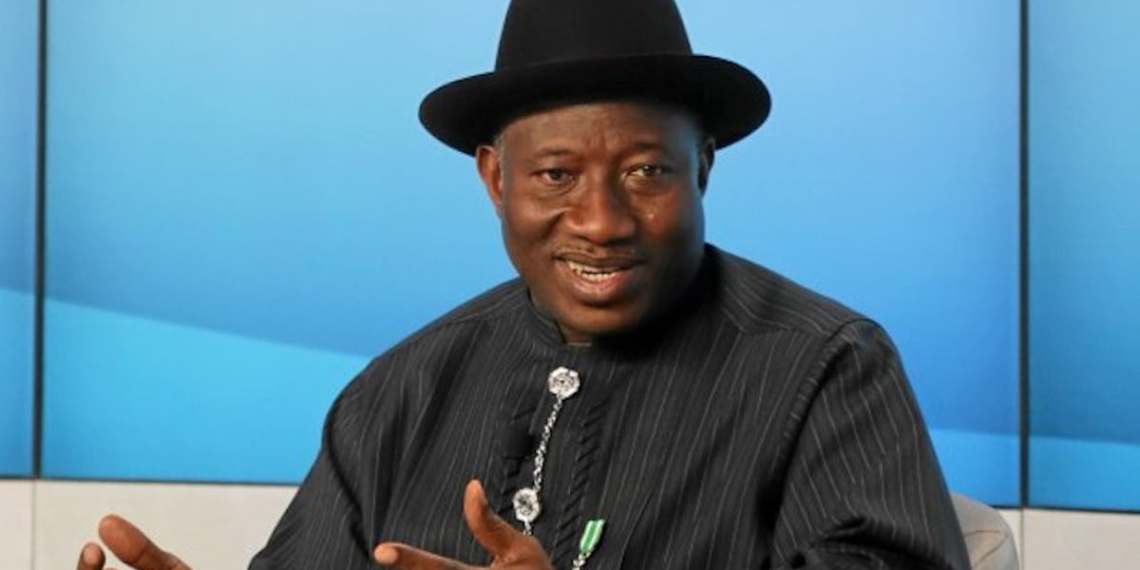
Goodluck Jonathan Dodges PDP National Convention, APC 2023 Ticket In Play

1

Nigeria’s former President, Goodluck Jonathan, just dodged the PDP National Convention on the excuse that he was attending an African Union retreat. That was a weak excuse as the party could afford to charter a plane for his trip, post his appearance. Largely, he had enough time looking at the schedules. For his absence, these two things come to mind:

(1) the ex-President does not see the party which elevated him to the highest office in the land as a viable party for national politics

(2) Mr. Jonathan will compete against Senator Tinubu for APC’s presidential ticket for 2023 elections as I have noted in Dec 2020.

This game is going to injury time with Obasanjo and Jonathan not showing up in PDP National Convention. Possibly OBJ and GEJ can attend Ndubuisi Ekekwe LinkedIn convention.