DD
MM
YYYY

PAGES

DD
MM
YYYY

spot_img

PAGES

Home Blog Page 5527

The Greatest Value from Education is the Liberation of the Mind, Not Paycheck

1

The value of education is not just determined by how much you make in money. The greatest value from education is the liberation of the mind. Do not measure the value of your education, formal or otherwise, by paycheck. Rather, try to ascertain how that program has liberated you from dogmas and norms which hitherto could have affected your ability to advance.

The same applies when people write “those fighting for As, where has it taken them?” The argument is that possibly Dangote, Elumelu, Zuckerberg, etc were not the top of their respective classes. Making that argument misses the point: that you made As in school does not mean that you will make “As” as an entrepreneur, doctor, engineer, etc. 

This is the point: it is statistically possible that a student who pursued As in school will be a better candidate to be a better doctor, engineer, lawyer, etc largely because of universality of the principles of aiming high, pursuing visions, and working to become the best possible one that be. Applying those principles in anything  will deliver better results. But that is not a probability of “1” (i.e. certainty).

But if I may ask those who throw digital flames to the As makers: does making Es help? I think they cannot provide better data. Yes, making Es does not improve chances either!

When you earn a PhD degree (doctor of philosophy), the school has essentially ascertained that you have mastered logic and philosophy in that field (say Mathematics, Economics, Chemical Engineering, etc). That “philosophy” there goes back to how “education” was structured before the end of the 18th century where all core sciences were studied under natural philosophy. 

You get it? Education does one thing: it liberates your mind by helping you to master logic. Do not equate your degree with paycheck. See beyond money as you go to school. Of course, if you master logic of your field, big paycheck follows.

Comment on LinkedIn Feed

Comment: If “Es” doesn’t help beause of its Face Value, then “As” don’t equally help due to the hidden inadequacies of its Intrinsic Value.

Elon Musk’s classmates said he never showed signs of exceptional intelligence in school, he didn’t fail at school albeit, but Richard Branson was an academic fiasco, yet their companies make case studies here. Their types make up most of the top successful entrepreneurs.

Michael Faraday who propounded the famous Laws of Electromagnetism that is widely studied in schools and applied world over was completely self-taught, he never set foot in college. Nikola Tesla who capitalised on that theory to invent the AC Motor and many great inventions that power our Post Modern lives had No Degrees.

Meanwhile, Dr. Samuel Langley, a DECORATED PROFESSOR of PHYSICS and MATHEMATICS and president of the Simthsonian Institute who was HEAVILY FUNDED by the government to build the first aeroplane failed, but Wright Brothers, who were bicycle mechanics, did it.

When we make these arguments, it’s not to negate the fact that multitudes of A Students also achieve great success, it’s simply to prove that Education is NOT EQUAL TO Academics whose Promise is now dated, that Education can be Informal too, and adequately so.

My Response: note this – Elon Musk broke records on computer related subjects that the Board requested that he be re-tested. See here . Steve Jobs went to school and largely studied one thing many times. He did not care for other things. In Carnegie Mellon University, we had a student who came, took courses on autonomous vehicles and said he was done. George Hotz went to create Comma AI which turns cars into autonomous vehicles. 

You may not believe, it would be hard to find any successful person who did VERY poorly in school in the area he later became successful even though his CGPA may be poor. In other words, Musk made As in computer related courses but possibly struggled in the distractions and that could make his CPGA low. But he was brilliant in his interests. Same for Steve Jobs. Same for Elumelu. Same for Holz.  What the press does is not the full story: Mr A made 3.0/4.0 in college without noting that he was above average in one area he cared about!

Musk made all A+ (see link) but he possibly was low on History of South Africa, Afrikaner, etc.

On Tesla, etc, I already wrote “education, formal or otherwise,”
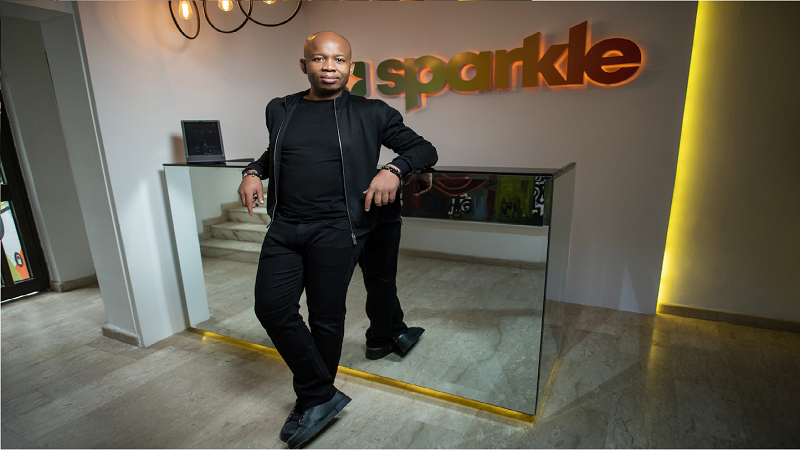
Sparkle, Nigerian Fintech Startup, Raises $3.1 Million Seed Round from Nigerian Investors

0

The Nigerian fintech space is recording proliferation of high-flying startups, securing investments from local and international investors who have unwavering faith in the market’s growth potential.

The proliferation of fintech startups and the flurry of investors betting money on them shows that the market is huge, and there is unlimited room for growth for everyone.

This week, Sparkle, a mobile-first digital bank that provides financial, lifestyle and business support services to Nigerians across the globe, joined a stream of fintech startups that announced new investments.

The company said it has raised an oversubscribed seed round of $3.1 million from an all-Nigerian group of investors that included Leadway Assurance, Trium Networks and a number of Nigerian High Networth Investors.

The new round took Sparkle’s tally to $5.1 million, having raised $2 million in a previous pre-seed round graced by family and friends.

Sparkle said the new round will be used “to scale the platform’s talent teams across engineering, financial risk and marketing departments and investing in its automated back end processes and digital infrastructure.”

Founded in 2019 by its CEO Uzoma Dozie, Sparkle has built its customer-base offering different categories of payment services, including cross-border payments.

“Since launching in 2019, Sparkle has developed a digital-first tribe of users who have access to features such as savings, bill payments, airtime/cable/utility/transport top-ups, the ability to request or send funds, split bills, review spending breakdowns and more, all via the Sparkle app,” a statement from the company said.

The platform also has a Visa card function for users to make in-person or digital payments. The platform has also secured partnerships with Visa, Network International, PriceWaterHouse Cooper Nigeria and secured a Microfinance Bank licence from the Central Bank of Nigeria (CBN).

Defying the pandemic, the startup said its transactions has tripled between 2020 and 2021, yielding tremendous growth. Sparkle said given the result, that it would now continue its focus of connecting Nigerians and the global Nigerian Diaspora by building a different type of financial services platform that is more than just banking, but a means of improving the financial lifestyle of its users, allowing for borderless transactions.

“In April 2021, Sparkle launched its business platform, Sparkle Business, targeted at the new generation of digital first MSMEs and SMEs in Nigeria, with features such as Inventory and Invoice Management, a Payment Gateway Service, Tax Advisory/Calculations and Payroll/Employee Management.

“Sparkle Business is the only Nigerian business account where no documentation is required to open an account – to register individuals require a personal Sparkle account, Tax Identification Number [TIN], and an email address connected to their TIN,” the statement added.

Sparkle’s seed round stands out as all-Nigerians led investment, changing the narrative of low interest in fintech startups by Nigerian investors that appears to have characterized Nigeria’s fintech space.

“I’m delighted to be collaborating with a group of highly respected Nigerian businesses, investment firms and captains of industry – all of whom understand the real need for a digital-first platform such as Sparkle, to bring better access to financial services and, importantly, financial inclusion, to millions more people – for business, for personal means or both.

“Collectively, as a group of investors and business builders, we are Nigerians who are bullish about Nigeria and the opportunity the country presents in terms of building global networks and communities, all via one app. I am excited to welcome our new investors into the Sparkle tribe and will be leaning on their sector expertise and insight to build long-lasting partnerships as we scale,” Dozie said.

He explained the features of Sparkle that have made it a top choice for users looking for a fast and reliable payment platform, including users’ ability to open an account in less than five minutes via a smartphone, without the need for documentation or in-person / banking hall verification.

“The future is about platforms, and connected platforms, to create seamless customer experience and, as we say, helping our users do what they want to do. Sparkle’s mission is to help Nigerians fulfil their potential by democratizing access to valuable solutions for their business and personal needs.

“Nigeria has a massive youth population who increasingly live, work and play beyond physical borders – we build with them in mind; Whether we are building services for individuals or businesses, we’re fully focused on creating a connected tribe of Sparklers,” Uzoma said.

The Awaited Automobile Hub In Nigeria

0

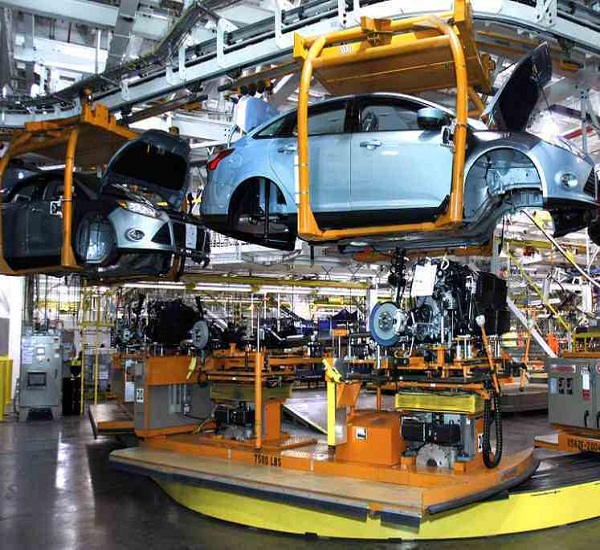
The last time I checked, Nigerians in their numbers were earnestly awaiting the era when the acclaimed giant of Africa would be spotted on the world map as regards automobile industry.

The aforementioned quest is not unconnected with the recent deal struck by the Nigeria’s government and its German counterpart. It isn’t equally unconnected with the candid body language that accompanied the pact.

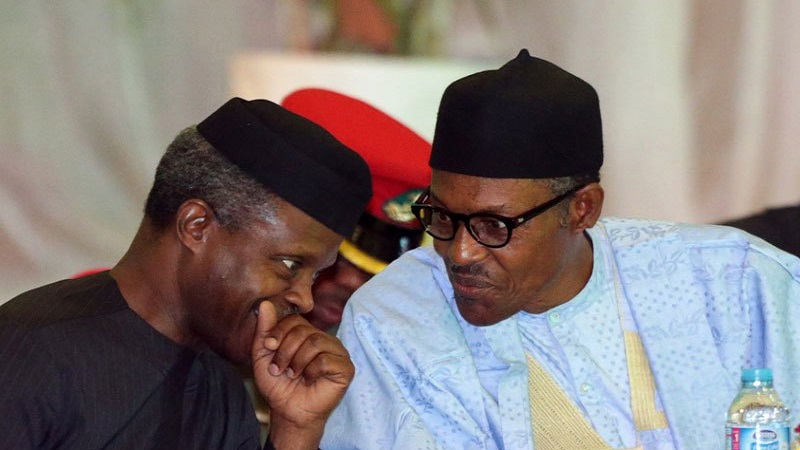
It would be recalled that on Monday, 3rd September 2018, the Federal Government (FG) under the watch of President Muhammadu Buhari graciously signed a Memorandum of Understanding (MOU) with the Volkswagen Group with a view to developing an automobile hub in the country.

The two were reportedly to come up with an enabling policy framework on the proposed project. The epochal move was an offshoot of the recent visit of the German Chancellor, Mrs. Angela Merkel to Nigeria, precisely in Abuja – the country’s Capital city.

It’s noteworthy that under the bilateral arrangement, the automobile firm is expected to implement a phased approach in relation to assembly of vehicles down to positioning the nation as an automobile hub in the entire West Africa region.

Lest I forget, in regard to vehicles’ assemblage as mentioned in the pact, the government must take into cognizance that there’s need to go extra mile towards reviving the country’s dying pride if they are really ready to invest in the said sector.

As we might have forgotten in haste, it’s highly imperative to recall that some of these vehicles – particularly Peugeot products – were previously being assembled in Nigeria but the lofty activity has now regrettably gone into moribund.

This, therefore, implies that the FG is required to look inwards with a view to resuscitating and boosting the aforesaid practice, which is currently considered as a lost glory. In a bid for an automobile hub, they must make frantic effort to reawake the seeming dead foundation.

The pact equally includes raising a training academy in conjunction with the German government with the sole aim of equipping the upcoming pioneer employees of the impending industry with requisite skills as well as imbuing them with the needed industrial qualities.

Definitely, establishing an academy to train the indigenous prospective workers that would kick start the hub is a welcome development. It’s thus needless to state that the MOU included the key recipe with regard to the awaited industry.

However, the bitter truth is that such an approach is liable to collapse on arrival if the stakeholders involved failed to consider the essential factors required for its functionality. Hence, the parties in charge of the initiative must leave no stone unturned towards doing the needful.

It’s similarly pertinent for the government to acknowledge that such an academy deserves to be sustained in the long run. In view of this idea, the institute shouldn’t be utilized only in the case of the ‘pioneer employees’. Thus, it ought to be retained with a view to training subsequent intakes as well as upgrading the skills of those already absorbed in the system.

Recalling other clauses contained in the pact, it’s worthy of note that the FG on its part is to ensure that the Nigerian Automotive Policy, which is currently under consideration, gets a speedy approval from the apt quarters. The policy, though still in the pipeline, includes the gradual transition from the importation of used cars to the manufacturing and distribution of new passenger vehicles.

It’s not anymore news that overtime issue regarding policies has bedevilled most of the activities taking place in the country. Acknowledgement of this recurring decimal indicates that the concerned stakeholders are required to go extra mile in their move to ensure that the lofty motive of the FG is duly actualized.

It’s on this premise that I suggest the authorities involved painstakingly consider all the needed parameters as they prepare the policy. Every required factor, ranging from setting up the hub, training academy, in-service workshop/training, to working incentives cum environment, must be holistically looked into so that nothing absolutely would be missing in the process.

It’s really saddening to note that three years down the line after the pronouncement, nothing tangible has been done by the relevant authorities to walk the talk. Hence, the government must comprehend that the citizenry are seriously looking up to them.

The legislators need to be duly lobbied in a quest to witnessing a healthy deliberation as regards the needed legislation. In his words, an Adviser in the Ministry of Industry, Trade and Investment, Bisi Daniels disclosed that the government was committed to providing a conducive legislative environment for the production of automobiles in the country.

I deem it fit to advise that such a commitment must be fully put into action if the FG is truly determined to create an industry where Nigerians as a people could boast of production of automobile machines that can be presented as well as used anywhere in the world.

As regards the sealed deal, the Minister of the said ministry, Dr. Okechukwu Emelamah strongly affirmed that the MOU was a major step in the FG’s quest for a robust automotive industry in the country, hence assured that the government was damn prepared to achieve the tech-driven objective.

The gospel truth is that, everything centres on the political will that accompanies the quest. Against this backdrop, for the tour in question to arrive at the desired destination, the government must not claim ignorance of the fact that what’s primarily of importance at this point is to support the recently embarked journey with the required will.

This is actually the time for the government to genuinely support the already existing private-owned automobile hubs in Nigeria, such as the Innoson Motors and what have you, in a bid to ensure they excel in their respective activities that’s targeted to boost the country’s economy.

Inter alia, for a thorough emergence and sustenance of the industry in question, the country’s education sector must also be involved. Hence, our technically-inclined students need to be brought closer to realities. It’s appalling and pathetic to understand that our teeming graduates in the field of Mechanical Engineering and allied disciplines cannot present the mechanism that constitute main parts of an automobile let alone manufacturing them.

It’s no longer news that in recent times, successive governments had made various worthwhile and commendable moves but in the long run, end up not actualizing the object of the initiative, owing to their inability to accompany the approach with candid practical steps. It’s thus unnecessary to remind the government that it’s expected to make a difference by acting differently.

As the Buhari-led administration is ostensibly determined to create a technology-driven economy, it must do everything humanly possible to separate priorities from frivolities.

Nigeria Has Latent Tools To Unlock Massive Economic Growth

2

Nigeria has to really do more for us to build a promising future. In population, the United States has about 120 million more people than Nigeria. That is where any metric breaks down. I was just going through the profits of major US banks and I became intrigued: largely the profit of one American bank in mere 3 months can buy all the banks traded in the Nigerian Stock Exchange.

Bank of America’s profit rose 58% to $7.7 billion;  Wells Fargo’s profit increased 59% to $5.12 billion; Morgan Stanley notched a $3.7 billion profit and Citibank posted a $4.6 billion profit for the three-month period that ended in September, IN News summarized.

Nigeria’s most valued bank, GTBank*, has a market cap of about $1.6 billion. If you combine all of the banks, you will not get up to $6 billion which is well below the market cap of South Africa’s Standard Bank Group.

Sure, you cannot compare a $21 trillion economy with a sub-$500 billion economy. But we need to pay attention to these numbers to be motivated to do the needful. And that “needful” must include a fundamental redesign on how we deploy state resources. For all the entrepreneurial festivals happening in Nigeria, without foreign capital, we will not have these growing startups. If that is the case, do we need to change our tax code to make those who have money to invest in productive things in Nigeria?

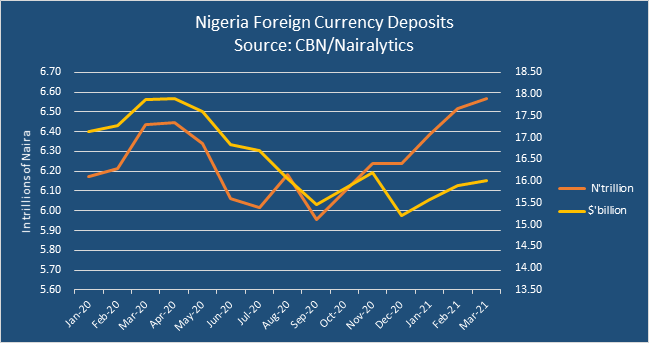
Why am I writing this? The news is that Nigeria has $16 billion in domiciliary accounts (about $4.3 billion are retail deposits) in our banking system. That tells you that Nigeria has capacity but we are not deploying productive assets to ramp up growth: “Nigeria has an estimated $16 billion in domiciliary accounts of commercial and merchant banks, data from the Central Bank of Nigeria reveals. We assumed an official exchange rate of N410/$ based on NAFEX rate used at the Investor and Exporter window. According to data contained in the apex bank’s statistical bulletin, Nigeria had a total domiciliary account balance of N6.566 trillion as of March 2021 which when converted to dollars at the official rate of N410/$1, translates to about $16 billion.”

I am very confident that a tax system that rewards productive investment will release capital in the economy and in the process build up the economy. When people prefer to put their money in the bank instead of investing, we can assume that our system is not working optimally.

Foreign Currency Deposits. Exch rate used N360/$1 Jan 2020 – July 2020, N385/$1 Aug-Nov 2020, M410/$1 from December 2020-March 2021. (Nairametrics)

[ATTEND] Investing in Africa’s Next Unicorns – A Tekedia Capital Playbook

0

We invite the general public to attend Tekedia Capital Public Lecture this Saturday. This is an  academic event on how we use patterns and data to determine the next winners in Africa’s startup ecosystems. Tekedia Capital is built on the philosophical construct of Pythagoras which is that the world is numbers, and we use numbers to model sectors and companies that will thrive within our investment thesis. It is a kind of symphonic innovation where we look at many elements before we commit to support extremely young companies. 

Public lecture details as follows:

  • Topic: Investing in Africa’s Next Unicorns – A Tekedia Capital Playbook
  • Presenter: Prof Ndubuisi Ekekwe, Chairman, Tekedia Capital USA
  • Date: Oct 16, 2021
  • Time: 6pm – 6.45pm WAT

Venue: Zoom link  on this link