DD
MM
YYYY

PAGES

DD
MM
YYYY

spot_img

PAGES

Home Blog Page 5550

Andela Becomes A Unicorn, Raises $200 million at $1.5 billion Valuation

0

Andela joins the big club – the club of unicorns. It has been a long time since I wrote “The Andela Problem” where I noted some of its challenges. But over the years, Andela has fixed all the issues I noted. Of course, I have gone ahead to baptize it as an amazing company, and one of the future leaders in placing software engineers  in a world which is currently being eaten and saved by software.

Today, the company has raised $200 million, as it continues to build  a global talent network that connects companies with vetted, remote engineers in emerging markets. Unlike the old mission to simply discover, train and nurture African engineers, Andela has changed its model, making sure that it is open wherever it can find talent. That is why it has workers in 6 continents: “Andela helps companies build remote engineering teams by providing them with access to the best software engineers in the world. Launched in Africa in 2014, the Andela network today represents engineers from more than 80 countries and six continents.”

More so, it has improved its marginal cost by phasing out a costly playbook of hiring and accommodating team members. With the redesign, Andela is totally a digital platform that produces human technical talents, unbounded by geography or any atom-anchored marginal cost.

Expect an IPO in three years.

Full press release below

Andela, the global network for remote engineering talent, today announced $200 million in Series E financing that values the company at $1.5 billion. The round was led by Softbank Vision Fund 2* with participation from new investor Whale Rock and existing investors including Generation Investment Management, Chan Zuckerberg Initiative, and Spark Capital. Lydia Jett, Founding Partner at SoftBank Investment Advisers and one of the most respected consumer technology investors in the world, will join Andela’s Board of Directors.

Andela helps companies build remote engineering teams by providing them with access to the best software engineers in the world. Launched in Africa in 2014, the Andela network today represents engineers from more than 80 countries and six continents. Through Andela, thousands of engineers have been placed with leading technology companies including Github, Cloudflare and ViacomCBS.

“Andela has always been the high-quality option for those building remote engineering teams. Now that the world has come to embrace remote work, Andela has become the obvious choice for companies because we can find better talent, faster,” says Jeremy Johnson, CEO and co-founder of Andela. “If you are a talented engineer, Andela opens up a world of possibilities for you, no matter where you are based.”

With a successful placement rate of 96%, Andela has mastered the ability to evaluate the technical skills and soft skills of engineers to match them to the teams they’ll be most successful in. With the new capital, the company will invest in developing products to simplify global hiring and make engineers’ lives easier. In addition, Andela will continue to expand its talent offering beyond software development to include new verticals such as design and data after launching Salesforce development earlier this year.

“Hiring remote technical talent is one of the top challenges that companies face today. We believe Andela will become the preferred talent partner for the world’s best companies as remote and hybrid work arrangements become the norm,” said Lydia Jett, Partner at SoftBank Investment Advisers. “We are delighted to support Jeremy and the Andela team in their mission to connect these companies with brilliant engineers, and in the process, unlock human potential at scale.”

“This new round of funding enables Andela to strengthen our already extensive network of incredible talent in Africa and across the world, as we systematically connect the best software engineers with global opportunities”, says Agnes Muthoni, Director of the Andela Learning Community at Andela. “Being backed by a diverse group of renowned and experienced investors is a testament to the growing importance of remote work, and how Andela is at the forefront of helping companies scale their engineering teams at a rapid pace”

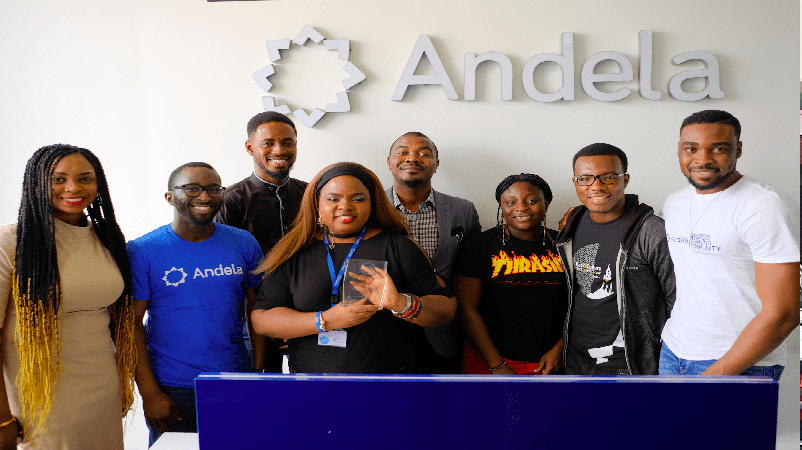
A fully remote organization with more than 300 employees around the world, Andela is hiring top talent across the board, particularly in Product, Engineering, and Growth.
U.S. Plans $1.9 Billion to Replace Huawei Equipment

0
Most parts of the world have been pushing to cage Huwaei

The United States is taking steps to compensate telecom companies affected by the decision to boot Huawei and ZTE out of the country’s telecom industry.

The US Federal Communications Commission (FCC) said on Monday it will open a $1.9 billion program to reimburse mostly rural US telecommunications carriers for removing network equipment made by Chinese companies, which Huawei has called Huawei as a threat to national security and ZTE Corp., Reuters reports.

The programme, which was finalized in July, will be open for applications from October 29 to January 14, 2022.

Last year, the FCC designated Huawei and ZTE as national security threats to communications networks — a declaration that barred US firms from tapping $8.3 billion government funds to buy equipment from the companies. The FCC adopted rules in December that required carriers with ZTE or Huawei equipment to “rip and replace” that equipment.

This problem is a major problem for rural carriers, who face high costs and difficulty finding workers to remove and replace equipment.

The FCC’s final order expanded eligible companies for reimbursement from those with 2 million or fewer customers to those with 10 million or fewer.

In September 2020, the FCC estimated that it would cost $1.837 billion to remove and replace Huawei and ZTE devices from the network.

In June, the FCC voted to advance a plan to ban approval from Chinese companies for equipment in US telecommunications networks that are perceived as national security threats, such as Huawei and ZTE. The FCC can also revoke prior equipment authorizations issued to Chinese companies. In March, the FCC designated five Chinese companies as a threat to national security under a 2019 law aimed at protecting US communications networks.

Affected companies include the previously named Huawei and ZTE, as well as Hytera Communications Corp, Hangzhou Hikvision Digital Technology Company and Zhejiang Dahua Technology Company.

In August 2020, the US government barred federal agencies from purchasing goods or services from any of the five Chinese companies.

Though President Joe Biden signed executive orders reversing some of his predecessor, Donald Trump’s orders targeting Chinese tech companies, including TikTok, the five Chinese companies were not considered eligible for the clemency.

In Biden’s executive order, there is a shift in approach to risk assessment of companies that pose a threat to US national security.

A section of the order says: In evaluating the risks of a connected software application, several factors should be considered.  Consistent with the criteria established in Executive Order 13873, and in addition to the criteria set forth in implementing regulations, potential indicators of risk relating to connected software applications include:  ownership, control, or management by persons that support a foreign adversary’s military, intelligence, or proliferation activities; use of the connected software application to conduct surveillance that enables espionage, including through a foreign adversary’s access to sensitive or confidential government or business information, or sensitive personal data; ownership, control, or management of connected software applications by persons subject to coercion or cooption by a foreign adversary; ownership, control, or management of connected software applications by persons involved in malicious cyber activities; a lack of thorough and reliable third-party auditing of connected software applications; the scope and sensitivity of the data collected; the number and sensitivity of the users of the connected software application; and the extent to which identified risks have been or can be addressed by independently verifiable measures.

Cars Are Parked At Owners’ Risk; The Implication from Legal Perspectives

5

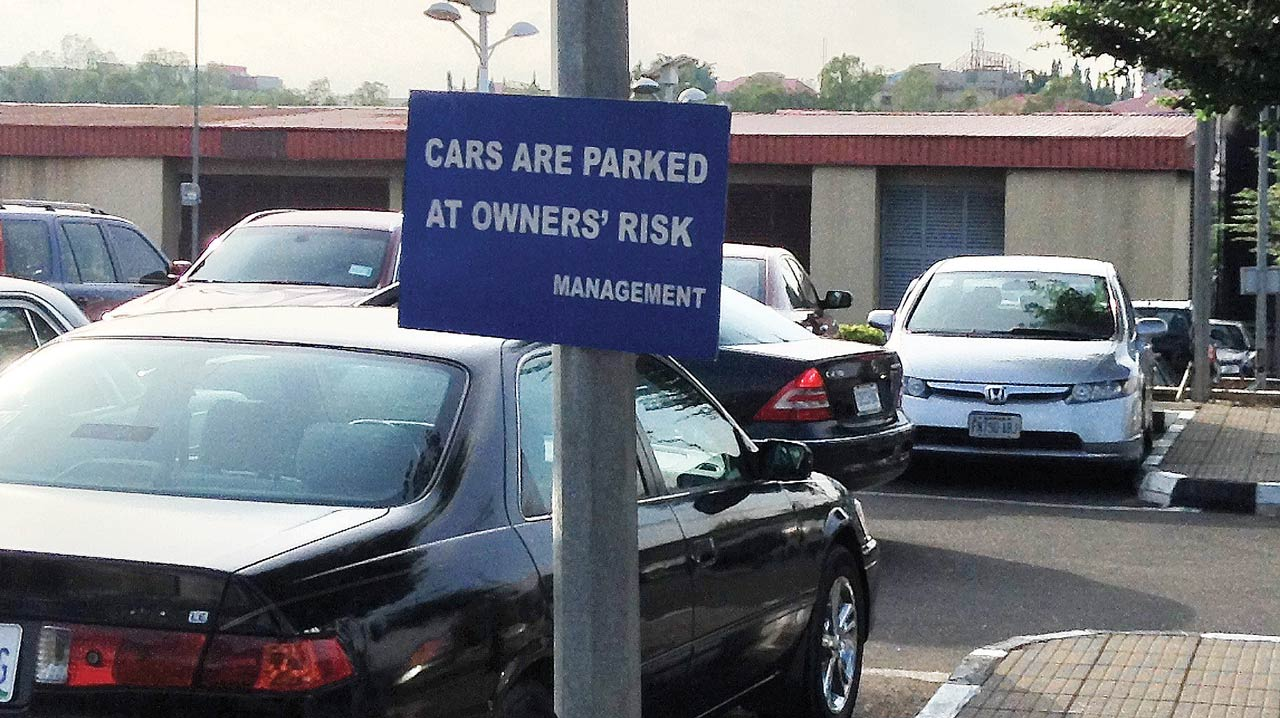
Everyone that has a car or rides in a car should have seen this sign that is always conspicuously placed in parking lots or parking spaces ‘cars parked are at owners’ risk’ and you may be wondering what are the are the legal implications of this sign, what if something goes wrong with your car; it gets damaged, burgled or the whole car stolen at the parking lot who will be held accountable. You might have even been in this kind of situation before; what’s the legal implications of the sign; who pays for the damages, what are your rights and remedies at law in this circumstance, who do you sue to recover damages, do you even have enforceable rights or remedies at law?      

On 19th of December1986, Justice K.O Anya (rtd) traveled  to Owerri for a book launch. When he got to Owerri he checked into a hotel called Imo Concorde Hotel, a renowned hotel in Owerri, Imo State.

When it was time for him to leave the next day, been the  20th of December 1986, he discovered that his car; Pequot 505, AC salon he came to the hotel with had been stolen from the hotel premises where he parked it the previous day.

He decided to sue the hotel management. So he took the hotel management to court, joining the two securities on duty the day he checked and the day his car was stolen to the suit, on the grounds that the respondents were negligent by allowing his car to get stolen. He prayed the court to grant him damages, total damages of N150,000.00; N65,000.00 being a special damages as the current value of his Pequot 505 salon car.

The trial court decided in his favour held that he had a right to action and can recover damages from the hotel which he checked in and his car was stolen and that the defendants are in breach of duty of care which they owed to the plaintiff and consequently are liable to the plaintiff for the loss of his said car so damages was awarded to him.

The hotel management, displeased with this ruling of the trial court, went on appeal. The appeal court reversed the ruling of the trial court holding that he had no right of action against the hotel that his car was stolen from.

Justice K.O. Anya then appealed to the Supreme Court since the decision that the trial court held in his favour was reversed by the Appeal court. 

The Supreme court upheld the decision of the court of Appeal and held that Justice Anya cannot recover damages for his stolen car from the hotel. The Supreme Court in its Obiter Dictum stated that the general principle is that the tort of negligence only arises when a legal duty owed by the defendant to the plaintiff is breached and to succeed in an action for negligence, the plaintiff must prove by the preponderance of evidence or the balance of probabilities that;

(a)  the defendant owed him a duty of care

(b) the duty of care was breached

(c)  the defendant suffered  damages arising from the breach~ PER A. KALGO, JSC.

The Supreme Court also went further to state that it is a generally accepted principle of negligence that a person only owes a duty of care to his neighbour who would be directly affected by his act or omission.

The question now is ‘who then is your neighbor?

In old case Donaghue v. Stevenson,  Lord Atkin provided an answer to the above question that your neighbors (in law) are persons who are so closely and directly affected by your act that you ought to reasonably have them in contemplation as to be affected  when you are directing your mind to the acts or omissions which are called in the act in question.

To this effect, the parking facility of a hotel, church, airport, restaurant, supermarket, etc is a gratuitous service given to users of that place and in the absence of express agreement the securities or the management of the parking lot has no legal duty or obligation to provide security for the cars parked in their space hence cannot be held for negligence if anything goes wrong with the car as it is just a moral obligation for them to look after your car and not a legal obligation.

By the reason of this Supreme Court judgement in the case of K.O. Anya V. IMO Concorde Hotel, the sign ‘car parked are at owner’s risk’ is an express and open caveat to everyone that the security men guarding the parking lot owe you no legal duty or obligation to make sure your car is safe neither can they or anyone else be held responsible for negligence if anything goes wrong with your car.

Be it as it may, as it is said that in every general rule there must be an exception, there’s also an exception to this caveat ‘car parked are at owner’s risk’. When you park your car and give the car key to the security men guarding the parking space or the management of the parking space and you draw their attention to where your car is parked, then there may arise a duty of care which places a legal duty and obligation on the management and security of the parking space to make sure your car is safe and secure. If anything goes wrong with your car at that instance you can sue the management of the parking space for negligence and recover damage as they are in breach of duty of care owed to you.

Therefore, if you want to hold the management and security men of a parking lot of a hotel, church, restaurant, supermarket, airport, market, mosque, offices, etc , accountable if anything goes wrong with your car then you must drop the car key with them, and draw their attention to where the car was parked.

As Depositors Choose Treasury Bills Over Fixed Deposit, Nigerian Banks Raise Deposit Rates by 140 Percent

0

The Nigerian banking industry is facing an unprecedented challenge from the emerging fintech market that is rapidly fixing every friction in the payment business, especially cross-border payment frictions. The situation does not only scuttle the current growth of banks, it also threatens their future.

Nevertheless, while fintech remains a threat that the Nigerian banking industry needs a formula to neutralize, there is another situation that the banks have made a drastic decision to arrest.

In the first half of the year (H1’21), the Central Bank of Nigeria (CBN) raised the interest rate on one-year Treasury Bills (TBs) to 10.1%. The TB rate was 5.74% at the end of last year. This decision of the apex bank ignited a renewed preference by depositors to put their money in Treasury Bills as it becomes more profitable than leaving it in banks’ fixed deposits.

With this development, the amount of available funds in bank deposits has greatly declined, prompting the banks to raise their rates for deposited funds.

Vanguard reports that Nigerian banks have raised  deposit rates by 140% in a bid to attract more funds from customers and address the sluggish growth in deposit recorded in (H1’21).

According to the report, the financial statements of the 13 banks listed on the Nigerian Stock Exchange (NSE), show that customers’ deposits grew marginally by 6.6% to N34.13 trillion at the end of June this year from N32.02 trillion at the end of December last year, indicating a very sluggish growth as a result customers’ unwillingness to leave their money in bank deposit.

To entice depositors in order to increase banks’ deposit growth in the second half of the year (H2’21), banks needed to make them an attractive offer, which means raising the deposit rates.

Vanguard noted the latest report on Deposit and Lending Rates in the Banking Industry published by the CBN, where the average deposit rates of the top 13 banks rose by 140% to 5.3% on Friday September 17th from 2.2% at the end of December last year.

The 13 banks are Access Bank, Ecobank, FirstBank, FCMB, Fidelity Bank, GTBank, Stanbic IBTC, Sterling Bank, UBA, Union Bank, Unity Bank, Wema Bank and Zenith Bank.

The banks’ deposit rates according to the report

Zenith Bank leads the pack, lifting its average deposit rate by 2,450% to 4.75% in September from 0.22% in December. But in terms of growth in customers’ deposits, Zenith Bank came third, with 8.1% growth in deposit to N5.77 trillion at the end of June from N5.34 trillion at the end of December.

GTBank came second, raising its deposit rates by 4.57% to 5.57% in September from 1.0% in December.  In terms of growth in customers’ deposit, GTBank came ninth with 4.0% growth in deposit to N3.63 trillion at the end of June from N3.51 trillion at the end of December.

In the third position is Fidelity Bank which raised the deposit rate by 4.50% to 5.5% from 1.0% during the nine months period. In terms of growth in customers’ deposits, Fidelity bank came 2nd with 16.5% growth in deposit to N1.98 trillion at the end of June from N1.7 trillion at the end of December.

Following the trend above, Access Bank, which raised its average deposit rate to 9.52% in September from 1.93% in December, indicating a 3.93% increase, took fourth position. Wema Bank on its part raised its average deposit rate to 4.94% from 1.47%, indicating a 2.36% increase during the nine months period. In terms of growth in customers’ deposits, Wema Bank occupied the 11th position with 0.05% growth in deposit to N808.9 billion at the end of June from N804.9 billion at the end of December.

Stanbic IBTC came 6th as it raised its deposit rate to 5.52% in September from 1.86% in December, indicating a 1.97% increase. Stanbic IBTC recorded the highest growth in customers’ deposits with 16.9% growth in deposit to N958.4 billion at the end of June from N819.9 billion at the end of December.

Ecobank occupied the 7th position. The bank raised its deposit rate to 9.67% from 3.5%, indicating 1.76% during the nine months period.

Union Bank also intensified its quest for customers’ deposits by raising its average deposit rate to 8.28% from 4.28%, indicating a 93% increase during the nine months period. In terms of growth in customers’ deposits, Union Bank occupied the 10th position with 3.6% growth in deposit to N1.17 trillion at the end of June from N1.13 trillion at the end of December.

Sterling Bank, on its part, raised its deposit rates to 9.77% in January from 7.15% in December, indicating a 37% increase. In terms of growth in customers’ deposits, Sterling Bank occupied the eight position with 6.7% growth in deposit to N1.02 trillion at the end of June from N951 billion at the end of December.

Despite slashing average deposit rate by 33% to 1.0 per cent in September from 1.5% in December, UBA recorded the fourth highest growth in customers’ deposit, with 7.4% growth in deposit to N6.09 trillion at the end of June from N5.68 trillion at the end of December.

Though FBN Holdco retained its average deposit rates at 0.15% during the nine months period, the bank group was able to record 4.1% growth in customers’ deposits to N5.1 trillion in June from N4.89 trillion at the end of December.

With the decision to review their deposit rates upward, the banks have set a bait to win depositors back, but also have set up a competition against the Treasury Bills.

What Is Facebook Custom Audience And How Can Architects Benefit?

0

For most Architects, finding clients in a post-pandemic world is hard. In some places, many prospects are still struggling with the financial consequences of COVID-19, and others are getting battered with advertising messages from your competitors. Here’s where Facebook comes in.

Architects can benefit a lot from Facebook, the social media behemoth with 1.4 billion daily active users. Meaning that whether you own a small or large Architecture firm, you’re very very likely to get new clients on the platform.

And one of its best features is its Custom Audience advertising feature which you can leverage to reach a very specific audience while omitting anyone who doesn’t fit your profile. It doesn’t matter if you’re a skylights firm in Los Angeles or Lagos, you can always get clients through this feature.

But for the best use of this feature, it’s advisable to segment your audience. This is important because: 

Facebook gets over one billion daily visitors, most of whom aren’t your target clients. So if you advertise to them, you’ll be wasting time and money.

Targeted ads on Facebook are cheaper and more effective. That’s because your Ad will be seen by the few who’re likely to become clients down the road.

Most use Facebook to make friends. No one goes to Facebook to see ads. So if your ads address their issues due to better targeting, you’ll connect emotionally with them faster.

Types of Facebook Custom Audience

  1. Current List’s Custom Audience

Do you have a current database of prospects whom you want to reach on Facebook? You can do this easily.

Simply upload that data into Facebook. The Facebook system will find the exact profiles and get your ads to them. The data could be contained in an email list or phone list.

  1. Website Visitors’ Custom Audience

With Facebook, you can also target anyone who got on your website and took a specific action that’s relevant to your business goals.

To do this, install a Facebook pixel on your website. The pixel will track the activities of your website visitors from Facebook, and this will make it possible to create relevant follow-up ads for the prospect. And you can even prevent ads to people who have already taken the desired action.

  1. Custom Audience From Lookalike Feature 

Would you like to find clones of your best clients? I believe this is Facebook’s best feature. Just as the Pareto principle, the 80/20 states, 20% of your best clients are responsible for 80% of your business’s profits. Meaning that you must do your best to identify the 20% and then discover prospects whose attributes match those of the 20%.

But in order to create a lookalike audience, you must have an audience database of 100 people to enable the Facebook system to work excellently. When you have that information, simply upload that list to Facebook and ask it to find active users whose attributes are very similar to those of your best clients.