DD
MM
YYYY

PAGES

DD
MM
YYYY

spot_img

PAGES

Home Blog Page 5551

The Accused Must Not Prove His Innocence

0

‘’ei incumbit probatio qui dicit, non quo negat” (he who avers must prove), ie, he who alleges must prove.

I know it is the common deal amongst people that when a person is accused of committing an offense or doing some wrong everyone interested will say ‘let him prove that he’s innocent’, then the bandwagon will be ‘if he’s claiming to be innocent let him prove that he’s innocent or that he didn’t do it’.

This line of thought is logically unsound, fallacious, laymanic and it is a legal fallacy.

It is a resounding legal principle that an accused don’t have to prove he is innocent or that he didn’t commit the crime/offense he’s being accused of, rather, it is the duty of his accusers to prove that the person they are accusing actually committed the offense; he who alleges must prove.

This renowned legal maxim of ‘he who avers must prove’, simply means that if you allege or claim that a person stole your item or that a person commits any wrong against you, then you should be able to prove that that individual did stole the item or committed the wrong against you if not you don’t have a case. That individual don’t have to prove that he didn’t do it as it is not his job to prove his innocence, rather what is called the ‘burden of prove or onus of prove’ is on you the accusers and when it involves a criminal matter, you must prove the accused involvement in the crime is beyond every atom of doubt that he did committed the offense.

I know I have burst your bubbles a bit and I’m sorry about that but you commit a fallacy and your arguments are unsound and your line of thought/reasoning is illogical whenever you insist that the person you accused of something should prove that he didn’t do it. Therefore, using the most common examples; when you claim that the government is not working, according to this principle, they don’t have to prove to you that they are actually working rather you that alleged that they are not working should prove that. Also, when you claim, allege or aver that a government official or an individual is corrupt and have stolen government funds, they don’t have to prove to you that they are not corrupt, rather, it is your job to prove and pin the corruption on them. This is what the maxim ‘’ei incumbit probatio qui dicit, non quo negat (he who avers must prove)’’ is all about.

Although this is a legal principle but it is relatable to our daily endeavors as most of us have been caught up in the lie that you have to prove your innocence to your accusers. You don’t have to prove your innocence for whatever reason, your accusers must be able to prove that you did what they are accusing you of, if not they don’t have a case.

As a bonus, let it be known to you that there are two standards of proof; the balance of probabilities (used mostly in civil actions) and beyond reasonable doubt (used mostly in criminal actions). Beyond every reasonable doubt simply means that your accuser (which in criminal actions being the state) must prove that you committed the crime you are being accused of beyond every atom of doubt and it is visible to the blind and audible to the deaf that you actually committed the crime.

It is the writer’s aim to arm you with legal niceties so you can navigate your daily lives knowing some legal technicalities that will help you evade some foreseen and unforeseen dooms.
Fixing Nigeria’s Bigman-ism and Lessons from Amazing Rwanda

2

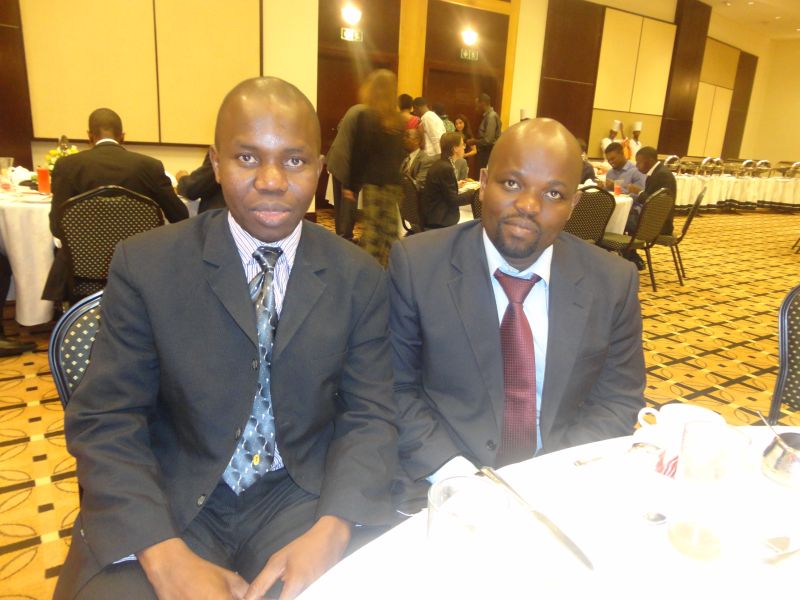
I meet government officials all the time, from America to Ghana and beyond. But I have NEVER met more simpler political leaders than those that serve Rwanda. I am pulling this photo because I just spoke with a minister in an eastern European country; he was waiting 5 minutes ahead of schedule, and not the usual I get in Abuja (the minister has an urgent message from the President, and you need to give him time. Check – there was no message from the President; he was simply reminding me that he was the Oga).

In Rwanda, I had flown from the US to Kigali as Carnegie Mellon University was setting up the African campus. We did the ceremonies and the minister was excited. You know what? Went to an eatery; he drove himself with no security or any protocol. As we walked, citizens were waiving and greeting – and shaking hands. I could not believe that I was in Africa!

During lunch, we had a table like others; no security zone was created. You see an emerging society. My question daily is this: how did Nigeria miss our old amazing trajectory which even in 1976 was seen as a benchmark of decency, service and values that the world waived visas and treated our passport as pure diamond? What happened and who brought the culture of bigman-ism?

Balancing Cash Flow Equations of Nigerian Railway Corporation (NRC)

1

This is the toughest mathematical equation the government of Nigeria has to solve, and it is coming from the Nigerian Railway Corporation (NRC). Let’s go:

NRC 2020 revenue was N1.13 billion.

NRC is asking the government for N61.5 billion  for 2022 procurement activities (working capital, parts, insurance, locomotives, etc).

NRC’s current personnel strength is 10,672; those workers will cost N9.14 billion for 2021. (Note the delta between revenue and personnel cost).

To run Lagos-Ibadan, NRC needs about 1,000 staff which will add additional N0.5 billion in the payroll.

Does this math balance for the NRC and for the nation? I support the investment in railway systems, but I still struggle how this will work, since the fees they are collecting are unbelievably low with  most costs dollarized or yuan’d (as in China). 

Sure, miracles do happen but I am deeply concerned that this railway playbook in the nation may have a broken railtrack already. If Nigeria hopes to have a working railway system, someone needs to look at these numbers and take action, immediately.

Nigeria Opens The Playbook – “beneficiaries must … sign a bond to serve their state for 5 years”

2

Nigeria needs teachers and now it is inventing something: pay undergraduate students in the education domain  N75,000 per semester in any public university across the country. Students in the National Certificate in Education (NCE) programme in public institutions will get N50,000. But magically, the government added that dreaded word which many have been pushing is not for the modern world: bond.

Yes, “beneficiaries must attend public institutions only and sign a bond to serve their state for five (5) years on graduation,’ says a statement from the government. It is very intriguing that this is coming from the government. Banks can now rejoice because they usually like to bond workers after those foreign training programs.

Largely, the government through the Ministry of Labour has  been fighting companies which bond workers. So, it is a huge irony that the government has joined and is scaling the practice at the highest level: at schools well before the students begin work!

Personally, I do not believe in bonding workers and it should be outlawed. If you want to keep your workers, find better ways to do so – and those options include stock options, contracted labour agreement which requires paying them more with certainty on availability (those given to CEOs), etc. 

For a government, I do not think it is necessary. Yes, if you think giving young people N150k yearly for 4 years will make them commit to serve you for 5 years, post graduation, you have an issue. In a nation of massive unemployment, that is not necessary. What is necessary is making the public sector (including teaching in public schools) to be driven by merit so that more energetic and motivated people will show interest.

All together, bonding the youth to work for the government is a bad idea. But making the public sector attractive via merit and opportunities will send the best to the government.

Comment on LinkedIn Feed

Comment #1: There is no free lunch Sir, If the government is footing the bills, it’s not unreasonable to expect for return on the their investment.

It’s quite simple really, They will educate the students and pay them, and in return they’ll work for them to pay back. Only thing is that If those students wish to leave early and not engage in the proscribed field, then they should able to refund the cost Borne by the government in full.

My response: Government will get students but this policy will not attract the best. To attract the best which remains the challenge, the teaching opportunity has to be extended. It is not just getting teachers, it is making teaching a career. Those things are two different things. If any government opens a website to hire 100 teachers, it will get possible 10,000 applications. But those are not the ones government wants. To get the ones it wants, it needs to change many things. Paying a teacher N18,000 a month or N25k as in some cases will not make this work. This piece is not political – it is going to the root cause.

Comment #2: The mad rush of Doctor/japa generation out of the country after graduating from public schools has thought our policy makers something new. What the government is basically saying is, “what will you give back in return for collecting this money?” A lot of our undergraduates are not aware that their education is heavily subsidized by the same government they love to criticise at every given opportunity.

My Response: This is not a blind criticism, it is a constructive way of shaping what government does. Government will do this but it cannot get the right students. To get the ones it wants, that N18,000 monthly salary has to change.

Subsidizing education does not mean the best in classes will agree to be paid N18k because govt helped them. If we improve the teaching profession, the best will go there.

Google To Deploy $1 Billion for Massive Digital Transformation in Africa

0
CEO of Google

Google plans to invest $1 billion in Africa over the next five years to ensure access to fast and cheaper internet and will back startups to support the continent’s digital transformation. The company made the announcement at a virtual event where it launched an Africa Investment Fund, through which it will invest $50 million in startups, providing them with access to its employees, network and technologies. The core focus would be fintech, e-commerce and local language content.

Sundar Pichai, CEO of Google and Alphabet, said, “Google is building global infrastructure to help bring faster internet to more people and lower connectivity costs. The subsea cable Equiano will run through South Africa, Namibia, Nigeria and St Helena and connect the continent with Europe.

“Internet access is also hampered by the affordability of smartphones. Android has developed a device locking technology as part of the Android platform that will enable partners to offer financed devices. Google has collaborated with Kenya’s largest carrier Safaricom to support the launch of the first “Device Financing” plan in Kenya, and will expand this initiative across Africa with partners like Airtel, MTN, Orange, Transsion Holdings and Vodacom, and more. These partnerships will help millions of first-time smartphone users gain access to quality, affordable Android smartphones.”

“We’ve made huge strides together over the past decade — but there’s more work to do to make the internet accessible, affordable and useful for every African. Today I’m excited to reaffirm our commitment to the continent through an investment of $1B over five years to support Africa’s digital transformation to cover a range of initiatives from improved connectivity to investment in startups,” he added