


Today is the last day to join the business school. Yes, registration for the 6th edition of Tekedia Mini-MBA ends today. BEGIN here if you want to co-learn with us in 2021
Implementing AfCFTA: What is in it for youths?

It is said that “a nation with large human capital base and wealth of natural resources should be advanced in development and experience immerse civilization”. However, while it is true that Africa as a continent is in no small ways blessed in all kinds of resources, her present reality does not validate that claim. As of now, only a handful of her entity states rank’s considerably key indicators such as infrastructural development- which of the eight (8) countries above average, Seychelles leads with 96.73 per cent, and education where the country is the only African state in the top 50 on the global metric. Also, she has a collective debt running over more than 283 billion USD, with one of her member state Sudan to be precise having been sunk so deep in debt that it gained global empathy for a 14 billion USD debt relief. All this are the reality even when the continent is rich in vigour, creativity and numerous valuable materials and should have nothing to do with neck-breaking debts, rather it should sit on the giving end of aids matter.
While debts in their selves are not a thing of shame, since capitalist nations such as The United State and China have accumulated debts in excess of 20 trillion USD and 8.2 trillion USD respectively, however, productive use of debt is a way towards growth. Simply, a debt must pay debt and then foster development.
Nevertheless, like the Western- Nigeria (A western African state) adage puts it, “onakan o woja”, translated to mean “there are many routes to the market”. Simply, debts are not the only way towards development. As debts enable development, so also does trade. Trade, according to Investopedia, is a basic economic concept involving the buying and selling of goods and services with the compensation paid by a buyer to a seller or the exchange of goods or services between parties. Trade could be further categorized into Home Trade and Foreign Trade. Home Trade, also called domestic trade, is the trade that takes place within a country. Whilst foreign trade, also known as international trade, is trade between a country and others. The need for foreign trade arises because individual states are not equally endowed with resources. So, outsourcing and external trade is vital to meet internal demands.
Africa countries like every other part of the world trades. As of 2019, member states traded aggressively with a total value of transactions peaking in the range of 750 billion USD. However, with the bulk of valued traded underdevelopment lingers as her reality indicate. It has thus left questions in the heart of many, is Trade truly potent for development? Well, indeed, trade is potent, as it brings diverse opportunities to all. However, the kind of trade in which African states members have engaged for a long time cannot bring continental shared prosperity. While it’s undeniable that the nations have efficiently mastered home trade, she still lacks greatly in regional trade- a kind of international trade, which could be best put as continental trade.
Continental trade, is the trading activities between countries of a region. Continent such as Europe have European bloc which forms a collective power in which trading activities go with, so also does the Asia continent have theirs, same as America. Although intra-Africa trade is low, it is not less of continental trade. Statistically, compared to other regions of the world like Europe, Asia, and America involved in intra-regional trade which sits around 68.1 %, 59.4% and 55% respectively, the intra-Africa export crawls at 16%, which subtly indicates why the continent trades so much, yet, grows so little. This low intra-trade amongst many can be pointed to the continent poor infrastructure. It remains more expensive for an operating factory in Accra, Ghana, to import coffee from Rwanda than from a Paris-based company, for instance. All these have been made worse by the COVID pandemic.
The year 2020, would remain memorable as many would hardly forget the diverse heart-breaking incident that filled the global space. As the global supply chain was broken, crude oil prices fell into the negatives, so also did social turmoil arose and political unrest occurs, as in the case of the Black lives matter and the endsars movement respectively. Common to all these is that Africans were not prepared for it. The waves of shocks aside the cracks in Africa’s structure showed the fragility of what African states have long depended upon and the need for a new path towards development. As said, this new path is Regionalization. So, to make regional trade work which in turn would foster and strengthen Continental trade, Africa Continental Free Trade Agreement famed as AfCFTA was initiated.
Although the initiative was long thought off, well before the advent of the COVID- 19 pandemic, the pandemic increased its relevance and strengthened political attention. AfCFTA is an agreement that enables the free movement of goods and services as it seeks to unify fragmented markets into a singular entity*. It would cover Trade in Goods and Services, Investment, Intellectual Property Rights and Competition Policy*. It needs arises since most African companies are small, and thus it is hard for them to individually attract funds that have developmental potentials. Africa’s Technology boom and China’s voyage into specific countries, such as Nigeria, Kenya, South Africa and Egypt is a testament that many are scared of other parts of the continent, even when these parts have huge potentials as they have a large base of non-consumers on across a broad variety. So, in simple terms, the trade agreement would de-risk the market, and in doing this improve the overall state of the continent. This shared prosperity would have the greatest impact on a set of demography, the youth. It would provide the following to them:
Employment. To sustain trade, the manufacturing sector would rise. It would eventually make the creativity, intelligence and tenacity of productive use. By doubling the investment in manufacturing to $1 trillion, the creation of 14 million new stable jobs would be attainable.
Cultural Integration. Aside from the Nigeria and Ghana Jollof fight, there is little interaction between African. And the knowledge we have about each other is small. I must admit I just got to know about Seychelles, which is home to numerous beaches, coral reefs and nature reserves, as well as rare animals such as giant Aldabra tortoises. I would have missed out on the knowledge of this country and lived in complete ignorance that rather than search Miami beach, there are many around me.
Improved sense of worth and dignity. Nothing improves a human sense of worth than self-knowledge. Self-knowledge would be built as one incrementally and comfortably shoulder responsibilities. As the tariff and the cross-border limitations are made non-existent, Small and Medium Scale Entrepreneurs would rise. These entrepreneurs, who pioneer most jobs, would have no time to engage in anti-social activities. All this, in turn, would drastically reduce the insecurity and crime rate on the continent as no human would work so hard only to self destruct.
Advancement in Knowledge. Beyond the profits that would emerge on the continent, there would be a push in the boundaries of knowledge. As trade occurs and profits accumulated, the need for research for development would arise. It would cause the continent to have not only might that works, but minds that think. At the advent of this, the continent would be experience increased civilization tailored to her desire.
Political Involvement. If there is anything one is certain of it is that both the Nigerian government and the Ugandan government have seen that the youths are ready for their future just as they displayed in the EndSars and Bobi Wine movement. With AfCFTA, there is shared voice as by trading with my suppliers and customers I can have wedge geo-political influence through to laws of demands and supply to initiate the desired Continental change Many youth now know that wars are won by the simple laws of economics.
So, the implementation of a regional trade is beyond the words of mouths. It is a real force which has the power to shift the continent from mere global speculators to global dictators. However, this would not happen if the youth do not see themselves as crucial players in it implementation. To say that the agreement trade is a gift by other for the benefit of the youth is half truth, the trade agreement cannot work without the actions of the youth. The youths matters. So, if this lofty goal is to be realized the youth must be given their rightful place, else, the continent would remain crawling.
Plan your freedom from debt and career options could open

The best possible early career experience anyone could get is beginning a career in banking especially if you apply the principles of banking in your personal life. First, working in a bank reshapes your understanding of society. Yes, we the people go to banks but there are people banks go to them. And if you pay attention, you understand one of the most powerful weapons ever invented by humans: DEBTS.
Check the history of empires, up to 650 years BC right at the time of Nebuchadnezzar II, you will understand the power and meaning of debts.
At extremes, debt is a tool which helps extremely rich people pay less taxes even as it helps very poor people to make rich people richer! Yet, debt could be a necessary tool in commerce. But never allow it to float without being in charge.
If you can control your debts, you will be in charge of your options! Remember – you work hard to grow cash flow but debt by nature of interest does not need any help from you to keep growing if you neglect it. Plan your freedom from debt and career options could open.
The Facebook Empire is Down – And What is Happening?
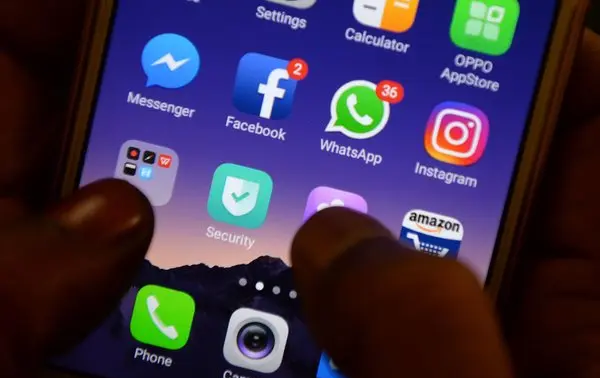
Attempt to log in to your Facebook page brings the message: “Sorry, something went wrong. We’re working on it and we’ll get it fixed as soon as we can.” For Instagram’s web page, this message, “5xx Server Error” instead of pictures and videos, pops up.
Facebook apps went down on Monday for hours, in a major outage that has got users talking. From Facebook itself to Instagram, WhatApp to Messenger, users can’t access services.
The issue, which started around 11: 45am ET has recorded overwhelming reports on the website Downdetector, which tracks outages and issues across various websites and services.
In a tweet addressing the outage, Facebook said, “We’re aware that some people are having trouble accessing our apps and products. We’re working to get things back to normal as quickly as possible, and we apologize for any inconvenience.”
The outage, which affected users around the world, beams with curiosity, as it is happening around the same time that Facebook is facing backlash from the Congress over leaked data which alleges that the social media platform contributed greatly to the Jan 6 Capitol riot.
The social media’s kid-apps have also used Twitter to address the outage.
“Instagram and friends are having a little bit of a hard time right now, and you may be having issues using them. Bear with us, we’re on it! #instagramdown,” Instagram tweeted.
WhatsApp followed shortly after the report was made saying that “we’re aware that some people are experiencing issues with WhatsApp at the moment. We’re working to get things back to normal and will send an update here as soon as possible. Thanks for your patience!”
Messenger offered a bit of explanation in its tweet; “Mercury in retrograde got the best of us. We’re working to resolve the issue as quickly as possible, and apologize for the inconvenience. #MessengerDown,” it said.
Downdetector said it has received more than 86,000 user reports of Facebook outages since 11:25am ET on Monday, according to its website. Of these issues, 79% were related to Facebook’s website, 12% were related to server connections, and 9% were related to the app.
There have been more than 76,000 user reports of Instagram outages, more than 21,000 user reports of WhatsApp outages, and more than 6,000 user reports of Messenger outages in the same timespan, according to Downdetector.
Insider reported New York Times technology reporter Ryan Mac, tweeting that the outage is also affecting Facebook’s internal platforms, so its employees can’t work right now, and Instagram chief Adam Mosseri tweeting that “it does feel like a snow day.”
In a “60 Minute interview” on Sunday, Frances Haugen, a former Facebook product manager had accused the social media giant of choosing profit over safety. The 37 years old whistle-blower, who was responsible for the release of thousands of pages of internal research documents, said Facebook is aware that it is used to spread hate, violence and misinformation, and that the company has tried to hide that evidence.
“The thing I saw at Facebook over and over again was there were conflicts of interest between what was good for the public and what was good for Facebook, and Facebook over and over again chose to optimize for its own interests, like making more money,” Haugen told “60 Minutes,” after making her identity known.
Haugen worked on civic integrity issues while at Facebook, and believes the company’s inaction was largely responsible for the Jan. 6 riot. She said the social media platform has denied results of its own internal research that shows how harmful the platform has become.
Facebook has come under fire since the release of the documents, and will be facing Senate Committee on Tuesday.
Why does it matter?
Was it just a coincidence that all these are happening at the same time? Or could it be that some people are taking it upon themselves to out Facebook and its subsidiaries on behalf of goodness or some other reasons? The total outage has been the worst suffered by the social media apps since 2008, which suggests that there could be more to it than “mercury in retrograde.”
Instagram employees told CNBC that the outage is the whistle-blower’s karma.
Facebook has been at the center of the debate to break up big tech companies. The debate has been based on the perception that the big tech has acquired so much power, and has been using it to get away with antitrust issues. Now it’s shifting to the weight of immoral influence the companies, especially Facebook, are exerting on users.
It is not yet clear what exactly brought the long outage as the platforms have issued no explanation, what is clear is that Facebook has come under attack like never before in its history.
Facebook’s Symphonic Innovation At Technology Stack

In the Innovation of Firms, a course in Tekedia Mini-MBA, I explained Symphonic Innovation thus: “Symphonic Innovation is innovation that is not domain-specific, but is anchored on a unified and harmonious approach in the deployment of technology components to accelerate productivity gains and cushion competitiveness. With Symphonic Innovation, you do not deploy and launch for blockchain, only to be tripped by AI or big data; you launch with a mindset that these technologies are like extended musical compositions which must be carefully organized to make the orchestra an unforgettable experience.”
What happened to Facebook Inc today revealed a case study on how to build modern technology stacks. You do not build in disparate structures with no order. Rather, you see your technology as a musical orchestra with instruments which must be harmonized to deliver an unforgettable memories across platforms and product nexus.
Facebook is back after a major outage that lasted for about six hours Monday. The outage impacted users across its suite of apps, in addition to its employees — internal systems and tools stopped working, as well. The social media behemoth faces mounting scrutiny — a whistleblower, who is set to testify before Congress Tuesday, told CBS’s “60 Minutes” Sunday that Facebook “amplifies hate, misinformation and political unrest.” The cause of the outage is still unknown, but security experts believe it could have been a Domain Name System (DNS) problem. (LinkedIn)
This is the age of unification and we have just learnt that Facebook, WhatsApp, Instagram, Oculus VR, Messenger, etc are powered under one unified stack making it easier for those great experiences we get across the platforms. Sure, the revelation came through a freeze but at least we know what they do at the highest level.
Go back to your office and ask your CTO and CIO if they can learn from this playbook, of course building redundancies to avoid a protracted failure when bad things happen.