A close observer can boldly attest to the assertion that the Nigeria’s lingering epileptic power supply remains the bane of the country’s socio-economic prospect.
On 22nd May 2018, President Muhammadu Buhari during a meeting with a concerned group in Abuja, stated that the erstwhile president, Olusegun Obasanjo expended about $16 billion on the power project without anything to show for it.
Earlier, in 2007 precisely, piqued by the epileptic power situation, President Umaru Yar’Adua – of the blessed memory – upon assumption of office, lamented that the government under Obasanjo squandered about $10 billion on the National Integrated Power Project (NIPP) with little or no effect. He alleged that, on power sector alone, the administration of his predecessor spent a total of $16bn.
However, it was gathered that the Late Yar’Adua’s administration expended $5.375 billion on power, whilst his immediate successor Dr. Goodluck Jonathan spent $8.26 billion. In a nutshell, the country within the years in review, reportedly spent about a whopping sum of $29.635 billion only on a quest for steady power supply.
The bitter truth remains that Nigeria has expended funds amounting to trillions of naira on the power sector within the last twenty-one years. But rather than dwelling on our failure, or apportioning blames, it’s imperative for the country to henceforth concentrate on the way forward in a bid to getting it right.
The Nigeria’s power sector is presently yearning for rescue that if drastic measure isn’t taken, soonest the country won’t only reckoned to be synonymous with blackout but a place invariably used as a case study whenever non-electricity supply is being discussed or researched.
It’s indeed worrisome to acknowledge that in spite of the intimidating size of the acclaimed giant of Africa, both in landmass and population, she’s currently struggling toward boasting of steady seven thousand Megawatts (7,000MW) of electricity supply, whereas nations like Ghana, South-Africa, Iran, and South-Korea, among others alike, that aren’t up to 60 million people on the average, presently boast of over fifty thousand Megawatts (50,000MW). Such a shocking phenomenon calls for thorough and candid examination in the Nigeria’s power sector.
During the past administrations, Obasanjo’s particularly, the Power Reform Act was introduced, which was aimed at boosting electricity supply. In addition, the then existing National Electric Power Authority (NEPA) was changed to Power Holding Company of Nigeria (PHCN) via concession. In furtherance of the motive, the NIPP was equally initiated.
It would be recalled that during Dr. Jonathan’s reign, the distribution section/phase of the power sector was totally deregulated, thereby leading to Public-Private Partnership (PPP); a measure that Nigerians thought would salvage the country’s power industry.
It’s worth noting that the power sector comprises three major sections (phases) namely: the generation, transmission, and distribution sections. These three phases collectively contribute to the production of the two hundred and twenty Alternating Current Voltage (AC220V) required by electricity consumers in Nigeria.
Despite all these measures, rather than improving, the country’s power sector remains in a comatose state, or even deteriorates on a daily basis. Worse still, the various distribution firms, instead of concentrating on how to serve the teeming consumers, end up compounding the already existing plight.
At the moment, an electricity consumer in Nigeria, regardless of locality, would be faced with a utility bill even though he never enjoyed any power supply in the recent past. One might then wonder where such bill was fabricated.
The problem with the Nigerian power sector unequivocally cannot be unconnected with inadequate policies, political instability, corruption, insecurity as well as decay in maintenance culture.
Most times, the personnel at the generation phase would inform Nigerians that the supply of gasoline has depreciated due to pipeline vandalism. This very factor could be attributed to insecurity and lack of maintenance culture. The government (public) owned assets in countries like Nigeria cannot be aptly safeguarded; this is why it’s advisable to allow private investors to fully take over such critical sector.
However, such a report concerning vandalism is so ridiculous and laughable in a country like Nigeria that could boast of so many sources of electricity generation, which are in abundance. Frankly, over-dependence on mono-source is really telling on the Nigerian economy at large, not just in the power sector.
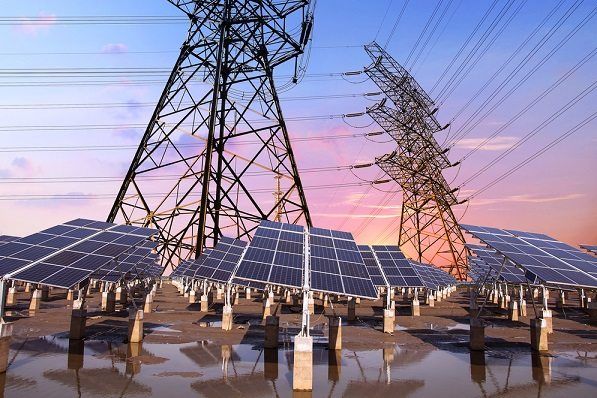
A few of the country’s mineral resources alone, such as coal or what have you, can generate enormous electricity required by the overall Nigerians. Similarly, energy sources like biomass and solar, which are renewable and reliable – if properly harnessed – can generate electricity that can serve the entire Nigerian population and beyond.
Biomass can either be used directly via combustion to produce heat, or indirectly after converting it to various forms of biofuel. Its conversion to biofuel can be achieved by different methods broadly classified into chemical, thermal, and biochemical methods.
Besides, why is solar energy (photovoltaic) still in abeyance within the shores of Nigeria despite its obvious impact on the global society? Most Western countries that cannot boast of a steady fifteen degree Celsius (15C) currently depend mainly on solar as regards power supply, let alone Nigeria that can steadily boast of over thirty degree Celsius (30C).
The country abounds with the aforementioned three energy sources. But pathetically, the resources are lying fallow. The government needs to create an industry that would produce the required facilities. The proposed approach cannot be actualized without allowing the private investors to totally key into the sector.
In the ongoing power generation via turbine or hydro-plants, there’s compelling need for the government to decentralize the transmission grid. Rather than sustaining the national grid, since it’s obvious that such sustenance is cumbersome, each region or zone ought to be entitled to a transmission grid, thereby easing the maintenance cost. This can be aptly actualized by involving the private sector.
The aforementioned approach won’t only reduce cost, but will equally boost adequate and uninterruptible power supply across the federation. Hence, the various established private transmission grids, such as the Power Geometrics situated in Aba the commercial hub of Abia State, needs to be encouraged effectively.
Just a few weeks back, the President sacked the country’s Power Minister and his replacement was effected immediately. We cannot continue to hire and fire on a regular basis. It’s time we discovered the fundamental causes of our common predicament towards addressing them headlong.
The required remedy to the Nigeria’s electricity crisis does not lie in the ability of the serving power minister, but in the adequacy of the extant policies. This cannot be achieved if the glaring corruption continues to stare our faces.
The country’s generation sub-sector comprises about 23 grid-connected generating plants. These plants are in operation round the country with a total installed capacity of 10,396MW, with available capacity of 6,056MW.
The thermal-based generation has an installed capacity of 8,457.6MW, with available capacity of 4,996MW. The hydro-based generation possesses a total installed capacity of barely 1,938.4MW, with available capacity of 1,060MW.
It’s noteworthy that the thermal segment has been sold to the private sector, except the Sapele Power Plc – generating about 414MW – that is 51% sold. Similarly, the hydro segment is under long-term concession.
In its effort to increase the level of power generation in the country, the Federal Government (FG) in 2004 under the leadership of Olusegun Obasanjo, incorporated the Niger-Delta Power Holding Company (NDPHC) as a public sector funded emergency intervention scheme.
The NDPHC was imbued with the mandate to manage the NIPP, which essentially involved the construction of identified critical infrastructures in the generation, transmission, and distribution as well as the natural gas supply sub-sectors of the electric power value chain.
In total, the NIPP power stations were targeted to add about 4,774MW of electricity to the national grid network. Some of these stations have been privatized while plans are underway to sell the remaining ones to interested investors towards increasing private-sector participation in the power sector, thereby improving the ongoing reform programme of the FG.
In furtherance of the reform policy direction, the Nigerian Electricity Regulatory Commission (NERC) has in the past licensed many private Independent Power Producers (IPPs). Some of the IPPs are reportedly at various stages of project development.
The above analysis implies that the generation sub-sector is currently operating under the PPP arrangement, with almost 97% participation of the private investors. But the transmission segment is completely managed by the government, whilst the distribution sub-sector is being operated and managed by private investors.
It’s imperative to acknowledge that, even if all these generating plants are in good form, or functioning as expected, their total installed capacity will still not generate the needed Megawatts (MW) of electricity across the federation, taking into cognizance the overall population of Nigeria.
Taking note of the abridged survey or review, we would understand that the country’s lingering power crisis ought to be blamed on the epileptic policies guiding the sector, not the ability of the minister as being perceived. The fact is that, even if the best brain and most active technocrat is in charge of the Power Ministry, the sector will continue to wail and bleed.
More so, aside the policies needed to encourage the utilization of other energy sources as highlighted herein and full private sector participation, formidable policies must equally be formulated by the government to discourage the endless rampant importation of conventional power generating sets (devices) whose operations depend solely on fuel, diesel, or gas, as the case may be.
The importers of the said equipment won’t live to see a functional power sector in Nigeria, hence the need for a policy or legislation to tame their unwholesome activities in the country, coupled with the political will to ensure holistic implementation of the proposed policies.
As I enjoin the Nigerian government to extend hand of fellowship to the cognoscenti towards doing the needful, we must take into cognizance that there ought to be a holistic probe into the dwindling power sector.
Like this:
Like Loading...