DD
MM
YYYY

PAGES

DD
MM
YYYY

spot_img

PAGES

Home Blog Page 5571

Google Buys A $2.1 Billion Office in New York

0

Google has purchased a $2.1 billion office on Manhattan’s West Side as it embraces a hybrid work due to the pandemic, the company announced on Tuesday.

Quoting Real Capital Analytics, the Wall Street Journal described the purchase as the largest real estate deal in the United States for an office building since the onset of the Covid-19 pandemic.

Caught in the challenges of Covid-19 restrictions, the tech giant is looking to move to a more flexible work space for its growing workforce, and New York, which holds its second-biggest office, becomes the destination of choice.

“Google has been fortunate to call New York City home for more than 20 years, during which time we have grown to 12,000 employees,” the company said in a statement. “New York’s vitality, creativity and world-class talent are what keep us rooted here. It is why we’re announcing today that we are deepening our commitment to New York and intend to purchase the St. John’s Terminal in Manhattan for $2.1 billion, which will serve as the anchor of our new Hudson Square campus.”

Google sees the property purchase as key in giving back to New York, where it has recorded tremendous growth over the years. The web search giant also believes purchasing the St. John’s Terminal will give it the opportunity to increase its help to communities and organizations impacted by the pandemic.

“This space will provide new opportunities for us to engage with our community neighbors, and will include office space occupied by Google, a public food hall, community space, galleries, the city’s largest public rooftop space and educational and environmental programs run by the Hudson River Park Trust,” the company said.

Google had been leasing the St. John’s Terminal, a former freight transfer facility, purchasing it as part of the tech giant’s expansion of its 1.7 million-square-foot Hudson Square campus. The company said that the building will be “reimagined into a highly sustainable, adaptable and connected building.”

As a result of the new office space, Google will have the capacity to employ 14,000 workers in New York City in the future. The company said the decision to purchase St. John’s Terminal further builds upon its existing plans to “invest more than $250 million this year in our New York campus presence.”

In an era when the office work model has been greatly scuttled, Google and other big companies have had to make tough decisions allowing employees to work from home. Google said that it’s buying the building because in-person collaboration is an “important part of our future.” Google has recently postponed a full return to the office until 2022 and is giving employees the option of permanently working from anywhere if their role allows.

As CNN noted that though the pandemic has forced many to work from home, tech companies have been expanding their office facilities, Google’s purchase of the St. John’s Terminal does not come as a surprise. Facebook recently bought a previously unused corporate headquarters from outdoor retailer REI in Bellevue, Washington. Amazon has also been eying to expand in New York’s Hudson Yards, according to Bloomberg, while Apple has announced major expansion plans in various US cities.

The St. John’s Terminal transaction will close in the first quarter of 2022.

China to Establish Banks in Nigeria – In the Digital Currency Era, It May Be The Game Changer

8

For years, Chinese businesses in Nigeria have been significant with construction, technology and clothing. But that’s about to change as the world’s second-largest economy is moving to establish its presence in the Nigerian banking industry.

Cui Jianchin, the Chinese Ambassador to Nigeria, says he is in talks with Chinese-owned banks to establish operations in Nigeria, NAN reports.

“Before my departure from Beijing to Abuja, I talked to several banks in China. When you list the world’s 10 big banks, six are in China. The banking sector is very important because, without money, we cannot build our industries,” Mr Jianchin explained. “What I am thinking here is best to talk to the governor of the central bank, and how we can allow the Chinese banks to run office here and now, they are doing the feasibility studies on that”.

This, the envoy said, would boost Nigeria’s economy and expand trade relations between the two nations.

Mr Jianchin disclosed this on Tuesday in Abuja while addressing journalists during the commemoration of the 2021 Chinese Moon Festival and China-Nigeria Cultural week.

He explained that establishing Chinese banks in the country would also be a point of discussion during the China-Nigeria Binational Committee meeting.

“I am working hard that in the binational meeting, I hope we can make a big decision and give a big push to let the banking industry and insurance industry because financial integration and institutions are key,” Mr Jianchin added. “If you go to China, you will find our banking industry is very powerful, not only for business but a change in the way of life.

Extolling the extant China-Nigeria trade relations, the Chinese ambassador noted that the trade volume between China and Nigeria was nearly $20 billion, increasing from 2020’s $19.2 billion.

However, China’s move to add banking to its menu of businesses in Nigeria has come at a time when the Central Bank of Nigeria (CBN) is moving to establish the Nigerian International Financial Centre (NIFC), in a bid to put Nigerian banks in a global spot.

The last time China made attempt to get into Nigeria’s financial market was in 2018, when the Asian giant made a currency swap agreement with Nigeria to finance trade and investment between both countries.

The currency swap agreement was designed to facilitate trade transactions between China and Nigeria and remove the need to use the US dollar in between the two countries’ currencies. The deal had a three year tenor that allows CBN and the Peoples Bank of China (PBoC) to swap a maximum of 15 billion yuan for N720 billion. However, the three years tenor has passed and the deal is yet to materialize, killing the prospect of facilitating easier financial transactions between Nigeria and China.

But a lot has changed in the financial world since 2018 when the deal was struck, creating a path that may help Nigeria and China to strike a fresh attainable deal.

With the fintech boom, whose innovation has paved the way for partnership deals between Nigerian and Chinese payment companies, the cross-border bottlenecks have been largely overcome. But there is more. China and Nigeria are on a race to start using central bank digital currencies (CBDC), with Nigeria scheduled to launch its digital currency, the E-naira by October 1, and China, on the verge of conducting final tests for its CBDC, E-yuan.

The two countries have shunned cryptocurrencies, seeking to use their central banks-backed digital currencies as alternative. This means, China establishing banks in Nigeria may help both countries to facilitate dollar-free financial transactions, swapping their digital currencies.

Nnaemeka Anyanwu Donates To Tekedia General Scholarship Fund

0

Good People, join me to thank Nnaemeka Anyanwu, MBA, PMP, ACP, who just made a donation to Tekedia Institute General Scholarship Fund. Through his generosity, more young people will experience our top-rate business education.

Five current students will benefit from this scholarship. Eyitayo Adeleke, our head of campus unit, will coordinate, select and send to the enrollment team. Students, if interested, reach out to him.

Thank you Nnaemeka for funding the future!

Biden Administration Opens The Veil On Crypto Ransomware Criminals

1
White House

One of the greatest illusions in modern commerce is the construct that Bitcoin and its cousins are outside the control of the government. My postulation has remained: provided you cannot keep the coins under your pillow or underground rock safe, you will need an exchange. And for an exchange to receive your money, it needs to be registered by a government to be connected to the regular banking system. Through that system, you will have an opportunity to transfer money and buy the coins.

And since that is the case, with the exchange under the control of the government, Bitcoin may be technically decentralized but unfortunately for the crusaders, it is centralized, legally on structure. 

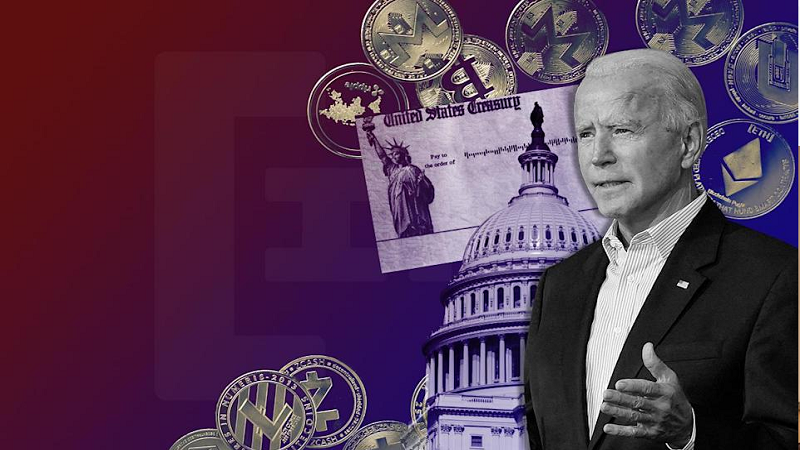
That is playing out right now: the Biden Administration is simply suing exchanges which help criminals cash out on ransomware: “The Biden administration has announced new sanctions against cryptocurrency exchange Suex for using its platform to receive revenue for ransomware groups adding to the growing trend of cyberattacks targeting companies and government agencies.”

Good luck arguing that you did not know your customers. Then, they will drop another regulation – KYC/AML. By the time you are beaten left and right, you will ask those crypto holders to show up with their correct identities.

It is simple: governments run this earth and when it matters, they have all the tools to get things done!

U.S. Sanctions Crypto Exchange, Suex, for Facilitating Ransomware Transactions

0

The Biden administration has announced new sanctions against cryptocurrency exchange Suex for using its platform to receive revenue for ransomware groups adding to the growing trend of cyberattacks targeting companies and government agencies.

It marks the first of such action against a virtual currency exchange. The Treasury said ransomware payments totaled more than $400 million in 2020 alone, four times more than it was in 2019, and it is taking new measures to see it stops.

The sanction means Suex’s access to US markets has been cut off. The department alleged that Suex “has facilitated transactions involving illicit proceeds from at least eight ransomware variants.” It also said that more than 40% of the company’s known transaction history is “associated with illicit actors.”

The Treasury Department has also updated guidance to US businesses on paying ransoms to cybercriminals, saying that it “strongly discourages” such action.

Cyberattacks targeting US companies were notably significant this year with the ransomware attack against Colonial Pipeline – the largest fuel pipeline in the United States – in May. Carried out by the Russian-linked Darkside ransomware group, the attack forced Colonial Pipeline to take systems offline and halt all pipeline operations. The height of the attack rattled the US government with the Biden administration issuing emergency waivers in response, lifting limits on the transportation of fuels by road as fears of shortages begin to put upward pressure on oil and gas prices.

Bloomberg reported that Colonial Pipeline handed over almost $5 million to the attackers for decryption of its data, some of which was subsequently recovered by the Justice Department in June. It took Colonial Pipeline several days to get operations back to normal.

CSO reported that earlier this week, New Cooperative, a grain distributor with 60 locations in Iowa, fell victim to a large ransomware attack by a Russian-speaking group known as BlackMatter. The attackers are believed to have requested almost $6 million for the release of the data, although this is unconfirmed by New Cooperative. An investigation into the incident is ongoing.

The new sanctions against Suex, a platform that offers an easy and often difficult to trace way to buy and exchange cryptocurrency, are an effort by the Biden administration to prevent ransomware payments that encourage actors to carry out further attacks against US companies.

Commenting to reporters ahead of the announcement, Treasury Deputy Secretary Wally Adeyemo said, “Exchanges like Suex are critical to attackers’ ability to extract profits from ransomware attackers,” adding that the action “is a signal of our intention to expose and disrupt the illicit infrastructure using these attacks.”

However, John Bambenek, principal threat hunter at Netenrich, questions whether the move will have any material impact on the proliferation of ransomware.

“Attempting to stop ransom payments didn’t help the kidnapping problem we saw in Sou a couple of decades ago, and it’s not likely to help much here either,” he tells CSO. “Sanctions against providers may make a degree of sense as long as the more honest providers are able, willing, and incentivized to report bad behavior on their platforms. What is more important in stopping ransomware is finding those involved and getting them brought to justice, and these kinds of actions actually could impair intelligence collection on those bad actors.”

This new line of action is expected to deter other crypto exchanges, making it difficult for them to facilitate transactions for ransomware criminals.