DD
MM
YYYY

PAGES

DD
MM
YYYY

spot_img

PAGES

Home Blog Page 56

Tesla Launches Lower-Priced Model 3 in Europe to Combat Sales Slump and Chinese Competition

0

Tesla launched the new, lower-priced version of its Model 3 sedan in Europe on Friday, two months after its U.S. debut. This aggressive pricing move is a critical part of CEO Elon Musk’s efforts to revive the company’s core automotive business amid a prolonged and severe downturn in demand that has seen Tesla’s global sales contract for the better part of two years.

The launch of the Model 3 Standard is a direct tactical response to the softening demand across Europe, where new registrations have fallen sharply this year, forcing Musk to pivot away from a singular focus on premium vehicles. Tesla’s European sales have been in sharp decline for most of 2025, with registrations slumping 33% in the first eight months of the year, even as the broader Electric Vehicle (EV) market expanded.

This sharp reversal has seen many buyers opt for cheaper, fresher competitor vehicles such as the Volkswagen ID.3 and the aggressively priced Chinese rival BYD’s Atto 3.

De-Contenting for the Mass Market

The new entry-level Model 3, described by Tesla as having an “ultra-low cost of ownership,” achieves its reduced price through calculated cost-cutting, known as “de-contenting,” rather than a fully new architecture.

The Model 3 Standard is a stripped-down version that eliminates or downgrades several premium features found in higher trims, now renamed “Premium.”

Feature Downgraded/Removed Standard Model 3 (Europe) Premium Model 3 (Europe)
Audio System Downgraded to a 7-speaker system; no subwoofer or amplifier Premium 15-speaker system with subwoofer
Interior Textile and vegan leather seats; no heated rear seats or ventilation Full vegan leather; heated and ventilated front seats
Lighting No Ambient Lighting (only footwell and door pocket lights) Full ambient interior lighting
Convenience Manual folding side mirrors; manually adjustable steering column Power-folding mirrors; power-adjustable steering column
Battery/Range Smaller battery pack (~69.5 kWh usable capacity) Larger pack (~80 kWh)

Despite these omissions, the car still offers a respectable driving range above 300 miles (480 km) and is expected to begin customer deliveries in the first quarter of 2026.

Aggressive Pricing to Stop the Bleeding

The pricing is designed to immediately close the competitive gap with its rivals.

Country Model 3 Standard Price (Local Currency) USD Equivalent (Approx.)
Germany €37,970 $44,299.60
Norway 330,056 NOK $32,698
Sweden 449,990 SEK $47,820

In Germany, the Model 3 Standard’s €37,970 starting price directly undercuts the widely popular Chinese-made BYD Atto 3 by a slim margin, but still faces threats from even cheaper EVs that price below €30,000. This aggressive stance follows the October launch of a lower-cost Model Y crossover, confirming Musk’s shift away from his scrapped plan for an all-new $25,000 EV in favor of building lower-priced versions of existing models.

AI Pivot vs. Near-Term Revenue

Musk has largely diverted attention from the sales weakness by emphasizing the company’s long-term pivot toward artificial intelligence (AI), specifically focusing on robotaxis and humanoid robots. However, analysts caution that the immediate financial viability of the company still rests on its core business.

While Musk has promised a future centered on AI and driverless services, these new, aggressively priced Model 3 and Model Y variants are seen as the key drivers of near-term revenue growth and vital to stemming the tide of declining global sales that have made investors uneasy.

Tesla hopes to convert millions of price-sensitive European consumers into buyers and restore momentum in a market it once decisively dominated by making calculated compromises on features.

How Portugal Is Redefining Residency-by-Investment for a New Global Landscape

0

For more than a decade, Portugal has been one of the most attractive destinations for global investors seeking stability, mobility, and long-term residency in Europe. The country’s residency-by-investment program, widely known as the Golden Visa, has played a unique role in connecting international capital with national development priorities. As global migration trends shift and cross-border investment behavior evolves, Portugal is now entering a new phase where its strategy focuses more strongly on innovation, competitiveness, and sustainable economic contribution.

In this context, understanding what the next evolution of the program represents – particularly as investors look ahead to the Portugal Golden Visa 2026 – becomes essential for entrepreneurs, executives, and families evaluating long-term relocation or diversification options.

A Changing Global Environment for Talent and Capital

Over the past few years, residency-by-investment programs worldwide have faced pressure to adapt. The global economy has become more interconnected and digital, geopolitical competition has intensified, and countries are reevaluating the balance between attracting foreign investment and maintaining housing affordability, regulatory control, and national security.

Portugal responded proactively to this environment by reshaping its program to emphasize contributions that strengthen strategic sectors, promote innovation, and support long-term economic growth. While some investment routes have been phased out, the core of the program remains active and more aligned with global expectations of responsible and productive investment.

This shift mirrors a broader international trend: nations are increasingly competing not only for capital but for high-value individuals who can contribute entrepreneurial, technological, and financial expertise. Portugal, already a growing hub for digital nomads, startups, fintech companies, and multinational teams, continues to position itself as a stable entry point into the European market.

Why Portugal Remains a Leading Choice for Investors

Portugal’s attractiveness goes far beyond its visa framework. The country offers a rare combination of advantages that appeal simultaneously to investors, entrepreneurs, and families:

  • A stable democratic environment and strong rule of law
  • One of the safest countries in the world
  • High-quality infrastructure, healthcare, and education
  • A strategic time zone for companies operating across the US and Europe
  • Competitive corporate tax incentives for innovation and R&D
  • A lifestyle marked by mild weather, strong culture, and accessible cost of living

These elements form a comprehensive value proposition. Even with program adjustments, Portugal continues to attract high-income individuals and global families seeking not only mobility but also security, diversification, and long-term stability.

The Strategic Role of Investment Funds in the New Phase

One of the most important developments in the evolution of Portugal’s residency-by-investment framework is the increasing emphasis on regulated investment funds. These vehicles channel capital into sectors such as technology, renewable energy, healthcare, education, and industrial modernization.

For investors, this shift offers several advantages:

  • Professional fund management by licensed financial entities
  • Diversified portfolios supported by regulatory oversight
  • Clear alignment with national economic priorities
  • Attractive risk-adjusted returns in sectors with growth potential
  • Transparency and governance standards consistent with EU regulations

As global investors become more selective, Portugal’s move toward structured and supervised investment models strengthens credibility and positions the country competitively alongside other European alternatives.

What Investors Expect from the Portugal Golden Visa 2026

Looking ahead, the next stage of the program reflects a deeper integration between foreign investment and Portugal’s long-term development strategy. The focus is on:

  1. Sustainable contribution to high-value sectors

Funds supporting technology, clean energy, industrial transformation, and export-oriented companies are expected to remain central.

  1. More efficient application and digital processes

Portugal continues investing in administrative modernization to reduce waiting times and deliver more predictable timelines.

  1. Stronger alignment with EU standards

Residency programs across Europe are undergoing regulatory tightening. Portugal’s compliance-first approach provides reassurance to investors.

  1. Growing interest from US and Asian markets

Rising geopolitical uncertainty and asset diversification strategies are directing more attention to Portugal as a safe, EU-based alternative.

For individuals planning ahead, understanding these dynamics is essential for making informed decisions.

Portugal’s Broader Economic Vision and the Role of Global Residents

Beyond the visa itself, Portugal is shaping an economy grounded in innovation, internationalization, and digital competitiveness. With strong growth in sectors such as green technology, biotech, telecommunications, AI, and nearshore service centers, the country is positioning itself as a talent magnet within Europe.

Residency-by-investment applicants often bring more than financial resources. They relocate businesses, establish partnerships, create job opportunities, and integrate into the entrepreneurial ecosystem. This contributes to:

  • Increasing Portugal’s competitiveness
  • Strengthening global networks
  • Bringing new skills and perspectives
  • Supporting long-term economic resilience

As global competition for talent intensifies, Portugal stands out for offering a stable and welcoming environment where investors can integrate without sacrificing lifestyle, safety, or opportunity.

The Outlook: A Program Evolving, Not Ending

Despite speculation in international media over the years, Portugal’s Golden Visa remains active – but with a refined purpose. The years leading to 2026 reflect a transition toward a more strategic, transparent, and resilient investment model.

For investors, this evolution represents an opportunity rather than an obstacle. The program rewards long-term thinking, aligns with modern investment standards, and provides a stable path to European residency while contributing to Portugal’s economic future.

As global uncertainty grows, Portugal’s consistency, stability, and forward-looking approach make it one of the most compelling options worldwide for high-net-worth individuals seeking mobility, diversification, and a stronger European presence.

Review of DTCC and EY Report on the Shift to 24×5 Trading in U.S. Equities

0

The Depository Trust & Clearing Corporation (DTCC) and Ernst & Young LLP (EY US), titled “The Shift to 24×5 Trading: What It Means for U.S. Equity Markets”, explicitly highlights how the rise of 24×7 crypto markets is fueling global investor demand for extended trading hours in traditional U.S. equities.

The report analyzes industry surveys and trends, projecting that up to 10% of total U.S. equity volume could trade during overnight sessions by 2028, driven largely by this convergence of crypto-inspired expectations and global participation.

The report notes that the convergence of securities and crypto brokerages is a major catalyst, as retail and institutional investors accustomed to crypto’s near-continuous access (24×7) now expect similar availability for U.S. stocks.

This “always-on” mindset is particularly strong among Asia-Pacific (APAC) investors, who represent a growing share of global demand and face time-zone barriers with current U.S. market hours typically 9:30 AM–4:00 PM ET.

Regulatory permissiveness and surging international interest—especially from APAC—are key factors pushing the industry toward 24×5 trading Sunday 8:00 PM ET to Friday 8:00 PM ET, with brief pauses. The report emphasizes that extending hours aligns U.S. markets with a “global, always-on investor base,” reducing fragmentation and enhancing accessibility.

Based on surveys of market participants, 1–10% of equity volume is expected to migrate to overnight sessions by 2028. This could reshape liquidity patterns, with implications for pricing, volatility, and execution.

Nearly 60% of firms surveyed plan upgrades to technology, risk management, and liquidity tools to handle extended hours. Key areas include: Updating circuit breakers, surveillance, and Securities Information Processor (SIP) data feeds for real-time accuracy.

Managing intraday liquidity and collateral in a non-stop environment, drawing lessons from crypto’s 24/7 operations. DTCC is extending its clearing hours to support this shift, starting mid-2026, to bolster market safety.

Mark Nichols, Principal and Capital Markets Strategy Leader, EY US: “Extending trading hours represents a significant step for U.S. equity markets, aligning market structure with the expectations of an increasingly global, always-on investor base.”

Through this collaboration with DTCC, we aim to equip market participants with clear, actionable insights on navigating the complex firmwide implications and operating model considerations of a 24×5 trading environment—helping the industry collectively build a more accessible and resilient marketplace.

Val Wotton, Managing Director and Global Head of Equities Solutions, DTCC: “As interest in near round-the-clock trading of U.S. equities grows, we are meeting this demand by extending our clearing hours to support our clients and further strengthen the safety and soundness of the markets.”

This report builds on ongoing SEC approvals and exchange initiatives, such as NYSE Arca’s plan for 22-hour trading sessions 1:30 AM–11:30 PM ET Monday–Thursday, launching late 2026 and FINRA’s expansion of trade reporting facilities.

These projections center on the anticipated migration of trading activity to “overnight” sessions outside traditional 9:30 a.m.–4:00 p.m. ET hours, influenced by global investor demands, crypto market parallels, and regulatory shifts.

The report estimates that 1%–10% of total U.S. equity volume could shift to overnight sessions by 2028. This represents a potential multi-billion-dollar notional value increase, given that average daily U.S. equity volume exceeds $500 billion in notional terms based on recent market averages.

Currently, overnight volumes hover at ~1% of total daily notional traded, primarily in limited after-hours activity via electronic communication networks (ECNs) and alternative trading systems (ATS). The projected range suggests a 10x potential uplift at the high end, though the lower bound implies minimal disruption.

63% of surveyed participants anticipate an increase in overnight volumes, aligning with key milestones like the National Securities Clearing Corporation’s (NSCC) extended clearing hours launch on June 28, 2026.

Medium-Term (by 2028): 74% expect meaningful changes, with the 1%–10% range materializing as exchanges (e.g., NYSE Arca) roll out 22-hour sessions starting late 2026.

The range accounts for optimistic (10%) vs. conservative (1%) outcomes. High-end scenarios assume strong retail adoption and APAC inflows; low-end ones factor in slower infrastructure buildout or regulatory hurdles.

The projections stem from a DTCC-led survey of 95 market participants across 84 firms, including 72 NSCC members. Respondents were queried on expected volume shifts over 2–3 years, operational readiness, and risk perceptions. This sample skews toward sell-side and clearing entities, providing a practitioner lens but potentially underrepresenting pure buy-side views.

Overnight sessions may see thinner books, leading to wider bid-ask spreads potentially 2–5x daytime levels and price dislocations, deterring all but opportunistic traders. Extended hours strain surveillance, raising fraud risks in a less-regulated environment.

~60% of firms plan tech upgrades, but staffing shortages and system downtimes could bottleneck growth. DTCC’s enhanced margining mitigates this, but asymmetric liquidity might inflate default risks by 10–20% in stress scenarios.

A 1%–10% overnight shift could redistribute ~$5–50 billion in daily notional, fostering a more globalized U.S. market but introducing volatility spillovers, It aligns equities with forex/commodities’ extended hours, potentially boosting overall efficiency by 5–10% via reduced settlement delays.

As the U.S. clearing powerhouse, DTCC’s infrastructure is “future-proofed” for 24×5, with the 2026 NSCC transition as a proving ground. Projections underscore DTCC’s role in risk mitigation—e.g., dynamic intraday margins could capture 20–30% more collateral in volatile overnight trades—enhancing systemic resilience.

DTCC’s projections paint a plausible, retail-led evolution toward 24×5 trading, with the 1%–10% range by 2028 signaling modest but transformative growth. Success hinges on liquidity bootstrapping and risk harmonization; absent these, volumes may cluster at the lower end.

This analysis positions the shift as evolutionary rather than revolutionary, borrowing crypto’s playbook to modernize equities. Crypto’s role is echoed in related discussions, where lessons from perpetual swaps and DeFi are informing equities’ evolution toward frictionless, global access.

Paribu’s Acquisition of CoinMENA is A Major Milestone in Crypto Expansion

0

Turkish cryptocurrency exchange Paribu announced it has acquired a majority stake in CoinMENA, the leading Sharia-compliant crypto platform in the Middle East and North Africa (MENA) region.

The transaction values CoinMENA at up to $240 million, marking Turkey’s largest fintech acquisition to date and its first cross-border purchase of a digital asset platform.

Paribu, founded in 2017 and Turkey’s top crypto exchange with over 10 million users, is acquiring a controlling stake in CoinMENA. CoinMENA, established in 2020 by Talal Tabbaa and Dina Sam’an, operates as a regulated crypto service provider serving 1.5 million users across 45 countries, with support for over 50 cryptocurrencies and local fiat on-ramps.

The deal is valued at up to $240 million, though exact terms weren’t disclosed publicly. CoinMENA had previously raised about $20 million from investors like BECO Capital, Arab Bank Switzerland, Circle Ventures, and Bunat Ventures.

Through CoinMENA, Paribu secures two high-value regulatory licenses: From the Central Bank of Bahrain issued in early 2021. From Dubai’s Virtual Assets Regulatory Authority VARA, issued in late 2023. These enable compliant operations in two crypto-friendly hubs, bypassing years of licensing delays and positioning Paribu as a multi-jurisdictional player in MENA—a region with surging crypto adoption.

Paribu’s move is a calculated play to bridge Turkey’s vibrant but domestically focused crypto market where it handles billions in monthly volume with MENA’s growth potential.

CEO Yasin Oral described it as “opening a new chapter in Paribu’s growth journey,” emphasizing how the licenses create a “regulated player in one of the world’s most crypto-adoptive markets.”

CoinMENA’s co-founder Talal Tabbaa called it the “most transformative milestone” for the platform, validating its Sharia-compliant model amid rising demand for Islamic finance-aligned crypto services.

Sharia-compliant cryptocurrencies—often called “halal crypto”—are digital assets designed to align with Islamic principles, prohibiting riba (interest), gharar (excessive uncertainty), maysir (gambling), and haram (forbidden) activities like alcohol or pork-related ventures.

As of December 2025, this niche is exploding, driven by the 1.9–2 billion global Muslim population seeking ethical alternatives in a $3+ trillion crypto market. Adoption surged 40% year-over-year in MENA and Southeast Asia, fueled by regulatory green lights and platforms like HAQQ Network and Binance.

The sector’s value hit $8 billion in 2025, up from $4.5 billion in 2024, with projections to $12.45 billion by 2028. MENA alone saw $390 billion in crypto flows from mid-2023 to mid-2025, but halal options lag behind demand—only 5–10% of tokens are certified, creating a “supply crunch.”

Muslim-majority markets like Indonesia and UAE lead adoption, with 10–15% of locals holding crypto. This ties into the $4 trillion Islamic finance opportunity, where blockchain tokenizes sukuk for fractional, transparent ownership.

Projects like Caiz emphasize “fair finance for all,” warning against speculative “gambling” tokens while highlighting riba-free DeFi. Bitcoin (BTC) tops lists as “digital gold” for its scarcity and decentralization; Ethereum (ETH) follows for utility in non-interest DeFi.

Niche tokens like Islamic Coin (ISLM) on HAQQ Network donate 10% of supply to charity and support 6M+ users. Others include gold-backed HelloGold and Caiz Coin. Screening focuses on asset-backing (e.g., real estate or gold), transparency, and fatwas from scholars.

Tools like Saraf Screening and Halal Crypto Guide vet 50+ coins quarterly, flagging issues like interest-based staking in MakerDAO (MKR). Real-world assets (RWAs) like tokenized sukuk in Gulf nations are booming, offering yields via profit-sharing, not interest.

Binance’s Sharia Earn launched in July 2025 offers certified halal staking for BNB, ETH, and SOL in 25+ countries, certified by Amanie Advisors—praised on X as a “game-changer” for inclusion. Bybit added interest-free accounts for 18 coins. Emerging wallets like SidEx integrate AI for zakat calculations and traceable transfers.

Paribu’s $240M buy of CoinMENA secured Bahrain/Dubai licenses, expanding Sharia services to 1.5M users across 45 countries. Theological variances by region; need for standardized governance. Solutions include scholar-blockchain teams for audits.

This is the convergence of faith, tech, and finance is democratizing wealth for underserved communities, with RWAs and AI tools accelerating inclusion. On X, sentiment is bullish: “We’re entering the era of Halal DeFi.”

This acquisition signals accelerating consolidation in global crypto, for Turkey It cements Paribu’s role as a regional powerhouse, potentially exporting Turkish liquidity and tech to MENA while diversifying away from local economic volatility.

For MENA, expect enhanced infrastructure for cross-border trading, with Paribu’s scale like advanced trading tools boosting CoinMENA’s offerings. It also highlights the UAE and Bahrain as “license magnets” for global players.

Amid regulatory clarity in places like Dubai, deals like this advised by firms such as Areta underscore how acquisitions are faster routes to compliance than organic licensing. Similar to Binance’s regional pivots or OKX’s UAE push, it could spur more Turkish-MENA fintech ties.

Tether Investor Makes Record £9M Donation to Reform UK

0

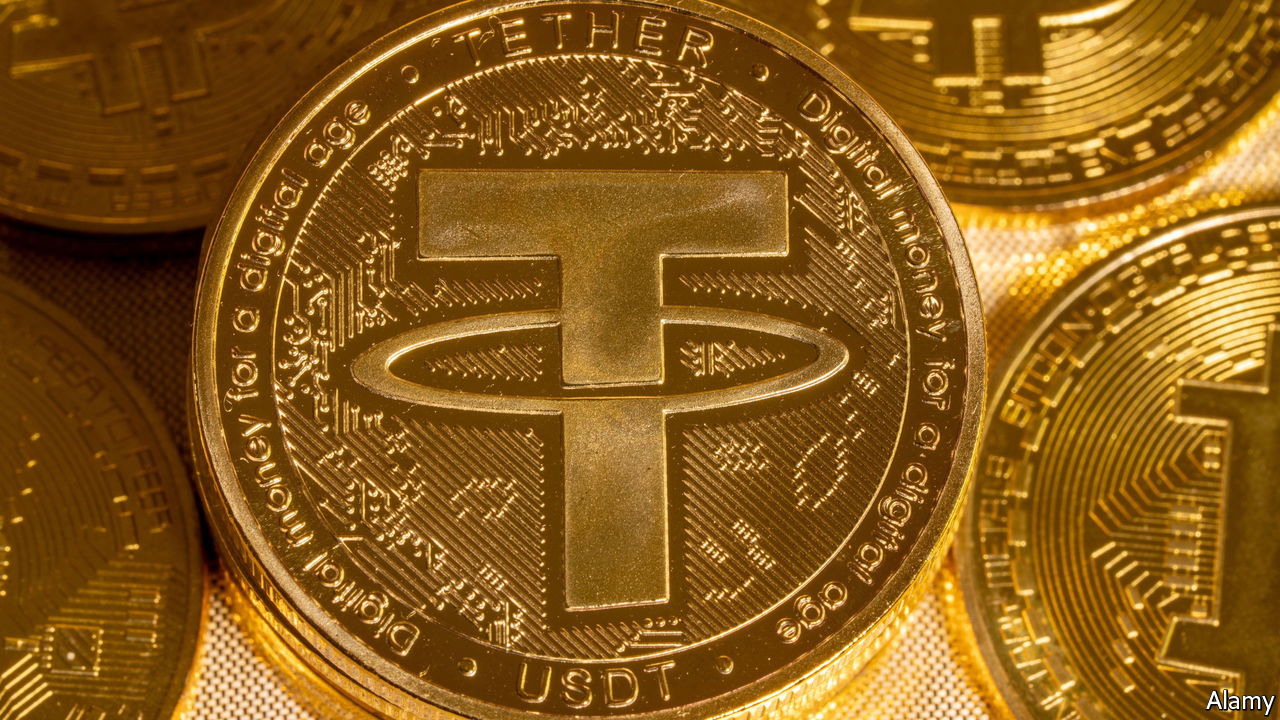
The UK’s Electoral Commission released quarterly donation figures revealing that Christopher Harborne, a British billionaire and former shareholder in Tether the issuer of the world’s largest stablecoin.

USDT and its affiliated exchange Bitfinex, donated £9 million approximately $11.4–12 million to Reform UK, the right-wing populist party led by Nigel Farage.

This marks the largest single political donation ever made by a living individual to a UK party, surpassing previous records like the £8 million given by Lord David Sainsbury to the Liberal Democrats in 2019.

The only larger sum on record is a posthumous £10 million bequest from the late Lord John Sainsbury to the Conservatives in 2022. Harborne, a Thailand-based aviation entrepreneur and crypto investor also known as Chakrit Sakunkrit, held a significant stake in DigFinex, the parent company of Tether and Bitfinex, from 2017 to 2018.

He has a history of funding right-wing causes, including £6 million to the Brexit Party (Reform UK’s predecessor) in 2019 and £3 million before the 2019 general election, plus £1.6 million to the Conservatives.

In 2022, he gave £1 million to Boris Johnson’s private office—the largest known donation to an individual MP at the time. Harborne’s son, William, is CEO of Rhino.fi, a stablecoin infrastructure firm that partnered with Tether in 2024.

The donation was made on August 1, 2025, contributing to Reform UK’s total Q3 fundraising of £10.5 million—more than double the Conservatives’ £7 million and Labour’s £2.6 million. It’s reported as a cash transfer, not cryptocurrency, though Reform UK became the first UK party to accept crypto donations earlier this year.

Reform UK, polling strongly ahead of May 2026 local elections, has aggressively courted the crypto sector. Farage has pledged a national Bitcoin reserve if elected and publicly promoted Tether in September 2025.

The party denies any link between Harborne’s gift and its pro-crypto stance, including deregulation pushes. However, the donation has sparked scrutiny amid growing UK concerns over crypto’s role in politics.

Labour’s Pat McFadden called for a donation cap, and the Electoral Commission is reviewing crypto financing rules, with proposals to potentially ban such contributions in a forthcoming Elections Bill.

This infusion has supercharged Reform UK’s finances, enabling expanded campaigning as it challenges the establishment parties. It underscores crypto’s deepening influence on global politics, with Harborne’s total political spending nearing £21 million mostly to Reform UK/Brexit Party.

Critics, including Transparency International, warn of risks from uncapped donations reliant on a few wealthy backers. No evidence suggests impropriety, and Harborne is a permissible donor as a UK electoral register member.

The news has trended on X, with users highlighting Farage’s crypto-friendly policies as a potential catalyst for UK Bitcoin adoption if Reform gains power.

Solana Tokens Now Live on Base

Aerodrome Finance, the leading DEX and liquidity hub on Coinbase’s Base network, has officially integrated the new Base-Solana bridge.

This allows any Solana-based token— SPL tokens, including $SOL itself to be bridged over, deployed for liquidity, and traded natively on Aerodrome in seconds, without wrappers or intermediaries.

It’s a game-changer for cross-chain liquidity, blending Solana’s high-speed ecosystem with Base’s low-cost, Ethereum-aligned infrastructure.

Users bridge assets directly via the Base-Solana bridge, powered by Chainlink’s Cross-Chain Interoperability Protocol (CCIP) and verified by Coinbase nodes for security. Once on Base, tokens can be pooled on Aerodrome for trading, yielding, or distribution—think instant memecoin launches or DeFi strategies across chains.

Already rolling out on Aerodrome, Zora (for NFTs), Virtuals, Flaunch, and Relay Protocol. Developers can fork the open-source bridge code on GitHub to add it to their own apps. Early tests include trading $SOL, $CHILLHOUSE, and $TRENCHER natively on Base.

Creators on Solana can now tap into Coinbase’s 120M+ users for instant exposure via Aerodrome pools. This bidirectional bridge unlocks deeper liquidity pools, potentially boosting TVL on both sides.

Aerodrome’s veAERO holders will vote on emissions to incentivize these new pools, aligning rewards with cross-chain growth.

Access Base’s cheap gas ~$0.01/tx and Coinbase on-ramps without leaving your wallet. Trade Solana assets in Base dApps, then bridge back seamlessly. Instant influx of Solana’s vibrant token ecosystem supercharges liquidity. Aerodrome’s TVL could explode as it becomes the go-to meta-DEX for L2s.

Early volume is already ticking up, with $10M+ in bridged assets reported across similar bridges. If you’re a trader, head to Aerodrome’s app to test bridging a small SPL token. This could be the spark for Base flipping Solana in TVL—watch $AERO and $SOL closely.