DD
MM
YYYY

PAGES

DD
MM
YYYY

spot_img

PAGES

Home Blog Page 5600

Tekedia Capital Wishes Mecho Autotech Success At YC Demo Day

0

Good People, join me to wish Tekedia Capital portfolio company, Mecho Autotech, a good outing on Y Combinator Demo Day. Mecho is a robust and fully interactive technology platform that delivers seamless vehicle maintenance, inspection, and repair services via a robust network of certified mechanics and automobile technicians. It has the largest database of mechanics in Africa. Vetted mechanics – checked. Original spare parts…loading.

CEO Olusegun Owoade and COO Ayoola Akinkunmi, and the whole team, good luck. Tekedia Capital stands with the team, and we wish you a solid performance.

To learn more about  Tekedia Capital and how we discover great startups, click here.

Register and Join “Business Growth Playbooks w/ Ndubuisi Ekekwe” Which Begins

0

You can still join this program.

Three more days to. No written materials. No pre-recorded videos. Just talks on the playbooks of business growth. Tekedia Institute begins Business Growth Playbooks w/ Ndubuisi Ekekwe on Sept 4 at 4.30pm WAT; it will run for 8 weeks. See it as spending 90 minutes of your week to listen to how modern companies are winning in markets.

Pricing: N20,000 naira (or US$60) per person; register and join us today.

This course, unlike Tekedia Mini-MBA, is exclusively on Zoom. That means there is no pre-recorded video and written materials. However, PowerPoint used for each Zoom session will be uploaded in the portal. The core goal is to provide a platform where innovators and project champions can co-learn, live, and examine playbooks for business growth. Both the faculty and participants will be co-learning alongside.

Huawei’s Mate 40E Smartphone Built with 60% Chinese Components

0
Huawei Mate X

Huawei Technologies is increasingly defying US sanctions with increased use of made in China parts in its smartphones. The increase in Chinese components is most notable in Huawei’s latest Mate 40E smartphone.

Huawei was nearly crippled by US sanctions restricting it access to made in America telecom components, killing the Chinese company’s dream to lead the global 5G roll out. Now the embattled telecom vendor seems to be rising from the misfortune, independent of the United States.

The latest Huawei smartphone points to the possibility of total freedom from the shackles of US sanctions in the near future. Nikkei reports on the 40E smartphone.

Nikkei, working with Tokyo-based research specialist Fomalhaut Techno Solutions, took down Huawei’s Mate 40E, which is compatible with fifth-generation networks, and found that parts made in China accounted for around 60% of the total value of components – twice as much as the Mate 30, the previous model.

Huawei remains reliant on certain key semiconductors from the US-made chips it has in stock. This vulnerability makes it likely that the company will fall further behind its competitors over time.

Samsung captured the largest share of the global smartphone market in the first half of 2021, according to International Data Corporation, an American company. Huawei placed second but has since collapsed from the top five rankings.

The Mate 40E was released in China in March. Nikkei and Fomalhaut identified the origin of each component to perform their analysis.

Fomalhaut estimated the cost of manufacturing the Mate 40E at $ 367, which is practically the same as the Mate 30, which hit the market in September 2019. The value of Chinese components was 56.6% in the Mate 40E, compared to 30.0% previously.

The increase is mainly attributable to an organic electroluminescence display manufactured by the Chinese group BOE Technology which replaces a display from Samsung Electronics. The component represents almost 30% of the overall value of the smartphone.

“Although BOE is around two years behind Samsung in terms of technology, Huawei is actively increasing the use of BOE-made parts to compete with Samsung in the smartphone market,” said Yoshio Tamura, president of Asian operations at Display Supply Chain Consultants, an American research company told Nikkei.

Before, Huawei had no choice but to use Qualcomm chips as the “brain” of its smartphones. Disassembly found the performance of the Kirin 990E chip – designed by Huawei subsidiary HiSilicon and manufactured by Taiwan Semiconductor Manufacturing Co. – is equivalent to similar American chips. It was also used in the Mate 30.

HiSilicon is also the source of the Mate 40E’s antenna switch – a communications chip – as well as one of the power control chips. Other Chinese components include the fingerprint sensor and the battery.

Fomalhaut director Minatake Kashio said the teardown confirmed “further advances in self-production and in-house component sourcing” that Huawei had undertaken ahead of the US sanctions.

In early 2019, President Donald Trump’s administration banned Huawei from doing business with US companies. In the fall of 2020, the United States added an effective ban on the supply of semiconductors using American technology to the Chinese company. Huawei’s smartphone business continues to struggle under the administration of President Joe Biden, who kept the pressure on.

Huawei shifted its purchases to land as it reduced its U.S. inventory. US coins only made up 5.2% of the Mate 40E’s total value, but that figure was actually over 2.6% in the Mate 30. There are six types of US semiconductors in the new model versus two in the old one.

The teardown did not find any American components compatible with 5G networks. But the Mate 40E has Qualcomm chips for core functions, such as processing communication ciphers. The device also contains a 4G semiconductor from Qorvo, an American manufacturer. Kashio believes Huawei “may have used US-made chips that he bought and accumulated before the sanctions.”

Since US sanctions apply to TSMC’s Kirin chips, Huawei will have to decide how quickly it uses its stock and where to find another source.

The shortage of smartphone spare parts does not affect the quality but limits Huawei’s production capacity. Huawei’s 5G units, including the Mate 40E, are generally out of stock at outlets, according to people familiar with the situation.

Teardown revealed that 15.9% of the Mate 40E components by value are Japanese made. This was down from the Mate 30’s 24.5%, as a $ 15 memory device produced by Kioxia, formerly Toshiba Memory, was replaced by a Samsung product.

There are, however, a number of components that are produced only by Japanese companies, including sensors and signal processing devices. The Mate 40E has an image sensor in its Sony Group camera. The teardown identified components from other Japanese companies, including Murata, TDK, Taiyo Yuden and Asahi Kasei.

“Yes [Huawei] asks us to provide parts, we have to comply even under US sanctions, “an official at a Japanese supplier told Nikkei. “There are even cases where executives ask directly. We will ship within an allowable range.

South Korean components made up 37.2% of Mate 30, but dipped to 11.5% in Mate 40E, behind Chinese and Japanese components. With the Samsung screen replaced by a BOE product, only a storage unit and a few memory chips remain.

The Zoom’s One Oasis Is Losing Steam

0

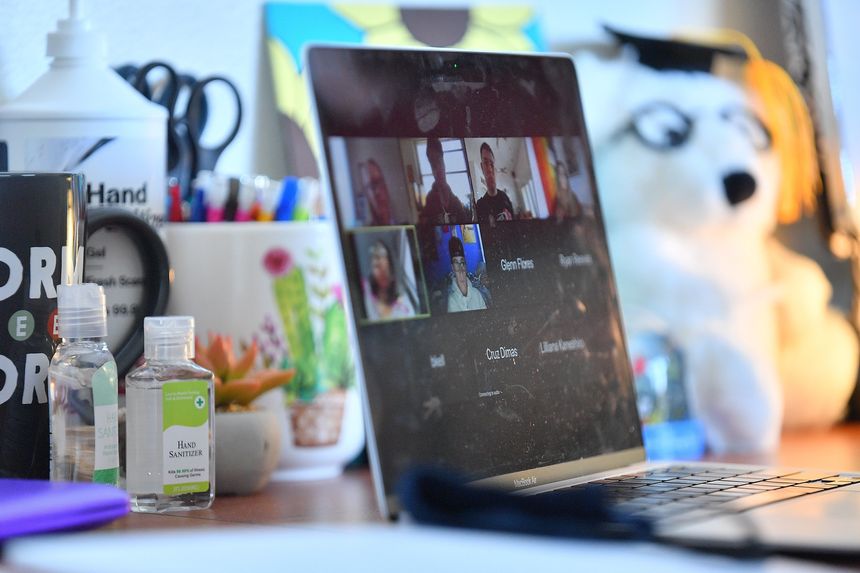
Zoom, the category-king video conferencing system, had its moments last year at the peak of the pandemic. It saved businesses and markets. The company just  reported a quarterly revenue in excess of 1 billion. That number is a milestone for the company as that was the first time it broke the billion mark. Call it a mark for a great celebration!

But if you look deeper, that revenue is coming from double plays, which though fine, does not explain the challenge on the one oasis which has powered the evolution of Zoom. And that is a problem for the company going forward.

The problem is evident here: Zoom’s Alexa ranking has dropped from 15 to 17 and that means it has lost millions of traffic. That is indirectly revenue lost by the company: “while the 54% increase in revenue does not match the company’s growth from a year-earlier, when its “services … made it ubiquitous during the pandemic,” Zoom said it’s seeing signs of demand easing as smaller companies start to meet back in person, rather than over screens”. That is why Zoom has lost more than 16% of its value in the last five days.

“Zoom Video Communications Inc.’s quarterly revenue surpassed $1 billion for the first time in the company’s history, though the strong demand for its videoconferencing services that made it ubiquitous during the pandemic is showing signs of easing as regular activities resume.

“The roughly 54% increase in revenue, while slightly better than Wall Street expected, couldn’t match the huge growth that Zoom had in the year-earlier period, when revenue surged fourfold compared with the prior year as companies leaned more heavily into remote working.

“While the company forecast revenue of more than $1 billion again in the current quarter, its adjusted earnings guidance came in lower than expected. And company officials said small businesses and consumers were starting to spend less as opportunities for in-person meetings and gatherings expand. Zoom officials said some metrics supercharged by the pandemic had begun to normalize as customers returned to “more thoughtful, measured buying-patterns.”

“Zoom shares fell 12% in after-hours trading, after closing up 2% on Monday.

“Research firm International Data Corp. projects that collaboration applications will become a roughly $51 billion market by 2025, nearly double 2020 levels.”

President Buhari Reshuffles Cabinet, Drops Two Ministers [full press statement]

0

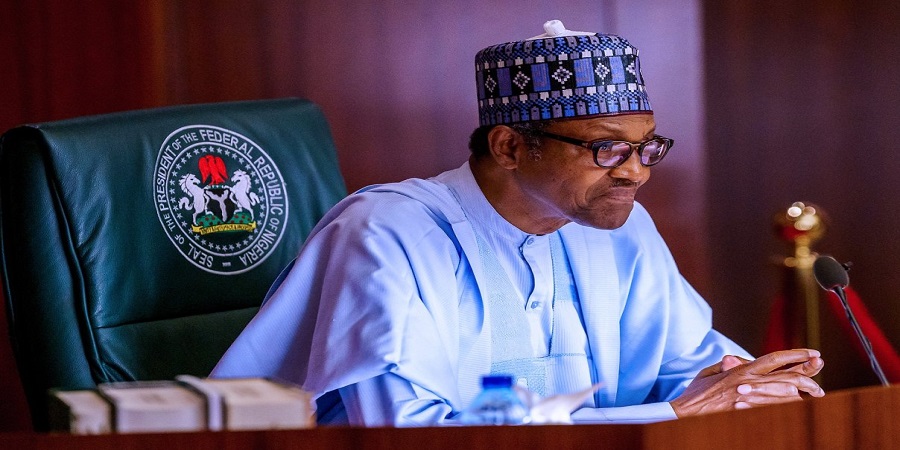
President Muhammadu Buhari has approved a reshuffle in the cabinet formed on August 21, 2019; the press statements show. Yet, the changes are largely unrelated to the insecurity paralysis. You would have expected changes in the ministries of interior, defense, and related ones. Maybe, this is Act 1, Scene 1. Act 2 may be coming soon. But in six months, most ministers will start resigning as they test the waters for possible gubernatorial elections in their states.

The press statements

In a statement to cabinet members during the Federal Executive Council meeting on Wednesday 1st September, President Buhari announced that Mohammed Sabo Nanono, Minister of Agriculture and Rural Development, and Engr. Sale Mamman, Minister of Power were leaving the cabinet.

In the same vein, Dr. Mohammad Mahmood Abubakar, Minister of Environment, was redeployed to assume office as the Minister of Agriculture & Rural Development, while Engr. Abubakar D. Aliyu, Minister of State, Works & Housing will now be the Minister of Power.

The President said the changes were sequel to the “tradition of subjecting our projects and programs implementation to independent and critical self-review” through sector reporting during Cabinet meetings and at retreats.

He added that “these significant review steps have helped to identify and strengthen weak areas, close gaps, build cohesion and synergy in governance, manage the economy and improve the delivery of public good to Nigerians.”

Femi Adesina

Special Adviser to the President

(Media & Publicity)

September 01, 2021

The full text of the statement is reproduced below:

On Wednesday 21st August, 2019 the current Federal Executive Council was sworn-in after a rigorous retreat to bring returning and new members up to speed on the accomplishments, challenges and lessons drawn from my first term in Office and to emphasise the 9 priority areas of government for the second term.

  1. Two years and some months into the second term, the tradition of subjecting our projects and programs implementation to independent and critical self-review has taken firm roots through sector Reporting during Cabinet meetings and at Retreats.

  2. These significant review steps have helped to identify and strengthen weak areas, close gaps, build cohesion and synergy in governance, manage the economy and improve the delivery of public good to Nigerians.

  3. I must commend this cabinet for demonstrating unparalleled resilience that helped the government to navigate the disruption to global systems and governance occasioned by the emergence of COVID-19 shortly after inauguration. The weekly Federal Executive Council meetings was not spared because the traditional mode was altered.

  4. As we are all aware, change is the only factor that is constant in every human endeavour and as this administration approaches its critical phase in the second term, I have found it essential to reinvigorate this cabinet in a manner that will deepen its capacity to consolidate legacy achievements.

  5. Accordingly, a few cabinet changes, marking the beginning of a continuous process, have been approved. They are as follows:

Ministers Leaving the Cabinet:

I. Mohammed Sabo Nanono, Minister of Agriculture and Rural Development, and

II. Engr. Sale Mamman, Minister of Power.

Redeployment:

I. Dr. Mohammad Mahmood Abubakar, Minister of Environment, to assume office as the Minister of Agriculture & Rural Development;

II. Engr. Abubakar D. Aliyu, Minister of State, Works & Housing assume office as the Minister of Power.

  1. In due course, substantive nominations will be made to fill the consequential vacancies in accordance with the requirements of the constitution.

  2. I have personally met with the departing members to thank them for their contributions to discussions in cabinet and the invaluable services rendered to the nation. Today, effectively marks their last participation in the Federal Executive Council deliberations and I wish them the best in all future endeavours.

  3. Finally, I wish to reiterate once more, that this process shall be continuous.

  4. I thank you all and May God bless the Federal Republic of Nigeria.