DD
MM
YYYY

PAGES

DD
MM
YYYY

spot_img

PAGES

Home Blog Page 5608

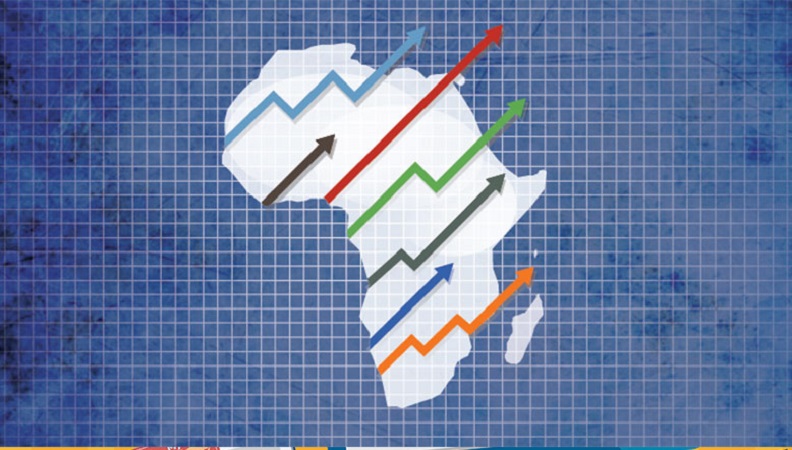
The Decades-Long Opportunities on Digitizing African Economies

0
We sent this note to members of Tekedia Capital Syndicate. We are seeing new patterns evolving in African markets, and we are sharing with our members at deeper levels, co-educating with them as we make decisions with Naira and US Dollars. We like patterns because you never miss opportunities if you understand them. We understand how the technology nexus shapes markets and economic systems. This morning, a startup we invested in our last cycle (July) is closing another funding at 3x valuation. I am long on Nigeria and Africa.

Greetings. We thank you for your partnership. We are writing to inform you that we are seeing new patterns in markets, and Covid-19 has drastically re-wired the architectures of economies. These changes are enabling new dimensions of opportunities across industries and territories.

Case 1: Africa seems to have found a working ecommerce model. In the last 6 months, B2B ecommerce companies like Suplias, Alerzo, TradeDepot, Omnibiz and others like them have raised $millions in Nigeria alone. And these firms are not burning money but have found extremely niche ways to capture value in markets. They provide sellers in open markets and supermarkets a means to order bulk merchandise through their apps, and they deliver to those shop owners. By doing this, the shop owners do not need to leave their shops, among other benefits.

Case 2: Portfolio company Lafiya Telehealth was originally conceived for the African market. But due to orders on its cloud hospital, the company has opened a physical sales location in the US to serve states which found it innovative to build a hospital within hours instead of days!. So, even in advanced nations, everything has changed: decentralized everything connected by technology.

Cases….

Tekedia Capital wants to play a major role at the early stage of funding these new species of companies. Our goal here is to see that even if our members decide to exit during relative mid-tier valuation secondaries, they could have made decent returns. In other words, if bigger investors come, and decide to buy out early investors, returns will still be significant.

Our strategy is proactive: never wait for builders to come; go after them. If we keep finding them, we will be well positioned for this decades-long digitization of African economies. The potential reward is massive.

We are excited about the promises of the future. We are always here for one-on-one conversation on what we see in markets. We are here to discuss at deeper levels these patterns with relevant market cases. Thank you for your partnership.

Regards,

Tekedia Capital Team

We Welcome New Members: Use this link for Tekedia Capital Syndicate registration

For prospective investors & startups looking for funds, email capital@fasmicro.com

Update Your LinkedIn With Your Tekedia Institute Qualifications

0

Tekedia Institute Alumni, add your qualification in your LinkedIn profile education section. Let’s grow the alumni community.

So, for Tekedia Mini-MBA, Tekedia Advanced Diploma, Tekedia Certificate programs, Tekedia Practice, etc, programs you can pick the school “Tekedia Institute” under Education and type the qualification.

—To List for Mini-MBA:
Go to Education section in your LinkedIn profile:
School: Tekedia Institute
Degree: Mini-MBA
Field of Study: Business Administration Management, General

—To List Advanced Diploma in Project Management:
School: Tekedia Institute
Degree: Advanced Diploma
Field of Study: Project Management

The best school.tekedia.com

ZIVA: Zenith Bank Introduces AI-powered Customer Service Channel

0

The Nigerian banking sector is increasingly adding Artificial Intelligence (AI) to its workforce, using automation to fill the gap in customer service among other areas.

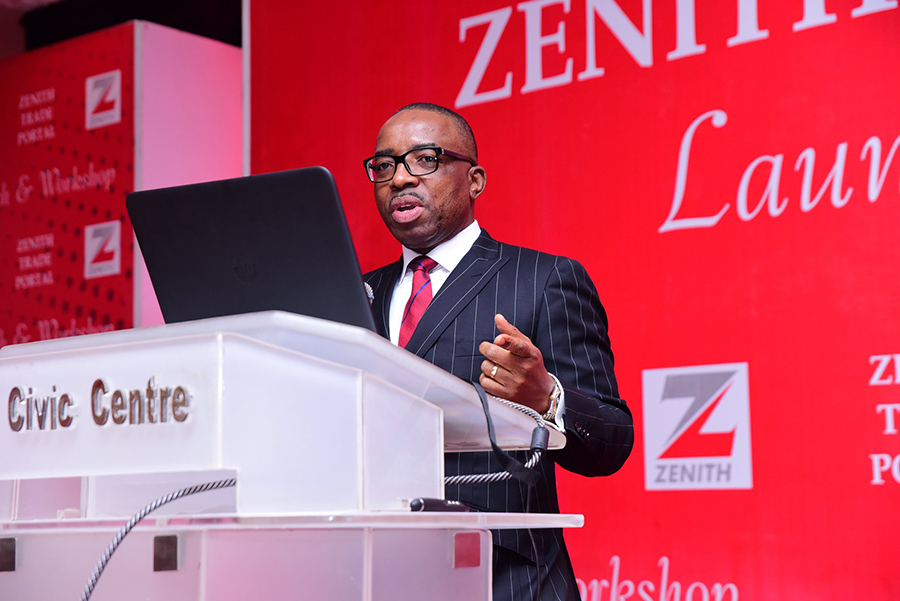
In this vein, Zenith Bank Plc has introduced an Artificial Intelligence (AI) powered Chatbot on WhatsApp named ZIVA (Zenith Intelligent Virtual Assistant), which enables customers to perform financial transactions and enjoy real-time customer service from their mobile phones.

The bank explained in a statement that its customers would be able to use the initiative by simply adding the bank’s verified WhatsApp mobile number 07040004xxx on their mobile devices, agree to the legal terms of use and then initiate a conversation.

This product provides the convenience for the bank’s customers to interact and transact on a 24 hours basis on the encrypted WhatsApp platform, it added.

Among the functions of the AI enabled chatbox is instant response to chats/queries via the WhatsApp platform. Also, customers would be able to open new accounts, receive instant transaction notifications, check their balances on the go, transfer funds and top up airtime.

They would also be able to confirm cheques, pay bills, apply for loans, block their accounts, and request mini statements, amongst other banking services.

Commenting on the new banking solution, the Group Managing Director/Chief Executive of Zenith Bank Plc, Mr. Ebenezer Onyeagwu said: “The launch of ZIVA is driven by the need for additional secured channels of communication with our customers as we deepen our retail penetration.”

He further explained that the ZIVA initiative was instigated by the need for diverse communication channels for the bank’s customers.

“Since the behavioural pattern of the modern customer dictates that they want to engage with brands over the channel of their choice, it was really important for us as a leading financial services institution and a pioneer of several technological innovations in the financial services industry to implement this solution in order to continue to create value for our teeming customers who incidentally were already using WhatsApp as a primary channel of communication,” he said.

Zenith Bank has remained the leader in the Nigerian banking industry in many fronts. The bank said it would continue to distinguish itself in the Nigerian financial services industry through superior service offerings, unique customer experience and sound financial indices.

“The bank has remained a clear leader in the digital space with several firsts in the deployment of innovative products, solutions and an assortment of alternative channels that ensure convenience, speed and safety of transactions.

“The bank’s commitment to world-class service standards has led to several product innovations, including the “Zenith Timeless Account”, which allows Nigerians aged 60 years and above bank for free, the “Zenith Save4me”, a high-interest target savings account and the deployment of contactless payments and QR on ATM points, amongst others.

“Zenith Bank places a premium on its core business strategy anchored on People, Technology and Service, to create value for its numerous clientele. With a team of dedicated professionals, the bank leverages its robust Information and Communication Technology (ICT) infrastructure to provide cutting-edge solutions and products through its network of branches and electronic/digital channels,” it said.

However, the AI initiative, which is likely going to be followed by other banks will impact jobs in the banking sector. With automated solutions to customers’ queries, the banking workforce will undergo a downsizing. AI is increasingly being embraced by industries following the outbreak of covid-19, limiting in-person services as much as possible but also taking jobs away from people.

Experts believe the trend will force many out of work in the near future, but will also help them to learn and practice other needed skills.

Nigerian Guardian Newspaper and Its Micromotional News on ‘Second Citizenship’

0

Till the day God will wipe out all living things on earth, migration will not fade out in people’s memory and organisation’s dictionary. This is premised on the fact that human beings will always look for better environments for sustainable living and business transaction while organisations will find ways of managing inflow and outflow of movement.

As I was working on today’s research and writing activities, a colleague shared a link with me through WhatsApp and said, “Mutiu, Nigerian newspapers are becoming more irresponsible by the day.” Initially, I ignored the message because I taught the link was fake news, misinformation and disinformation we always discuss whenever we meet.

On a second thought, I opened it and found myself on the Facebook page of The Guardian newspaper, one of the most respected and reputable newspapers in Nigeria. On the page, I only read the snippet and looked a white man’s picture used as a featured picture by the newspaper. The piece is titled “Nigerians increasingly seeking second citizenship” and published on August 26, 2021 at exactly 1:13pm.

With this headline, I expect a news story that informs us how Nigerians are migrating with the intent of gaining second citizenship through scholarship, job opportunities or asylum. Surprisingly, the newspaper exploited existing political challenges that compound socioeconomic problems many Nigerians are experiencing. In my view, the newspaper manipulated people’s mind towards clicking the link. In one of my forthcoming academic publications with colleagues in Russia, Nigeria and the United States of America, news stories like this are analysed and their implications discussed within the Nigerian project context.

Instead of constructing the headline using news headline construction practice, the newspaper should have let the audience know that the article is a promotional one not the types of news stories they have been reading about Nigerians’ movement to the global north and some part of the global south countries.

Nothing stops the editor for using SPONSORED OR PROMOTIONAL CONTENT before the main headline. The failure to prioritise this makes the news story micromotional rather than informational to the Nigerian audience. Micromotional in the sense that it aims at getting public attention wrongly using headline as a bait with the key intent of advancing strategic goals and objectives of the company being promoted. It is easy to argue that the piece will let political leaders address issues and challenges driving youths and adults, who have been fed up with the system, holistically. But, in my view, it is appropriate to explore responsible and solutions journalism practices.

“I am from Nigeria”!

0

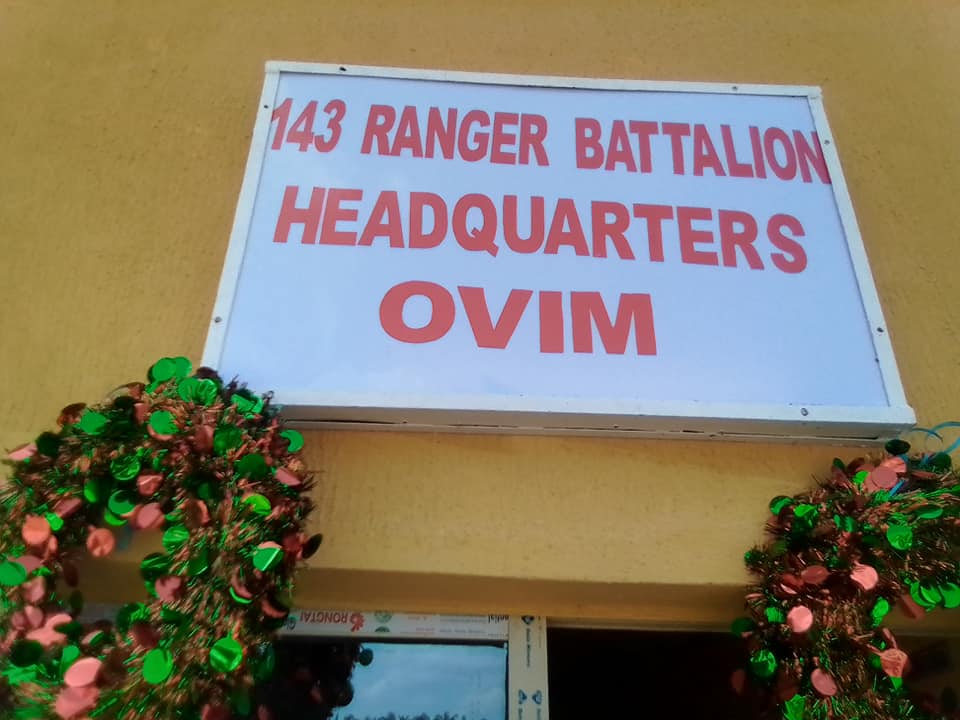
“Where are you from?”, the villager asked. The soldier responded, “I am from Nigeria”. The man then followed, “your drinks on me”.  While in my village (Ovim, Abia state) during the 2019 Christmas visit, I overheard that conversation in a shop.

I am going back to that conversation because it is possible that part of the military training has to do with the ways they are asked to identify themselves. Yes, do not say “I am from Edo, Lagos, Uyo…. but simply Nigeria”. That is unity squared as in algebra.

Now the question: if soldiers see themselves as being from Nigeria, is there an opportunity to move from “state of origin” to “state of residence” for Nigerians? There needs to be a structural solution to the evolving demons of tribalism in Nigeria.