DD
MM
YYYY

PAGES

DD
MM
YYYY

spot_img

PAGES

Home Blog Page 5613

President Buhari Reshuffles Cabinet, Drops Two Ministers [full press statement]

0

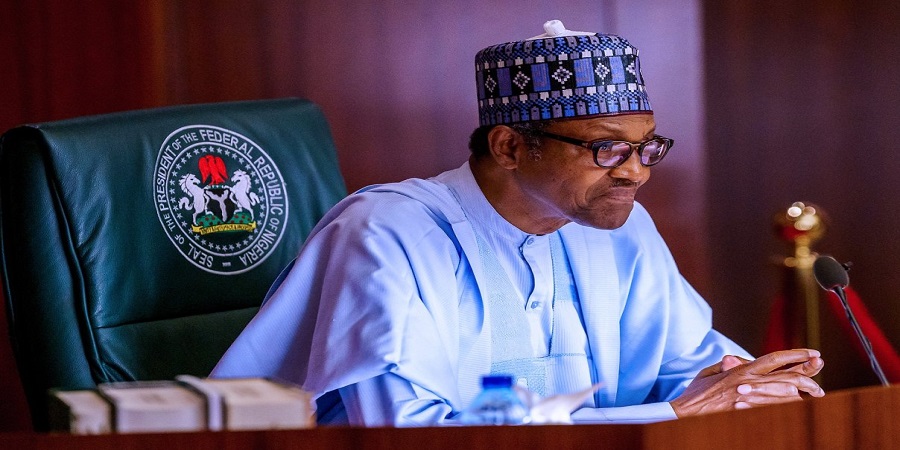
President Muhammadu Buhari has approved a reshuffle in the cabinet formed on August 21, 2019; the press statements show. Yet, the changes are largely unrelated to the insecurity paralysis. You would have expected changes in the ministries of interior, defense, and related ones. Maybe, this is Act 1, Scene 1. Act 2 may be coming soon. But in six months, most ministers will start resigning as they test the waters for possible gubernatorial elections in their states.

The press statements

In a statement to cabinet members during the Federal Executive Council meeting on Wednesday 1st September, President Buhari announced that Mohammed Sabo Nanono, Minister of Agriculture and Rural Development, and Engr. Sale Mamman, Minister of Power were leaving the cabinet.

In the same vein, Dr. Mohammad Mahmood Abubakar, Minister of Environment, was redeployed to assume office as the Minister of Agriculture & Rural Development, while Engr. Abubakar D. Aliyu, Minister of State, Works & Housing will now be the Minister of Power.

The President said the changes were sequel to the “tradition of subjecting our projects and programs implementation to independent and critical self-review” through sector reporting during Cabinet meetings and at retreats.

He added that “these significant review steps have helped to identify and strengthen weak areas, close gaps, build cohesion and synergy in governance, manage the economy and improve the delivery of public good to Nigerians.”

Femi Adesina

Special Adviser to the President

(Media & Publicity)

September 01, 2021

The full text of the statement is reproduced below:

On Wednesday 21st August, 2019 the current Federal Executive Council was sworn-in after a rigorous retreat to bring returning and new members up to speed on the accomplishments, challenges and lessons drawn from my first term in Office and to emphasise the 9 priority areas of government for the second term.

  1. Two years and some months into the second term, the tradition of subjecting our projects and programs implementation to independent and critical self-review has taken firm roots through sector Reporting during Cabinet meetings and at Retreats.

  2. These significant review steps have helped to identify and strengthen weak areas, close gaps, build cohesion and synergy in governance, manage the economy and improve the delivery of public good to Nigerians.

  3. I must commend this cabinet for demonstrating unparalleled resilience that helped the government to navigate the disruption to global systems and governance occasioned by the emergence of COVID-19 shortly after inauguration. The weekly Federal Executive Council meetings was not spared because the traditional mode was altered.

  4. As we are all aware, change is the only factor that is constant in every human endeavour and as this administration approaches its critical phase in the second term, I have found it essential to reinvigorate this cabinet in a manner that will deepen its capacity to consolidate legacy achievements.

  5. Accordingly, a few cabinet changes, marking the beginning of a continuous process, have been approved. They are as follows:

Ministers Leaving the Cabinet:

I. Mohammed Sabo Nanono, Minister of Agriculture and Rural Development, and

II. Engr. Sale Mamman, Minister of Power.

Redeployment:

I. Dr. Mohammad Mahmood Abubakar, Minister of Environment, to assume office as the Minister of Agriculture & Rural Development;

II. Engr. Abubakar D. Aliyu, Minister of State, Works & Housing assume office as the Minister of Power.

  1. In due course, substantive nominations will be made to fill the consequential vacancies in accordance with the requirements of the constitution.

  2. I have personally met with the departing members to thank them for their contributions to discussions in cabinet and the invaluable services rendered to the nation. Today, effectively marks their last participation in the Federal Executive Council deliberations and I wish them the best in all future endeavours.

  3. Finally, I wish to reiterate once more, that this process shall be continuous.

  4. I thank you all and May God bless the Federal Republic of Nigeria.

Great News for Tekedia Capital

0

Today began really well: a really brilliant startup in Tekedia Capital raised $millions today. I will allow the team to work on their moments. But I want to congratulate the team for the tenacity, excellence and can-do-attitude they have demonstrated.

I am a teacher and typically teachers get good gifts: I want a gift to go to that special market where they ring bells. I have got a good bell waiting and ready. Kpam kpam, bell rings. Glory!

At Tekedia Capital – we discover and fund winners. Our members, it is a festival today; really great news.

Read The Testimonials – Send Your Team To Tekedia Mini-MBA

0

If you send your team to our program, upon graduation, they will see markets in ways that will unlock value creation and business growth. And I guarantee it. A new edition begins Sept 13; read more testimonials here.

More and more companies are attending Tekedia Mini-MBA. As a business owner, as a CEO, as a Chairman of Board, as an innovator, as a builder, as a maker, etc, send your team to Tekedia Mini-MBA.

From 140 companies, from Microsoft to Flutterwave, from Shell to Nigerian Breweries, from BUA Cement to KPMG, from Amazon  to those amazing firms you know, your team will be ready to Innovate, Execute and Capture Value.


China Takes A Swipe at Gaming Industry With New Rules Limiting Play Time For Minors

0

In a new episode of its tech crackdown, China’s National Press and Publication Administration (NPPA) has released a notice imposing new rules, limiting online gaming time for minors. Kids and teens under 18 years old will have three hours weekly to play online video games.

On September 1st, video game companies will have to restrict gaming time to three hours a week — from 8 PM to 9 PM on Friday, Saturday and Sunday.

According to the translated version of the notice, the new rules will apply to companies providing online game services to minors, limiting their ability to serve those users outside the approved hours. The companies are also restricted from providing services to users who do not log in with their real-name registration.

The new set of restrictions are geared toward tackling addiction to online games. China has had to deal with growing cases of game addiction, especially among youths. The National Press and Publication Administration said online gaming has an impact on both the physical and mental health of minors.

The restriction system was adopted by Tencent in 2018, to limit play time on Honor of Kings, a widely popular mobile game.

But as TechCrunch noted, back then, limits weren’t as strict, as children up to age 12 could play one hour per day, and up to two hours per day for children between 13 and 18. At the time, authorities were concerned about worsening myopia among minors.

There is concern that the new rules will exacerbate the predicament of Tencent and gaming companies in China, who are already under the weight of the government’s crackdown.

“There are over 110 million minors that play video games in China today, and we expect the new limits to lead to a decline in the number of players and a reduction in the amount of time and money spent in games by those under 18,” Niko Partners senior analyst Daniel Ahmad said.

As TechCrunch noted, online gaming is mentioned specifically, which could mean that solo games won’t be restricted going forward. Also it’s unclear whether console games and foreign games will go along with the new rules, including the implementation of the new real-name-based registration system.

Some young gamers will also be tempted to circumvent the restrictions by signing up on a foreign server.

These open the Chinese gaming industries to uncertainties, though there is hope that it would have less impact on game companies as adult players will still be able to play 24/7.

“However, we do not expect the decline in spend to have a significant material impact on the bottom line of game companies given limits on time and spending have already been in place for minors for the past two years. Therefore, we expect a softer impact on overall growth rates as spending among minors was already low,” Ahmad added.

Tencent had earlier said that the amount of revenue coming from young game players is insignificant, given the existing restriction that allows them only a limited time. The company said it received only 2.6% of its second quarter gross game receipts in China from players under the age of 16.

In response to the new rules, Tencent issued a statement expressing its strong support for the new rules, saying it “will make every effort to implement the relevant requirements of the Notice as soon as possible.”

However, the news has seen the shares of some game companies drop. US-listed NetEase, another popular Chinese game development company, and Tokyo-listed Nexon and Koei Tecmo, shares fell 3%.

The culminating consequences of China’s crackdown on its tech industry is painting a grim future for its companies. Investors’ confidence in China’s market is plummeting, especially for US-listed Chinese companies.

“Policy uncertainty remains in the forefront. There is some calmness in the Chinese markets now from the lack of negative news. However, confidence is extremely fragile now,” Dave Wang, portfolio manager at Nuvest Capital, told CNBC. “Thus, if the Chinese authorities continue to release bits and pieces of negative news and worse another unexpected policy, we could see a renewed sell off.”

South Korea Enacts Law to Scuttle Apple, Google App Stores Dominance

0

While the US is still deliberating around legal bottlenecks in its efforts to break up the big tech and scuttle their dominance, an Asian country has scored a major win with a new legislation that will change how American companies, Apple and Google run their app stores.

On Tuesday, South Korea’s parliament passed a bill that would rein in the dominance Google and Apple exert over payments on their app stores, becoming the first nation in the world to enact such a law.

South Korean lawmakers voted to approve the amendments to the Telecommunications Business Act, which bars app market operators from forcing certain payment systems on mobile content businesses by abusing their market positions.

App store operators will also be restricted from unfairly delaying reviews of mobile content.

The move comes amid growing global scrutiny against Google and Apple, who maintain a strong grip over mobile ecosystems, for requiring developers on their app stores to use their proprietary payment systems that charge fees of up to 30 percent when users purchase digital goods within apps.

Developers around the world have questioned app market operators’ exclusive in-app payment systems, opposing their relatively high commissions and demanding that they should be able to freely use other systems.

The latest legislation in South Korea is expected to give app developers the choice to use other payment systems, potentially signaling a major shift in how Google and Apple run their app markets.

The legislative movement in South Korea picked up after Google announced in September last year it would enforce its billing system on all developers on its Play store starting October this year.

Local tech groups vehemently opposed the move, calling it a monopolistic measure and saying it would likely lead to a price hike in the broader digital content industry.

South Korea is home to a robust mobile app economy, with total sales from Google’s Play store at around 5 trillion won (US$4.2 billion) last year and that of Apple’s App Store at 1.6 trillion won, according to the Korea Mobile Internet Business Association.

But the legislative movement initially faced fierce controversy amid concerns over a potential trade conflict with the United States as it essentially took aim at U.S. companies.

In March, the Office of the United States Trade Representative made mention of South Korea’s legislative movement in its National Trade Estimate report.

“The requirement to permit users to use outside payment services appears to specifically target U.S. providers and threatens a standard U.S. business model that has allowed successful Korean content developers to reach global audiences,” the report read.

Local experts say a trade dispute is unlikely, considering recent similar movements in the U.S.

“The United States is currently reviewing measures against such market dominance, so it’s unlikely for it to become a big problem for South Korea,” Ku Ki-bo, a professor of global commerce at Soongsil University, said. “The legislation will likely present an opportunity for local IT companies to expand their market presence.”

Earlier this month, U.S. senators introduced a similar bill that seeks to limit the dominant control Apple and Google have over their app stores.

The bill adds pressure on Apple and Google who are locked in legal disputes with hit video game “Fortnite” maker Epic Games Inc. over app market operations.

In July, 36 U.S. states also filed a lawsuit against Google, alleging anti-competitive behavior in its Play store operations to collect and maintain its commission.

South Korean app developers have high hopes for the revised legislation to resolve their long-held complaints against the commissions charged by app store operators.

“The legal amendment is expected to lead to an expansion of diverse payment methods for consumers within apps,” said Jung Mina, policy director at the Korea Startup Forum.

“We welcome the revision and its efforts to maintain a fair market order. We believe South Korea has become a leading example in a global movement (against app market operators’ dominance).”

Apple and Google have expressed concerns about the revisions, arguing that allowing other payment systems could lead to security and privacy risks for users.

Other international tech groups, including NetChoice, have expressed that the revision would have a negative impact on the broader app ecosystem, according to National Assembly documents.

The bill’s passage also comes after multiple attempts from Apple and Google to appease developers.

Last week, Apple reached a class action settlement in the U.S. with developers who have accused it of exerting dominance in app content distribution.

Under the settlement, Apple said it would allow developers to share information about payment methods outside of apps with its users — a move the iPhone maker had previously limited.

Apple has also cut its 30 percent commission by half for app developers that earn up to $1 million annually at the start of this year.

Google has taken similar measures, lowering its commission to 15 percent for the first $1 million of revenue earned by developers from July.