DD
MM
YYYY

PAGES

DD
MM
YYYY

spot_img

PAGES

Home Blog Page 5626

The Lesson from TikTok on Facebook, And Mr Macaroni (Daddy Wa) On Nigeria’s Nollywood

9

Quibi lost to TikTok because humans really like videos.Quibi picked dozens of creators, hoping it could get a hit within them. TikTok does that differently: millions of people post short videos and AI parses them and quickly finds one that is viral. It then promotes it and quickly everyone is entertained. Statistically, you have a higher chance of finding more viral videos in millions of amateurs content than in dozens created by experts.

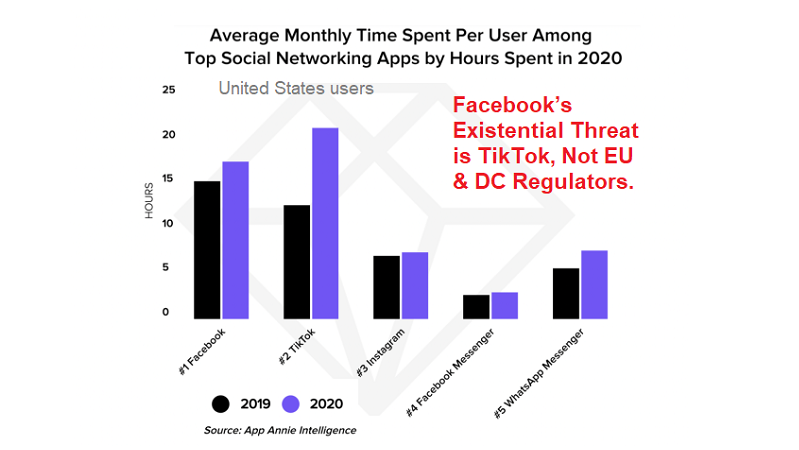
Now, the TikTok algorithm has overtaken Facebook. A few days ago, I wrote that TikTok would emerge as Facebook’s existential threat. The future is short videos because people are distracted on mobile: “The total viewing time for TikTok in the U.S. and U.K. is longer than that for YouTube, and short videos will continue to attract attention,” App Annie, an app market intelligence company.

Today, the best Nollywood producer in Nigeria is Mr Macaroni (yes, Daddy Wa) who creates short videos of 2-4 minutes at least one every 3 days. He is pulling more influence than any Nollywood studio because fewer people have time for 90-minute videos. His clip on Obi Cubana with Don Jazzy was legendary (video below). That man is a genius because he writes, produces, edits, etc in 3 days with his team!

People, short videos are for the mobile. If you plan to build for that channel, you need to think short videos.

If Africa is mobile-first, those launching streaming video on demand (SVOD) companies must think again if their main channel for distribution is mobile internet! Otherwise, it is a hopeless venture with no chance for future value capture, unless there is a double play strategy which can capture the value via another means (e.g. MTN making money via data plan for selling you SVOD). If that double play is not there, run away, fast.

The Facebook’s Existential Threat …TikTok

TikTok Tops Facebook, Becomes the Most Downloaded App

TikTok Tops Facebook, Becomes the Most Downloaded App

0

TikTok has come out of the many troubles of the past few years, following former president Trump’s executive orders targeting its operation in the United States. The short video app has witnessed record growth as its services become popular especially among young people.

A global survey of downloads in 2020 shows Chinese app on top of the list of social media providers for the first time since the study was first conducted in 2018, Nikkei Asia has the report.

As concern for personal privacy grows, Telegram, a messaging app that can delete posts, also ranked high during a year when social media use has been driven up by the COVID-19 pandemic.

ByteDance launched the international version of TikTok in 2017, and has since overtaken Facebook, WhatsApp, Instagram and Facebook Messenger — all of which are Facebook owned — in downloads, even in the U.S.

Some believe that personal information shared with TikTok is not secure. In 2020, former President Donald Trump called on the company to sell off its U.S. operations or be banned. The app’s popularity nevertheless grew during the pandemic, when it became the leading download in Europe, South America and the U.S.

Joe Biden, Trump’s successor, withdrew the presidential executive order, but uncertainties remain elsewhere. While The Financial Times reported on Sunday that ByteDance has revived plans to go public in the coming months, a spokesperson told Nikkei Asia on Monday that the article was “inaccurate,” insisting the company has no current plans for a stock market listing.

China’s Likee, a TikTok competitor, creates short videos that many companies use for marketing, and it ranked eighth in the latest global download league.

At the start of 2021, WhatsApp announced that it would share messaging data with Facebook relating to interactions between users and companies. Although WhatsApp promised to protect information about communications between friends and family, some users moved over to other apps.

Bucking that trend, Telegram, a messaging app originally developed in Russia but now based in Germany, moved up to seventh place. Users can adjust the settings to delete messages automatically after a specified period. The app was a particular hit with protesters in Hong Kong and Thailand who wanted to operate under the state radar.

Users have previously been mostly guided by the convenience and ease of use of free social media, but privacy has become more of a concern lately. “Companies’ approach to handling data will become a deciding factor in consumer choices,” Shinichi Yamaguchi, an associate professor at the Center for Global Communications, told Nikkei.

Discord, a voice calling app that moved up to seventh place, has benefited from people’s need to isolate during the pandemic. The app is popular among gamers for chatting when online, and has been funded by Sony Group. Social media services have primed the pump for greater outside investment and corporate involvement.

Domestic apps dominate the China market where many from overseas are closed out. Three in China’s top ten are for short video posting, including Douyin, the predecessor of TikTok, which ByteDance still provides in China.

Douyin is popular for music, dancing and general entertainment content. Douyin Volcano Edition — also from ByteDance — provides videos from everyday life, including people falling down in the street and other mishaps.

Among newcomers, Little Red Book (RED, Xiaohongshu) was fifth most downloaded. It combines social networking with e-commerce, mainly cosmetics, fashion, dietary supplements and consumer goods. In China, word-of-mouth is important, especially among women. “I read reviews of cosmetics and other products every day,” said a female user in Beijing.

Online networking is particularly popular among Generation Z, or Zoomers, born in the second half of the 1990s. Soul, the number ten app, uses artificial intelligence to analyze users’ personalities through psychological tests. It then matches them to others with similar profiles. A major difference from traditional matchmaking services is that people are not selected based on a picture of their face. Consumers use the app for matchmaking or simply to find new friends.

Short videos have gained popularity in other parts of Asia. Snack Video, an app from China’s Kuaishou, was the sixth most downloaded in Asia-Pacific. Its main feature is live commerce — a combination of video broadcasting and online shopping. Companies have used it to grow sales during the COVID-19 pandemic.

Line, which is especially popular in Thailand, was pushed out of the global rankings by strong competition from new players. In Japan, however, it moved from number two to the top spot. Line is working to make itself a super app by enhancing its payment settlement function.

During the pandemic, Osaka prefectural authorities used Line for vaccine reservations, and it is widely used by other local governments in Japan to disseminate information, making it increasingly a part of the infrastructure of daily. However, a subcontractor in China was discovered to be able to view Japanese user data, making security more of a concern.

The U.S. matchmaking app Pairs was originally developed in Japan, where it rose to eighth place. With the pandemic ongoing, it offers a remote dating function that was added in April 2020 to enable people to maintain romantic links from home. “I started using the service because I couldn’t have any real encounters with people during the pandemic,” said one male office worker in his twenties.

“The total viewing time for TikTok in the U.S. and U.K. is longer than that for YouTube, and short videos will continue to attract attention,” Chuzen Kin, marketing manager at App Annie, an app market intelligence company, told Nikkei as he reviewed trends. “In terms of content, music and comedies are becoming more popular.” Vocal social media is also on the up, with Clubhouse taking off in Japan and the U.S. in early 2021.

5G: the future, the present and the channel opportunity

0

By Giordano Albertazz

There was a time, not so long ago, when 5G was only talked about in relation to ‘the future’. But as the first 5G networks are deployed around the world, with higher bandwidth and faster speeds, applications such as high-definition video, ultra-low latency gaming and advanced telemedicine are already being enabled. The so-called “channel” presents several new opportunities, and by channel we mean a route to market that involves working with distributors, partners and resellers. What opportunities are emerging in the channel and what considerations should we bear in mind?

Covid-19 has changed most things, but in the case of our relationship with technology – certainly in the IT channel – it has been more accelerant than catalyst. As such, we are seeing demand for more sophisticated products, more deployment friendly solutions, more edge use case applications and prefabricated edge or data centre solutions. The channel is ideally placed for that because it’s got the breadth of the region in order to scale, take advantage of stock distribution and move things forward. But even the friendliest edge-ready solution has many moving parts requiring the partner to work more closely with the vendor and take advantage of the tools, configurators and practical support that a partnership should offer.

What does this mean for the rollout of 5G? Well, Ericsson is ready to offer secure on-site connectivity with its private 5G network and Deutsche Telekom and partners have successfully trialled the world’s first 5G voice over new radio (VoNR) call. But if we’re already seeing tangible examples of 5G’s application, realistically, we must have only just scratched the surface.

If we look at edge computing and 5G, the use cases are almost endless, as illustrated in Vertiv’s whitepaper on the subject: Turning on 5G: Using Edge Archetypes to Identify the Most Mature Use Cases . Everything from smart security to smart cities; digital health; automated cars; drones; extended reality…all have the potential to be accelerated by 5G. As the main enabler of 5G networks then, edge computing has to be considered one of the most important technologies of the next decade.

This should go some way to explaining how 5G will become the foundation for many emerging technologies. Artificial Intelligence (AI), in particular, is set to propel business into an era of data awareness and 5G will play a critical role in realising this vision. Yet, for businesses to reap the full benefits of this technology, AI cannot be solely located in the data centre. Rather, it needs to be located at the site, where the data is generated, within the business. As a result, the demand for highly secure, private 5G networks has increased to provide the data sovereignty and privacy needed for effective remote operations.

But the implications for 5G go further. Thankfully, as a global community we are increasingly mindful of sustainability and the impact we are having on the planet. And here, 5G is widely recognised as being more energy efficient than 3G or 4G when it comes to the power required to transmit data. According to our new research with STL Partners, 5G networks can be up to 90% more efficient per unit of traffic than their 4G predecessors. However, 5G deployments will increase to fully propagate the technology, meaning that overall energy consumption is set to rise and that telco companies will be under close scrutiny on energy sourcing and management.

There is a strong business case for channel partners, too. Indeed, as businesses decentralise and move towards smaller, more local data centre facilities, they will be looking to leverage 5G in order to increase the speed of data processing and decrease latency. For partners, this means there is considerable scope for selling the critical infrastructure to support data processing on a local scale and offer simplified, modular and self-managed solutions to accommodate 5G networks. Approaching the edge through three types of application, legacy, geographic and dynamic, is going to be key here.

Possibly buoyed by its own recent success, Ericsson predicts that 5G will penetrate every market on the globe by 2026 and has acknowledged that 5G expansion has been rapid. Notably, 5G subscriptions with capable devices grew by more than 70 million during the first quarter of 2021, reaching 290 million. What’s more, Ericsson predicts that there will be 580 million 5G subscriptions by the end of the year. But whether one chooses to look at the numbers or the multitude of potential applications for 5G technology, one thing is clear: the channel opportunity is huge and it must be seized sustainably. It’s time for IT channel businesses to lead from the front, engaging the market and building on an ecosystem of expert partners to steer and mentor the distributed compute revolution

Welcome 2GDB Consulting To Tekedia Mini-MBA

0

Tekedia Institute is very excited to welcome 2GDB Consulting, a strategic consulting company in the domains of tax services, business advisory services, management consultancy, and accounting system set-up & staff training, to Tekedia Mini-MBA.

2GDB members are a group of “experts equipped to partner with new, small and large entities” in various strategic business domains they operate. Our Institute welcomes the management of this firm. We also ask you to click and check what 2GDB offers to markets https://2gdb-consult.com/

We will co-learn, co-advance and accelerate productivity and human wellbeing in our communities. Welcome Titiloye Oni BSc, MBA, FCA ACS, ACTI and the team from 2GDB Consulting. We’re honoured that you chose us. Thank you.

Tekedia Institute Mini-MBA is the largest business school in Africa, attracting professionals from 39 countries (Lebanon got in last week). More SMEs come to co-learn with us, and make us better.

Welcome University of Nigeria Nsukka (UNN) To Tekedia CollegeBoost

0

Join me to welcome the Lions and Lionesses – students of University of Nigeria Nsukka – to Tekedia Institute CollegeBoost. They will be onboarded tomorrow. Young people, you have a heritage, as you attend one of the finest universities in Africa. At Tekedia Institute, it is indeed an honour that you want to co-learn with us. On behalf of our faculty, staff and other learners, WELCOME.

From our Campus Program lead, Eyitayo Adeleke, there is a message: “Sir, could you make this public. We have many many students on reserve across universities willing to take the CollegeBoost programme but financially incapable. They need alumni funders and funders to gain access.”

Good people, the bulk of our general funds goes to support students. We award them an excess of 85% scholarships; they pay the balance. But recently, many alumni have been offsetting the 15% balance. Pick your school and see if you can support. Eyitayo runs this and makes all the decisions. To learn more about CollegeBoost here, click here.