DD
MM
YYYY

PAGES

DD
MM
YYYY

spot_img

PAGES

Home Blog Page 5643

Tekedia Mini-MBA Thanks Our Faculty Members

0

We have the largest FACULTY of business executives in continental Africa. There are more than 140 of them. These are business legends and icons of industry. They are shaping a generation of business innovators and project champions through Tekedia Mini-MBA. Today, there is no area of practical entrepreneurial capitalism where we do not have capabilities. We #move because of these amazing men and women. We #roll because of these teachers of markets.

Tekedia Faculty, thank you. And THANK YOU.

Amazing people, they come from the finest companies you admire: Microsoft, Shell, Flutterwave, Jobberman, Nigerian Breweries, Emerging Capital, Harold&Co, United Nations, AXA Mansard,  Access Bank, Mastercard, KPMG, etc.

Go here to see some of Tekedia Institute Faculty.

Refitting the MISFITS of University Entrepreneurship Ecosystems

0

I was privileged to moderate the 4th edition of the Entrepreneurship Series of the Coal City University Enugu, Nigeria. This invitation was extended to me in my capacity as Visiting Professor of Entrepreneurship at the young private, but entrepreneurial and vibrant University in the Southeast of Nigeria.

A preamble to the event highlights the importance of the conversation with a view to charting a path for direction of travel especially as we prepare for a life after the global lockdowns.

Micro, small and medium sized enterprises (MSMEs) are the engine of the economy. They provide jobs and directly remove conflicts from our streets. With their nimble and innovative approaches, MSMEs foster local growth and drive economic prosperity. Behind their success often stand professional agencies like Custom Ecommerce Development Services | *instinctools that provide tailored solutions to expand MSMEs’ digital presence.

We are all partakers in MSMEs in one way or the other as educators, trainers, entrepreneurs, hosts, patrons, consumers and observers. What happens to MSMEs happen to us all.

With their knowledge creation mandate, universities are uniquely placed to hasten the development of MSMEs.

Panelists:

  • Dr. Chinelo Nwosu. National Universities Commission, NUC.
  • Dr. Friday Okpara. Small and Mediulm Enterprises Development Agency of Nigeria, SMEDAN.
  • Dr. Henry Awuregu. South East Chamber of Commerce, Industry, Mines and Agriculture, SECCIMA; and Enugu Chamber of Commerce, Industry, Mines and Agriculture, ECCIMA.
  • Mrs. Ijeoma Ezeasor. Manufacturers Association of Nigeria MAN (Anambra, Ebonyi & Enugu branch).

It was power-packed, and full of insights from the leading micro, small and medium sized enterprises (MSMEs) to regions and States (especially Osun and Oyo giving Lagos a run for its money). Rather surprisingly the Southwest seemed to be having more clout than the Southeast home to entrepreneurial enclaves such as Aba, Nnewi and Onitsha.

Key takeaways revolved around Refitting the MISFITS (Market access, Infrastructure, Support services, Finance, Information, Technology and Security) as coined by the Lead presenter Professor Peter Bamkole, Director and pioneer of pioneered of the Enterprise Development Centre (EDC) of the Pan-Atlantic University.

It was also interesting to hear from partners at Manufacturers Association of Nigeria (MAN), National Universities Commission (NUC), and the Small and Medium Enterprises Development Agency of Nigeria (SMEDAN) on how the university can pool together the entrepreneurial ecosystem with a view to tackling the “wicked problems” confronting the education sector in Nigeria.

One of such is the provision of quality education and being a force for good especially to the communities within which they are located. Indeed, the whole notion of community service should be at the heart of any well meaning University-albeit not to the detriment of the core product of teaching, learning and research.

Finally, I must commend the efforts of The Centre for Entrepreneurship Development, Coal City University for pulling off a 4th in the Entrepreneurship Series even for a young University which is only 5 years old having been found only in 2016.

Federal and State universities were called out to make their voices heard and their imprints felt in this entrepreneurial venture that shown the exploits, foresight and resilience of private universities in the country.

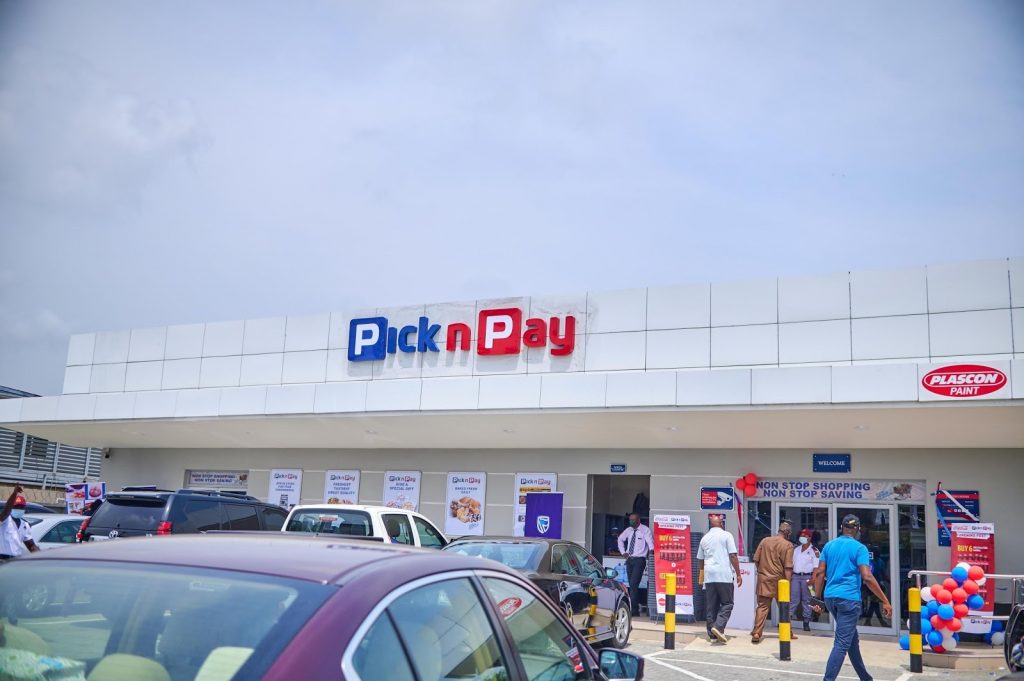
What Is Pick n Pay Playbook in Nigeria?

4

Shoprite came to Nigeria in Dec 2005 when Naira was about N127 to a dollar; the South African Rand was about 7 rand to a dollar then. Last year when it began the exit process from Nigeria,  one dollar exchanged for N380 or 15 rand. So, over the period noted, Naira lost 200% of its value to the dollar, keeping dollar value constant.  The rand has lost 114% of its own value. But the lost value on Rand is not a big problem since Shoprite reports its financials in Rand, being a South African firm. 

Nonetheless, the biggest problem was not the currency deterioration in Nigeria but the fact that the middle class was shrinking, affecting the capacity of Shoprite to capture value with the presence of supermarkets, open markets and even street-sellers as competitors. 

When that exit was announced, I wrote, “Shoprite may not be doing terribly bad in Naira but struggles in Rand when it reports in South Africa. It is exiting Nigeria even though it makes tons of naira. So, if a local investor acquires Shoprite Nigeria with no burden to report in USD or Rand, the currency issues could be eliminated. It is like Dangote generating more naira and still losing $17 billion in net-worth in 7 years.”

But in the midst of this paralysis, another South African retailer is here: Pick ‘n Pay. My question is this: what is the playbook for success in Nigeria considering that Shoprite, Mr Price and Woolworths could not overcome the paltry effective 30 million addressable market in Nigeria? Yes, I model that Nigeria has only 30 million who earn “decent” income and those 30 million support the remaining 180 million citizens.

So, as we see the exodus and death of companies, I remind everyone that Nigeria has about 30 million people who earn income and can pay for anything. Any model built outside that 30 million will disappoint. I have explained how I arrived at this 30 million number here. With the pandemic affecting that 30 million number, which carries the other 170 million citizens, you will then understand the challenge we have in the near future.

Comment on LinkedIn Feed

Comment #1: Prof Ndubuisi Ekekwe Modern Trade has never enjoyed mass patronage as markets have in Nigeria. Ask any FMCG manufacturer in Nigeria how much product pushes through Modern Trade and the will tell you it has never accounted for more than a few percent of revenue. Several retail outlets similar to Shoprite such s GAME, Park & Shop/SPAR, all South African.

Firstly there are far too many fresh local options cheaper and healthier/fresher like you can go to Ijora Market and Mile 12 in Lagos.

Secondly I speculate that these South African outlets must have some form of involvement of SA suppliers at investor level because a lot of their SA finished goods like Beef Boerewors or Richelieu Brandy neither grab the local consciousness of the Nigerian consumer, nor do they align with diaspora influence of known ‘abroad’ brands. There is a lot of tinned and packaged consumables also imported from SA. Forced repatriation of revenue to SA and on many goods with often weak market traction is a vulnerability. Successful large global operators maximise assimilation with local commercial ecosystems minimizing import necessity and recycling liquidity locally. They become comfortable with distributed rather than centralized profit retention.

Comment #2: Maybe we start by analysing list of investors in Shoprite and Pick n Pay, to see if they are related…

If we have 30 million people with decent purchasing power, who has been able to capture 10 million of them? Because that’s more than population of many countries in Europe and elsewhere, so it’s still a large number to service.

Again, where a retail brand sources its goods matters a lot, especially in our business climate. Can Pick n Pay position as retail of choice for locally produced items? Sometimes how we architect these things brings their downfall.

We import apple and grapes in Nigeria, are there local substitutes with similar nutritional value, which can be pushed to the public, instead of using dollars to import fruits? We don’t really have depths in the way we design economy and frame businesses here, we keep going with whatever the world brings to us.

We eat bread a lot here, wheat is largely imported, yet we haven’t been able to scale local substitutes for wheat, because we don’t see it as national emergency anyway.

I do think that the trio of our intellectuals, businesspeople and policymakers are all lazy, we talk a lot here, but no speed of thought and peerless pragmatism that can quickly bring solutions to our ‘moving target’ styled kind of problems.

Let’s see how many that will be paying after picking…

Why Brands Struggle and Depart Nigeria

New CBN Directive Could Boost Exits In Forex-Focused Fintechs In Nigeria

3

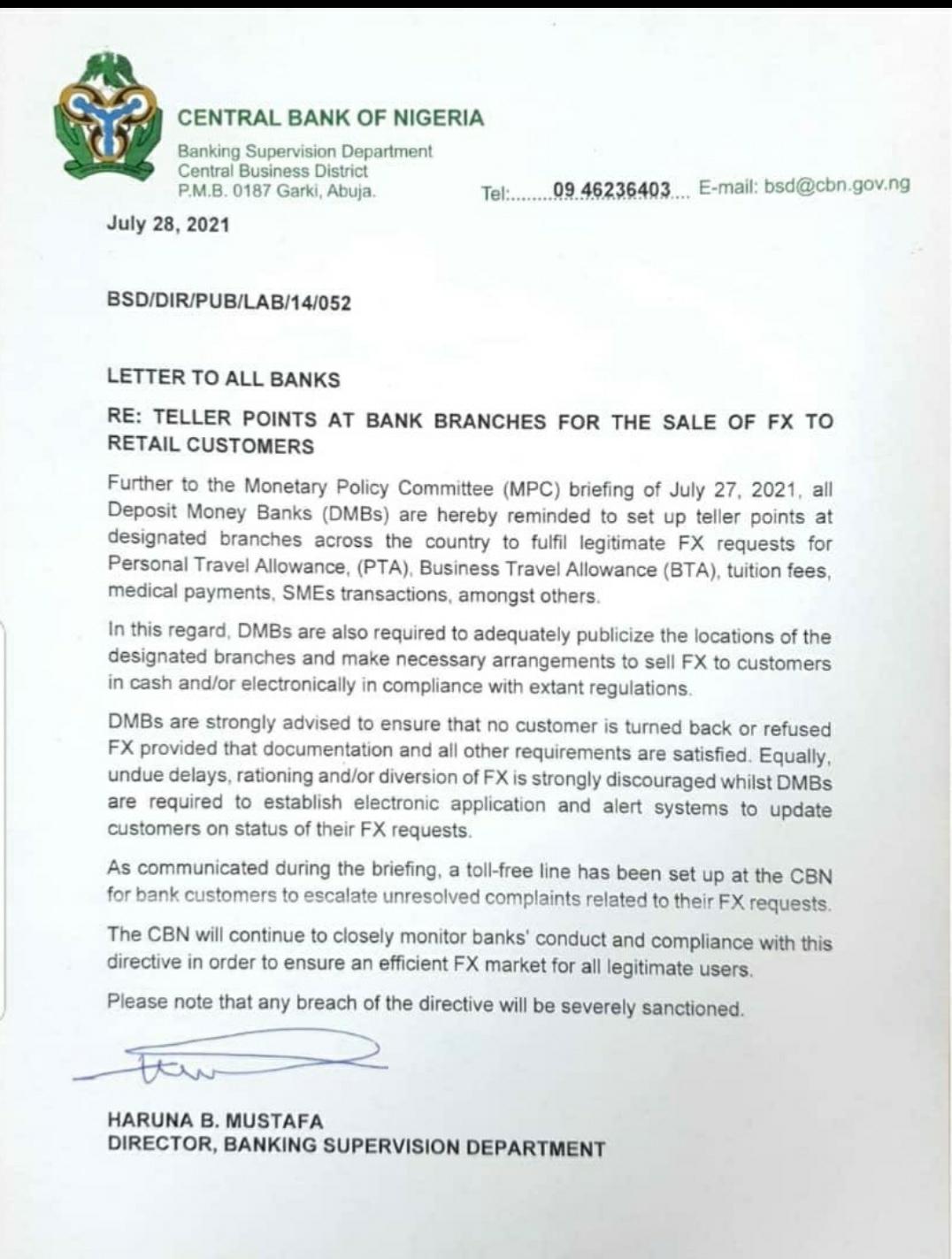
The Central Bank of Nigeria has directed commercial banks to develop apps and alert systems to update customers of their forex transactions: “Undue delays rationing and/or diversion of FX is strongly discouraged whilst DMBS [banks] are required to establish electronic applications and alert systems to update customers on status of their FX requests”. The apex bank just largely banned bureau de change operators in the nation [it will not sell foreign currencies to them] and mandated banks to ensure that they meet legitimate foreign exchange requests from customers. 

The new directive is contained in a circular issued on Wednesday by the apex bank:

“Further to the Monetary Policy Committees (MPC briefing of July 27 2021 of Deposit Money Banks (DMBs are hereby reminded to set up teller points at designated branches across the country to fulfil legitimate FX requests for Personal Travel Allowance (PTA Business Travel Allowance (BTA), tuition fees, Medical payments, SMEs transactions, amongst others. In this regard DMBs are also required to adequately publicise the locations of the designated branches and make necessary arrangements to sell FX to customers in cash and or electronically in compliance with extant regulations…As communicated during the briefing, toll-free lines have been set up at the CBN for bank customers to escalate unresolved complaints related to their FX requests,” the statement read.

So as it stands now, banks must “ensure that no customer is turned back or refused forex provided that documentation and all other requirements are satisfied equally”.

This directive opens a collision for some forex-focused fintech companies. Largely, banks are now mandated to join the fray and must build solutions to comply with what the CBN wants. My question is this: are we going to see a minor acquisition bump where some banks just decide to buy one of these fintechs instead of going to build one from scratch?

Not likely since the most important thing here is not technology, but the bank license which is the only thing CBN cares about. Yet, if you have apps in this domain, it may not hurt to shop around bank headquarters; they could pay good money.

What about it? Every bank in Nigeria now must have a forex app (web or mobile) to be in compliance. My prediction is that when e-Naira launches, a CBN API will interface with them to make every run seamlessly. The apex bank is going somewhere….just loading.

You and Implications of Your Digital Footprints in a Back-Forward Thinking World

0

Over the years, there are have been a number of individuals and groups who believe that physical rights equal digital rights. From the developed to the developing continents, these stakeholders want to be free. They want to pursue happiness in an atmosphere devoid of strict political control. They believe acting socially and politically enhance their pursuit of economic and social happiness in all ramifications. While behaving socially, economically and politically on various social networking sites, Internet-enabled gadgets they drop a significant number of traces, known as digital footprints, which is a trail of data created while using the sites and gadgets.

Our analyst had the opportunity to be among the people who participated a workshop on big data application in academic research organised by a Faculty at the Fountain University, Osogbo, Osun State. The event primarily expected to walk the students and Faculty Members in the University through the nitty-gritty of using big data in academic research towards collective value for the academia and industry turned into a forum where participants were informed of the implications of their digital footprints.

Professor Ayobami Ojebode of Department of Communication and Language Arts, University of Ibadan, shared his experience of the traces he left some years back, which were later used by a foreign based organisation that perused his application for a grant. According to him, people need to understand that as they use social networking sites, joining online pressure communities and using Internet-enabled devices, they should realise that someone in a particular location is gathering their traces [digital footprints].

While it is obvious that in the developed world, people are becoming more aware of their digital footprints, it could be said that in the developing countries such as Nigeria, people are yet to be fully aware of the implications of their digital traces. In the United States, for instance, a study shows that 60% of the people who search for their names actually find information about themselves online.

How would you know that someone has collected your digital footprints and acted on them? Our analyst suggests the use of Google Alert and Google Search, which are primarily free. Google Alert has the capacity of helping you in getting first hand information in real time when someone posted about. It also helps in documenting the traces in a cloud storage such as Google Drive and Dropbox. It is also important that you carry out ‘vanity search’ occasionally. The search is a means to understand what people and organisations are discussing and publishing about you. You only need to put the keywords that associated with your names and personality on Google Search Engine. For you to have sufficient understanding of what is happening, you must click beyond the first result page turned out by the search engine. At least, getting to the 10-page of the result pages, would give you deeper insights about your digital footprints.

However, as shared by Professor Ojebode, erasing one’s digital footprints immediately they are dropped might not be possible because the person who collected had used big data collection tools, which could not be received or deleted by the owner. In this regard, our analyst notes that people only need to be cautious of what they do in relation to their pursuit of social, economic and political happiness while on the SNSs and using internet-enabled devices.