Square, the digital-payments company led by Twitter founder Jack Dorsey, has agreed to buy Australian buy-now, pay-later company Afterpay for $29 billion. People, this is what it is: we are now in the new age of Buy Now, Pay Later, reshaping the whole credit economy. In other words, many young people are not interested in the old credit system, and have shown through the evolution of the Buy Now, Pay Later systems that they prefer this evolving model. I expect more exits in this space as Apple Pay joins the fray and most want to get out before the ecosystem is reshaped.
In the age of fintech boom, every payment company appears to have a goal to expand to new markets. For some, it means raising funds in new rounds; while for others, it means acquisition or using a different playbook. From Stripe’s acquisition of Nigerian startup Paystack to Flutterwave, another Nigerian payment firm, attaining unicorn status, the uptick has been remarkable. Now Square, a payments company cofounded by Twitter CEO Jack Dorsey, is joining the race.
Square plans to buy Australian fintech company Afterpay as it looks to expand further into the booming installment loan market.
In some cases, you may not even have to pay interest (the merchant pays the interest for you)!
In Nigeria, expect agile fintechs to begin to redesign their lending products with BNPL since BNPL is more optimized as the interest rate is activated after you have identified and acquired the products, instead of borrowing money and warehousing in a bank account, and yet paying interest when you have not deployed it.
This shift is massive as repayment uses bank account ACH (minimal fees), not credit cards. So, if this BNPL picks up at scale, card companies like Visa and Mastercard could be in the crosshairs of a major shift.
In the age of fintech boom, every payment company appears to have a goal to expand to new markets. For some, it means raising funds in new rounds; while for others, it means acquisition or using a different playbook. FromStripe’s acquisition of Nigerian startup Paystack to Flutterwave, another Nigerian payment firm,attaining unicorn status, the uptick has been remarkable. Now Square, a payments company cofounded by Twitter CEO Jack Dorsey, is joining the race.
Square plans to buy Australian fintech companyAfterpay as it looks to expand further into the booming installment loan market.
The company announced the $29 billion, all-stock deal on Sunday evening. The price tag marks a roughly 30% premium to Afterpay’s last closing price.
“Square and Afterpay have a shared purpose,” said Square’s CEO Dorsey in a statement. “We built our business to make the financial system more fair, accessible, and inclusive, and Afterpay has built a trusted brand aligned with those principles.”
Shares of Afterpay in Australia surged on that news, and closed nearly 19% higher on Monday.
Founded in 2015, Afterpay offers buy-now-pay-later services to millions of its users cut across Australia, US, Canada, UK (where it is called Clearpay) and New Zealand. The company allows customers to access the things they want and need, while still allowing them to maintain financial wellness and control, by splitting payments in four, for both online and in-store purchase.
Square pointed to consumers eschewing traditional credit, especially younger buyers. The San Francisco-based payments company already offers installment loans, which said it has been a “powerful growth tool” for Square’s core seller business. It plans to integrate Afterpay into both its seller and Cash App ecosystems.
Afterpay lets customers pay in four interest-free installments and pay a fee if they miss an automated payment. Its 16 million customers will eventually be able to manage installment payments directly through Cash App. The deal is expected to close in the first quarter of 2022.
Per CNBC, installment loans have been around for decades, and were historically used for big-ticket purchases such as furniture. Online payment players and fintechs have been competing to launch their own version of “pay later” products for online items in the low hundreds of dollars.
Affirm is one of the better-known public companies offering the option to finance items in smaller, monthly payments. PayPal, Klarna, Mastercard and Fiserv, American Express, Citi and J.P. Morgan Chase are all offering similar loan products. Apple is planning to launch installment lending in a partnership with Goldman Sachs, Bloomberg reported last month.
Square also announced its second-quarter results on Sunday, ahead of the previously planned release on Wednesday.
Gross profit increased 91% from a year ago, which marked a record quarterly growth rate for the payments company. Cash App profit was up 94%, while seller jumped 85% from a year ago. Net revenue excluding bitcoin came in at $1.96 billion for the quarter, an 87% rise year over year.
The company’s Venmo competitor, Cash App now has 40 million monthly transacting active customers.
Afterpay derives its revenue from merchants rather than customers. The company believes its pattern of play will encourage a more accessible and sustainable world in which people are rewarded for doing the right thing, thereby powering an economy where everyone wins.
So excited that we have just closed multiple year pre-payments for Business Growth w/ Ndubuisi Ekekwe, a new Tekedia Institute program which is Zoom-only. Business executives, professionals and students are coming on board. We are offering the option to pre-pay for a maximum of 3 years at once which will mean 15 sessions.
We thank Emmanuel S Akintunde for signing up for three years. There is an app called Clubhouse where people just talk and talk; Tekedia Growth is a business translation of that, and our conversation will be more valuable as we will be discussing business growth.
Pick your seat and master the physics of business growth.
Program will run for 8 weeks, every Saturday at 4.30pm – 6.30pm WAT, on Zoom. The sessions will be recorded and archived in the portal for members who may miss them. For each session, the faculty will teach and make a presentation and then discussions will follow. This program will run from Sept 4 to Oct 23, 2021.
Good People, the new program is coming out fine – so far, 127 members have responded in the 24 hours we unveiled. We are expecting to reach 1,000 members as quickly as possible. I also report that some are coming for 3 years. Yes, you can prepare for three years.
Program: Business Growth Playbooks with Ndubuisi Ekekwe
Time: Saturdays, 4.30pm – 6.00pm WAT
Location: Zoom
Start/End dates: Sept 4 – Oct 23, 2021
Faculty: Prof Ndubuisi Ekekwe, Lead Faculty at Tekedia Institute
Business systems and making alpha. I have got the first session ready and the title is “The Physics of Growth”. Yes, we will explain the natural philosophy within business growth in Africa. This is a cambrian moment and the future is exciting.
Join me every Saturday at Business Growth Playbooks w/ Ndubuisi Ekekwe. Register here for N20k or $60.
Updated: So excited that we have just closed multiple year pre-payments for Business Growth w/ Ndubuisi Ekekwe, a new Tekedia Institute program which is Zoom-only. Business executives, professionals and students are coming on board. We are offering the option to pre-pay for a maximum of 3 years at once which will mean 15 sessions.
We thank Emmanuel S Akintunde for signing up for three years. There is an app called Clubhouse where people just talk and talk; Tekedia Growth is a business translation of that, and our conversation will be more valuable as we will be discussing business growth. Pick your seat and master the physics of business growth.
As new technologies evolve, businesses, individuals and governments are having opportunity of solving varied problems and providing needs. The new technologies are also increasing competition. Every business wants to be at the top and well positioned in front of the digital audience, who make decisions based on what they read, listened to and watched on different digital enabled platforms.
In this piece, our analyst examines Search Interest Competition, an emerging competition in the digital space being driven by Search Engine product of Google, Bing, Yahoo and other technology companies in the world.
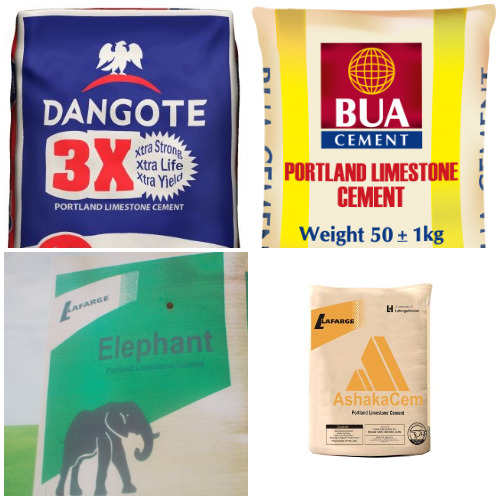
The focus is on understanding how the competition is or not favouring selected cement brands in Nigeria in relation to their specific performance on the Nigerian Stock Exchange market. To the best of knowledge, this is the first piece in Nigeria that examines workability of Search Interest Competition. Our analyst studied the performance of Dangote, BUA and Elephant on Google Trends, a tool that normalised public search behaviour on the Internet through Google Search Engine. The performance of the brands on the Nigerian Stock Exchange between June 24 and July 2, 2021 was also factored into the analysis.
In our analysis, we discovered that the volume of the Nigerian population interest in Dangote reduced its trade volume by 1%. It was minus 24.2% for the BUA cement. With 18.3%, Elephant performed better. This indicates that one unit of the population interest in the brand translated to over 18 units increase in its trade volume. We found a negative connection [-21%] of the population interest in Dangote cement with BUA cement, signifying that the more the population had interest in Dangote cement the less they had interest in BUA cement. With this insight, it could be said that the population prioritises Dangote brand more than the BUA brand. This is expected to manifest in the trade volume of Dangote brand during the period.
However, analysis suggests that Elephant brand competed favourably with the Dangote cement during the period as the connection analysis shows a 7.8% linkage, which indicates that the more the population had interest in Dangote, the more they had interest in Elephant cement. With this result, it is expected that two brands would have a significant increase in their trade volume during the period. Our analysis further indicates that the interest the population had in BUA cement accounted for 5.9% of its trade volume between June 24 and July 7, 2021. Elephant cement recorded 3.3%, while Dangote had less than 3%.
Some Premises That Support the Brands’ Performance in the Competition
While our analyst believes that there are other factors which could contribute to the performance of the brands, it is instructive to note that the brands made some strategic moves that could be linked with the outcomes of our analysis. For instance, Dangote cement successfully issued N50 billion bonds for expansion projects and others during the period of our analysis. It also partners with NCF on ecosystem restoration.
BUA cement debunked the rumour that it planned to increase price. “We are now aware that Dangote Cement has increased the price of its Cement (ex-factory) by N260 effective Monday, June 14, 2021. BUA is not a part of this increase and will not seek to increase the price of its cement (ex-factory) in the foreseeable future.
BUA therefore restates its earlier position communicated on April 24, 2021, that it will not join in any increase in the prices of Cement for the foreseeable future.” Divestment of over N1 billion from the BUA Cement Plc and donation of N230m infrastructure to relocated communities in Sokoto could also be potential factors.