
DD
MM
YYYY

PAGES

DD
MM
YYYY

spot_img

PAGES

Home Blog Page 5648

Understanding Forward Integration

2

Every business chasing growth does one of three things; consolidate their present space (expanding their market share), integrate horizontally (getting into new businesses) or integrate vertically (getting deeper into other parts of their business). The biggest technology firms in the world have gone past consolidation; most of them are presently so big, they’ve consolidated their respective markets to the extent the government is now concerned about their growth. One major metric to know when your business is hugely successful is when the regulators start coming after you – what do Facebook, Apple, Amazon and Google have in common? They’re all trillion dollar businesses, what else do they have in common?

The United States Senate is looking for ways to break them up due to antitrust concerns. You can’t really blame them, for context sake, the combined net worth of Facebook, Apple, Amazon and Google is about US$7.1 trillion, this is more than the GDP of Nigeria multiplied by two – then multiplied by two again. Twenty years ago Microsoft was in this shoe, they’ve surprisingly learnt how to avoid the lime light and stay underneath the shadow while they grow an insanely successful cloud business (Azure) and make more than US$143 billion in annual revenue. For the purpose of this piece, the three most successful businesses in Nigeria by order of importance are Bitcoin, MTN and Multichoice.

If Bitcoin was a company, at more than US$400 million in annual recurring revenue from local trades alone (before the CBN ban), Bitcoin is likely on par with Dangote Cement on the basis of profitability. When you process more than US$400 million – don’t pay taxes, and are completely self-regulated, it’s only a matter of time before they come after you.

The next two companies that exemplify success in Nigeria are MTN and Multichoice; one in two Nigerians are on MTNs mobile network, the former is reportedly owing Nigeria US$5.2 billion, while the latter has refused to pay more than N1.8trn (US$4.7 billion) it reportedly owes in taxes (a number I have strong reasons to believe was probably made up). When you make more than N7 billion (US$17 million) in 3 months by keeping 22 young people in a house and letting them do whatever they like while they take orders from some strange guy who is probably too shy to show his real face, it is also only a matter of time before they come for you. I hope Obi Cubana is reading this.

Anyways, Horizontal integration is usually what happens when you’ve made so much money for your investors and you’re looking for new ways to satisfy their insatiable desire for profits – like Netflix going into gaming, Facebook’s foray into VR, and Apple gradually turning itself into a Fintech by offering BNPL (Buy Now Pay Later) services.

However, vertical integration is where all firms try to compete to succeed.

Vertical Integration

When you’re vertical integrating, you’re usually trying to achieve two core goals – create a better user experience for your users by owning (more of) the end to end user experience of your product.

If you own the restaurant, the raw material production and the transportation chain, you’re vertically integrating – you can have full control over raw material supply and product delivery for your users, and optimize your processes accordingly. The second core reason you should vertically integrate is cost leadership. There are two major ways any business can out compete it’s competition by pricing; one is if it is high on steroids (VC money) and chasing growth (Blitzscaling) by all means necessary (Uber, Jumia etc), if everything goes as planned, the startup will usually have a large user base it may then be able to profitably sell to, if it doesn’t – they will either have to pivot to something else, or go home. The second way you can out compete the competition on pricing is a strong vertical integration strategy. Excluding the fact that Amazon has a cash cow in AWS (Amazon Web Services) that can bankroll any project, it can also outcompete any player in its space via pricing because it holds a good portion of the end to end delivery solution and can essentially pay lesser than any player to deliver its solutions to its users.

Vertical integration is a powerful strategy that can help you advance your business, depending on what part of the matrix you fall into.

However, not every business should vertically integrate. Sometimes, you’re better off staying in your lane and making the best of where your strength and domain expertise keeps you. A good example of this is the food delivery space.

Chicken Republic is a great business, with more than 70 outlets scattered nationwide. However, Chicken Republic is not a technology firm, and they should not try to be one. In a bid to take advantage of the increased demand for on demand food delivery, Chicken Republic has gone ahead to develop a mobile application. The Chicken Republic app is a clear proof that they are not a technology business. The Mobile app has a little over 5,000+ downloads, and as at the time of writing this piece, the first comment in the ratings section says USELESS APP.

As much as I am critical of Jumia as a business, Jumia Food’s is doing a great job in aggregating restaurants into a single platform and making it easier for users to order food from anywhere in Lagos. I really hope these services really work, and it doesn’t become a situation of waiting till 2pm for breakfast you ordered at 10am to be delivered, or a classic case of what I ordered versus what I got. However, I personally believe that the potential winner in this space will likely be Gokada. The location tracking tool on their riders may be the game changer as it makes it easier to reduce wrong expectations; like when the rider is still at Ikeja GRA but keeps telling you he’s at Cement Bus stop (the same bus stop he has been at for the past 30 minutes).

Gokada’s Super app strategy is a brilliant way to consolidate their market.

Forward Integration

In essence, there are two types of vertical integration; you could either integrate forward or integrate backward. Most smart businesses integrate backward to (like I said earlier) create a better user experience for their users, drive down their cost of production or even create a new product lineup. So think about Apple making their own M1 Chips for their iPhones and hardware devices which serve as a way to both bolster their user experience (the M1 is a massively powerful chipset) and to probable drive down costs in the long run, Nestle going into farming to secure some part of its supply chains, lower down costs, and reduce its dependency on third party suppliers, or Samsung’s decision to build its own Exynos Chipset to cut down its reliance on Qualcomm, and its decision to build its own displays which it actually sells to Apple, Gionee, Sony, Acer and the likes. Selling to your competition is actually a complex issue – I imagine Samsung executives praying for their competitors to fail but realizing that the success of their competitors is also the success of their display business, a business unit bringing in more than $20 billion a year for the conglomerate, but I digress. TeamApt, the Nigerian Fintech firm is integrating backwards when it announced it gained a switching license from the CBN. GTbank, Zenith Bank etc owning their own payment gateways are also doing the same thing.

Forward integration is almost always a bad idea. Most businesses who integrate forward do not usually succeed. Forward integration occurs when a business decides to move forward in its vertical integration initiatives and take a more customer facing role. Forward integration usually gives businesses cost advantages, but gaining adoption from customers is usually an entirely different ball game altogether.

Google decided to switch from just providing the Android operating system to building out its own smartphone to run on the same OS. It started out with the Nexus brand which it left for third parties to design and develop for them – which had subpar performance, then they decided to throw money at their problems, buy Motorola Mobility for US$12.5 billion, convert 2,000 Motorola Mobility employees into Google employees to work on their smartphone (and other hardware) projects, and they still sell around 7.2 million pixel phones a year. For context purposes, Samsung sells more than 250 million smartphone units annually.

Most companies have challenges with Forward integration because forward integration is less about superior technology (although this is important) and more about brand strength and user perception. I’ve had a good number of arguments in recent weeks about Kuda Bank not being an MFB (Microfinance Bank) (although it operates with an MFB license), Kuda is a Digital/Neo bank that brands itself as the bank of the free. I know at least three people who use their Kuda account to actively receive money, but I have however not met anyone – not a single living and breathing soul that uses a MFB for everyday transactions. Kuda’s strength isn’t necessarily its technology, it is its superior brand image and perception among younger demographics that makes it standout and lead its market. Breaking that product and brand moat will take a lot more than just throwing money at problems.

Chicken republic has a higher chance of success if it were to backwardly integrate to take full ownership of the logistics required to run deliveries (if it has enough delivery volume), than Gokada has if it decided to open up its own restaurant chain to serve customers food. Chicken Republic already has a brand name in the fast food space, Gokada has none.

Conclusion

Forward integration is usually a bad idea for most businesses to do, by taking on the frontend and customer facing roles of any business, especially when they’ve spent the majority of their time delving in the back end of a products architecture and don’t have a strong customer brand, they set themselves up for unnecessary and meaningless competition in spaces they aren’t properly wired to compete in.

Inspired By The Holy Spirit
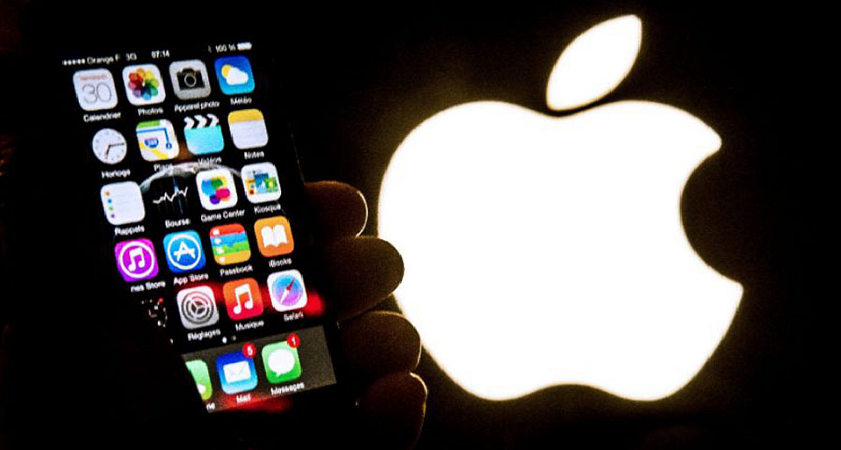
Apple’s Fiscal Third-Quarter Earnings Beat Expectations

0

American tech companies keep adding record numbers to their earnings despite the crippling impact of the pandemic on the global economy. Smartphone maker Apple has joined others to post earnings that beat estimates.

Apple reported strong fiscal third-quarter earnings on Tuesday, crushing Wall Street expectations. Every one of Apple’s major product lines grew over 12% on an annual basis.

Apple stock was slightly up in extended trading. CNBC has the report.

Overall, Apple’s sales were up 36% from the June quarter last year. iPhone sales increased nearly 50% on an annual basis.

Here’s how Apple did versus Refinitiv estimates:

EPS: $1.30 vs. $1.01 estimated

Revenue: $81.41 billion vs. $73.30 billion estimated, up 36% year-over-year

iPhone revenue: $39.57 billion vs. $34.01 billion estimated, up 49.78% year-over-year

Services revenue: $17.48 billion vs. $16.33 billion estimated, up 33% year-over-year

Other Products revenue: $8.76 billion vs. $7.80 billion estimated, up 40% year-over-year

Mac revenue:$8.24 billion vs. $8.07 billion estimated, up 16% year-over-year

iPad revenue: $7.37 billion vs. $7.15 billion estimated, up 12% year-over-year

Gross margin: 43.3% vs. 41.9% estimated

Apple did not provide formal guidance for the sixth quarter in a row and has not since the beginning of the Covid-19 pandemic.

Apple also had a strong quarter in its Greater China region, which includes Taiwan and Hong Kong in addition to the mainland. Apple reported $14.76 billion in sales in the region, up 58% from the same quarter last year, although it was an easy comparison given that China was in stages of lockdown during the quarter.

Americas sales were up nearly 33% year-over-year to $39.57 billion.

Apple’s quarter ending in June is typically one of its slowest of the year, but the company has benefitted from work-at-home and remote schooling trends that have boosted sales of its premium computers.

Last year’s June quarter was a company record for sales even despite lockdowns around the world, so Apple is growing even compared to a strong basis from a year ago.

Cook mentioned that the success was not just because of people upgrading their old iPhones, but also Android customers buying their first iPhone.

“We saw a very strong double digit increases in both upgraders and switchers during the quarter,” Cook said.

Apple’s quarter could have been even better if it had not grappled with supply shortages likely linked to the global chip shortage, which mostly affected its Mac and iPad sales.

“The shortage primarily affected Mac and iPad,” Apple CEO Tim Cook told CNBC’s Josh Lipton. “We had predicted the shortages to total $3 to $4 billion. But we were actually able to mitigate some of that, and we came in at the lower than the low end part of that range.”

Apple’s services business also shook off investor fears that its rate of growth could slow as more people go back to work and spend less on online services and apps. Services was up 33% year-over-year, an acceleration from last quarter’s 26.7% growth rate.

While Apple’s services business includes many products and Apple does not break down how it’s composed, Cook told CNBC that the company set records in music, video, cloud services, advertising and payments.

“It’s clear that our long running investment in our services strategy is succeeding,” Cook told CNBC.

Apple now has 700 million paid subscribers, up 150 million year-over-year, Cook said. Apple’s subscriber figure includes customers subscribed to an app through Apple’s App Store billing.

Cook also said that Apple pushed back its return to its campus headquarters from September to at least October because of the Covid-19 situation.

“I’ve been really pleased with what we’ve been able to accomplish in this fully remote mode,” Cook said.

Apple declared a dividend of $0.22 per share of stock. In a statement, Apple said that it spent $29 billion on shareholder return during the quarter. Apple CFO Luca Maestri told CNBC that the company has bought back almost $450 billion in stock in recent years.

No Future for BDCs As E-Naira Arrives And Central Bank of Nigeria Goes Retail

7

I will not write much here to avoid stress on some people. But let me tell everyone that the Central Bank of Nigeria (CBN) is planning a huge redesign in the architecture of the financial systems in Nigeria. From my analysis of what is happening, this is the destination: the government wants clear visibility on financial flows in the nation. This is going to become a new dawn in Nigeria. And I think it is a good playbook.

The abolition of the bureau de change is necessary for the upcoming rise of e-Naira. Largely, there is nothing BDCs do that commercial banks cannot do today. Many Nigerians who want to transact in multiple currencies can open domiciliary accounts on top of their naira accounts.  Yes, you can buy $100, facilitated by your bank, by merely debiting and crediting the right accounts. If that happens, the nation will have clearer insights on the state of things. 

The Director, Information Technology Department, Central Bank of Nigeria (CBN), Mrs. Rakiyat Mohammed, stated at the banker’s committee meeting that the apex bank will be launching a Central Bank Digital Currency (CBDC) before the end of 2021: “As I said, before the end of the year, the Central Bank will be making special announcement and possibly launching a pilot scheme in order to be able to provide this kind of currency to its populace.” This follows a statement by the bank governor a few weeks ago: “Under cryptocurrency and Bitcoin, Nigeria comes 2nd while in the global side of the economy, Nigeria comes 27th. We are still conducting our investigation and we will make our data available.”

The BDCs do not offer that level of insights and as we move to the new age of e-Naira digital currency, the apex bank will like to work with commercial banks who have our full data (biometrics, photos, etc) to begin that transition to a quasi-banking era with the central bank.

The destination is evident: in 3 years, if everything goes as planned, Nigerians can indeed get US dollars directly from the central bank but disbursed via agents like commercial banks. In other words, we will have an account in the CBN headquarters and the bank can ascertain and track what is happening.

The future of Naira has no role for BDCs because the CBN through technology will do what BDCs do today. Expect massive redesigns as the Central Bank of Nigeria goes retail, via e-Naira digital currency. The new digital currency is expected to be piloted in Q4 2021 and will possibly go live at scale in 2022.


In Tekedia Mini-MBA edition 6, we will discuss these issues through a Special Case Study I have developed: Business Opportunities in the New Era of Sovereign Digital Currencies like e-Naira, e-Euro, e-Yuan and e-Dollars – Prof Ndubuisi Ekekwe. I invite you to join us.

LinkedIn Comment on Feed

Comment #1: This should have been executed generations ago; but a good playbook non the less. And one that can be cheered even if the ramifications on the economy will be significant in the short term and hopefully not long term. If frictions in the banks selling and transacting between the naira and foreign currencies becomes flawless, then this move can be declared a win for the nation.

Unfortunately too many roads lead to and from the CBN that are not visible to the majority of the populace. If political might is stretched, someone may lose their job quite quickly or become an unjust target. I believe the CBN can be extensively innovative with the e-naira if they decide to be and can cause significant progress to be made in the current monetary playbook that has not made the positive impacts that has been expected.

The final quarter may be a bumpy ride in the nation. We hope the light at the end of the tunnel is not another candle light.

Comment #2: This is interesting, thanks for sharing Prof. Ndubuisi Ekekwe It is however pertinent to add that #CBDCs are not without limitations especially as it concern interoperability of the technology for cross-border payments and proactivity in international cooperation by monetary authorities. This is in echoed in the Bank for International Settlements – BIS report on CBDCs. Only time will tell where the road will lead us, game on!

By Q4 2022, Central Bank of Nigeria will Exchange Dollars Directly with Nigerians and Companies via e-Naira Digital Currency

Do Not Conform in Markets – Pioneer Your Path and Thrive!

1

Young people, this is a message for you. In anything you do in markets, do not simply conform to the settled ordinance. Yes, when you launch, many will tell you to become like this company, because for most, that is what they are used to. Interestingly, if you follow them, you will lose your mission. Think about it: how would you be different if you become like others?

That takes me to Tekedia Mini-MBA: many want us to partner with UK, US or Canadian universities. For them, that is what everyone does. My response has been: “if your motivation is to have a certificate that has a ‘university’ on it, you can find many online. Look at Udacity, the world’s leading digitech trainer and its clarity that it has no plan of being a university or being accredited”. Google, Amazon and some of the BigTech train therein.

You know what? There are many reasons for that. If we become accredited, instead of using a CEO of a logistics company to reach the logistics and supply chain course, we  would be forced to look for one engaged or disengaged PhD holder. Yes, the PhD is the qualification irrespective of the readiness to impact knowledge. I prefer to use the CEO of a fintech company to teach fintech than a professor of finance (or tech) who has never worked outside a university.

As I have written extensively in Harvard, winning in today’s market requires going beyond Needs and Expectations of customers, but Perceptions of customers.  You cannot anchor that Perception if you just build to conform to what everyone is doing. 

A Lagos big bank is sending us its early level staff to work with. We are very humble to note that it has all the funds to send them to the regular “universities” but it wants them to come to a school that does things in new ways. The first course begins next month and the CIO of India’s finest digital bank will open it for us. A Managing Director of a US bank region comes. By the time they are done with us, they will understand the world of banking at deeper levels and at a globalized depth.

Find your voice in the market – and try not to calibrate out what makes you unique. Sure, in the next coming weeks, we will have a university partner which can offer a paper to those who want to see “university” in their Tekedia certificates. We understand. But our core will remain being great on the education of entrepreneurial capitalism on the tenets of Innovation, Growth and Business Execution.

Do not conform – pioneer your path!

Tekedia Live: Information Security & Digital Forensics – Dr. Francis Nwebonyi, July 29th

0

His job is to secure the integrity of autonomous vehicles for BMW Group’s future diving machines. He is an IAM Engineer (Identity and Access Management Engineer) and holds a PhD in Computer Science with focus on Network and Information Security from Universidade do Porto. He had earned an MSc in Computer Security and Forensics from the University of Bedfordshire. He is part of our Cybersecurity and Digital Forensics Faculty.

Dr Francis Nwebonyi in a team at the forefront of creating the next generation software systems for vehicles of the future. And certainly, when it comes to digital security, we like those who hold extremely critical positions in such domains. Dr Nwebonyi will be at Tekedia Live, the Zoom session of Tekedia Mini-MBA, to offer management-level understanding of the domain. I have told him “no geek tech”! Lol. 

Yes, this will be all management and business insights on how we can build secure businesses in this digital era. 

  • Thur, July 29 | 7pm-8pm WAT | Information Security & Digital Forensics – Dr. Francis Nwebonyi, Critical TechWorks, Portugal

Tekedia Mini-MBA: learn from the best here.