DD
MM
YYYY

PAGES

DD
MM
YYYY

spot_img

PAGES

Home Blog Page 5649

US Congress Halts Arms Sales to Nigeria Over Rising Reports of Human Rights Abuse

0

United States lawmakers are stalling a proposed sale of attack helicopters to Nigeria amid mounting concerns about the Nigerian government’s human rights record as its military grapples with multiple security crises at once, Foreign Policy magazine reports.

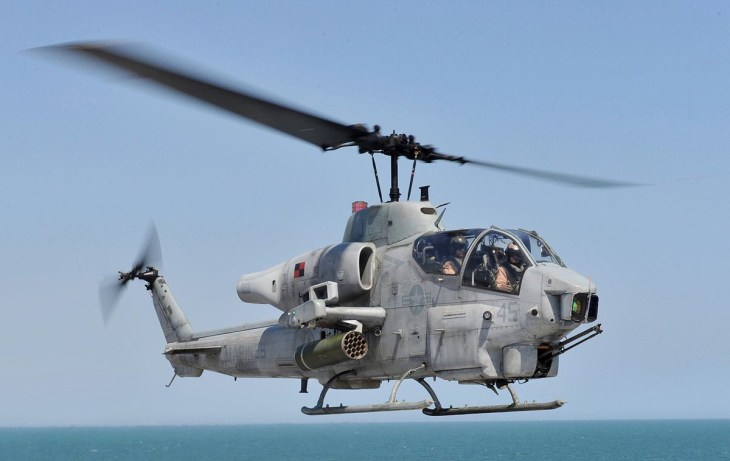
The top Democrat and Republican on the Senate Foreign Relations Committee have delayed clearing a proposed sale of 12 AH-1 Cobra attack helicopters and accompanying defense systems to the Nigerian military, pausing a deal worth some $875 million, according to U.S. officials and congressional aides familiar with the matter.

The behind-the-scenes controversy over the proposed arms sale illustrates a broader debate among Washington policymakers over how to balance national security with human rights objectives.

The hold on the sale also showcases how powerful U.S. lawmakers want to push the Biden administration to rethink U.S. relations with Africa’s most populous country amid overarching concerns that Nigerian President, Muhammadu Buhari, is drifting toward authoritarianism as his government is besieged by multiple security challenges, including jihadist insurgency.

Nigeria is on the front lines in the battle against Boko Haram, one of the world’s deadliest terrorist groups, and plays a role in U.S. and international efforts to roll back extremist groups in the Sahel region of West Africa.

But Western governments and international human rights organizations have ramped up their criticisms of the Nigerian government, particularly in the wake of its ban on Twitter, systemic corruption issues, and the Nigerian military’s role in deadly crackdowns on protesters after widespread demonstrations against police brutality last year.

Sen. Bob Menendez, the chairperson of the Senate Foreign Relations Committee, called for a “fundamental rethink of the framework of our overall engagement” with Nigeria during a Senate hearing with U.S. Secretary of State Antony Blinken in June.

Both Menendez and Sen. Jim Risch, the top Republican on the Senate Foreign Relations Committee, have placed a hold on the proposed arms sale, according to multiple U.S. officials and congressional aides familiar with the matter, who spoke to Foreign Policy on condition of anonymity.

The details on the proposed sale were first sent by the U.S. State Department to Congress in January before then-former U.S. Vice President Joe Biden was inaugurated as president, according to officials familiar with the matter.

In addition to the helicopters, the proposed sale included 28 helicopter engines produced by GE Aviation, 14 military-grade aircraft navigation systems made by Honeywell, and 2,000 advanced precision kill weapon systems—laser-guided rocket munitions, according to information sent by the State Department to Congress and reviewed by Foreign Policy.

Nigeria has relied on U.S. arms sales in the past to help address multiple security challenges: the 12-year insurgency by Boko Haram militants in the country’s northeast, a spate of high-profile kidnapping-for-ransom campaigns targeting schoolchildren in the country’s northwest, and deadly clashes between the country’s semi-nomadic herders and farmers fueled by climate change and environmental degradation of the country’s arable land.

The State Department describes the U.S.-Nigeria relationship as “among the most important in sub-Saharan Africa” and has provided limited funding for various military training and education programs.

Some experts said the United States should hit the pause button on major defense sales until it makes a broader assessment of the extent to which corruption and mismanagement hobble the Nigerian military and whether the military is doing enough to minimize civilian casualties in its campaign against Boko Haram and other violent insurrectionists.

“There doesn’t have to be a reason why we don’t provide weapons or equipment to the Nigerian military,” said Judd Devermont, director of the Africa program at the Center for Strategic and International Studies, a think tank. “But it has to be done with an assessment of how it will, one, change the direction of conflict in Nigeria, and, two, that they will use it consistent with our laws. In both cases, it’s either a question mark or a fail.”

“There is a culture of impunity that exists around abuses by the military,” said Anietie Ewang, the Nigeria researcher at Human Rights Watch.

Ewang cited the Nigerian military’s killing of unarmed protesters at Lekki toll gate in Lagos during the country’s massive #EndSARS demonstrations against police corruption and brutality last year as well as cases documented by human rights organizations of abuses in the military’s campaign against Boko Haram.

“I’m sure it’s a difficult situation. There are so many conflicts springing up across the country now,” Ewang said. “The authorities, I presume, are trying to do the best they can to save lives and property. But this must be done in accordance with human rights standards. You can’t throw one out just to be able to achieve the other.”

In the past, under former President, Barrack Obama’s administration, the US had halted arms sales to Nigeria over concern about the prevalence of human rights abuse resulting in many civilian casualties. But the strained relationship seems to have been mended with former President Trump.

Recall that the former U.S. President, Donald Trump’s administration agreed to sell 12 A-29 Super Tucano warplanes to Nigeria, resuscitating a proposed sale the Obama administration froze after the Nigerian Air Force bombed a refugee camp in January 2017. The first batch of those planes arrived in Nigeria earlier this month.

There has been increase in complaints of human right abuse involving the Nigerian Army since 2015, when more than 400 members of the Shiite group, and over 200 members of the Indigenous People of Biafra (IPOB) were massacred by soldiers. US Congress’ decision to halt the proposed arms sales to Nigeria means that the Nigerian Army professional conduct has become internationally worrisome.

Nigeria Needs Chief Listening Officers

0

In every society, people are expected to pass through an educational system that equip them with the ability to use the four language skills. In life, one is expected to speak, listen, read and write. However, it is not a water-tight that someone must have adequate knowledge of the skills. For instance, there are people who did not pass through the system. In most cases, these people cannot write, but they relatively have the ability and capability of speaking and listening while using reading and writing skills always difficult to use.

This preamble, according to our analyst, is imperative as businesses and government establishments continue facing the challenge of providing superior feedback to customers across industries and sectors. From the consumer to the industrial good industries and sectors, businesses cannot do without communicating with their customers either through verbal and non-verbal means. Whatever means that found appropriate, representatives of businesses must be have superior listening skill. The failure to have the required advanced listening skill level will always impact expected superior customer engagement that delivers mutual benefits to both parties.

As customers continue reporting their complaints about businesses and government establishments in online communities and physical sphere, our analyst examines Nigeria-population interest in a number of indicators that resonate with customer engagement between January and June, 2020.  Analysis indicates a 39.1% connection between the population interest in listening and services, while it was 5.3% for products. We also discovered that the population interest in listening linked to customer care by 19.1% during the months. The interest in services moderated interest in listening by 39.3% when it is combined with products more than being used individually.

Exhibit 1: Nigerian Population Rank Interest in Listening, Products, Services and Customer Care

Source: Google Trends, 2021; Infoprations Analysis, 2021
Note: The higher the score, the lower the interest, the lower the score, the higher the interest

The combination of interest in products, services and customer care had a positive influence on the public interest in listening. However, interest in services and customer care still posed high positive influence on seeking information about listening. There is no significant difference in the level of interest public had in products and services. However, there is a strong difference in the level of interest public had in listening and customer care.

Our insights suggest that both businesses and government Ministries, Agencies and Departments need to consider Chief Listening Officers. This is not new in advanced countries, especially among companies. Dell and Kodak are first companies that embraced the role of CLOs. The outcomes are there for everyone to see.

“Chief listening officers specialize in monitoring both external and internal communications about organizations. Their primary focus is on gathering information from customers and employees in order to develop ways for an organization to enhance their relationships with both.” CLOs are quite different from Customer Relationship Officers. They are not Public Relations Officers. They are not Liaison Officers. They are more of Intelligence Officers, who examine every bit of a conversation in order to provide appropriate responses to the bits that have multi-pronged risks. In order words, they listen actively to conversations online and offline, and share their insights with the superior officers or employees when they cannot provide appropriate responses to the customers.

By Q4 2022, Central Bank of Nigeria will Exchange Dollars Directly with Nigerians and Companies via e-Naira Digital Currency

3

Tekedia Institute  believes that by Q4 2022, the Central Bank of Nigeria will sell forex (US dollars, GBP, Euro, etc) directly to Nigerians and companies via the e-Naira digital currency. Our expectation is that once e-Naira is stabilized, Nigerians will have quasi-accounts with CBN with all information populated from their BVNs (bank verification numbers).

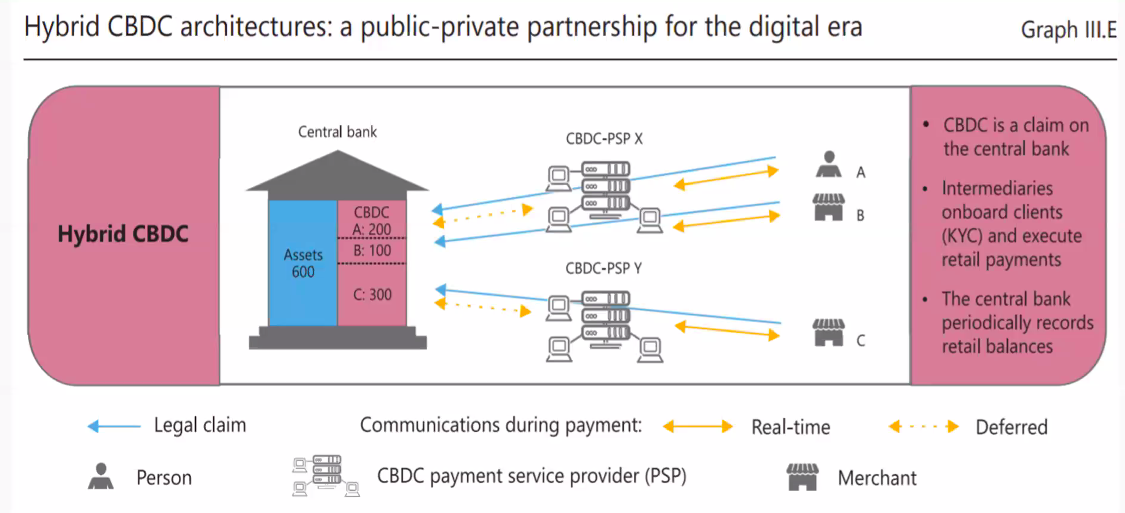
E-Naira, a central bank digital currency (CBDC), is virtual money backed and issued by central banks. As cryptocurrencies and stablecoins have become more popular, the world’s central banks have realized that they need to provide an alternative—or let the future of money pass them by. Nigeria is expected to pilot e-Naira from October 2021.

Specifically, CBN will use that regime to directly manage disbursement of forex. Forex management remains one of the most challenging things in Nigeria today. And the apex bank has lost confidence in many of the players and wants to engineer a new future for Nigeria. If all goes well, every forex bought in Nigeria could be traceable, deepening transparency while reducing abuse.

Yes indeed, since Nigeria does not use US dollars in Aba, Alaba, Kano, Uyo, markets, there is no reason to sell it on the streets. For those traveling and coming into the nation, e-Naira will simplify that process. Technology is known to reduce frictions; e-Naira offers a promise to do that in the forex space in Nigeria.

Watch this video where Tekedia Mini-MBA had a conversation on CBDCs – we just decided to make it public for the community.

Through CBN, your bank can debit your Naira account and give you credit for USD. And when visiting from abroad with USD, you can also get value in Naira if you want. But where you have no bank account, the unlicensed bureau de change (BDCs) can still serve you. While BDCs have not been banned, they are not getting US dollars from the government.

What we expect to happen is that over time, with your NIN and BVN, you can connect to e-Naira irrespective of location. Today, you can wire funds from Citibank bank account in New York to your Nigerian bank account via fintechs. The destination is evident: by Q4 2022, the Central Bank of Nigeria will exchange US Dollars and other key foreign currencies directly with Nigerians and companies via e-Naira digital currency, with only marginal support from commercial banks. 

This is going to become a major disintermediation as the apex bank looks for ways to be in control of forex management in the nation. Yet, the risk remains since banks must keep deposits to have resources to lend to customers: “Magically, if people cannot borrow from banks because the money is in the CBN vault, the economy will crash as we cannot have growth. I do expect the CBN to cap how much people can keep in e-Naira; otherwise, our economy will fold.”

There is a massive promise on the ascension of a digital currency, e-naira, in Nigeria. But e-Naira can also crack Nigeria’s economy. I have a 25 document which I have been creating on E-Naira as I continue to evaluate the opportunities and risk.  The fact is this: if E-Naira launches, expect everyone to move his or her money from retail banks to CBN (Central Bank of Nigeria) – and if that is the case, retail banks will have limited money to lend, freezing banking as we know it.

“The CBN is actually looking to deploy a hybrid structure for the eNaira rather than a direct structure which will mean a shift from its role as a regulator to an operator. There are thoughts as well on capping the amounts to be held in wallets by Nigerians and other users.” A comment on LinkedIn

Yet, this will not save Nigeria’s economy. But effective forex management can improve the efficiency of the utilization of factors of production which can boost production in the nation. It is only when we have done that right – the ability to make things in Nigeria – would we expect the rise of Naira. I just believe that the apex bank is looking for paths to support manufacturers, and if this redesign can bring transparency and stabilize the Naira, that would be good. I expect the Naira to lose value in the next coming months, but by mid 2022 to begin to fully stabilize due to structural changes on demand and supply equilibrium which e-Naira will cushion.


In Tekedia Mini-MBA edition 6, we will discuss these issues through a Special Case Study I have developed: Business Opportunities in the New Era of Sovereign Digital Currencies like e-Naira, e-Euro, e-Yuan and e-Dollars – Prof Ndubuisi Ekekwe. I invite you to join us.

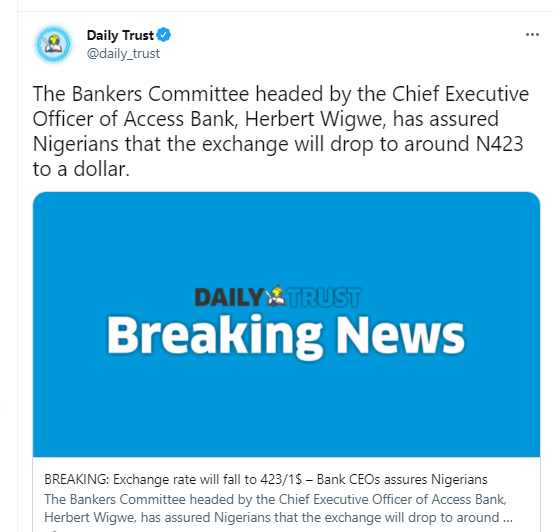
Update –  The Naira will not come down to N423/$ since what makes the Naira go up is not fully under the control of banks and the CBN HQ. The warehouses and factories (modern and old types) need to wake you, posting exports to help Naira. Without them running, Naira will continue to underperform despite any financial engineering in CBN.  Yet, recent policy by CBN will help the Naira to stabilize despite any short-term spike.

The Bankers Committee of Bank Chief Executive Officers, headed by the Chief Executive Officer of Access Bank, Herbert Wigwe, has assured Nigerians that the exchange rate will drop to around N423 to a dollar. The Committee of Bank CEOs addressed the media on Thursday following the halt in the sales of forex to Bureau De Change operators by the directive of the Central Bank of Nigeria (CBN). Addressing the question on the sharp spike which saw the dollar hit N523, the Chief Executive Officer of Guarantee Holding (GTCo), Segun Agbaje said: “What we saw in the market yesterday and today is an aberration. “The rate will come down. Very soon, you will buy at N423 or N425 at most.”

No Future for BDCs As E-Naira Arrives And Central Bank of Nigeria Goes Retail

Welcome Chekkit Technologies Corp To Tekedia Mini-MBA

0

Join me to welcome Chekkit Technologies Corp to Tekedia Institute Mini-MBA which begins Sept 13. Chekkit protects consumers from the dangers of using counterfeit products while helping consumer goods and pharmaceutical companies boost their sales, better understand their consumers, and recover lost market share. Asides from allowing consumers to verify products (with ChekkitApp or by dialing a USSD code) and reporting the fake products they are sold, the benefits of using Chekkit is huge for manufacturers and producers.

Tekedia Mini-MBA continues to welcome hundreds of startups, SMEs, and large corporations to its next edition (Sept 13- Dec 6). They will co-learn and co-advance with citizens and professionals across market domains and territories in Africa’s largest business school, for mastering the concepts of entrepreneurial capitalism. We teach Innovation, Growth and Operational Execution.

Welcome Chekkit, a leader on  consumer intelligence and anti-counterfeiting. To join Chekkit in our class, click here.