DD
MM
YYYY

PAGES

DD
MM
YYYY

spot_img

PAGES

Home Blog Page 5681

The Referral At The Palace

4

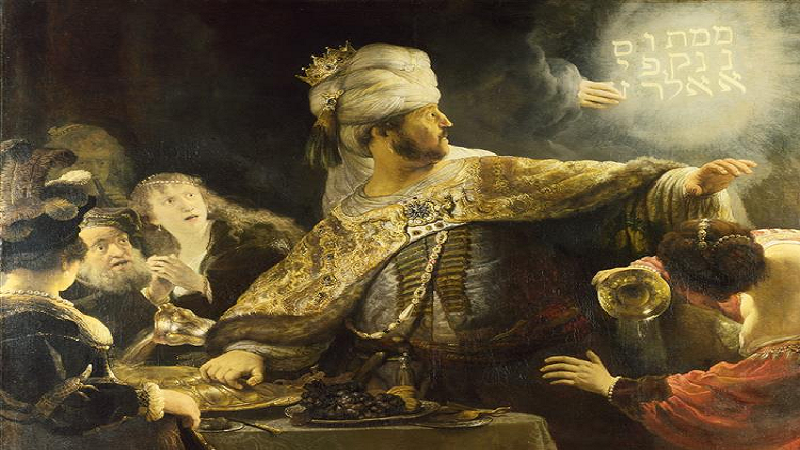
He hosted a grand banquet for royals. They drank, and then asked for the gold and silver goblets which his father had brought from Jerusalem. Then fingers of a human hand appeared and wrote on the plaster of the wall. The king became pale as he could not understand. He called his enchanters, astrologers, and diviners – the wise men of Babylon – and commanded, “Whoever reads this writing and tells me what it means will be clothed in purple and have a gold chain placed around his neck, and he will be made the third highest ruler in the kingdom.” None helped.

Then the queen came to the rescue, and told King Belshazzar that in his kingdom, there was a young man: “In the time of your father he was found to have insight and intelligence and wisdom like that of the gods. Your father, King Nebuchadnezzar, appointed him chief of the magicians, enchanters, astrologers and diviners”. 

Daniel is that man; when Belshazzar took over from his father, he was demoted. Daniel was brilliant and when Nebuchadnezzar ruled over his empires, he assembled the most knowledgeable people in all the kingdoms he controlled. He went for the best including appointing brilliant “slaves” to become heads of important positions in his government: he made Daniel the leader of his strategy team – “chief of the magicians, enchanters, astrologers and diviners”. Then Nebuchadnezzar messed up, and his son took over, and fired those people, bringing the yoyos to live in splendour.

But interestingly, those who remembered the old moments would always ask him to go back to the men who built the old empires. Here, the queen told him to call back the man under whom Babylon became greater because of his wisdom.  Unfortunately, that message was not a good one but the lesson is there.

Daniel interpreted “mene, mene, tekel, parsin” but today men and women are called to interpret new product strategy, new market entry strategy, etc. The question is this: how can you become good that men and women will recommend you in your absence? 

And hopefully, when you arrive, you will justify that confidence. I have been in Board meetings when Chairmen will ask: who truly understands this, and can we bring him here? Names will begin to fly. Elevate yourself to be remembered during such moments. Happy Sunday.

Comment on LinkedIn Feed

Extended comment: Good People, seek for that referral. Daniel got his in the palace. Yours could be in the Board, football field, or anywhere. The key is being good at something that others will recommend you. Someone recommended me for a Board position in a public company last week, and yesterday, a governor extended an invitation to visit. For that one, time is tight to travel now to Nigeria,  but I was truly happy that His Excellency was aware that there is someone like me. Possibly, someone sent something about me to him. Elevate and get the referrals from the “palace”.

Comment (from below): Three key characters to pick out here, and I will prefer to extrapolate to political space, rather than corporate, the former perfectly delivers the insights, using Nigeria as case in point.

For the characters:

First is the king, who realised that there’s a mystery that needed to be unravelled, and was willing to do whatever it took to get it done: admission and willingness to deliver.

Second is the advisers and assistants, who were equally eager to help the king solve the mystery, and when they realised that their own mastery and intelligence weren’t enough, they didn’t double down and insist that the answer must come from them, so they were disposed to bringing whoever that could get the job done.

Third is the expert, in this case Daniel. He delivered because he was called up and then allowed to work, and the mystery disappeared.

Nigeria’s present problem isn’t with the third character, because they are constant here, but the first and second characters? Herein lies the challenge. A leader who admits his own limitations and advisers who will recommend the best hands and finest minds? This is where I want to us to focus and reflect as a people.


To learn more, read this verse.

Anambra State’s Burial Law and the Test of Obi Cubana’s Extravagance

1

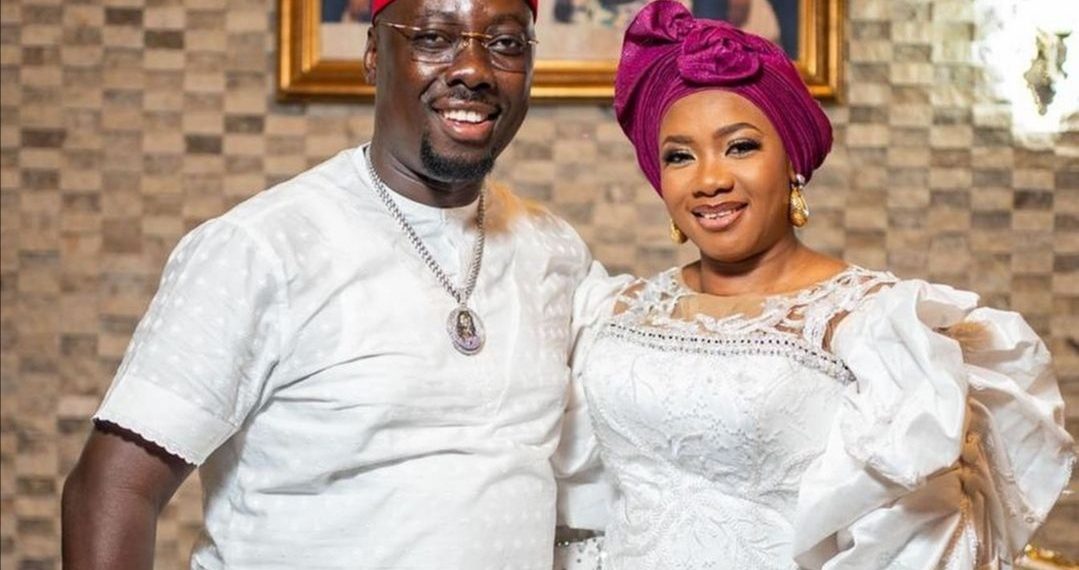
It was a weekend of extravagance in Oba, Anambra State, as Obinna Iyiegbu aka Obi Cubana laid his mother to rest. Graced by the flotsam and jetsam, the funeral has become one of the most flamboyant events in Nigeria in recent times.

Obi Cubana’s mother died in December 2020 at the age of 75, opening an opportunity for the 46-year old hospitality mogul to show off his galore of wealthy friends during the long-planned funeral.

It was more like a carnival than a funeral, as rich people from all walks lavishly flex their financial muscle. About 67 private jets reportedly touched down in Anambra Cargo Airport. Wands of naira and dollars littered the air as guests competed with each other to spray more money. About 347 cows, 158 goats and 78 rams, millions of naira were reportedly donated, among other expensive gifts for the funeral, by Obi Cubana’s friends.

Nigeria’s social media space has been agog with the lavishness of the funeral. Although the turnout is attributed to Obi Cubana’s goodwill, his investment in human capital development which has yielded many millionaires who want to pay back in some way, the extravagance has rekindled a popular issue that the Anambra State government had two years ago, enacted a law to quell – extravagant funerals.

In April 2019, the Anambra State House of Assembly passed a bill seeking to curtail the rising cost of burial ceremonies in the state. Under the bill, which was accented to a month after by Governor Willie Obiano, it’s illegal to deposit a corpse in the morgue beyond two months from the date of death. The use of uniforms in honor of the deceased was also abolished. The law also forbids blocking of road/street for burial except there is authorization from the local government.

No wake keep of any kind for a deceased person was allowed, and religious activity for the deceased must end by 9 pm, and no food, drink and other forms of entertainment on behalf of the deceased will be tolerated after. The law further stipulates that burial ceremonies must not exceed one day, and burial service must not last more than two hours. For condolence, the law says condolence visits must not go beyond one day after burials, and no one should give the bereaved family a condolence gift exceeding money for one jar of palm wine, one carton of beer and one crate of soft drink.

These among other rules in the burial act were necessitated by the societal trend of exorbitant funerals tearing families apart and throwing many into debt and poverty among other consequences after burial ceremony.

“I have seen families sell their real estates, property, and personal belongings, in order to meet up with the expectations of society as regards funeral expenses.

“Businesses had folded, marriages had broken down, children had been out of school and sudden deaths had been recorded, simply because people could not wriggle out the devastating effects of the huge expenses incurred during the funerals of their loved ones,” Catholic Bishop of Awka, Bishop Paulinus Ezeokafor, who lobbied for the bill said in an interview.

However, Obi Cubana’s mother’s burial has defied most provisions of the law and thus, sets a precedent that may revitalize the old practice if the state government fails to implement the law.

One of the major concerns in the outset of the bill was implementation. Many stakeholders believed the law would not stand the test of time as it would die where it was made. This concern stemmed from the glaring influence of non-state actors who wield enormous wealth and connections. Anambra State has many people of such status, whose affluence gives the effrontery to break some laws and get away with it.

The burial law empowers Magistrate Courts in Anambra State to try defaulters, imposing jail terms and fines as necessary. But it is easy with common people, not the likes of Obi Cubana, who is well connected as shown by the number of dignitaries and celebrities who graced his mother’s burial.

Obi Cubana owns a chain of entertainment businesses that include hotels, clubs, lounges that are scattered across Nigeria. He is estimated to be worth $96 million.

Against this backdrop, the Anambra State government is up against a test of dignity. With all eyes curiously set for the government’s reaction, whatever happens will determine the fate of Anambra State’s burial law, and the future of funerals in the state.

The Lessons from Dangote Refinery on Big Projects in Nigeria

1

Dangote Refinery: if you want to understand big project management in Nigeria, pay attention to it. Yes, in Sept 2013, billionaire Aliko Dangote told the world that he would build a refinery and production would begin in 2016. But since that date, the completion data has been moved at least 8 times. The question is this: why? Because if this was a government project, many of us could complain. This is a private enterprise and it is largely none of our business. But that does not mean we cannot learn from it.

Lesson 1: the banks which invested in this project would be under stress now if not that Dangote is loaded on cement and can move funds around to handle interests on loans.

Lesson 2: big projects in Nigeria are challenging, you need to plan very well.

Lesson 3: when things become hard, ask the government to invest to cushion debt servicing; NNPC is buying 20% of the refinery for $3.8 billion and that is a saving manna. To do that last one, you must command the conglomerate tax and get a bill updated.

Finally, Dangote Refinery had made a claim that only those with refinery license should be allowed to import petrol into Nigeria. If the government buys into that, over time, the refinery can even stop production, and focus on imports. That is why exemptions are bad: everyone needs to have the same rules.

Punch had reported that Dangote Group has desired  for inclusion in the Petroleum Industry Bill a requirement that the license to import petroleum products should be given only to companies with active refining licenses. The company does think that by having that requirement, companies will invest in local refining business.

When you do big projects in Nigeria, build a highly pessimistic model because from building rail tracks to power systems to oil refineries to steel complexes, big projects in Nigeria struggle! We need to reverse that, and if possible, use equity and not debt!

Harnessing Opportunities from Crises

2

When you tell people to find opportunities within the crises around them, many of them turn around to tell you, you are wicked, selfish, inconsiderate, greedy, and all. Some of them make it look as if it is a crime to take advantage of what is lacking or wrong with your society. But what many of them fail to understand is that many professions thrive in a crisis. And by this, I don’t mean negative professions; I mean those prestigious ones we all aspire to join. Let’s look at some of them one after the other.

You cannot be a medical doctor if there are no sick persons to attend to. Many parents want their children to study medicine in the university because, apart from the profession being looked at as prestigious, these parents are sure their children will not be unemployed when they become certified medical doctors. The doctors that want to go for their consultancy, first of all, check the commonest type of medical crisis in the country and then pass through thick and thin to be certified as experts to handle those cases. By the time they become consultants, they become the kings in their professions. But no one ever sees them as wicked or mean.

What about the lawyers? If people start living in peace, our law courts will close down. These people need you and I to trample on the rights of others to feed. They can’t survive in a Utopia. They won’t even want that imaginary world in the first place. But we all hail them, don’t we?

Let’s leave “white collar” jobs and come down to those that know how to find money in the dirt.

I was looking at my plastic water tank the other day, wondering if I would have bothered buying it if I had access to constant water supply. I wouldn’t have bothered storing water if the resource is always available, now would I? I actually went for the tank due to the water crisis Enugu is known for.

What about all these people going into agriculture recently, especially after the federal government restrictions on food importation took effect? Don’t you think they were envisioning a food crisis and wanted to benefit from it when it happens?

The truth is, every profession is established because there is a crisis that it will tap from. We are told that professions come up to handle needs in society but what those that taught this that avoided was telling us that crisis are the causes of those needs. For instance, the COVID-19 pandemic has brought a lot of opportunities, which will thrive for years, if not decades. Climate change is also bringing more opportunities to our doorsteps. What more? The insecurity in the country has caused many people to establish private security firms. People avoid holding cash these days because of robbers and for that, tech companies have devised cashless transactions. ENDSARS happened and POS has started giving jobs to many youths. These are just the few that we can see all around us.

So, what about you? What crisis are you planning to reap from? Are you going to lament about them while they make millionaires out of your neighbours? Look around you and start now to count the number of individuals and businesses that thrive because of one type of crisis or the other; maybe that will help you to understand the theme of this text.

Whatever you do, always remember that opportunities are born out of the crisis. So, locate one and reap out of it. It is not a crime. It is not inhumane. And, it is not a sin.

Binance Cancels Stock Tokens Amidst Controversy and Regulatory Concern

0

As governments’ pressure continues to mount on the cryptocurrency market, many players, particularly exchanges, are making many changes to their operations to avoid a possible crackdown.

Binance, the world’s biggest crypto exchange, which has been recently enmeshed in squabbles with different governments, is making efforts to curtail regulators’ interest in its activities.

CNBC reported that the exchange will no longer offer digital versions of stocks like Tesla, Apple and Coinbase.

The world’s top digital currency exchange by trading volume said in a blogpost Friday that it would end support for “stock tokens,” crypto assets tied to the value of certain shares.

Binance had offered the tokens through a partnership with CM-Equity AG, a licensed investment firm based in Germany. According to Binance, each token was fully backed by shares held by CM-Equity AG.

Binance said stock tokens were unavailable for purchase on its website, “effective immediately.” The company will cease support for any stock tokens after Oct. 14, and users may sell or hold them over the next 90 days.

European users will be able to move their holdings over to a new “portal” from CM-Equity AG roughly two to four weeks before Binance closes all positions on Oct. 15, Binance said.

The company said the decision was taken to “shift our commercial focus to other product offerings.”

In April, Germany’s financial watchdog warned investors that Binance had likely violated securities rules with the launch of its stock tokens, adding the company faced potential fines for not publishing investor prospectuses for the instruments.

“As the crypto ecosystem evolves, and as Binance grows as a company, we are continually evaluating our products and working with our partners to meet our users’ needs,” a Binance spokesperson told CNBC.

“We take our legal obligations very seriously and engage with regulators and law enforcement in a collaborative fashion. We don’t comment on specific matters or inquiries.”

Binance’s stock tokens let users buy a fraction of publicly traded companies’ shares without paying commission fees. Stocks on offer included Apple, Coinbase, Microsoft, MicroStrategy and Tesla. Prices were settled in the company’s own dollar-pegged stablecoin, Binance USD.

Binance has been facing a growing crackdown from regulators around the world. Last month, Britain’s markets watchdog barred the firm from carrying out regulated services in the country, while Italy’s securities regulator on Thursday said Binance was not authorized to provide investment services to Italians.

Regulators in Japan, Canada and Thailand have also issued warnings about Binance.

Last week, Binance CEO Changpeng Zhao — known in the crypto industry as “CZ” — said that his firm “still has a lot of room to grow” and that “compliance is a journey” in the nascent digital asset market.

However, the exchange’s decision to wind down its digital stock offering may add to its predicament. Binance handled nearly $2.5 trillion in derivatives in May. But soon after, the cryptocurrency market suffered a crash that has plummeted its value by more than half, forcing Binance to freeze for over an hour, locking many traders out. The exchange also seized their margin collateral and liquidated their holdings, according a report by WSJ.

Since then, about 700 traders involved around the world have been trying to get their money back. The group has been seeking a way to sue Binance but has been immobilized because the exchange doesn’t have headquarters.

The culminating backlash has instigated governments’ decision to stop Binance from offering stocks. Regulators in most countries oversee exchanges that offer stocks and other securities, and may order brokers to pay restitution to customers in cases of loss stemming from platform issues. But like other crypto exchanges, Binance is not regulated and cannot be held accountable by regulators.