DD
MM
YYYY

PAGES

DD
MM
YYYY

spot_img

PAGES

Home Blog Page 5686

Top five tech growth sectors to watch over next few years

0

Five key tech sectors will enjoy a combined growth of more than 400% over the next five years, according to market reports.

These innovation pacesetters – nanotechnology, AI, Digital Twins, genomics and other biotech life sciences – attracted a combined $892.63 billion of investment in 2020, set to rocket to $2.44 trillion by 2025.

Paul Stannard, Chairman of the Vector Innovation Fund (VIF) – an international alternative investment vehicle for advancing enabling technologies globally – said:

“These top five tech growth sectors are the ones currently lighting up investment opportunities, and we have specifically aligned our investment pipeline to them. They hold the key to solving major global challenges relating to sustainability, healthcare, energy, food resources and equal and fair distribution of innovation worldwide.

“Most tech sectors are growing, but these game-changers attracting that $2+ trillion investment won’t be companies enhancing things that already exist, like simply making your TV screen sharper.

“We are backing tech companies that transform how we deal with healthcare and future pandemics, sustainable clean energy, food production and combine these opportunities with AI and machine learning.

“Our fund’s first key target is health tech, which has enjoyed record levels of investment in the wake of COVID, so we would focus on potential nanomedicine breakthroughs such as reversing degenerative diseases and cancers or creating a multi-vaccine to protect us from a range of diseases.

“And while funds like ours can supply management expertise, our target companies are also those showing the skill to commercialise and monetise their offering to a willing market.

“What we have seen with the pandemic as well as Climate Change is a global realisation that we must also accelerate investment in enabling technologies supporting environmental, social & corporate governance (ESG) and the UN’s Sustainable Development Goals (SDG) principles where impact can deliver better outcomes for everyone.”

The Top Five tech growth sectors highlighted by market reports are:

1. Artificial Intelligence has the most far-reaching potential, and the market is forecast to grow 16-fold from $62.35 billion in 2020 to $997.77 billion by 2028 at a 40.2% CAGR,  being the catalyst for accelerating almost all tech sectors and has already shown how it can enhance food science, lower retail and banking costs, and develop medical advances such as remote patient monitoring and more intelligent clinical diagnosis.

AI is transforming future healthcare, food, energy, transport, construction, aviation, and many other sectors. Combining AI with nanotechnologies, for instance, allows platform technologies to re-invent the industries over this decade. 

According to data gathered by StockApps.com, in the last quarter of 2020, there was a massive surge in investment in AI technology companies totalling $73.4 billion, which was a $15 billion increase on the start of 2020. In the first half of 2021, we have seen 4,080 investment deals in AI technology companies, according to the investment monitoring platform Pitchbook. The average investment deal flow value has increased nearly three-fold in 2020. 

2. Nanotechnology is set to grow its market from $54.2 billion in 2020 to $126.8 billion by 2027, which has enabled significant advances in medicine, electronics, environmental solutions, and materials, with the potential to improve drug delivery procedure and storage, and renewable energy. For example, COVID-19 accelerated both vaccine and virus testing and also drove specific developments such as nanotech material masks that filter out 99.9% of bacteria, viruses, and particulates.

According to the investment monitoring platform, Pitchbook, in 2020, $5.56 billion was invested in nanotechnology companies. In the first half of 2021, there has already been $7.72 billion of investment in nanotechnology companies, from 775 deals, with the average deal size value increasing three-fold in just the last six months. 

Paul Sheedy, a co-founder of the World Nano Foundation (WNF), said: “The COVID pandemic is fuelling an investment trend behind the nanoscale tech that is already being billed as the ‘COVID Decade’ and driven by the fear of human and economic devastation from another pandemic. 

“And that risk is high: there are only ten clinically approved solutions to over 220 viruses known to affect humans, and we can expect at least two new viruses to spill from their natural hosts into humans annually, but nanotech and biotech can help counter this threat.” 

3. Biotechnology is the biggest and most mature market here, forecast to grow from $752.88 billion in 2020 to $2.44 trillion by 2028 at a 15.83% CAGR through significant effects on agriculture, improving the nutritional value and preservation of foods, minimising waste, and healthcare advances – the last being highlighted by the record-breaking speed of the Pfizer COVID vaccine development last year.

According to Nature magazine, global biotech funding in 2020 had its best year ever: 73 life science firms alone raised a collective $22 billion. Private fund-raising also mushroomed by 37% on the previous year – already a stellar year. This is being further fuelled with the COVID-19 mitigation market and the advent of a surge of investment in pandemic protection and preparedness using multi vaccines, autoimmune treatments and early intervention testing. Pitchbook has recorded 3,800 deals in biotechnology companies in the first half of 2021, totalling $34.48 billion in investment in these companies. Again, the average investment level is nearly three times what it was the previous year, and post valuations of invested biotech companies have doubled from 2020.

4. Digital Twins are a new up and coming high growth tech sector, forecast to grow 15-fold from $3.1 billion in 2020 to $48.2 billion by 2026 at a 58% CAGR, with the technology already widely used in the construction, energy, healthcare, automotive, and aerospace sectors, and new fields opening up all the time.

According to Pitchbook, last year, there was $103.8 million of capital invested from just 53 investors into the Digital Twins technology start-ups. One company, Cityzenith, has added over 5000 new investors in the last 18 months, raising $10 million to date.

Cityzenith uses its Digital Twin SmartWorldProOS™ software platform to enable architects, planners, and energy providers to track, manage, and reduce emissions and energy waste from individual buildings, infrastructure, and even whole cities and has just reported major contract wins and seen its share price rocket 161% in early 2021. The company is partway through a $15 million Regulation A+ investment raise to scale up its international commercial opportunities.

The Digital Twin sector is an interesting space with tremendous growth opportunities for nimble, fast-moving start-ups who have the opportunity to compete with major conglomerates in this dynamic field such as Microsoft, Siemens, Phillips and Bentley.

5. Genomics is a market set to grow from $20.1 billion in 2020 to $62.9 billion by 2028 through its key role in healthcare innovation and tailoring care to an individual patient while providing more data on diseases and human genetics. The World Health Organisation reports that gene sequencing was critical to the rapid development of COVID-19 tests and other tools used to manage the virus outbreak.

According to Pitchbook, investment capital in genomics companies has more than doubled in value per deal in 2021 over the previous year. So far in 2021, post-investment valuations have also more than doubled against the whole of 2020. 

Paul Stannard added: “The accelerated innovation since the COVID-19 pandemic is astonishing – some experts say we witnessed ten years’ growth in the last 18 months of the outbreak – giving us a glimpse of even greater possibilities, especially when some of these pacesetters, such as nanotech, genomics and Digital Twins are able to advance, accelerate and complement each other.

“If it is backed by astute and enlightened investment, our future is looking bright!”

Break Them Up: Will the Big Tech Escape This Time?

0

After months of antitrust inquiries, bills have finally been approved in the US House that may be the end of big tech as we know it.

On Thursday, a House committee approved far-reaching legislation to curb the market dominance of tech giants, including Alphabet Inc.’s Google and Facebook Inc., after hours of rigorous debate that lasted into the night.

The six-bill package, dubbed American Choice and Innovation Online Act, will hit Silicon Valley tech giants, mainly Google, Facebook, Amazon and Apple in five hard ways. Tech Explore highlights them this way.

BREAKING THEM UP

The legislation would bar the four companies from owning a dominant platform at the same time they own another line of business if having both creates a conflict of interest.

That means they could be forced to sell off businesses in which their market dominance enables them to favor their own services or squash competitors. Because the tech giants often operate both as a platform and as a competitor on the platform, industry critics say, there’s a built-in conflict.

The measure doesn’t name the four companies. But they fit into a new legal category it creates called “covered platforms” that fall under the new restrictions: online platforms with 50 million or more monthly active users, annual sales or market value of over $600 billion, and a role as a “critical trading partner.”

Some critics of the industry have pointed to Facebook’s popular messaging services Instagram and WhatsApp as strong candidates to be divested.

CROSSING OVER

Lawmakers propose enabling users on dominant platforms to communicate directly with those on rival services. It could make it easier for different companies to use products together, with the aim of helping startups and smaller companies.

People would also be able to carry their personal data—photos, videos and all—from one service to another.

“Americans deserve to have more ownership over their personal information, with the ability to seamlessly transfer their data between platforms of their choice,” says Rep. Burgess Owens, the Utah Republican who is a chief sponsor of the measure.

NO MORE FAVORITISM

The legislation would prohibit the tech giants from favoring their own products and services over competitors on their platforms.

An example: Some independent merchants who sell products on Amazon.com have complained to lawmakers about the e-commerce giant’s practices, such as contract provisions and policies said to prevent sellers from offering their products at lower prices or on better terms on any other online platform, including their own websites. Under the legislation, could Amazon be forced to spin off its private-label products that compete with vendors on the platform?

The Seattle company has said that sellers set their own prices for the products they offer on its platform. “Amazon takes pride in the fact that we offer low prices across the broadest selection, and like any store we reserve the right not to highlight offers to customers that are not priced competitively.”

HARD TO MERGE

Lawmakers want to make it tougher for giant tech companies to snap up competitors in mergers, which they have completed by the hundreds in recent years, waved through by antitrust enforcers in both Republican and Democratic administrations.

Acquisitions that would eliminate competitors or potential competitors, or expand or entrench the market power of online platforms could be expected to be blocked by regulators.

The burden would shift from the government to the companies to show that a particular merger wouldn’t harm competition.

DIALED UP ENFORCEMENT

Lastly, the legislation would give the Federal Trade Commission more money, and states more power, to enforce the antitrust laws against companies.

It would increase FTC filing fees for any proposed tech mergers worth over $500 million and cut the fees for those below that level. Many state attorneys general have pursued antitrust cases against Big Tech companies, and many states joined with the U.S. Justice Department and the FTC in their landmark antitrust lawsuits against Google and Facebook, respectively, last year.

Both Democrats and Republicans are united in pushing the bill now unlike any other time, with the main area of disagreement being that the bill does not address the alleged censorship of conservative voices by big tech. Seeing the handwriting on the wall, the big tech are intensifying efforts to halt the legislation.

The New York Times reported that Apple’s chief executive, Tim Cook, called Speaker Nancy Pelosi and other members of Congress, warning that the bill would crimp innovation and it would hurt consumers by disrupting the services that power Apple’s lucrative iPhone.

There have been a swarm of lobbyists, advocacy groups and think tanks hired by the tech companies, roving from one office to the other in the Capitol, pushing to halt the bills. They argued that there will be dire consequences for the tech industry if the bills become law.

“The legislation would have significant negative effects on the hundreds of thousands of American small- and medium-sized businesses that sell in our store and tens of millions of consumers who buy products from Amazon,” Amazon’s top lobbyist, Brian Huseman warned in a statement on Wednesday.

The New York Times reported that Google’s senior vice president for global affairs, Kent Walker, has also made calls to lawmakers in recent days, and the company’s top lobbyist, Mark Isakowitz, has weighed in on how the bills would alter how people use the internet. “American consumers and small businesses would be shocked at how these bills would break many of their favorite services,” he said in a statement. A spokesman for Facebook, Christopher Sgro, said that antitrust laws “should promote competition and protect consumers, not punish successful American companies.”

There have been objections also by advocacy groups being funded by the tech companies, joining voices with critics of the bill within and outside the House to sound warning of its consequences.

Former Google executive, Adam Kovacevich, who formed the Chamber of Progress group, urged members of the Judiciary Committee to oppose two of the bills. He warned that the bills would hurt consumers, resulting in Amazon without Prime, the iPhone without text or phone capabilities preinstalled, and Google without Maps.

Though the lawmakers are not all speaking in one voice, as some GOP members see the move as pandering to the wishes of Democrats, the momentum in support of the bills has outgrown the norm that has held calls to break the big tech back for long. Speaker Nancy Pelosi reportedly pushed back on an attempt by Cook and other lobbyists to delay the bills.

After the House committee voted on Thursday in favor of the bills, the only cramp on their way is the California delegation’s hesitation to fully support them, which may spell some trouble for them in the full House before it gets to the Senate. The future of the legislation is still uncertain but they depict trouble for the big tech having come further than ever before.

The Ranking of Social Media Platforms in Nigeria

0

This data is from Quartz and it reports of a social media platform I am just hearing:  Koo. In that report is a table which shows how the social media platforms are doing in Nigeria. WhatsApp leads the race followed by Facebook. Indeed, one can say that Nigeria is a Facebook nation since WhatsApp and Facebook belong to Facebook Inc. You can also add Instagram and FB Messenger which also belong to Facebook Inc. This explains why Nigeria could not “suspend” Facebook when it cut-off Twitter even as both deleted the same “the language they understand” post of President Buhari.

Almost a week after the indefinite suspension of Twitter’s operations announced by the Nigerian government took effect on June 4, accounts for the “Government of Nigeria” and other government officials were created on Indian microblogging platform, Koo.

All the accounts created were afterwards verified with a yellow badge and have started putting out regular official updates. The Government of Nigeria page has amassed 49,000 followers, compared to the 1.4 million followers on its Twitter page. Koo presents itself as a Twitter alternative with less stringent moderation policies.

Koo’s CEO, Aprameya Radhakrishna, welcomed the Nigerian government to the app, also announcing their first international extension plan into Africa’s most populous country and their plans to use local Nigerian languages on the app. Growth in India was bolstered by government support and the use of local languages. However, it remains uncertain whether Koo will thrive in the diverse Nigerian market in the same way it did in its home market, India, where it has over 6 million users.

Nigerian FM Practitioners on a Mission to Enhance Solution and Service Quality

0
Global FM Standards Framework
Source: Infoprations Analysis, 2019

In 2020, the Standard Organisation of Nigeria inaugurated committee on facility management standards in Nigeria. After the inauguration of the committee, which has some notable practitioners in the industry as chairman and members, our analyst noted that the regulatory organisation took a strategic decision which would advance the creation and delivery of quality solutions.

Our analyst believes that from August 2020 to July 2021, the committee has done a number of underground activities that led to the forthcoming maiden edition of roundtable discussion on localisation of global standards in the industry.

Information has it that the focus of the roundtable discussion will be explication of the significance of ISO 4100 series, which has ISO 41011, ISO 41012, ISO 41013, ISO 41001 and ISO 41014, to the industry growth and development. From ISO 41011 to ISO 41014, our check reveals that practitioners and key players will be walked through the nitty-gritty of applying FM concepts and constructs, specific guidance on strategic sourcing and the development of agreements. We also found that the discussion will afford practitioners and captains of the industry opportunity to gain the needed insights in the areas of outlining solution scopes and benefits of the FM to their clients.

With the touches expected on ISO 41001 and ISO 41014, attendees are expected to learn how to set up and apply relevant strategic tools for needs identification and solution delivery in a proactive, cost-effective and sustainable manner. Participants would not leave without being equipped with the core elements needed for standardised processes towards decision making, carrying out activities, gathering required information and analyzing relevant data for the development of sustainable strategy of FM solution delivery.

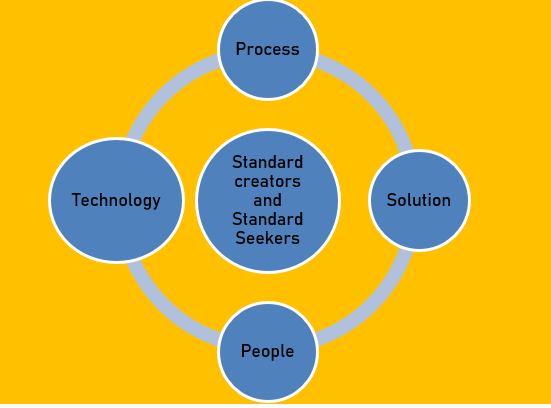
Our analyst has also noted in one of the previous analyses that standards that would be localized must establish how facilities management solutions should be delivered effectively and efficiently. The standards must consistently meet the needs of interested parties and applicable requirement. Responsiveness and responsibility of the people within the supply side to the demand side should also be considered as sacred towards inclusive solutions delivery and value capturing. Our expectation is that the keynote speaker and the panelists would dwell on critical issues in the industry in relation to the various components of the ISO 4100 series.

NIGERIA’S REAL ESTATE MARKET: The Cost of Not Replying Customers in an Era of Big Reviews Analytics

0

In every business, customers are believed to be treated as kings and queens. This has always been premised on the fact that without them business does not exist. In our previous analysis, our analyst stressed the place of conversation analytics in building and sustaining superior customer engagement in the market. His analysis, coupled with the views expressed by an expert in the market, shows that the real estate companies are missing a lot when they failed to extract value from the big conversation data inherent on Twitter, Facebook and other social networking sites.

For instance, a study from the Harvard Business Review discovered that when businesses responded to customer reviews — good or bad — ratings subsequently increased. The researchers of the study note that “responding to online customer reviews, especially when they’re bad, can help you learn from your mistakes as a business owner — and this learning curve will improve your customers’ overall experience and your business’ reputation.” In another study, it emerged that user-generated online reviews help customers for making decisions about ‘continuance’ or ‘withdrawal’ or ‘staying away’ from projects of developers.

As submitted by another set of researchers, when a real estate developer utilized online customer reviews in the areas of new product development and refinement of the existing ones, there is a likelihood of having superior ability and capability over others. As the Harvard Business Review’s study indicates, our analysis of the number of reviews of the 50 real estate companies’ customer reviews and ratings given to the companies reveals that the higher the reviews the higher the ratings.

However, our analysis only establishes 6.2% increase in ratings when a customer reviewed the companies’ products or performance. Our relational analysis further indicates that replying to the customers’ questions enhances ratings by 16.7%, while it was 21.7% when the companies replied to reviews. Our expectation of 50% or more than 50%, which indicates a good relationship, was not met. Therefore, the real estate developers need to work on the customer engagement on Google Business Review and other platforms that allow conversational engagement with the prospective and established customers.

In line with the emerging insights, our Real Estate Marketing Analyst, Mariam Akanni notes that “not replying to customers on the Review Platforms is an indication that companies do not care if their products satisfy customers and are comfortable with becoming obsolete in no time.”  She stresses that the Nigerian real estate companies should engage their customers through online conversation for better understanding of their needs.