DD
MM
YYYY

PAGES

DD
MM
YYYY

spot_img

PAGES

Home Blog Page 5687

US Senate Proposes 25% Tax Credit for Semiconductor Manufacturing

0

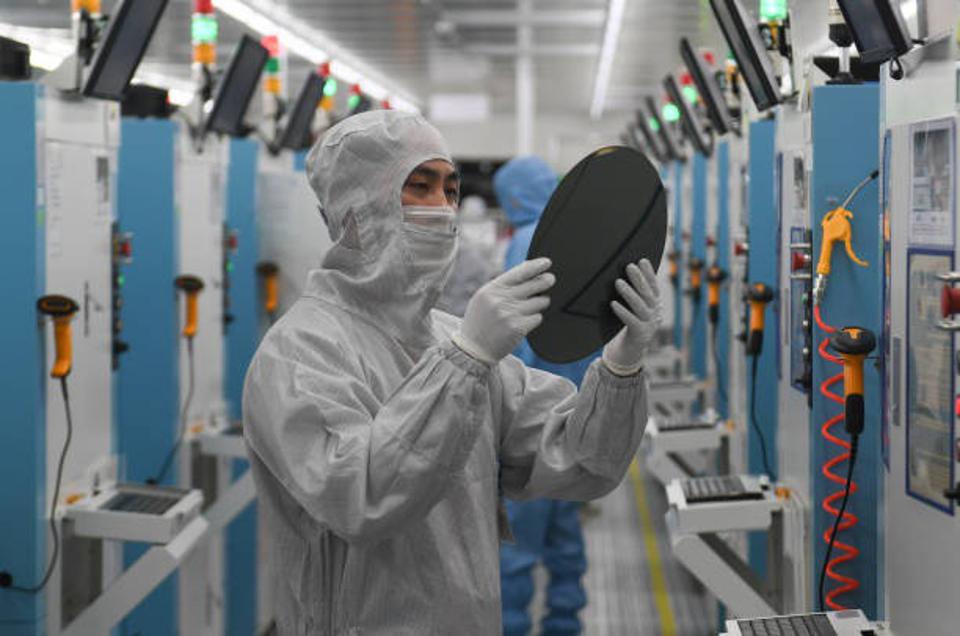
Global chip shortage has added to the existing need for the United States to up its semiconductor production. China has become a chipmaking rivalry in recent years, which the US has tried to contain through trade agreements with China, designed among other things, to protect its intellectual properties.

COVID-19 outbreak ushered in a new normal that revved up chip demand, as the whole world relied more on technology and artificial intelligence to carry out tasks. Against this backdrop, from smartphone to auto production has been seriously impacted, and the US government knows it needs to do more to ameliorate the growing chip scarcity.

Thus, a bipartisan group of U.S. senators on Thursday proposed a 25% tax credit for investments in semiconductor manufacturing as Congress works to increase U.S. chip production. Reuters has the report.

The proposal sponsored by Senate Finance Committee Chairman Ron Wyden and the top Republican on the panel, Senator Mike Crapo, along with Senators Mark Warner, Debbie Stabenow, John Cornyn and Steve Daines, would provide “reasonable, targeted incentives for domestic semiconductor manufacturing,” they said in a statement.

The group did not immediately provide a cost estimate for the measure, which is on top of recent proposed semiconductor funding. Last week, the Senate approved $52 billion for production and research on semiconductors and telecommunications equipment. That included $2 billion dedicated to chips used by automakers, which have seen massive shortages and made significant production cuts. The House of Representatives must still act on the measure.

Supporters of funding note the U.S. share of semiconductors and microelectronics production has fallen to 12% from 37% in 1990.

The senators said up to 70% of the cost difference for producing semiconductors overseas results from foreign subsidies.

“The United States can’t allow foreign governments to continue to lure companies’ manufacturing overseas, increasing risks to our economy and costing American workers good-paying jobs,” Wyden said.

U.S. Commerce Secretary Gina Raimondo said last month the funding could result in seven to 10 new U.S. semiconductor plants.

Raimondo anticipates government funding would generate “$150 billion-plus” in investment in chip production and research – including contributions from state and federal governments and private-sector firms.

The tax credit could benefit Taiwan Semiconductor Manufacturing Co (TSMC) 2330.TW, which is building a $12 billion semiconductor factory in Arizona, and Dutch chipmaker NXP Semiconductors NV as well as U.S. firms such as Intel Corp and Micron Technology Inc.

The Semiconductor Industry Association praised the proposal, saying it would “strengthen domestic chip production and research, which are critical to U.S. job creation, national defense, infrastructure, and semiconductor supply chains.”

There have been moves by semiconductor manufacturers to increase production by building new factories in the US. Intel announced plan in March to build $20 billion factories in Arizona, a project that will see the US increase its volume of chip production significantly. That would be an immense addition to TSMC’s proposed $12 billion chip plant in Arizona. But it falls short of the growing demand that has seen auto companies shutting down production.

China is yet to announce a new plan to counter the global chip shortage. This means, if the US implements the 25% tax credit proposal for investments in semiconductor manufacturing, it will help it close the 25% production gap that started after 1990.

IMF Expresses “concerns with the resurgence of fuel subsidies” in Nigeria

0

A microchip is a composite of transistors which are biased at different regions using current. In analog circuits, you need to calculate the amount of current to pass through the transistors so that they will run within the operating regions of interest. To determine that current, you solve some calculus which provides you the length, width, etc of the transistors. But no matter what you have done, you will always optimize things when simulations show variations from design and operations. Those variations come from many factors, including the process you have designed for. This is what I do for a living!

Interestingly, the processes involved in many circuits are also what great nations use to run policies. You commit to a policy, you try things and over time, you look at data. Depending on what you have seen, you recalibrate. For example, President Biden is learning many things on the correlation between social support and looking for jobs.

That brings me to a new IMF call on Nigeria: the resurgence of fuel subsidies: “The mission expressed its concern with the resurgence of fuel subsidies. It reiterated the importance of introducing market-based fuel pricing mechanism and the need to deploy well-targeted social support to cushion any impact on the poor.” 

“The mission expressed its concern with the resurgence of fuel subsidies. It reiterated the importance of introducing market-based fuel pricing mechanism and the need to deploy well-targeted social support to cushion any impact on the poor. The mission recommended stepping up efforts to strengthen tax administration to mobilize additional revenues and help address priority spending pressures.

“The Nigerian economy has started to gradually recover from the negative effects of the COVID-19 global pandemic. Following sharp output contractions in the second and third quarters, GDP growth turned positive in Q4 2020 and growth reached 0.5 percent (y/y) in Q1 2021, supported by agriculture and services sectors.

“Nevertheless, the employment level continues to fall dramatically and, together with other socio-economic indicators, is far below pre-pandemic levels. Inflation slightly decelerated in May but remained elevated at 17.9 percent, owing to high food price inflation.

“With the recovery in oil prices and remittance flows, the strong pressures on the balance of payments have somewhat abated, although imports are rebounding faster than exports and foreign investor appetite remains subdued resulting in continued FX shortage.”

It added that the IMF mission appreciated the authorities and other counterparts for the open and thoughtful discussions and excellent cooperation.

My question is this: Why are we going back to this? What is the justification after we swore that it was all over?

My understanding was that Nigeria was phasing this out. Now that it is coming back – why, and what have we learnt for it to be back. I understand that the government does not want the burden of fuel cost on the poor. But that is why we need to get the National Identity Management Commission working so that we can deliver support to the needy in a more targeted ways via the National Identity Numbers.

You Can’t Be Influenced by Brand Ambassadors and Still Have These Incentives in Ibadan Real Estate Market

0

Apart from using scintillating texts and illustrations in ads and marketing materials to woo prospective buyers or clients, brand ambassadors are strategic in getting sales leads in every sector and industry.  Meanwhile, using brand ambassadors has both negative and positive outcomes.

In a number of studies and fora, it has been noted that brand ambassadors are contributing significantly to the product and brand images. We have seen how local and international brand ambassadors recently disrupted sales growth of some products because of the public perceived attitude and behaviour of the ambassadors in relation to the features and benefits associated with the products.

Away from these insights, our checks reveal that using brand ambassadors, as noted earlier, is not exclusive to a particular industry, a sector or a company. Anyone has the right of using it when the need arises. However, having the right does not translate to better usage and sustainable outcomes in most cases.

From Lagos to Abuja real estate markets and Port-Harcourt to Ibadan real estate markets, brand ambassadors are being used to woo prospective homeowners and investors. Our checks show that these ambassadors range from entertainment and media industry to sports industry. For instance, Yinka Ayefele, Femi Adebayo, Peter Rufai, Mary Onyali, Bash Ali, Lateef Adedimeji and Bidemi Kosoko are ambassadors of real estate companies located in Lagos, which also have products in places such as Ibadan, Port-Harcourt among others.

In our earlier analysis of incentive marketing strategy in Ibadan real estate market, we noted how good roads, stable electricity, recreational centres and other facilities, which are non-materials, are being used by the developers to market lands or completed houses our experts say prospective homeowners’ and investors’ lack of information in the locations of the lands or completed houses is being filled. We also pointed out that, when incentives such as buy a plot and get a ram, a bag of rice and a keg of vegetable oil are being employed the developers are only appealing to the motivational void and exploiting socioeconomic status of the prospective homeowners and investors.

The current analysis shows that brand ambassadors were used for marketing products that are less than N4.5 million mostly. This is not the only surprising result from our analysis. We also discovered that ambassadors were used for marketing lands than completed houses between 2019 and 2021. It also emerged that getting prospective buyers’ attention through brand ambassadors’ personality traits are sufficient in getting the needed sales leads than combining the ambassadors and non-material incentives discussed earlier.

On the other hand, according to our analysis, developers believe that marketing lands and houses to buyers of low socioeconomic status using ambassadors and material incentives noted earlier would deliver better results than using either of them alone. Our analysis suggests that developers are not considering price as a significant determinant for using brand ambassadors. However, it is a significant factor for marketing lands more than completed houses in Ibadan.

Additional reports by Mubaarak Abdulhameed [a Builder and Quality Engineer] and Mariam Akanni [a Real Estate Marketer]

Building Great Companies and Brands – Tekedia Live Today

0

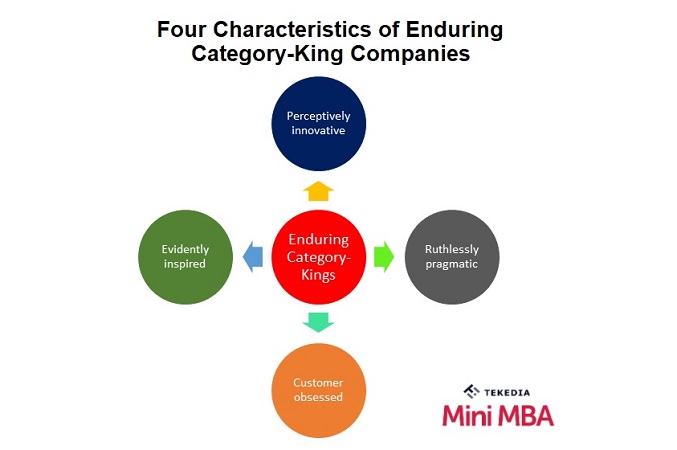
At Tekedia Live, the live session of Tekedia Mini-MBA, I will discuss “Building Great Companies and Brands”. My cases will be Indomie Noodles and Apple corporation.  I will explain four characteristics I have seen in great brands and companies, connecting them to the Grand Playbook of Business lecture. 

To become an enduring category-king in your business sector, you must possess these characteristics. With them, the firms build moats to protect their castles.

  • Perceptively innovative: you are always innovating. You never rest, always pushing for better products, services and experiences. You outperform competitors with new solutions for unmet needs.
  • Evidently inspired: you inspire your users. You are modern, trustworthy and inspirational, you have a larger purpose, helping people live out their own values and beliefs.
  • Ruthlessly pragmatic: your customers depend on you and you have their backs, making life easier by delivering consistent experiences. You make good on your promises.
  • Customer obsessed: customers cannot imagine living without you. You know what matters to customers, finding new ways to meet their most important. needs.

Time is 7pm WAT; Zoom link in the Board.

Y Combinator in Africa – And Why It’s The Category-King In The World

1

Good People, its economic anointing is something else: the most catalytic and impactful company in the world right now, when it comes to building digital technology companies, is an American company named Y Combinator. I have never seen anything like that. A startup looks for $200k on Monday but on Tuesday, YC accepts it, and magically, everyone wants to give it money to the extent that the problem becomes how to politely decline these investors.

A pure inverse system: the investors you have been writing with no-show and interest now become the ones asking for your bank accounts. Yes, they begin to beg you. Why? Some men in America have chosen to give you $125k in return for 7% of your company!

My question today is this: how can someone create something as powerful as YC for Africa? I am not talking of cloning YC website or its business model; I am talking of asymmetric impacts when someone endorses a startup. 

And if you look at the whole thing: the easiest way to become a paper $millionaire in Africa is to be accepted into YC. Of course, after the acceptance, you still have to compete and win in markets. But one thing is evident – there is a massive herding in the world of startups, and America has created a supreme club, and the impacts are everywhere from Nairobi to Lagos and beyond.

Some of the great technology companies in Nigeria like Flutterwave and Paystack graduated from YC. So, the results speak for this company.