


Our two special weeks have been announced. Tekedia Career Week and Tekedia Innovation Week are exclusive to members who have attended Tekedia programs in 2021. We have started registration for a new edition of Tekedia Mini-MBA (Sept 13 – Dec 6, 2021); beat the early bird registration deadline to attend these two events at no additional cost. Begin here.
Changing Strategies for Financial Inclusion Drive in Nigeria

Financial inclusion drive is a process of bringing people under the financial net or scope in order to ensure access to affordable and timely financial products and services is achieved.
When it is achieved to a large extent, it usually helps in financial planning and budgeting for the citizenry. Nigeria, a country with over 80 million people living in poverty and about 38 million people financially excluded, has taken up this drive passionately, but unfortunately not much has been achieved.
There are some facts that we need to accept in our financial inclusion drive as a country. These are:
- The financial inclusion drive must be led by Government Policies before it can have a noticeable impact. What this means is that only the government will keep the eyes on financial inclusion goals; other organizations or firms will give priorities to the business aspect of financial inclusion.
- Financial inclusion drive is a continuous activity. We can only reduce the rate of exclusion when we have the pointers such as population growth, rates of illiteracy, poverty rates, and age gap under control.
We have seen a yearly increase in the volume of financial transactions with no noticeable reduction in financial exclusion rates. It means that a high volume of transactions is not directly proportional to financial inclusion rates.
So many Fintechs companies had sprung up in the last four years to join the banks in this drive with the expectation that it will have a direct impact on financial inclusion rates but to no avail.
This does not mean that these financial inclusion drivers have failed, rather it further points to us that there are lots of businesses and individuals that are not under the financial network which may depict that our financial exclusion rate is far more than the records we have.
We must quit the speculative approach to adopt a deliberate approach to financial inclusion drive. We cannot continue to expect that banks and Fintechs alone will do the needful with regards to financial inclusion without first considering its profitability.
I have said on different occasions that the financial inclusion drive is more lucrative than it presently portrays. No one wants to take the risk to unlock the treasury but everyone is waiting to see who goes first. This is understandable as no bank/Fintech can force a customer to remain a customer even if it opens the first account/wallet for such a customer.
This is where the government’s policy is expected to lead the way and unlock this treasury for financial inclusion drivers.
The Government must be deliberate enough to put up the following policies in line with financial inclusion drives to ensure that all the above-mentioned pointers are under control:
- Child Registration Smart Card, tied to a bank account/wallet with initial balance as incentives and with annual incentive until the child becomes 15 – 18 years. At that time the Card will be transferred to the child and biometrics of the child will be taken to update the records. The registration centers should be placed in all our Health facilities, Primary and Secondary schools. No one would abandon such an Account/wallet especially when it has regular incentives from the government. The policy should also state that every death whether infant or adult must be reported to an appropriate authority for proper identification.
- Cashless payments to the vulnerable Policy. We had the opportunities to bring so many people under the financial net at the peak of the Covid-19 pandemic in the year 2020 when several palliatives were been shared to the vulnerable (IDPs, Physically challenged, Old people and e.t.c) but I doubt we utilized them appropriately as cash payments were seen being made.
All Government Agencies, NGOs, and Politicians should also be made to comply with such policy. All payments should go through an account/wallet created for such people.
With the above mentioned policies in place, banks and fintechs will daily bring genuine numbers of the potential excluded and already-excluded population under the financial net while they continue in the business-focused financial inclusion drives.
If we are deliberate and consistent in this path, in the next few years we would see a significant decrease in the numbers of the financially excluded population.
Nigeria’s Black Swan on Debt Servicing And Post-Border Closure Paralysis
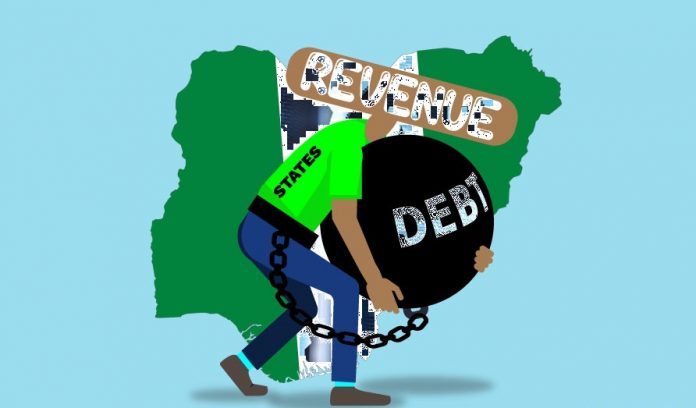
Nigeria’s total debt rose to N33.1 trillion at the end of Q1 2021, from N32.9 trillion recorded as of the end of Q4 2020. Data from Debt Management Office (DMO) states that the federal government spent N1.02 trillion on debt serving in Q1 2021, a 36% year-on-year jump on the Q1 2020 number. As things stand, Nigeria’s debt servicing is growing faster than its revenue, creating a major paralysis.
-
A sum of N537.78 billion was used to service FGN Bonds in the review period. This represents a 124.6% increase compared to N239.46 billion recorded in Q1 2020.
Nigeria repaid a sum of N31.44 billion as principal repayment, while N35 billion was used to service Nigerian Treasury Bills.
In terms of external debt, $134.04 million was used to service multilateral loans, which includes $104.4 million to International Development Association, $16.21 million to AFDB, and $9.5 million to African Development Fund.
-
Also, $106.3 million was used to service bilateral loan agreements, while $763 million was spent on Euro bonds.
But besides these numbers, looking at Nigeria before and after the big border closures, one can see severe cracks. Though I am still expecting economists to do a deep dive, the borders could have possibly wounded Nigeria’s economy when you look at food inflation, acceleration of criminality due to food scarcity, etc.
Economically, in the last 6 years, you can divide the economy before and after the border closures.
Looking at some data from some light manufacturers who export to Cameroon, Benin Republic, etc, there is clear evidence that during the closure, most found alternatives – and Morocco captured most of the opportunities. Post-closure, most have not been unbundled.
Possibly, Nigeria is a net gainer in the region and border closure was an own-goal. If that is the case, we must not repeat the same again. That is critical as we cannot afford to budget N13.6 trillion and waste N4 trillion on just servicing debts as we continue to look for money to hold the economy together.
UEFA Abolishes the Away Goal Rule

The away goals rule has been scrapped for all UEFA club competitions from next season, it has been confirmed.
The away goals rule, initially used back in 1965, was brought in to determine a winner in two-legged knockout ties where the two teams had scored the same number of goals on aggregate over the two matches. The winner, in such a scenario, was the team who scored more goals in the away leg.
But the rule has come in for criticism in recent years with home advantage no longer as strong across the game and many believing the rule to be inherently unfair on those teams playing second in a two-legged tie.
“The impact of the rule now runs counter to its original purpose as, in fact, it now dissuades home teams – especially in first legs – from attacking, because they fear conceding a goal that would give their opponents a crucial advantage. There is also criticism of the unfairness, especially in extra time, of obliging the home team to score twice when the away team has scored.
“It is fair to say that home advantage is nowadays no longer as significant as it once was. Taking into consideration the consistency across Europe in terms of styles of play, and many different factors which have led to a decline in home advantage, the UEFA Executive Committee has taken the correct decision in adopting the view that it is no longer appropriate for an away goal to carry more weight than one scored at home.”
Uefa cited statistics since the mid-1970s which showed how the gap between home and away wins had reduced. It talked about better pitch quality, standardized pitch sizes, and even VAR as factors in the decline of home advantage.
Paris Saint-Germain’s away-goals victory over Bayern Munich in last season’s quarter-finals will go down in history as the last in the Champions League before the rule change.
The rule has led to some dramatic moments in recent years, including Tottenham’s stoppage-time success over Ajax in the 2019 Champions League semi-finals.
The abolition may be linked to UEFA’s big restructure plan for European football. The plan became well known in April, when select football clubs announced the formation of European Super League (ESL) in an attempt to break away from UEFA and start a more lucrative league.
It was revealed that UEFA has been working on a new plan that will see the Champions League restructured from 32 to 36-team, and had planned to sign off on it before the ESL. The plan will include a proposal to collapse the group stage into a single table instead of the current groups of four teams.
Under the proposal, teams would play 10 matches each in the group stage rather than the six currently being played, and there would be a playoff round before the last 16. The scrapping of the away goal rule comes barely two months after the Super League attempt was quashed, and it suggests that there could be more changes in the pipeline.
Rudy Giuliani, Another Victim of Trumpism

Rudy Giuliani, the infamous ex attorney of former US president Donald Trump, has become the latest victim of Trumpism.
The former New York mayor who was once a top Justice Department official and U.S. attorney in Manhattan, was on Thursday, suspended from practicing law by a New York court for promoting “false and misleading” theories supporting Trump’s claim that the Nov. 3 election was stolen.
He thus joins a growing number of unfortunate associates of Trump who traded dignity for loyalty and now have a heavy price to pay for it.
The court found Giuliani guilty of breaching Rules of Conduct, which “establish a framework for the ethical practice of the law and a lawyer’s duties as an officer of the legal system.”
“We conclude that there is uncontroverted evidence that respondent communicated demonstrably false and misleading statements to courts, lawmakers and the public at large in his capacity as lawyer for former President Donald J. Trump and the Trump campaign in connection with Trump’s failed effort at reelection in 2020.
“These false statements were made to improperly bolster respondent’s narrative that due to widespread voter fraud, victory in the 2020 United States presidential election was stolen from his client. We conclude that respondent’s conduct immediately threatens the public interest and warrants interim suspension from the practice of law, pending further proceedings before the Attorney Grievance Committee,” the court said in 33-page suspension order issued by a five-judge panel of the Appellate Division of the First Judicial Department of New York state Supreme Court.
Trump lost the presidential election to Joe Biden, but rejected the result on the false claim of widespread voter frauds, which was bought wholly by his supporters and pursued by his lawyers led by Giuliani. The conspiracy theories, which have come to be known as The Big Lie, instigated the Jan. 6 Capitol insurrection that resulted in the death of more than five Americans and the second impeachment of Trump.
While Trump and many of his allies still hold on to the Big Lie, a push for truth led by Democrats is driving lawsuits against the promoters of the conspiracy theories.
Giuliani, who is also facing criminal investigation by the FBI for his dealings in Ukraine on behalf of Trump, had a $1.3 billion defamation lawsuit brought against him by Dominion Voting Systems, the company that supplied the voting technology used during the election. Dominion in the lawsuit argues separately that Giuliani, Lindell and Powell, Trump’s other lawyers, had each harmed its reputation by spreading dozens of false and misleading claims about the company and its role in the contest between Trump and President Biden.
House Speaker, Nancy Pelosi announced on Thursday “that the House will be establishing a select committee on the Jan. 6 insurrection.” The move, which came after Senate failed to establish an independent commission to investigate the insurrection, is likely going to indict many other Trump’s associates.
Although Giuliani’s suspension is temporary, pending the outcome of a full formal disciplinary hearing, he has joined a growing number of Trump disciples whose services to Trump brought misfortune. Giuliani’s suspension was ordered a day before his 52nd anniversary as a licensed lawyer in New York. For others, it’s far worse.
Michael Cohen, Trump’s former personal lawyer, was sent to prison in 2018 for tax evasion, fraud and lying to Congress about his dealings with Russia on behalf of the president. Paul Manafort was sentenced to more than seven years in prison in 2019 for a slew of charges from Robert Mueller’s investigation into Russian election interference, including tax and bank fraud, and conspiracy against the United States. Rick Gates, a Trump campaign deputy, was sentenced to 45 days in jail on a plea bargain for charges of conspiracy against the U.S. and making false statements; Michael Flynn, Trump’s first national security advisor, pleaded guilty to lying to the FBI.
George Papadopoulos, Trump’s former foreign policy advisor, was sentenced to 14 days in prison with a year of supervised release, for lying to FBI agents about his contacts with Russian intermediaries during the 2016 campaign. In fact, the Mueller probe resulted in 100 charges against 34 people, six of whom were Trump associates.
Although Giuliani believes that given the chance, he’d prove his innocence, overwhelming evidence contained in the order suggests he doesn’t stand a chance. What becomes of his fate if found guilty is not clear.