DD
MM
YYYY

PAGES

DD
MM
YYYY

spot_img

PAGES

Home Blog Page 5694

How Countries can use Bitcoin Adoption as a tool of Economic Development

0

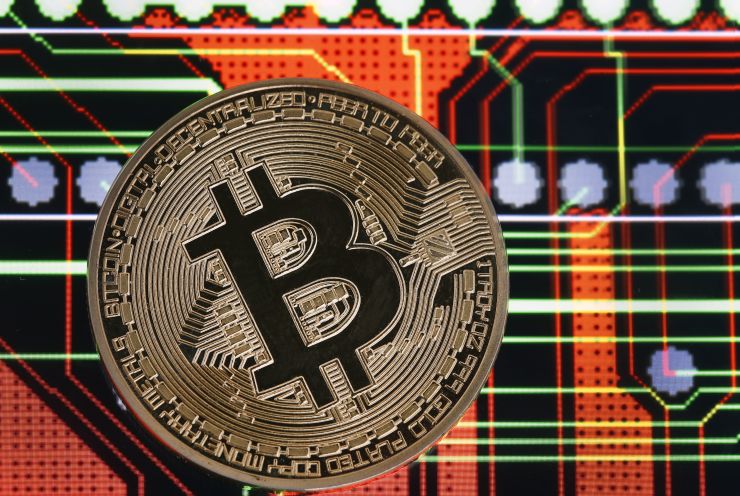
Imagine living in a country where you have access to almost all things. You have access to the financial system such as having a bank account.

You have the right to conduct a business that has a disruptive revenue model. Having the freedom to experiment ideas that will contribute to the real growth of the economy?

On the other hand, imagine you are in a country that lacks many things. The country has an undeveloped financial system, there is a problem of financial inclusion.

70% of the population is unbanked. Do you think you will be able to thrive in such a country?

To solve the problem of economic development is to address the financial inclusion problem. This is the story of a country called El Slavador, it has a huge problem of financial inclusion.

30% of the population are banked and 70% of the country is unbanked. According to a speaker at the Bitcoin 2021 conference held in Miami, 20% of the GDP of this country is from remittance sources, and 50% of the remittance goes into fee servicing.

But, they want to become like other countries that don’t have financial inclusion problems. 

In the Bitcoin conference, the president announced that Bitcoin will be made a legal tender. This is because with bitcoin the problem of financial inclusion, high rate of remittance, inflation due to the devaluation of currency will be solved.

But, what are the gains or the impact of making bitcoin and other cryptocurrencies legal tender?

Ways Cryptocurrency Adoption can Speed Up Economic Development.

While El Slavador became the first futuristic country that believed that a country can solve its economic development problems by embracing technology, the problem the country is experiencing is very similar to other developing countries and emerging economies.

When it comes to inflation, it is a global problem that every nation should fix. Imagine an open and trustless monetary system, where currency supply is fixed, will there be inflation?

The potential of bitcoin can help countries to solve the following problems and more. 

Financial Inclusion Effect:

Imagine what will happen to a country that has most of its population unbanked adopting cryptocurrency as a legal tender. When it comes to cryptocurrency, you don’t need a bank account to be part of the financial system, all you need is access to the internet. 

With access to the internet and software applications, you will be able to use bitcoins and other coins.

This will give freedom to the people and security. The poor and crude standard of living will be gone. What does financial inclusion bring to an economy?

Financial inclusions bring an increase in economic activities to an economy, this will translate to growth in GDP. Do the economies of Africa need this solution? Your answer is the same as mine…

 Economic Growth Effect:

According to a UN report, remittance to Africa has a 10% average fee rate. That means for every $1b remittance inflow would decrease by $1m.

This is a loss to the economy, and it will have a ripple effect on the economy. Imagine, a country like El Slavador that pays 50% of the remittance on the fee. That means the remittance to the economy is reduced by ½ due to the high rate of sending fiat money.

What crypto such as bitcoin does is that it makes cross border payment less expensive and efficient. What will take 10% can now be less than 2% .  A transaction that is supposed to take 3 days will now take minutes.

This gain in efficiency will generate gain in productivity which will lead to economic growth? Do Africa and Asian countries need this life-changing innovation? 

Technological Innovation Effect:

One of the direct impacts of the adoption of crypto, especially bitcoin as legal tender by a country, is the increase in technological innovation. A country that is friendly to blockchain and crypto innovation will surely attract the best tech brains. 

This will become a network effect that will lead the country to become a pioneer in that industry.   I can imagine the level of innovation that will be coming from El Slavador, because many tech talents will be opening offices there. 

What will this have on the economy of El Slavador? 

Entrepreneurship Explosive Effect:

Joseph Schumpeter, a legendary economist believed that the engine of economic growth is innovation. When innovation is added to entrepreneurship, it will create real growth to the economy. 

The government of El Slavdor had a foreign policy to offer a permanent citizenship to cryptopreneurs with a requirement of having 3 BTC.

When the effect fully matures, the economy will reap the benefits of reduction of unemployment, growth in productivity and economic activities, reduction in crime etc. When people have what to do, there will be less idle time to get involved in crime and social vices.

Can you see that to solve the problem of economic development technology is the sure solution?

However, making bitcoin a legal tender will be a great stride by countries as the benefits are too great but implementing policies to maximize the benefits are far more important. What policies will your country adopt to maximize or optimize the benefits of making crypto a legal tender?.


Here is an article that explains how to use ERC20 USDT and TRC20 USDT. 

Originally published on Trenndify 

Duties of the Elites To Nigerians

0

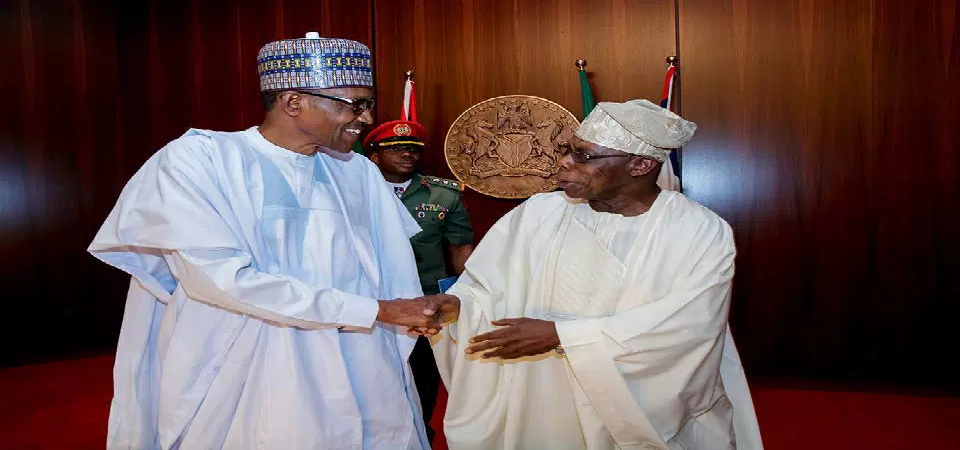
President Muhammadu Buhari has complained, severally, that the Nigerian elites are not helping with shaping Nigeria to a better nation. He has accused them of looking the other way while the country was being stripped bare by looters. He also complained that Nigerian elites criticize his administration unfairly. Just a few days ago, during his exclusive interview with Arise TV, President Buhari complained that these elites have not bothered to call people tearing up the country to order.

While passing on his concluding message at the above-mentioned interview, Buhari said, “I don’t like the way the Nigerian elites is [sic] allowing ignorant people or careless people talking all over the place,” to register his displeasure at the turn of events in the country and how those that know what is happening decided to play deaf and dumb. From the way he said it, you will understand that the president has been reaching out to this group of persons but they seem to have abandoned or ignored his call. But then, one cannot help but wonder why the president believes the elites have so much power to ensure the harmony and growth of the country. Is he expecting too much from these persons? Or, do they actually wield so much power?

Many of us have heard so much about elites but we have not bothered finding out who they are. I have heard someone describing elites as the intelligent persons in a community because he believes that for you to belong to the elite club, you must be well educated and vastly knowledgeable. Well, he is not wrong, but he is not right either. This is simply because not all elites are “well educated” and not all highly educated persons are elites.

Every society has a small group of persons that are powerful, wealthy, intelligent, and influential. These people do not become powerful because they were democratically elected into power but because they either inherited power from birth or through hard work and wealth. It all depends on the culture of the society, anyway. But the elites are usually neutral in their political affiliations so that they are not affected by changes in political powers unless they participate directly in politics. The elites are actually the “owners of the land” because political leaders are careful not to offend them. Hence, for President Muhammadu Buhari to reach out to these people, expecting them to quell the fire created by misinformation in the nation, is not out of place.

You may ask yourself who the Nigerian elites are, considering that they are really quiet. Well, your guess is as good as mine. But what we should worry about is why they have not come out to get directly involved with putting Nigeria in order. Their silence is making it look like they won’t be bothered if Nigeria is burnt down. They give the impression that they have an alternative to Nigeria. And so, if Nigerians want to destroy the country, they should go ahead and do so.

The need for the Nigerian elites to rise up and address situations is becoming too urgent. They should remember that people trust and respect them more than they do their political leaders. They are in a better position to dig deeper into the insecurities in the country and call those directly involved to order. They can also help to groom and build up the youths, most of whom are misguided, confused, misinformed, and misused. They can equally help in calming nerves by shedding more lights into what is happening in the government. The elites truly have a lot of work to do to make this country an enviable one.

In as much as the elites have important roles to play towards ensuring proper direction and guidance of the masses, I still blame the political leaders for keeping people in the dark. The two interviews recently granted by the president and his Democracy Day speech revealed a lot about the activities of the government. Most of what the president said were unknown by many, which made it easier for mischief makers to twist narratives concerning this country and the present administration. 

People also discovered that many stories floating about, concerning the president’s wellbeing and state of health, were not true. So, as the president blames the elites for turning deaf and blind to the wrongs in the society, he should reserve some of those blames for himself for failing to blow his trumpet. He should understand that no one can tell his stories better than himself. So, let him make it a point of duty to talk more. Nevertheless, the president should not be the only person to reveal and clarify the government’s decisions and actions. His media team, concerned MDAs, and, of course, the elites have lots of duties to do in this case as well.

Welcome FUT Akure Students To Tekedia CollegeBoost

0

Good People, join me to welcome students and the Students Union Government of Federal University of Technology, AKURE, Nigeria to Tekedia Institute CollegeBoost, a Tekedia Mini-MBA designed for college students. When students come together in this way for an academic excursion, you have a reason to believe. Yes, instead of the usual (parties, etc), they want to spend time with us at the Institute to co-learn and co-share towards advancing the continent.

These are brilliant young people in one of Africa’s finest technical universities. They are already well prepared by FUT AKURE; at the Institute, we will simply expand their horizons in market systems. Welcome.

Similarly, I also want to congratulate FUT Minna students who just finished a program in our Institute. I have checked the Board, and can see that our business sagacity is deepening. I just approved for the Advanced Diploma in Business Administration certificates to be released. I want to congratulate all of you and most especially the Students Union Government leadership for focusing on knowledge.

For more on Tekedia CollegeBoost, contact Eyitayo Adeleke.

(This piece has been updated with FUT Akure, not Minna, as the new team)

Comparing Oil Revenues, Budgets, etc in Nigeria (1990 – 2017) Across Administrations

0

Responding to this post by Nurudeen Adeyemi, you always tag me (thanks), but here you did not state my position to help your audience. The average oil revenue during Jonathan was $76 billion per year , Buhari’s was $47 billion per year, using your data (I assume they did not include 2017 data). But if you look at borrowing, Buhari has made up his oil shortfalls via borrowing. My comment on that feed was this: money is money, borrowed or via oil revenue as when you spend Naira, it does not have a marker with “they got me from oil” or “I am borrowed”.

What Buhari did not get in oil, he had borrowed from pension, IMF, etc and at the end, he HAS more money (per year) than any of the administrations you mentioned. More so, the oil revenue that came during OBJ, Yar’Adua (the best among them), GEJ etc went into paying military era debts and because of that their budgets were LOWER.

Last Jonathan’s budget was N4.962 trillion in 2014 but Buhari’s last budget was 10.59 trillion naira in 2020. Even using absolute official rates in both 2014 and 2020, Buhari has more USD; Jonathan was around $24 billion using N200/$ in 2014 and Buhari $28 billion using N380/$ in 2020.

So, what you are sharing is irrelevant because even though oil revenue has dropped, President Buhari has used loans to jack up spending, more than any president in both Naira and USD. However, as I noted in the piece you cited, the thinking into the spending has not been strategic, and that is why it seems he does not have money even though he is spending more!

Comment on LinkedIn Feed

Comment: Even though President Buhari has used loans to jack up spending, more than any president in both Naira and USD, as you’ve said, he has projects to show for those spending but the previous administrations have no project to show for their spending that’s the issue.

Response: That is another debate which I do not want to follow up. I simply responded to debunk the “scarcity” you created on your feed. I am happy we are in affirmative now. You tagged me; so, I simply wanted to explain my side of the point. Mr. Buhari has a reason to be borrowing – he is fighting a war.  Yes, that he is spending more is understandable. I only responded to debunk that he had no money because oil revenue went down.

The Mastery of Marginal Cost is the Mastery of Digital Business Growth

0

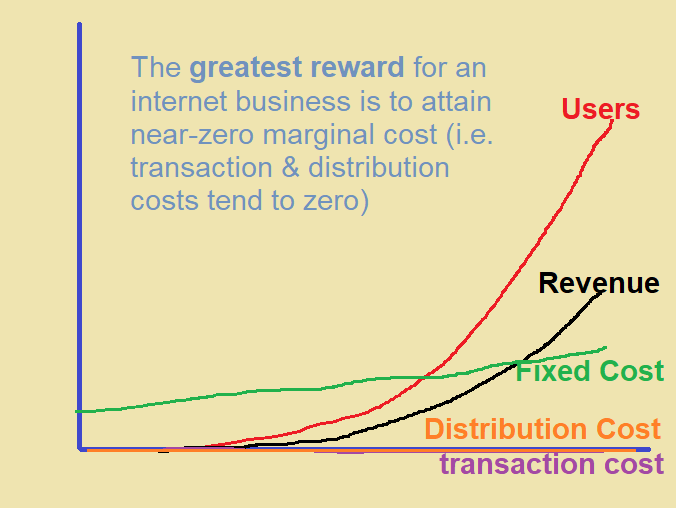
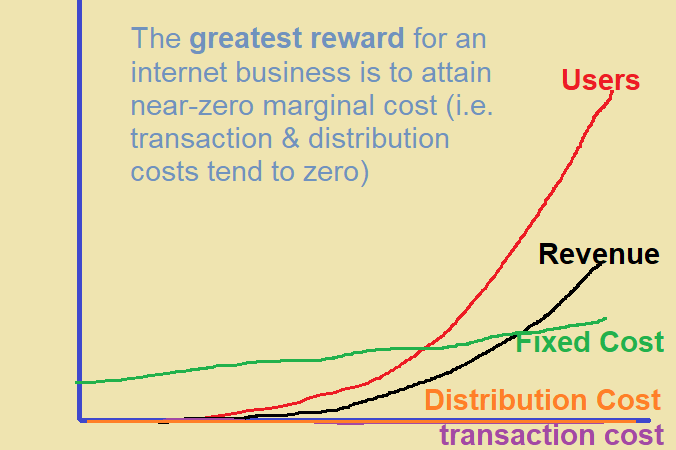
In a perfect internet market, the marginal cost of a digital product is zero. But no market is perfect, so, what we have in reality is that the marginal cost tends towards near-zero. What that means is that the transaction and distribution costs stay low even as output increases. Whenever you attain that positioning, your unit economics improves since you are essentially having accelerating returns which keep compounding.

Before you launch that digital product, understand this plot. If you do not, you will struggle to scale that product. The mastery of marginal cost is the mastery of digital business growth. Your scalable advantage is built on the “physics” bounded by distribution cost and transaction cost.

Unit Economics. Marginal Cost. Understand both, and the path to the mountaintop becomes clearer. How do you keep growing without increasing marginal cost?

The Mastery of Marginal Cost is the Mastery of Digital Business Growth


https://youtu.be/P75hzh3e190