DD
MM
YYYY

PAGES

DD
MM
YYYY

spot_img

PAGES

Home Blog Page 5696

The Central Bank of Nigeria’s N430-440/$ True Value, Nigeria’s New Private Equity Fund to Fight Poverty

3

Despite what we have in the books now, it seems the Central Bank of Nigeria has found another point for the Naira: “The Governor of the Central Bank of Nigeria, Godwin Emefiele advised investors in the U.K that he expects the true value of the naira to be between N430-440 to the dollar. Mr. Emefiele made this comment in a Webinar organized by the Standard Bank of Africa (parent company of Stanbic IBTC Nigeria). According to sources who attended the event on Monday, Mr Emefiele told participants that the current exchange rate at the parallel market was between N430-440/$1 and not the black-market rate which closed at about N500/$1.”

In an apparent attempt to woo foreign investments, the CBN Governor also encouraged foreign investors to reconsider their waning interest in Nigerian Equities suggesting that some of the stocks were undervalued. Nigeria’s capital importation data into equities was just $755 million in the whole of 2020 compared to $1.8 billion in 2019.

Nigeria needs the foreign investors desperately into the economy as whenever they show interest in our stock market, numbers move. Yet, it is really challenging for the investors since if the Naira continues to move negatively in the forex market, taking mid to long term positions will become harder. This is compounded by the foreign reserves which have gone down to a four year low. If that trajectory does not change, another currency devaluation would be on the way.

Tough decisions coming early in Q3 2021 for the nation and it would be really challenging. Sure, crude oil price is showing positive signs and if happens at high volume, we could buy a few more months.

Meanwhile, the Nigerian government has inaugurated the National Steering Committee (NSC) of the National Poverty Reduction with Growth Strategy (NPRGS), with the aim to lift 100 million Nigerians out of poverty. The Chairman of the committee is the Vice President. This committee will establish a private equity fund, the Nigeria Investment and Growth Fund (NIG-Fund), to lead resource mobilisation drive and manage its resources. Besides this playbook, Nigeria needs to work to stabilize the Naira. If we keep the Naira fairly stable, investment capital will arrive, and government will not even need to expand bureaucracy.

STATE HOUSE PRESS RELEASE
PRESIDENT BUHARI INAUGURATES STEERING COMMITTEE ON POVERTY REDUCTION, ESTABLISHES PRIVATE EQUITY FUND
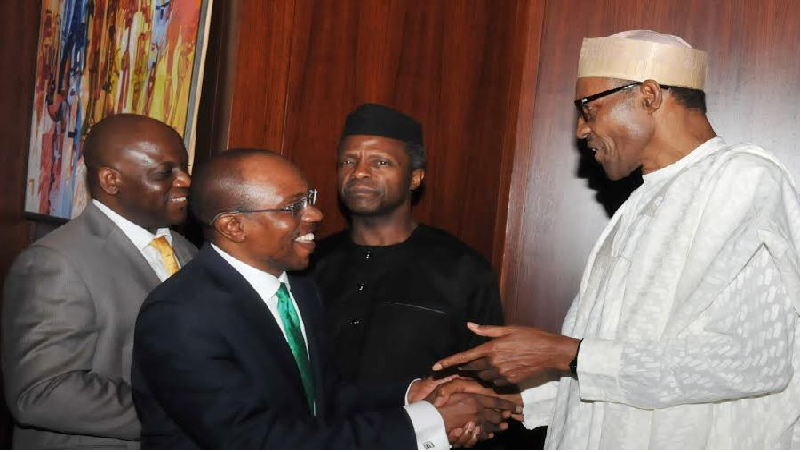
President Muhammadu Buhari Tuesday in Abuja inaugurated National Steering Committee (NSC) of the National Poverty Reduction with Growth Strategy (NPRGS) to be chaired by Vice President Yemi Osinbajo, reiterating his commitment to lifting 100 million Nigerians out of poverty in ten years, with a well-researched framework for implementation and funding.
Speaking at the ceremony attended by the Vice President, Secretary to the Government of the Federation, Boss Mustapha, some governors and top government officials, President Buhari noted that the NPRGS had already proposed the establishment of a private equity fund, the Nigeria Investment and Growth Fund (NIG-Fund), to lead resource mobilization drive and also manage the resources in a sustainable manner.
“This journey began in January, 2021 when I directed the Chairman of the Presidential Economic Advisory Council and Secretary to the Government of the Federation to collaboratively work together to articulate what that will lift 100 million Nigerians out of poverty in ten (10) years.
“I am happy to note that the process of designing this inclusive poverty reduction strategy recognized and addressed past mistakes as well as laying the foundation for a sustainable poverty reduction through the wide range consultations held at all levels of government, development partners, the private sector as well as the civil society,’’ he said.
The President added that the National Poverty Reduction with Growth Strategy would address the underlying causes of poverty on the basis of which it developed programmes that would deal with the multi-dimensional nature of poverty within the practical context of comparative advantage of human and natural resources in the various geo-political zones.
He noted that:
“The major challenge before this National Steering Committee is to translate our good intention into positive impact of the average Nigerian so that we create an appreciative impact on the poverty situation in our country.
“If India can lift 271million people out of poverty between 2006 and 2016, Nigeria can surely lift 100million out of poverty in 10 years. Fortunately, we have already started but we need to unlock the challenges of slow implementation, inappropriate targeting and absence of adequate resources.’’
President Buhari listed the responsibilities of the steering committee to include: anchor collaborative efforts; provide oversight for the implementation of the strategy; provide guidance to Technical Working Group and Federal Ministries, Extra Ministerial Departments and Agencies, subnational governments and other stakeholders on meeting the objectives of the programme as well as monitoring progress and any other effort that would enhance attainment of the objective of lifting 100 million people out of poverty in 10 years.
According to the President: “The performance of our economy despite COVID-19 gives me comfort that we can achieve our goal but we need to seriously scale up and work more with state and local governments.
“This call becomes more pertinent in the face of recent forecasts by the International Monetary Fund, the World Bank and our own Nigerian Economic Summit Group which all agreed that Nigeria needs to frontally tackle her poverty situation if our economic gains are to be sustained.’’
President Buhari said the National Steering Committee of Nigeria’s National Poverty Reduction with Growth Strategy also include Secretary to the Government of the Federation, Chief of Staff to Mr. President, Governor of Ekiti State (South West), Governor of Delta State (South South), Governor of Sokoto State (North West), Governor of Borno State (North East), Governor of Nasarawa State (North Central) and Governor of Ebonyi State (South East).
Other members of the committee are: Minister of Finance, Budget and National Planning, Minister of State for Budget and National Planning, Minister of Humanitarian Affairs, Disaster Management and Social Development, Minister of Agriculture and Rural Development, Minister of Industry, Trade and Investments, Minister of Labour and Employment, Minister of Education and Minister of Health.
President Buhari charged the committee to commence work immediately so that the Technical Working Group would also begin putting the nuts and bolts together.
“You may, therefore, wish to consider providing immediate guidance to the TWG on the following, establishment of the NIG-Fund leveraging on the Development Finance Assessment Report, public and private sector funding; harmonise existing human capital development; scale up existing Poverty Reduction Initiatives such as the Social Investment Programmes, various agricultural support initiatives as well as support to Micro-Small and Medium Enterprises; and leverage on existing development partner support programmes and projects with potentials for quick-wins e.g the Nigeria COVID-19 Action Recovery and Economic Stimulus.’’
The President said the responsibilities were onerous, but expressed confidence that the committee will be able to lay the foundation and demonstrate, within the next two years, the practicality of lifting 100 million Nigerians out of poverty in or under 10 years.
“As you all know funding will always be a challenge especially in these times when resources are limited. The NPRGS has, thus, proposed the establishment of a private equity fund, the Nigeria Investment and Growth Fund (NIG-Fund), to lead our resource mobilization drive and also manage the resources in a sustainable manner,’’ he added.
In his remarks, the Chairman of the committee, Vice President Osinbajo said the National Poverty Reduction with Growth Strategy would consolidate other efforts of the government to reduce poverty which include N-Power, school feeding and conditional cash transfer.
The Vice President noted that the President’s position that local governments, states and the federal government should work jointly to alleviate poverty in the country will be properly reflected in the framework and implementation, stressing the need for access and inclusivity.
The SGF said the poverty situation in the country assumed an enormous proportion, with an increasing population, adding that the situation was compounded by the COVID-19 pandemic.
He said the administration responded to the COVID-19 poverty fallout swiftly and was able to ameliorate the situation, and also ensured a quick exit from recession.
Femi Adesina
Special Adviser to the President
(Media & Publicity)
June 22, 2021

The Empires Of The Future Have One Gene Code: Technology

2

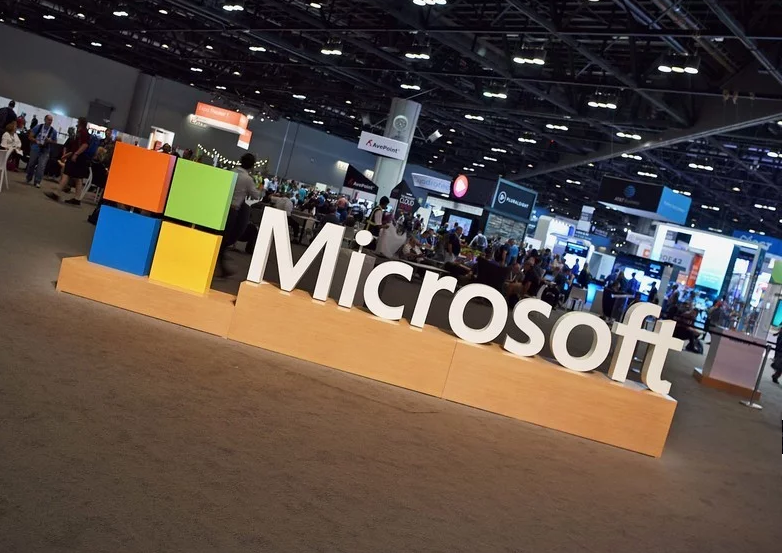
As the world welcomes another American company crossing the $2 trillion mark on market capitalization, one thing is very evident: technology will power the empires of the future. Yes, it took Microsoft more than three decades to hit the $1 trillion mark, but about two years to hit the $2 trillion number, demonstrating the pace of value capture and the absolute redesign of global economic structures. Amazon is expected to join Apple and Microsoft over the next coming months; Google (yes Alphabet) is not far behind.

What a record for Microsoft: it took it 33 years to hit $1 trillion. In just two years, it hit $2 trillion: “While it took Microsoft 33 years from its IPO to achieve $1 trillion in market capitalization in 2019, the next trillion only took two years, thanks to a rise in interest in tech companies prior to the Covid-19 epidemic and throughout the health crisis.”

This is a new era and the new empires are united by one gene code: technology. As the changes happen, these four things are now very noticeable in this post-Covid-19 world.

  • Hybridized Supply Chain: Flexible, adaptive, global and local, at the same time.
  • Remote Everything: The web will run the world across sectors.
  • Digitization and Cloud Migration: The pace will accelerate.
  • Semi-automation: Disintermediation of humans will accelerate.

Many firms are winning around those constructs especially in cloud computing and digitization. Most possess these four characteristics.

  • Perceptively innovative: you are always innovating. You never rest, always pushing for better products, services and experiences. You outperform competitors with new solutions for unmet needs.
  • Evidently inspired: you inspire your users. You are modern, trustworthy and inspirational, you have a larger purpose, helping people live out their own values and beliefs.
  • Ruthlessly pragmatic: your customers depend on you and you have their backs, making life easier by delivering consistent experiences. You make good on your promises.
  • Customer obsessed: customers cannot imagine living without you. You know what matters to customers, finding new ways to meet their most important. needs.

Build on these tenets and win.


India’s Mukesh Ambani Joins the Push for Cleaner Energy with $10.1bn Investment

0

Global push for cleaner energy has received additional support from a surprising source. The National News reported that Indian tycoon, Mukesh Ambani, unveiled an ambitious push into clean energy involving 750 billion rupees ($10.1bn) of investment over three years, marking a new pivot for one of the world’s biggest fossil-fuel billionaires.

The move will be one of the biggest company transitions from fossil fuel to clean energy in Asia, marking a significant commitment by industries to zero carbon emission goals. According to the report, Ambani did not give much details about the plan, but said it involves building a giga factory where solar modules, electrolysers and grid batteries will be manufactured and used to push the cleaner energy goals.

Reliance Industries, which gets 60 percent of its revenue from oil refining and petrochemicals, plans to spend 600 billion rupees on four “giga factories” to produce solar modules, hydrogen, fuel cells and to build a battery grid to store electricity. An additional 150bn rupees will be invested in the value chain and other partnerships, Asia’s richest man told shareholders on Thursday.

The move toward green by the Mumbai-based giant, which reported an annual revenue of $63bn, offers a glimpse of the new order awaiting some of the world’s major fossil-fuel producers. Global giants such as Exxon Mobil and TotalEnergies have been under pressure to pare their carbon footprint, as governments, investors and consumers join to fight climate change and global warming.

Speaking at the company’s online annual meeting, Mr Ambani gave scant details of how he would execute the plan. He was ranked No. 4 among global fossil-fuel billionaires by Bloomberg Green last year. The $10bn in green investment over three years compares with Fitch Ratings’ estimate – published Wednesday – of $7.4bn in annual average capital expenditure by the Reliance group through March 2025.

Shares of the company fell 2.4 per cent on Thursday in Mumbai, the most in more than two months.

“There is an apprehension that the new initiatives, especially green energy projects, will require high gestation period and may also result in fresh debt for the capex plans,” said Kranthi Bathini of WealthMills Securities. He expects these initiatives to benefit the company over the long term.

Mr Ambani isn’t entirely turning his back on his legacy oil and petrochemicals business. On Thursday, he said that a delayed plan to bring Saudi Arabian Oil Company as an investor in the energy division –announced two years ago – will be finalised this year. He didn’t elaborate. In a move to reassure investors, he also said Aramco Chairman Yasir Al-Rumayyan will join the board of Reliance.

The proposed green transformation aligns with the priorities of Prime Minister Narendra Modi’s government, which has been debating aggressive climate targets that would cut net greenhouse gas emissions to zero by mid-century, a decade before China. Though fellow tycoon Gautam Adani, who built a coal-centered conglomerate of ports and power plants, is already pursuing a similar path expanding his presence in wind and solar energy, Mr Ambani’s plans are bigger in scope.

“The world is entering a new energy era, which is going to be highly disruptive,” said Mr Ambani, 64. “The age of fossil fuels, which powered economic growth globally for nearly three centuries, cannot continue much longer. The huge quantities of carbon it has emitted into the environment have endangered life on Earth.”

One of Reliance’s “giga factories” will manufacture solar modules, enabling 100 gigawatts of solar energy by 2030, including on rooftop installations in villages across the country; the second involves large-scale grid batteries to store electricity, for which Reliance will collaborate with global leaders on the technology; and, the third will build and install electrolysers for separating green hydrogen from water.

“I envision a future when our country will be transformed from a large importer of fossil energy to a large exporter of clean solar energy solutions,” Mr Ambani said.

The fourth factory would be for fuel cells, which use oxygen from the air and hydrogen to generate electricity – a technology that’s being promoted by carmakers including Hyundai Motor but famously dismissed as “mind-bogglingly stupid” by Tesla’s Elon Musk.

The announcement comes the year after India’s most valuable company raised more than $30bn selling stakes in its technology and retail units, and through a sale of shares to existing investors. Reliance brought on board Silicon Valley giants such as Google and Facebook to help grow its digital and e-commerce footprint in a $1 trillion retail market of more than 1.3 billion people.

The investment inflows, which Mr Ambani called “vote of confidence” in his businesses, have helped Reliance’s stock almost double in value since the beginning of April 2020. Mr Ambani’s net worth is about $84bn, according to the Bloomberg Billionaires Index.

The Adani-led group is also raising its game in clean energy goals. Adani Green Energy agreed last month to buy SoftBank Group’s $3.5bn renewable power business in India, in a bid to achieve its goal of having 25 gigawatts of renewable power capacity by 2025. The green focus has led to a share rally with Adani Green jumping more than 580 per cent and Adani Total Gas – a joint venture with TotalEnergies – by 670 per cent since the beginning of last year.

Reliance last year set itself a target of becoming a net-zero carbon company by 2035 – a shorter time frame compared to the self-imposed 2050 cut-off of many of its global peers including BP and Royal Dutch Shell. Mr Ambani’s group bought its first cargo of carbon-neutral crude oil in February and said it was looking for more such partnerships.

India’s government plans to expand its renewable energy capacity nearly fivefold to 450 gigawatts by 2030, as the nation aims to reduce its dependence on coal.

”Reliance’s strategy on energy, data and consumer will ensure the company continues to grow sustainably bucking all cyclical trends,” said Sunil Chandiramani, chief executive at Nyka Advisory Services. However, “it will need to navigate challenges of technology innovation, talent acquisition, investor expectations and global turmoil”, he said.

A Huge Milestone – 1.1 Million Customers in Nigeria

1

Huge milestone: 1.1 million customers with billions of naira being processed monthly. I am yet to ring a bell in New York, London or Lagos on that special occasion, but I am feeling it now. A group of extremely young people made me very happy today: they hit a milestone, exceeding 1 million customers in Nigeria.

We will be hiring to deepen this business and I am looking for an operator with experience on strategic partnerships. We have a winning One Oasis but we want to use Double Plays to capture more values. If you are not initiated, read this my article in Harvard Business Review to understand the One Oasis playbook.

The founders are very young, about 25 years, but they are wickedly brilliant. They are restless to outperform and do not offer excuses.

We’ve dropped the next target and we need to offer support to make it happen. Will be looking for great operators to join the team. 

Welcome AjoCard to Tekedia Mini-MBA

0

Tekedia Institute is excited to welcome the AjoCard team to Tekedia Mini-MBA. AjoCard creates and delivers financial services to the largely underserved and excluded customers. These customers include the Unbanked consumers, helping them to save, make and receive payments; Banked consumers that aren’t close to their bank branches or ATM machines; and customers in semi-urban and rural areas needing to receive and make payments.

The company does all these through agency banking operation which helps companies and individuals to see their financial frictions disappear. Grow with AjoCard.

Welcome AjoCard – we are honoured that you chose us to co-learn and advance your mission.