DD
MM
YYYY

PAGES

DD
MM
YYYY

spot_img

PAGES

Home Blog Page 5699

Harvard and MIT mint $800 million via edX

0

The future of education is online; that statement is supported by data. Today, we are reading that edtech company 2U is purchasing online course provider edX for $800 million.Yes, that edX which was founded by MIT and Harvard University. Simply, they have exited, creating $800 million in less than a decade!

American universities are so amazing on how to unlock value: ‘It’s a big day in the education technology space. Edtech company 2U is purchasing online course provider edX for $800 million, following a year where digital instruction was a global necessity amid the pandemic. The deal, per The Wall Street Journal, “combines two major players” in online education — edX is a nonprofit run by Harvard University and the Massachusetts Institute of Technology aimed at bringing elite education to the masses. 2U’s CEO says the deal signifies the beginning of the “digital transformation of education.” ‘

MIT and Harvard University have announced a major transition for edX, the nonprofit organization they launched in 2012 to provide an open online platform for university courses: edX’s assets are to be acquired by the publicly-traded education technology company 2U, and reorganized as a public benefit company under the 2U umbrella.

The transaction is structured to ensure that edX continues in its founding mission, and features a wide array of protections for edX learners, partners, and faculty who contribute courses.

In exchange, 2U will transfer $800 million to a nonprofit organization, also led by MIT and Harvard, to explore the next generation of online education. Backed by these substantial resources, the nonprofit will focus on overcoming persistent inequities in online learning, in part through exploring how to apply artificial intelligence to enable personalized learning that responds and adapts to the style and needs of the individual learner.

Triple that $800 million number, and you have the annual total education budget of Nigeria. Depending on how you see it, Harvard and MIT have won big on online education! In 3 months, they will start another one because no company can stop them!

In our small window here, I also want to thank many Nigerian universities which have reached out. The most amazing thing is this: Tekedia Institute’s Advanced Diploma program was conceived – he gave us the name – by a professor in Nigeria who could not get his school to run it, and he found liberation through us.

Today, we expect thousands of Nigerian university students to pass through Tekedia CollegeBoost (marketing brand). Teachers, professors, lecturers, etc, if they do not give you freedom, we are here to provide a platform!
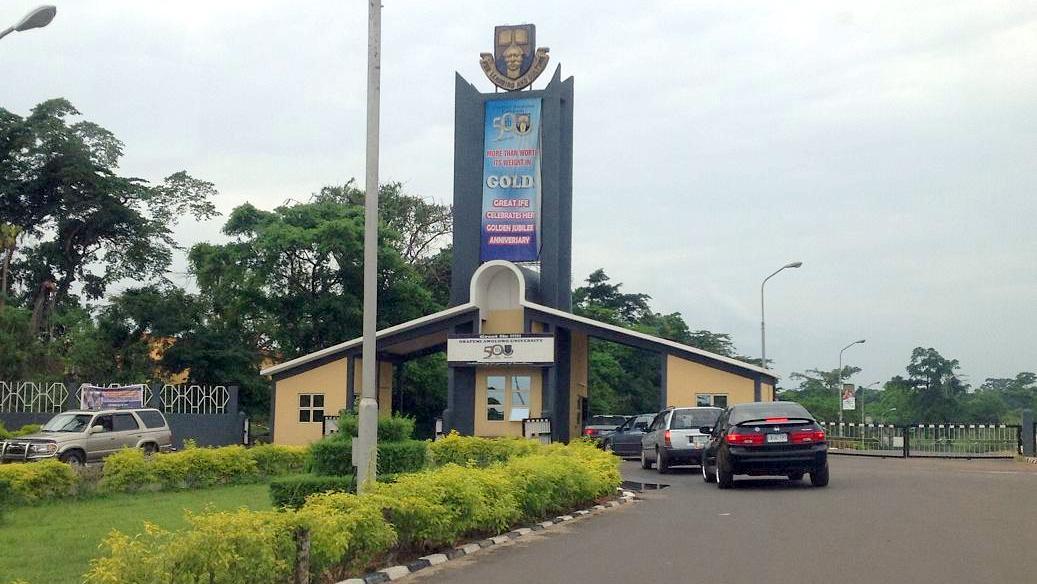
Welcome Obafemi Awolowo University To Tekedia CollegeBoost

0

Tekedia CollegeBoost is excited to welcome students from Obafemi Awolowo University. You are already well prepared by one of the finest universities in Africa. At Tekedia Institute, we hope to deepen your practical understanding of the mechanics of market systems.

You will attend courses developed by executives  from Microsoft, Shell, Coca Cola, Flutterwave, Access Bank, Amazon, Mastercard, Nigerian Breweries, FIRS, Deloitte, KPMG, etc, bringing new understanding to your perspectives. Your peers have rated us 5 stars. Welcome.

Tekedia CollegeBoost is an Advanced Diploma in Business Administration designed for students in colleges. It involves an 8-week program which could be broken into two semesters or taken in one semester, depending on the arrangement with the school or group of students. This course is only offered to a group of students. To learn more and enroll your school, click here.

The World’s WorldCoin By Silicon Valley Tech luminaries

1

Now the world has a WorldCoin, created by Silicon Valley tech luminaries, and it is something for Bitcoin hodlers to pay attention to: “Former Y Combinator head Sam Altman is cofounding a new cryptocurrency called Worldcoin, which has the goal of advancing universal basic income and would require iris scans to verify users’ identities, according to Bloomberg. Details are slim, as Bloomberg uncovered the startup before its launch, but the coin has backing from Andreessen Horowitz, Coinbase, and LinkedIn cofounder Reid Hoffman” (Fortune newsletter).

A San Francisco-based company wants to give everyone in the world an opportunity to get in on the cryptocurrency game. They’ll just need to scan your eyeballs first.

Bloomberg recently learned that a new company dubbed Worldcoin promises “a new global digital currency that will launch by giving a share to every single person on earth.” To prevent fraud, the startup says, it will require an iris scan to produce a unique numerical code for each person.

It’s currently testing the technology — a “silver-colored spherical gizmo the size of a basketball” — with volunteers in various cities in exchange for other types of digital coins like Bitcoin until the new cryptocurrency is ready. Leading the company is Alexander Blania, 27, a former student of theoretical physics at the California Institute of Technology. He told Bloomberg that the orb costs about $5,000 to make, though the price should decline as the company refines the process.

This one is special because unlike Bitcoin, the creators want us to know them. This creates the biggest challenge in the cryptocurrency world: what is the stable state of the best coin? Yes, Naira is naira, dollar is dollar, at least. But the “dog coin” is not the same as the “bit coin” and when you extrapolate, what happens in 25 years?

I remain optimistic that one person will create PeaceCoin. Yes, when you buy it, you will magically have peace unbounded! Now, get ready to use your iris to do coin!

Updated 7/24/2023: This coin is now launched

OpenAI CEO Sam Altman has pushed forward with Monday’s international launch of his cryptocurrency project, dubbed Worldcoin, despite regulatory tensions in the U.S. The digital asset’s centerpiece is a “digital passport” called a World ID that confirms a crypto holder’s identity through an in-person eye scan with a Worldcoin “orb.” Worldcoin already has 2 million users through beta testing, and Monday’s launch scales it across 35 cities in 20 countries. Because of the post-“crypto winter” U.S. regulatory crackdown, Worldcoin tokens won’t be available in the U.S. for the time being. Worldcoin more than doubled its initial $1.70 price before settling at about $2.13 by 7 p.m. EST, according to CoinMarketCap.

Join Tekedia Mini-MBA and Accelerate Your Leadership Ascent

0

Invent, innovate and drive organizational transformation, performance, and growth. Capture emerging opportunities in changing markets while optimizing innovation and profitability. Digitally evolve your business or functional area, turning digital disruption into a competitive capability and advantage. Master the concepts of building category-king companies, and thrive. Join Tekedia Institute Mini-MBA and accelerate your leadership ascent; self-paced, 12 weeks, thrice weekly live sessions  and costs N50,000 or $140.

Court orders liquidation of Brickwall Investment Ltd accused of land scam

3

As Nigeria’s housing deficit increases, compounding the poor state of affordable housing in the country, it also opens opportunities for a real estate boom. As with every developing nation, the common goal among Nigerians is to own a house and totally escape the hassles that stem from rising cost of accommodation.

While the situation is peculiar in many states of the nation, the individual push to own a house is higher in Lagos than any other state in Nigeria. The reason can be traced to its bloated population and limited land size ­­­ – Lagos is the smallest state in Nigeria by land size. Nigeria has more than 17 million housing deficit, of which Lagos has the lion share.

Against this backdrop, the individual push for house ownership in Lagos has leaped significantly since the last ten years. But as people strive to build or buy their own houses, they’re increasingly being confronted with fraudulent property vendors.

Last year, a group of buyers accused a real estate company, Brickwall Global Investment Ltd, of defrauding them in the guise of selling plots of land. It was a notorious scandal that splashed a dent on the young Nigeria’s real estate sector that has provided property buyers, a safer way of property acquisition devoid of scam.

Though Brickwall Global Investment Ltd denied any wrongdoing, evidence presented by the buyers proved that the company has fallen short in its obligation, prompting the buyers to take the matter to court.

Earlier this month, a Federal High court sitting in Lagos ordered the wound up of Brickwall Global Investments Ltd.

Justice Olayinka Faji of the Federal High in Lagos on June 17 granted the winding-up petition filed against Brickwall by the five aggrieved customers (who have now been joined by three others) to be advertised.

The judge also ordered that the company be restrained from dissipating its accounts until the determination of the Petition which has now been adjourned to October,12.

The court further restrained the directors, staffer, management, employees, officers, agents, privies, servants, or any persons from alienating, disposing of, dealing tampering, or interfering with the assets and properties of the Brickwall Global Investment Limited including tangible and intangible assets, movable and immovable assets.

The court also directed that any creditor of the company desirous of supporting or opposing the winding up of the company to appear at the time of hearing of the matter either in person or by their counsel.

The aggrieved customers had last year, petitioned the Federal High Court in Lagos to wind up the business so as to liquidate the company’s assets and retrieve over N5.7million spent on purchasing pieces of land in the company’s Mayflower Estate, at Ikorodu.

The petitioners had said that five years after they paid for the company’s advertised new development, Brickwall had without cause or justification refused to give the petitioners possession of the respective parcel of land purchased or returned their money.

The petitioners include Lawrence and Saffron Imolode, Ebuka Ezeocha, Zephaniah Nwokeji, and Chuka Nwadialo. But apart from them, investigations show that over a dozen other people have also been sold excuses rather than real estate they paid for in what appeared to them like an elaborate scam.

The Court agreed with the petitioners that the company is insolvent and is unable to meet up its obligations with its creditors and found that the Respondent failed to demonstrate that it is able to meet up its obligations as provided in the Company and Allied Matters Act.

Emmanuel Ijakpa, chief operating officer of Brickwall Global Investments had told BusinessDay that the delay in allocating the land to the buyers was due to a massive gully, almost the size of an acre, on the property which resulted in losses and needed resolution with the family that sold the land. The customers say this is not true,

The land in dispute is over 3,200 square meters lying in Mowo Nla village, Ikorodu, in Ikorodu local government area of Lagos state which belonged to the Ifegbuwa Chieftaincy Family.

Meanwhile, the Lagos State Estate Regulatory Authority has directed the State Criminal Investigation Department, Panti, Yaba, Lagos State to investigate the complicity or otherwise of the company, its directors, and senior officials on the allegation of using the company to defraud residents after several complaints to the Lagos State Government through their office.

However, findings show that the police is yet to fully implement this directive, a development that has caused grief to no end to the victims.

Brickwall Investments Ltd, owned by one Uche Ahubelem, a real estate practitioner and motivational speaker, continues to sell and advertise new developments in other parts of Lagos even as the court case progressed.

The intervention of the Lagos State Estate Regulatory Authority is to protect the sector from embarrassment and repercussions of fraud. The Nigeria’ real estate sector grew 1.8% in the first quarter, 2021, stymied by covid-19 pandemic strains. As forecasts predict a bright outlook for the sector, experts are concerned that the news of fraud by players in the real estate sector may mar its growth.