


Who Holds the “D” in Times of Replacing and Restoring Failed Cooling Systems in Nigerian Banks?

One of the core facilities that banks and other businesses cannot play with is an air conditioning system. This is premised on the fact that they usually have a large number of customers to attend to every second, minute and hour. The importance of this system is more appreciated during the dry season, the period every object and human being are expected to feel severe heat.
Our checks indicate that commercial banks have varied strategies for equipping their strategic locations in the bank halls and premises with different brands of air conditioners available in the market. Our analyst discovered that a number of the banks are using outsourcing model of acquiring and maintaining their ACs.
Using this model does not mean that the banks do not control the staff of the solution provider(s), our analyst points out. Our analysis indicates that split, package and portable air conditioners are being used mostly in selected Lagos commercial banks. In terms of brands, Pansaonic, LG, Haier Thermocool and Samsung are the most used.
Knowing the categories and the brands are not enough for us. Our analyst further examines the functionality and operationality of the AC through the views of Facilities Managers and Technicians. This was done with the intent of determining the reliability of components before downtime and hours taking concerned stakeholders in decision making regarding restoration of the ACs to their previous state.
Hours Spent on Replacing Failed Components
In our analysis, it emerged that Condenser Coil, Evaporator and Expansion Valve are more reliable than Fan, Capillary Tube, Electrical Cable, Contactor and Compressor, according to Facilities Managers and Technicians. Being reliable is not enough for us to understand who holds the keys to making smart decisions during the downtime of the components. The mean time between failure, an approach which establishes the average time that equipment operates between breakdowns, was employed.
This is the most common inquiry about a product’s life span, and is important in the decision-making process of the end user. Analysis reveals that the concerned stakeholders are spending an average of more than 29 hours and 25 hours for the replacement of expansion valve and capillary tube respectively. It was also discovered that a day is being spent before replacing evaporator while 22 hours are being used for the replacement of condenser coil. In our analysis, repairing panel is taking more time than repairing fan.
Exhibit 1: Mean Time [Hour] Failure of AC Components in Select Lagos Commercial Banks
Source: Infoprations Analysis, 2021Hours Spent on Restoring Failed Components into Functioning State
Replacing these components does not mean the system will get back to the previous stage. Our analyst examines the average hours being spent on restoring the failed components. Our results indicate that compressor, chemical refrigerants and capillary tube are taking many hours than other components [see Exhibit 2].
According to our analyst, this implies that some factors are preventing the concerned stakeholders from making quick and smart decisions. It could be that accessing the needed fund for buying the new components is being delayed from the banks or solution providers’ side. The delay in restoring the failed components could also be traced to lack of the domain knowledge needed for restoring the components, especially when the discovered faults are typical of the components.
In all these situations, our analyst suggests that concerned stakeholders need to reengineer the processes and upskill the people being used for maintaining, repairing and restoring the components. Co-knowledge creation and sharing should also be prioritised because these components have a high tendency of developing faults that might not be easily addressed by the technicians assigned to them specifically.
Exhibit 2: Average Hours Spent on Restoring Failed Components
Source: Infoprations Analysis, 2021Nigeria Opens A New Playbook for Global Tech
It is what it is – most global jurisdictions wrote their tax laws before the internet, and accordingly tax jurisdictions were not based on IP addresses but physical address. As a result of that, some technology companies which run their playbooks via IP addresses could sell globally, and yet not pay taxes globally. Nigeria thinks that is not fair – and to a large extent, I agree with the nation.
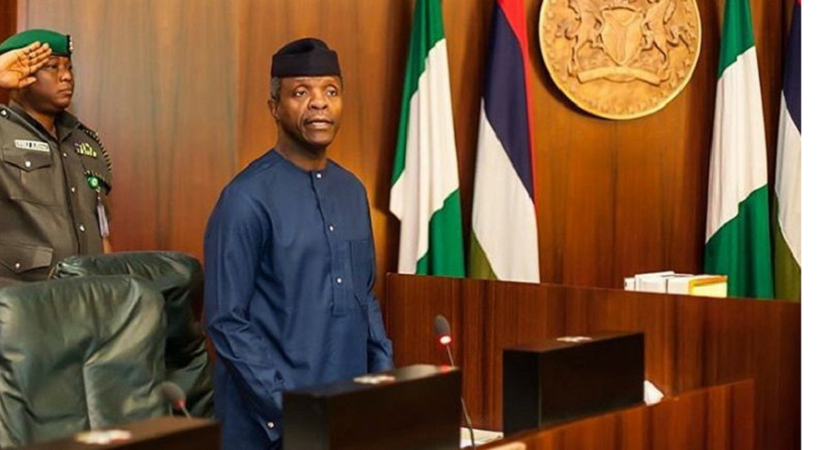
So, the nation wants to do something about it: according to the Office of the Vice President, Nigeria will adopt a new playbook which will impose ” taxes on the Nigerian income of global tech giants with significant economic presence in the country, even if they have not established a physical office or permanent establishment and are currently not paying taxes in Nigeria.”
He added that while the Federal Government has no plans to raise taxes now, saying “there are those who argue that our tax rates are too low, comparing us to other places in the region where the rates are much higher.
“So we have had to balance all of these issues because clearly, higher tax rates can be a disincentive to businesses and investments.
The plan is the easiest part, the most difficult component is actually making that happen. How do you tax Netflix if it fails to cooperate? Sure, you can ask Nigerian banks to keep 7.5% VAT on any credit or debit card domiciled in Nigeria which is used to pay for Netflix subscriptions. To a large extent, Netflix will not have issues with that as that money was never coming to it.
But where things will be challenging is here: asking Netflix to pay corporate tax on businesses done in Nigeria. If you try that, it will become interesting. Yes, magically, due to IP licensing, these companies can claim they make no money in Nigeria!
Left and right, Nigeria’s best playbook is to build local capabilities because the future of commerce will be wired digitally, and no group of people in Abuja can police people in Paris, New York, and London without their governments coming to support them when things get out of hand. And deciding to suspend or ban them would become huge own-goals unless you have alternatives.
Let’s follow the Chinese model: the best defense is offense; create and support alternative companies and disintermediate the global techs (see below) in your jurisdictions so that on tax day, you will be in charge!
Great Insights for Owners and Regulators of Nigerian Filling Stations in an Era of Location Analytics
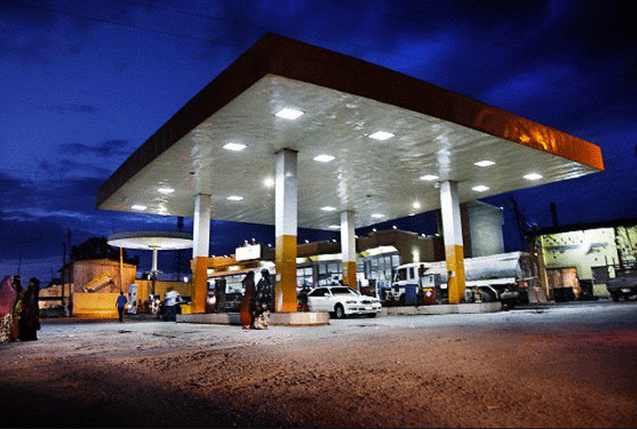
Less than 1% prediction of the Nigerian Filling Station Market growth rate between 2021 and 2026 is not a surprise to business development experts and station managers who spoke with our analyst because the country is yet to overcome the consequences of COVID-19 and varied disruptions that followed EndSars protest.
Beyond these incidents, our analyst notes that there are internal and external factors that equally affected the growth of the market before 2019 and 2020 used as the base years by some market analysts. Many filling stations experienced unexpected disruption in accessing petroleum for sale, largely linked to sever internal politics by station managers.
However, this piece is not about the factors that drive the growth of the market. It focuses on understanding location within the context of factors of production and the implications of the closeness of the stations to critical public and private facilities.
Our analyst believes when location analysis is considered before situating the stations the owners will have opportunity of creating and capturing expected value. Analysing location by the regulatory agencies will also help government in knowing the level of risk and threat the stations could pose to the human survival.
As good as these propositions from our analyst, analysis of various studies and reports from local and international organisations reveals that a significant number of the filling stations in the north, east, west and south regions are violating the specified distance limit and adequate provision of required facilities. Most of the stations are situated to public premises. In Ilorin, 10 stations are located to school, 226 are closed to shops while 192 and 11 are located close to residential houses and hospitals respectively. This insight is not quite different from what is available in Bauchi, Ilaro, Akure, Oyo, Ilesa, Kaduna and other cities in the country.
Meeting the Standardised Distance Limit
From the studies and reports, including our observation, majority of the stations do not meet the regulatory agencies’ distance limit requirement. In Kaduna, 86% of the filling stations did not meet the minimum distance of 100 meter from the health care facilities. 84% did not meet the criteria of 400-meter minimum distance to other stations. In Bauchi, out of 73 stations, 60 % are clustered along out bound roads while 58 % violated the 400m requirement.
Emerging Consequences
The failure of not following the extant rules of locating the stations is huge according to the Nigerian and foreign studies. Emissions being generated every second, minute and hour have been mostly documented by the researchers. Our analysis also reveals this consequence. In Akure, the rate of fume inhalation and noise pollution is very high because a number of the stations operate on generating plants. Stations that are located close to residential structures are obstructing easy traffic flow and have high potential of causing fire outbreaks.
Strategic Options
From the insights, it is high time that concerned regulatory agencies intensify their efforts towards better location analysis before approving stations. The Ministry of Lands and Survey at the state and federal levels and the National Environmental Standards Regulations Enforcement Agency should lead in this regard. The Department of Petroleum Resources needs to increase its methodologies for ensuring total compliance with the existing distance limitation rule and public safety regulations.
Let’s Ride The Rocketship Together At Tekedia Capital

Very excited that through Tekedia Capital, we will inject $millions into seven Africa-operating startups. These companies cover six sectors and we are very confident that they would outperform. From next week, I will begin to share the portfolios once we finalize the deals.
Innovators, keep building and I want you to check Tekedia Capital to see how we can support your missions. Let’s ride the rocketship together.
Future investors, we want to work with you to build the NEXT Africa. Learn more and join our syndicate.