DD
MM
YYYY

PAGES

DD
MM
YYYY

spot_img

PAGES

Home Blog Page 5727

Using “State of Residence” over “State of Origin” in Nigeria

1
The coat of arm of Nigeria

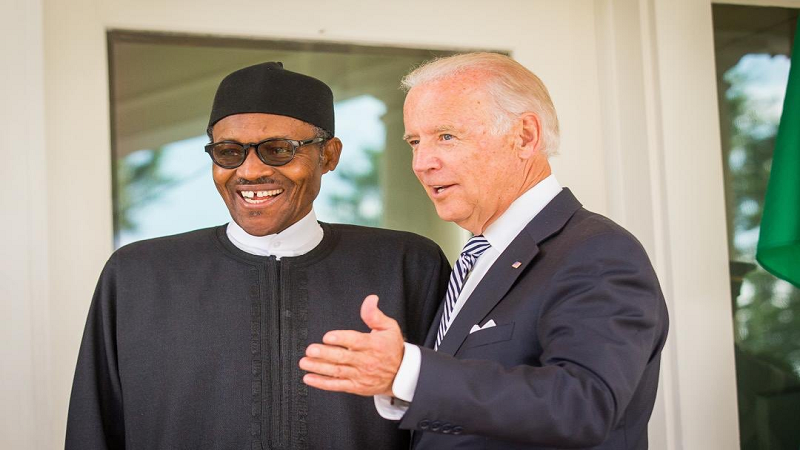
To President Buhari: “Mr. President, thank you for the opportunity to be in your presence. I have come here to tell you to build a New Nigeria by working with the National Assembly to abolish “state of origin”. More than 90% of our national problems are connected to that line in our national forms where irrespective of where one has lived, that individual remains tethered to his or her biological ancestral roots.

“We need you to change this abnormality of “state of origin” to “state of residence”. Through that mechanism, what would matter is where you live and how many years you have lived there to establish residence.

“If we build that structure, we will drive to make people see where they live as their eternal community, and that would make them do everything necessary to make it thrive.

“Until Nigeria does this, we will continue to underperform and our racial lines will not be blurred. ” Thank you for your audience.

(Mitt Romney, a US politician, was born in Michigan state, became a governor of Massachusetts state, and today is a Senator from Utah state. Nigeria needs to make such possible through state of residence, and not state of origin. We need to be Nigerians, and nothing more.)


I am reposting this for the current paralysis in Nigeria. For the full piece, click here.

One Policy That Will Change Nigeria For Good – Abolish “State of Origin” for “State of Residence”

Thrive As ONE Nation, Nigeria

0

Let us work together as ONE Nation. Let us see ourselves as ONE. Let us treat one another fairly and justly. We are ONE people and we are Nigerians. As  I have said here many times, in Secondary Technical School Ovim (Abia state), we had a very popular Mathematics teacher. Mr Bukar in JSS3 initiated us into Mathematics. We became the group of Bukar for Maths. He was excellent; villagers admired him. Across our nation, our diversity could be a strength to outperform.

We have one President and we want him to succeed. And part of that process is asking him to speak as the leader of the nation. Imagine if President Buhari had said, “My fellow citizens in Southeast, I want to assure you that I will do all to protect you and your properties. This government cares about your wellbeing. But those causing troubles in the region, this government will go after them.” He is human and simply removing “civil war” in his statement would have shown leadership in his warning to bad guys.

That is critical. Why? Even if there are robbers and criminals in the Southeast, the nation must not declare war there. Go after bad guys but do not make it a war on the innocent citizens.

I am very confident that Mr. Buhari has learnt on this and his choice of words would be moderated henceforth. Also, I expect Twitter to be back. We have more important things to deal with than blue birds. God bless Nigeria. Happy Sunday.

Beyond Twitter to All OTT & Social Media Ban in Nigeria; Bank’s N6.98 for USSD Transactions

0

Nigeria has banned Twitter but it may not end therein: “The Federal Government has also directed the National Broadcasting Commission (NBC) to immediately commence the process of licensing all OTT and social media operations in Nigeria,” Nigeria’s information minister, Lai Mohammed, said.

A social commentator explained what could happen:

“OTT” stands for “over the top,” and is video industry parlance for content delivered via the internet, independent of traditional broadcast, cable, and terrestrial satellite networks. Netflix, HBO Now/Max, YouTube, Hulu, Disney+, Amazon Video… all OTT. The announcement instructs the Nigerian Broadcasting Corporation to begin registering all OTT and social media services. This creates the opportunity for regulation and forcible compliance as a means of ensuring certain information is not available in the country,” Oluseyi Sonaiya tweeted.

Simply, Nigeria can ban Netflix, HBO Now/Max, YouTube, Hulu, Disney+, Amazon Video, etc in a hurry. Yet, I do not expect that to happen. Twitter is already making moves to unban its services in Nigeria.

STATE HOUSE PRESS RELEASE

PRESIDENTIAL STATEMENT ON TWITTER SUSPENSION IN NIGERIA

The temporary suspension of Twitter is not just a response to the removal of the President’s post. There has been a litany of problems with the social media platform in Nigeria, where misinformation and fake news spread through it have had real world violent consequences. All the while, the company has escaped accountability.

Nevertheless, the removal of President Buhari’s tweet was disappointing. The censoring seemed based on a misunderstanding of the challenges Nigeria faces today.

The President in his address at the United Nations General Assembly, UNGA in 2019 said “the world was shocked and startled by the massacre in New Zealand by a lone gunman taking the lives of 50 worshippers.”

This and similar crimes which have been fueled by social media networks risk seeping into the fabric of an emerging digital culture.

Major tech companies must be alive to their responsibilities. They cannot be allowed to continue to facilitate the spread of religious, racist, xenophobic and false messages capable of inciting whole communities against each other, leading to loss of many lives. This could tear some countries apart.

President Buhari has therefore been warning against social media’s disruptive and divisive influences and the government’s action is not a knee-jerk reaction to Twitter’s preposterous deletion of his tweet which should have been read in full.

The tweet was not a threat, but a statement of fact.

A terrorist organisation (IPOB) poses a significant threat to the safety and security of Nigerian citizens.

When the President said that they will be treated “in a language they understand,” he merely reiterated that their force shall be met with force. It is a basic principle of security services response world over.

This is not promotion of hate, but a pledge to uphold citizens’ right to freedom from harm. The government cannot be expected to capitulate to terrorists.

IPOB is proscribed under Nigerian law. Its members murder innocent Nigerians. They kill policemen and set government property on fire. Now, they have amassed a substantial stockpile of weapons and bombs across the country.

Twitter does not seem to appreciate the national trauma of our country’s civil war. This government shall not allow a recurrence of that tragedy.

Garba Shehu
Senior Special Assistant to the President
(Media & Publicity)
June 5, 2021

USSD Bank Charges

As that happens, Nigerian banks can now charge customers for USSD services: ‘Users of Unstructured Supplementary Service Data (USSD) services in Nigeria have started getting notice of N6.98 charges for each transaction session. This follows the agreement reached in March between the deposit money banks and the telecommunication firms after the intervention of the Central Bank of Nigeria (CBN) and the Nigerian Communications Commission (NCC), in a dispute about accumulated debts. A notice received by a bank customer read, “Welcome to USSD Banking. Please note, a N6.98 network charge will be applied to your account for banking services on this channel.”’

The Economics of Twitter and What Nigeria Needs To Know


United States Responds On Nigeria’s #Twitterban

2

Below is the US Government’s statement on the Twitter ban by the Nigerian government. I predict that Nigeria will chill. Expect someone to go to court, and a court will rule against the Nigerian government to unban Twitter. Then, the government will put a statement – “as a responsible government, we are unbanning Twitter, as we believe in the rule of law”. But let me assure you that what is happening here is vapor as the government will not even put an argument in the court.

When an Iranian military officer was killed by the US in Iraq, during the time of Trump, Iran promised to retaliate. The country fired a missile but made sure that US and allies were warned ahead to leave the base before the projectile could hit. In short, they intentionally missed the target.

But what happened afterwards was legendary, and one of the few moments when Fake News served humanity well: Iran showed on its TV images of many dead “American soldiers”, telling the citizens that it avenged the life of the officer. Magically, the citizens stopped the protests as they believed that the government had dealt with America!

So, for Nigeria and Twitter, the biggest challenge is not Twitter: it is Facebook which also removed the same post. But Nigeria cannot ban Facebook because Facebook is Instagram, Facebook com and WhatsApp. Many Nigerian companies live on those platforms and the government knows that.

Where am I going? The government needs soft-landing so that we can move to the next big distraction! A court supported by the government can even put an injunction: blue bird, you are free to fly in Nigeria!

The Economics of Twitter and What Nigeria Needs To Know

‘When is President Buhari Tenure Ending?’ Nigerian Youths in Dilemma as Twitter Ban Becomes Effective

0

Social networking sites are part of the tools being used globally for holding political leaders accountable and in some cases businesses. In the last decade, interest in using the sites has been on the increase in developing countries, where citizens believe that the sites could help them in demanding and getting good leadership towards sustainable socioeconomic development.

Year-on-year, the users of Facebook, Twitter, Instagram, LinkedIn, YouTube among others are growing. It is instructive to know that these sites are not only deploy for political purposes, but also for business activities. One of the factors that has been attributed to the growth of social media use is the increase in the number of Internet users. In 2020, it was reported that Nigeria has 46.6% of its population as the Internet users. This is expected to reach 65.3% in 2025. Available statistics indicate that Twitter is the second most use social networking site in Nigeria after Facebook. Between May 2020 and May 2021, Twitter user grew by 5.06% [see Exhibit 1].

Exhibit 1: Share of Nigerians’ Select Social Media Users

Source: Social Media Counter, 2021; Infoprations Analysis, 2021

In the political space, the sites are being used by citizens and politicians for engagement before, during and after elections. From the administration of former President Olusegun Obasanjo to Musa Yar’dua and Goodluck Jonathan, Facebook and Twitter were used by their media handlers for civic engagement. While these sites were deployed, the handlers were commended and chided in relation to the government’s policies and programmes. The constant reactions from the public to the messages emanated from the presidency has never for a second stopped since 2015, the year President Muhammadu Buhari took over from former President Jonathan.

What has changed according to social commentators and public affairs analysts is the current government’s inability to withstand severe criticism from non-state actors. The criticism has been primarily occasioned by the various socioeconomic and political challenges ravaging the country and the government seems not be concerned about finding lasting solutions to them.

President Buhari’s recent statement on the need for the citizens in the southeastern region to support the government in ensuring peace and unity was quoted and posted on Twitter by the media handlers. Part of the message was considered offensive and capable of leading to genocide by the microblogging site. The site enforced its rules by deleting the message, this led to banning of the company’s operations in Nigeria.

Our analyst examines reactions to the ban by the government. In 24 hours of enforcing the ban by the telecommunication operators, analysis reveals that interest was more in knowing why the Federal Government banned Twitter, what is happening to the microblogging site and how to use Virtual Private Network to access it as the telecommunication operators effected government’s order. One of the critical questions being asked by the Internet users, who are mostly the youths, is When is President Buhari tenure ending? This is being asked on Google Search Engine.

In spite of the ban, our check shows that some users are using VPNs to access the microblogging site. Having discovered this, our analyst mined 10,195 tweets for further analysis and understanding of what the users debated between 10 am and 2pm on June 5, 2021. A total of 316, 130 words was used by the users to express their feelings about the ban.

Significantly, analysis establishes the use of ban, twitter, Nigeria, government, Nigerians, President Buhari. Endsars, freedom, people, power, democracy as dominant words appropriated to questioning rationales behind the ban. We also found democracy, Fulani herdsmen, dictatorship, policy, terrorism, cryptocurrency, Buharimustgo and accountability as dominant words.

From the ethnographic analysis of the tweets, our analyst found that these words were used within the contexts of existing socioeconomic and political challenges. These words were also discovered to be divisive factors, categorising the users into Pro-Government Group, Pro-Twitter Group, Anti-Government and Anti-Twitter. In our dataset, members of the Anti-Twitter Group were minute while the Anti-Government were many. It also emerged that members of PTG were more than those in PGG.

These groups equally have different perspectives regarding the ban. PGG believes that the microblogging is posing serious threat to national security and unity when one considers how the users are using it to spread fake news and misinformation. On the other hand, members of the PTG consider the decision as a factor that would affect Nigeria’s image globally and also increasing unemployment rate among the youths who are working in the digital economy sector.

Exhibit 2: Dominant Themes in Tweets

Source: Nigerian Twitter Community, 2021; Infoprations Analysis, 2021