DD
MM
YYYY

PAGES

DD
MM
YYYY

spot_img

PAGES

Home Blog Page 5743

Welcome 10 ART Foundation Scholars To Tekedia Institute

0

Join me to welcome 10 ART Foundation Scholars to Tekedia Institute Mini-MBA which begins June 7 to end Sept 1, 2021. Founded by Rasheed Adebayo, ART FOUNDATION, a charity organization, aims at moving the less-privileged in communities in all the states in Nigeria from Poverty to Plenty.

Their  slogan is P2P which means Poverty 2 Plenty. ART does this by providing enablers  such as scholarships, food banks, trainings and development, and ethics and value orientation programmes.

At Tekedia Institute we celebrate these scholars. They will attend one of the finest management and leadership programs in Africa, and we are very confident they will be prepared to experience PLENTY because the future is full of abundance, irrespective of the past.

To ART and Mr Adebayo, thank you for serving.

Welcome, ART Scholars. Welcome to Tekedia Institute.

The Big Bailout – Nigeria To Buy 20% of Dangote Refinery Via NNPC

9

This is a big revelation in the Nigerian business climate. Yes, the Nigerian government through NNPC, the national oil corporation, is planning to acquire 20% of equity in Dangote Refinery: “I can tell you today that we are seeking to have a 20 per cent minority stake in Dangote Refinery as part of our collaboration and you know that there’s a huge quantity of crude for that refinery.” So, magically, the Nigerian people have essentially solved any risk within Dangote Refinery as the world begins to move post-hydrocarbons. Depending on valuation, who knows, the company can even make “profit” before the first day of refining crude.

What do I mean? If Dangote Refinery invested $10 billion in that refinery, and now values the business at $50 billion and  Nigeria takes 20% stake, it simply means that Dangote Refinery has recovered the $10 billion. Magically, it does not need to spend years paying back debtors, etc, as it can return the money immediately!

NNPC Chief Operating Officer, Refining and Petrochemicals, Mr Mustapha Yakubu, at the virtual event, stated that one of its divisions, the Greenfield Refining Projects Division (GRPD) was handling the negotiations with Dangote Refinery.

He said: “We have what we call the Greenfield refinery and the Greenfield Refining Projects Division (GRPD) of the NNPC. What we do, our strategy is to collaborate and seek strategic partnerships with private investors.

At the moment, we have Dangote Refinery, which is the 650,000 barrels per day capacity, plus a mini 80,000 tonnes per annum petrochemical plant.

What are we doing there? I can tell you today that we are seeking to have a 20 per cent minority stake in Dangote Refinery as part of our collaboration and you know that there’s a huge quantity of crude for that refinery.

That’s 650,000 barrels, going into a single crude distillation unit (CDU). When that comes on board, it will also wet the nation for us.”

But how would Nigeria get the money to pay the refiner? We have a new revenue source called Recovered Loot: “The Minister of Finance and National Planning, Zainab Ahmed has revealed that the government has been borrowing from recovered loots to fund the budget. The minister also revealed that the government has not been able to repay back the loans taken so far. She revealed this while appearing before the House of Representatives committee investigation recovered loots on Thursday.”

Because more recovered loots are coming back, we are sure that resources would be available to buy this 20% stake, even as Nigeria continues to look for funds to fix its own refineries! What a country!

FASMICRO Celebrates A Decade As An Intel Technical Partner

1
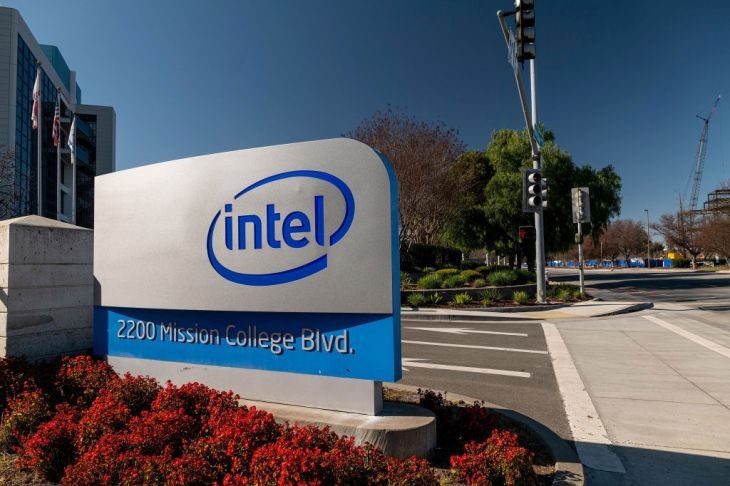
Signage at the entrance to Intel headquarters in Santa Clara, California, U.S., on Wednesday, Jan. 20, 2021. Investors want to know if the world's largest chipmaker will outsource more production when Intel Corp. reports results Thursday. Photographer: David Paul Morris/Bloomberg via Getty Images

A few minutes ago, I signed a major contract with Intel Corporation. At Fasmicro, we are truly honoured that Intel is extending our contract, and providing an opportunity for us to continue to serve our customers. I signed the first one in 2011. Today, we are just two companies in continental Africa that do what we do. We celebrate a decade as an Intel Technical Partner on programmable microprocessors. So, our name remains on the list on Intel website.

I thank our team, especially Engr Ekele Eke, our Engineering Manager, the finest hardware engineer in Africa. We will continue to serve the world of microprocessors and broad electronics. 

My name is NdubuECE EkEkwE and it stands for Electronics Computer Engineering in the department of Electrical Electronics Engineering! (That was how I used to jokingly write my name while in FUTO; I studied EEE with option in ECE).

Fasmicro is always ready to help you with your programmable microprocessor needs. We have access to tools and documents as an Intel Partner that will help you. BUILD with Intel, work with FASMICRO, the electronics people.

Tekedia 2021 Businessperson of the Half Year – Babawande Afolabi, CEO of Green Africa

1

Nations rise when pioneering entrepreneurs emerge. Nigeria will only rise when makers and builders show up. For all the promises of governments and markets, only great founders, anchored on the tenets of entrepreneurial capitalism, can elevate the nation to the mountaintop. The sound of prosperity and abundance for all, will go through market systems, anchored on the business models, propelled by great entrepreneurs.

Nigeria is having one of those entrepreneurs. When they come, few believe them because their dreams are always bigger than the suits they wear. His name is Babawande Afolabi; I wrote about him in 2018. He is the founder and CEO of Nigeria’s newest airline: Green Africa Airways.

I like aviation because supply chain is commerce. Yes, without a supply chain, you have no economy. That explains why the CEO of Air Peace, Sir Allen Onyema, was my 2019 Businessperson of the Year.

For HI 2021, Babawande Afolabi is my person of the half year, for bringing a new basis of competition in the Nigerian aviation sector. Did you see how his arrival has crashed ticket prices by more than 40%? That is what competition does, it improves the efficiency of the utilization of factors of production for players.

Yes, Babawande has not done really much. But it does not matter. For his bravado of taking action to run an airline in Nigeria, and suddenly forcing the incumbents to adjust prices, is just enough for me to recognize him as Tekedia HI 2021 Businessperson of the Half Year. I wish him open markets and territories as he serves his nation and continent.

The company fixed the fare for these destinations, which as of April were N50,000 and N60,000, at N16,500. It says it offers a single class product to customers, charging for only what they need.

[…]

While the sustainability of Green Africa’s disruption is under question, given that foreign exchange among other things have since gone up, Afolabi appears to be leveraging cheaper-to-maintain aircrafts (propellers) that use 40% less fuel, to target the middle and lower end of the market.

It costs nearly N16,500 to travel by road with some premium bus transport companies, to the destinations of Green Africa. With the current security situation of the country, many travelers will find it easy to switch to the airline from June 24.

Green Africa Airways: Will Nigerian Aviation Industry Survive the Disruption?

Green Africa Airways: Will Nigerian Aviation Industry Survive the Disruption?

0

Green Africa Airways, a Nigeria-based airline startup, is revving up plans to disrupt the fragile Nigerian aviation industry. The company on Tuesday announced irresistible airfares for different routes in the country, and it has rattled existing airline operators who in the wake of COVID-19, made 100% increment in fares of domestic flights.

Founded in 2015 by Babawande Afolabi, who is also the CEO, Green Africa Airline has unveiled to the excitement of the Nigerian public, airfares slashed by 50%. Their operation which is scheduled to kick off on June 24 focuses firstly on selected domestic destinations including Abuja, Port Harcourt, Akure, Ilorin, Enugu and Owerri.

The company fixed the fare for these destinations, which as of April were N50,000 and N60,000, at N16,500. It says it offers a single class product to customers, charging for only what they need.

However, while jubilation has greeted the development, the question remains: will the Nigerian aviation industry survive the disruption?

As of December 2020, Nigerian airline operators were considering merger as COVID-19-induced strains grounded aviation activities, pushing them near bankruptcy. The Director-General of the Nigerian Civil Aviation Authority (NCAA), Capt. Musa Nuhu said then that merger was the only option the aviation industry had left, as government bailout intervention was not forthcoming.

“The COVID-19 pandemic exaggerated a bad situation; some airlines may not survive but the industry will come back better. It has always gone through crisis but has come back better. It has always gone through crisis but has come out stronger. The Airlines Operators of Nigeria are coming together to see what they can do to help the situation and they met with me. The industry will be different altogether.

“I am sure a lot of them will see changes in their model. I won’t be surprised there would be merger activities around airlines to reduce cost and survive,” he said.

Local airlines were said to be indebted to NCAA at the tune of N22 billion as a result of decline in flight activities around the country. Arik Airline laid off as much as 300 workers as the situation became a bit harder. There was growing despair among the operators as the industry’s survival rested solely on lifting of the flight ban.

However, in July 2020, when the authorities finally lifted the domestic flight ban, the cost of air tickets skyrocketed due to many factors, including foreign exchange and COVID-19 protocols that reduced the number of passengers each flight should carry.

Nuhu said the airlines carry their maintenance out of the country and it is done in foreign exchange. So they needed to raise enough money to service their aircrafts.

The 100% price hike thus became the bitter pill airline passengers have to swallow to keep the Nigerian aviation industry alive.

With its accumulated debt and low patronage, the aviation industry’s recovery is expected to take longer period. It is not yet up to a year. Green Africa’s emergence with crashed airfares means that other operators in the industry will be forced to return to pre pandemic flight fares.

For instance, Air Peace Airline, one of the biggest airlines in Nigeria, has reportedly reduced its fares across some destinations like Ilorin, and Abuja. The airline slashed the airfare from Lagos to Ilorin from N52,500, which some airlines charged last month, to N32,700. Also, the fare from Lagos to Abuja has dropped from N60,000 (in April) to between N23,000 and N29,000.

While the sustainability of Green Africa’s disruption is under question, given that foreign exchange among other things have since gone up, Afolabi appears to be leveraging cheaper-to-maintain aircrafts (propellers) that use 40% less fuel, to target the middle and lower end of the market.

It costs nearly N16,500 to travel by road with some premium bus transport companies, to the destinations of Green Africa. With the current security situation of the country, many travelers will find it easy to switch to the airline from June 24.