DD
MM
YYYY

PAGES

DD
MM
YYYY

spot_img

PAGES

Home Blog Page 575

Why BlockDAG’s Whale Purchases & Nearly $400M Presale Beats Pepeto’s $6.28M & BlockchainFX’s $6.2M

0

BNB’s latest breakout and Solana’s strong rebound are both drawing attention, with traders weighing whether these moves still offer worthwhile upside. BNB has gained steady traction from exchange demand, while Solana continues to attract capital through its expanding ecosystem.

Even with these surges, many are questioning if the risk-to-reward balance still favors an entry. The focus is slowly shifting from established players to emerging presale opportunities that offer higher potential returns.

Projects like Pepeto and BlockchainFX have made noise with funding milestones, but BlockDAG (BDAG) is clearly taking the lead. Priced at $0.0013 for a limited time and backed by whales dropping multimillion-dollar buys, it has entered its most competitive stage. The upcoming major deployment event has only further amplified the hype.

Pepeto Presale Expands Beyond Meme Status

Pepeto has raised $6.28M and completed Stage 10, cementing its position as one of the more active presales of late August. Built on Ethereum, it aims to prove it is more than a meme by launching PepetoSwap with zero-fee trading, a cross-chain bridge, and staking with APYs reported between 242% and 246%.

Credibility is supported by dual audits from SolidProof and Coinsult, while a growing community of 100,000 followers shows strong engagement. Supply is capped at 420 trillion tokens, with a demo exchange already live and Phase 2 listing applications moving forward. Marketing campaigns and tier-1 exchange ambitions position Pepeto as a utility-focused presale with forward momentum and potential.

BlockchainFX Presale Builds Multi-Asset Future

BlockchainFX has raised over $6.2M from 6,400 participants, with tokens priced at $0.021 and a launch target of $0.05. Early buyers are encouraged with bonus codes such as AUG35 that deliver 35% more tokens, while immediate staking rewards create early utility. Analysts suggest this could drive short-term gains, with projections of 10x to 40x potential after launch.

Its long-term vision aims higher, presenting BlockchainFX as a multi-asset super app uniting crypto, stocks, forex, and ETFs in a single platform. With 70% of fees redistributed through staking and a BFX Visa card planned for real-world use, the project continues to expand its appeal. Growing media coverage and whale activity support the outlook, positioning BlockchainFX as one of the most promising presales to watch.

BlockDAG Whales Drive Presale Into Overdrive

BlockDAG’s presale has entered a new phase defined by dominance rather than steady growth. Two whales recently made entries worth $4.4M and $4.3M, surpassing the long-standing $3.8M leader and sparking a rush of activity. Each leaderboard shift is pulling in retail buyers who see the writing on the wall: demand is accelerating, supply is tightening, and hesitation could mean missing the window.

Early participants are already sitting on gains of 2,900%, while latecomers still have clear upside with the $0.05 launch target ahead. That kind of return is rare in presales, and it is positioning BlockDAG as one of the few projects where the profit potential is playing out visibly before listings.

The excitement is further amplified by a major Deployment Event in Singapore. After withdrawing from Token2049 due to local restrictions on presale promotions, the team opted to launch its own flagship event. Additionally, despite being priced at $0.03 in Batch 30 of its presale, BlockDAG has introduced a new special price of $0.0013 per BDAG until October 1. This rate will remain in effect for the final 30 days leading up to deployment.

Momentum is undeniable, with nearly $400M raised and 26B coins sold to date. Over 3M users are mining through the X1 crypto mobile app, while thousands of X10 miners have been shipped globally, proving adoption alongside fundraising. Still, it is the whale inflows, extraordinary bonus structure, and massive ROI prospects that make BlockDAG the clear standout in today’s presale market.

Quick Rundown

Pepeto has closed Stage 10 with $6.28M raised and continues to build attention with staking, PepetoSwap, and cross-chain tools, while BlockchainFX has secured traction with presale bonuses, staking rewards, and bold ROI projections. Both carry momentum and remain part of the presale conversation, showing how new projects are drawing buyers this season.

Yet the spotlight is firmly on BlockDAG. With almost $400M raised, whales entering with multimillion-dollar allocations, and a special price of $0.0013 still active until October 1, its presale has become the defining play. Each batch makes entry less accessible, which is why smaller buyers are rushing to secure their positions before the next stage.

Presale: https://purchase.blockdag.network

Website: https://blockdag.network

Telegram: https://t.me/blockDAGnetworkOfficial

Discord: https://discord.gg/Q7BxghMVyu

Spartans Launches in Colombia, Peru & Chile, Eyeing LATAM Betting Crown!

0

The competition in Latin America’s betting scene is intensifying, and Spartans is moving quickly to claim a strong position. In 2025, it confirmed its launch in Colombia, Peru, and Chile, introducing a blend of FIAT and crypto payment options, rapid withdrawals, and an extensive gaming collection that’s already gaining loyal players.

In a sector where success depends on speed, accessibility, and adapting to local needs, Spartans arrive well-prepared. It steps into LATAM as an established global brand, offering more than 5,900 casino titles from 43 providers and a fully loaded sportsbook. With payment systems tailored to each market, Spartans signals a determined approach to one of the fastest-rising regions in iGaming.

Why LATAM Is Becoming a Prime iGaming Arena

Latin America’s betting sector has been on a sharp growth curve, supported by regulatory improvements, wider digital access, and a strong sporting culture. Colombia stands out as an early adopter of regulated online betting, while Peru and Chile are moving toward clear legal structures. These changes open the field for platforms that can meet local requirements and work within new compliance rules. Spartans’ approach focuses on addressing these demands head-on.

Offering FIAT payments in local currencies removes currency exchange issues, while crypto integration draws in the growing audience of digital-first players. This mix enables Spartans to attract both traditional sports fans and tech-savvy casino users.

Central to Spartans’ offering is its single-wallet system. Players across Colombia, Peru, and Chile can move smoothly between sports betting and casino play without juggling separate balances. A player can wager on a Copa Libertadores match and then switch to slot games with winnings instantly available in the same account. The sportsbook includes both global and local favorites, soccer, basketball, tennis, cricket, and volleyball, with in-depth markets and live betting. On the casino side, choices span from high RTP slots to live dealer tables, interactive game shows, and poker rooms. This variety allows Spartans to appeal to casual players and high rollers alike.

Faster Payments and Building Player Confidence

In regions where slow withdrawals have been a concern, Spartans stands out with instant crypto payouts and swift FIAT transactions. Crypto withdrawals in BTC, ETH, USDT, and other options are processed in under 15 minutes, while FIAT payments use reliable local channels for quick transfers. Its streamlined KYC process for crypto users also addresses privacy concerns, giving players faster platform access while staying within compliance rules.

Spartans’ marketing in LATAM goes beyond its features. The platform’s 300% welcome bonus for new users and high-profile giveaways like the Lamborghini promotion add strong appeal. Seasonal promotions are tailored to major sporting and cultural events in each country. The site also supports multiple languages, letting users in Colombia, Peru, and Chile enjoy the same smooth interface in Spanish or English.

Competing with regional brands and major international names such as bet365, Betsson, and Stake, Spartans is banking on its FIAT + crypto model, faster payouts, and wider game library to attract users looking for a better experience than slower, less flexible sites. Its launch comes during a period of rising crypto adoption in Latin America. Reports show that Colombia and Peru rank among the top in Bitcoin and stablecoin use for everyday payments. By catering to both standard and crypto-focused audiences, Spartans can appeal to a wider user base than many one-channel platforms.

Final Remarks

Beyond its debut, Spartans aims to secure a long-term place in the region. It is combining licensing and compliance with affiliate programs, giving local marketers commission opportunities to help build the brand. This method accelerates growth and builds trust through local engagement. With 24/7 live chat, a regularly updated game library, and infrastructure ready for high volumes of traffic, Spartans’ LATAM entry shows it is committed to more than just a temporary push.

The goal is to become a top player in the market. Colombia, Peru, and Chile are only the beginning. Spartans brings the speed of a crypto platform, the depth of an international casino, and the familiarity of a local sportsbook. In a region demanding secure, fast, and varied betting options, Spartans is positioning itself to become a leading name, blending the passion of local sports fans with the seamless access of modern digital gaming.

Find Out More About Spartans:


Website: https://Spartans/

Instagram: https://www.instagram.com/spartans/

Twitter/X: https://x.com/SpartansBet

YouTube: https://www.youtube.com/@SpartansBet

Betsson Reaches $2.3B, SkyBet Secures Stability and Spartans Pushes Boundaries with Lamborghini Giveaway

0

In 2025, the question remains what makes a betting platform stand out, strong odds, reliable gameplay, or the speed of withdrawals? SkyBet continues to show consistent growth in the UK, while Betsson reports $2.3 billion in market value with strong numbers in Europe and Latin America. Both represent established operators, yet many users now look for options that move faster and adapt quicker. Spartans has entered this space by offering a model that combines speed, scale, and new incentives.

Built around crypto from the start, Spartans merges casino and sportsbook functions in one account, offering over 5,963 games, instant payouts, and fast blockchain payments. Its structure is designed to give users more choice, quicker settlement, and an edge on both sports and casino markets. When weighing current platforms, Spartans presents itself as a forward-looking contender for the title of top sports betting site.

Turn $5 into a Shot at a Lamborghini with Spartans

Spartans has introduced a format that changes the way rewards are viewed. The Lamborghini giveaway is framed as an open contest, where each deposit acts like another move forward on a track. Rather than focusing only on games or sports odds, the platform integrates this challenge into regular activity, turning routine deposits into visible progress toward a single prize.

The process is clear. Each deposit counts, every participant enters the live leaderboard, and the outcome is decided at the final draw. No shortcuts or hidden terms apply, making it transparent and outcome-driven. The structure appeals to those who want direct engagement and see betting activity linked to a larger competition.

What sets Spartans apart from other operators claiming to be the top sports betting site is not only its crypto-first framework but also the integration of competition with scale. With partnerships from 43 providers, thousands of games, and instant blockchain withdrawals, the technical base is designed for fast execution. The Lamborghini giveaway adds a symbolic layer, highlighting the difference between traditional offers and high-profile challenges that capture user attention.

Unlike platforms promoting long-term bonuses or gradual loyalty schemes, Spartans positions its campaign as immediate and measurable. Every registered account with a deposit is active in the contest until the live reveal, leaving no room for passive play. The choice is clear: engage directly for a chance at a high-value prize or remain outside the competition. For a sector where speed and visibility are increasingly valued, Spartans represents a model that aligns with the next phase of the top sports betting site debate.

SkyBet and Its Place in the Market

SkyBet has built its reputation in the UK through football and horse racing, while also adding tennis, cricket, and other sports. Its platform is designed for easy use, with strong in-play betting and reliable support, which makes it a familiar choice for many users. Over time, it has become a trusted brand for those seeking safe and consistent betting.

The challenge now is whether SkyBet can keep up with modern demands. Its reliance on traditional banking methods and slower withdrawal times contrasts with the efficiency of crypto-driven platforms. While SkyBet still delivers reliability, being considered the top sports betting site depends on what players prioritize. Trust and legacy remain strengths, but speed and flexibility are becoming more important, and SkyBet will need to adapt if it wants to compete with newer operators.

Betsson’s Expansion and Future Questions

Betsson has posted strong numbers in 2025, with Q2 reports showing revenue above €300 million and net income over €49 million. Growth across Latin America and Western Europe, along with entries into Georgia and Belgium, has strengthened its reach. These results prove that scale and consistency continue to have value in a competitive market.

Still, Betsson faces questions about how quickly it can adapt to new trends. Payment speed and user choice are areas where modern competitors are moving ahead. With its stock steady at about 160 SEK, Betsson is stable, but long-term growth will depend on matching features like instant crypto transactions and flexible rewards. It remains a recognized European operator and part of the top sports betting site conversation, but the pace of change may force it to rethink its approach.

Looking Ahead

SkyBet continues to rely on football and horse racing, but the absence of instant crypto options holds it back from being the first choice for a growing segment of users. Betsson, meanwhile, is building global strength through new markets and solid revenue growth, yet faces the same issue of needing faster payments and more flexible play.

Spartans presents a different model. With crypto-only deposits, instant withdrawals, over 5,963 games, and the Lamborghini challenge, it positions itself as more than just another casino. It feels like a real competition where speed, scale, and stakes meet. For players asking what defines the top sports betting site in 2025, Spartans is setting a new standard while SkyBet and Betsson weigh how to adapt.

Find Out More About Spartans:


Website: https://spartans.com/

Instagram: https://www.instagram.com/spartans/

Twitter/X: https://x.com/SpartansBet

YouTube: https://www.youtube.com/@SpartansBet

African Startups Raise $93M in August Amid Slowdown, But 2025 Outlook Remains Strong

0

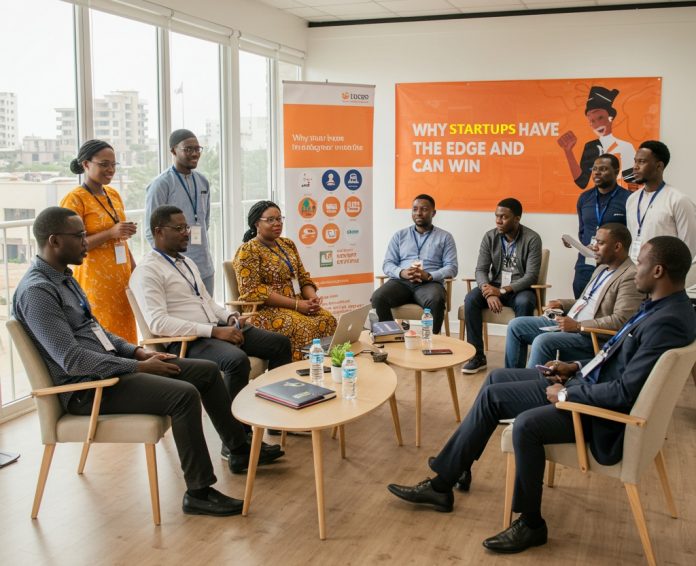
African startups raised $93 million in August 2025 through deals valued at $100,000 or more, excluding exits, marking one of the quietest months for the continent’s venture funding this year, according to a report by Africa; The big deal.

The figure reflects a slowdown compared to July’s surge. Recall that last month, 61 start-ups announced at least $100k in funding, which is much higher than what was seen in the first half of the year when the number was hovering around 40 a month.

According to recent data, August was the second-slowest month for funding this year, following March. However, August 2025 funding still surpasses the amount raised in August 2024, signaling steady investor interest. Despite the dip, analysts remain optimistic about the rest of 2025, citing a strong pipeline of deals and growing confidence in Africa’s tech ecosystem.

Analysts say there is no cause for concern, as the number of startups securing funding remained consistent with figures from the same month in both 2024 and 2023.

In total, 33 startups across the continent raised $93 million. Roughly 75% of the funds were raised through equity, while the remainder came from debt financing, including a $9 million securitized bond issuance by valU in Egypt.

Some of the most notable rounds in August included:

  • Koolboks – $11 million Series A

Koolboks, a Nigeria- and France-based cleantech startup, raised $11 million in Series A funding to expand its solar-powered refrigeration solutions across Africa and establish its first assembly plant in Nigeria.

The round, announced in August 2025, was co-led by KawiSafi Ventures, Aruwa Capital, and All On. The funding brings Koolboks’ total raised to $15.4 million, per Crunchbase.

The capital will support scaling its cooling-as-a-service model, which uses IoT-enabled, solar-powered freezers to serve small businesses, particularly women-led enterprises, in markets like Nigeria, Côte d’Ivoire, and Senegal.

  • Hewatele – $10.5 million raise

Hewatele, a Kenyan medical oxygen producer, secured $10.5 million from AfricInvest’s Transform Health Fund to build East Africa’s largest high-purity oxygen plant, producing oxygen at 99.6% purity.

This investment is part of a broader $20 million funding package, including earlier debt and equity from investors like Finnfund, U.S. International Development Finance Corporation (DFC), Soros Economic Development Fund, UBS Optimus Foundation, and Grand Challenges Canada.

The funding aims to address East Africa’s medical oxygen crisis by financing a liquid oxygen (LOX) manufacturing facility near Nairobi and doubling hospital-based production capacity.

  • Breadfast – $10 million Series B

Egyptian grocery delivery platform Breadfast raised $10 million from the European Bank for Reconstruction and Development (EBRD) as part of its Series B2 funding round, led by Novastar Ventures.

The investment, announced in August 2025, pushes Breadfast’s valuation to approximately $382–400 million, making it one of Egypt’s highest-valued startups.

The funds will support the expansion of fulfillment centers, entry into new Egyptian cities, and the growth of its fintech arm, Breadfast Pay, which offers savings, withdrawals, and branded payment cards.

  • Chowdeck – $9 million Series A

Chowdeck, a Lagos-based on-demand delivery platform for food, groceries, and essentials, raised $9 million in a Series A funding round in August 2025.

The round was led by Novastar Ventures, with participation from Y Combinator, AAIC Investment, Rebel Fund, GFR Fund, Kaleo, HoaQ, and angel investors like Paystack co-founders Shola Akinlade and Ezra Olubi.

The funds will support Chowdeck’s quick commerce strategy, leveraging dark stores and hyperlocal logistics to enhance delivery speed and efficiency. The company plans to expand into more cities in Nigeria and Ghana, targeting 40 dark stores by the end of 2025 and 500 by 2026.

Egypt, Kenya, And Nigeria Dominate Funding

Egypt, Kenya, and Nigeria emerged as the top-performing markets, collectively attracting 75% of the total funding raised in August across the African continent.

Sector-wise, funding was fairly balanced, with at least five sectors each accounting for 10% or more of the month’s total, largely driven by these sizable deals.

The month also saw notable exit activity, with Nedbank’s acquisition of iKhokha in South Africastanding out. The deal, valued at over $93 million, marked one of the most significant acquisitions in the African startup ecosystem this year.

Despite the slower pace in August, the continent’s fundraising momentum remains positive.

Future Outlook

So far, African startups have already raised $2 billion in 2025, including $1 billion in equity funding. Analysts are optimistic that 2025 will outperform 2024, marking the first year of positive year-on-year growth after two consecutive years of decline.

Current numbers suggest that 2025 is on track to match or even exceed 2023’s performance. If anticipated mega-deals materialize in the coming months, total funding could approach $3 billion by year-end, signaling a strong rebound for Africa’s startup ecosystem.

Geoffrey Hinton Warns AI Will Enrich the Few and Leave Many Jobless, Blaming Capitalism, Not Tech

0

Geoffrey Hinton, the pioneering computer scientist often called the “godfather of AI” and a Nobel laureate, has issued another warning about the future of work in the age of artificial intelligence.

In a wide-ranging interview with the Financial Times, Hinton predicted that AI would trigger mass unemployment alongside soaring profits, enriching a small elite while leaving most people poorer. But crucially, he argued that the fault lies not with the technology itself, but with capitalism.

“What’s actually going to happen is rich people are going to use AI to replace workers,” Hinton said. “It’s going to create massive unemployment and a huge rise in profits. It will make a few people much richer and most people poorer. That’s not AI’s fault, that is the capitalist system.”

His comments echo those he gave to Fortune last month, when he accused AI companies of chasing short-term profits at the expense of preparing for the technology’s long-term societal consequences.

Entry-Level Jobs at Risk

For now, layoffs tied to AI adoption have not spiked, but early signs of disruption are emerging. Evidence is mounting that entry-level opportunities — the first rung for many recent graduates — are shrinking as companies turn to AI for repetitive tasks. A recent survey from the New York Fed found that firms using AI are more likely to retrain existing employees than fire them, but acknowledged that layoffs are expected to rise in the coming months as automation deepens.

Hinton believes that jobs performing mundane or routine tasks are the most vulnerable, while roles requiring highly specialized skills or human judgment may be safer. Healthcare, in particular, is one sector he expects to benefit rather than suffer from AI.

“If you could make doctors five times as efficient, we could all have five times as much health care for the same price,” Hinton said in June during an appearance on the Diary of a CEO YouTube series. “There’s almost no limit to how much health care people can absorb—[patients] always want more health care if there’s no cost to it.”

While some AI leaders, such as OpenAI CEO Sam Altman, have suggested a universal basic income (UBI) to soften the blow of job displacement, Hinton dismissed the idea, saying it “won’t deal with human dignity” or the intrinsic value people derive from having work.

Existential Threats and Regulation Gaps

Hinton has long warned of the dangers of AI without adequate guardrails. He estimates a 10–20% chance that advanced AI could eventually wipe out humanity after the emergence of superintelligence.

He places AI’s risks in two categories: threats inherent in the technology itself — such as runaway intelligence — and threats arising from misuse by malicious actors. For instance, he warned in his FT interview that AI could aid in the creation of bioweapons.

Hinton also criticized the Trump administration for its reluctance to regulate AI more tightly, noting that China is taking the threat more seriously. At the same time, he acknowledged AI’s upside potential, describing the current moment as unprecedented and unpredictable.

“We don’t know what is going to happen, we have no idea, and people who tell you what is going to happen are just being silly,” he said. “We are at a point in history where something amazing is happening, and it may be amazingly good, and it may be amazingly bad. We can make guesses, but things aren’t going to stay like they are.”

An Unexpected Personal Use of AI

Despite his concerns, Hinton is also an active user of AI tools. He told the FT that he uses OpenAI’s ChatGPT mainly for research. In one anecdote, he revealed that a former girlfriend once used the chatbot during their breakup: “She got the chatbot to explain how awful my behavior was and gave it to me. I didn’t think I had been a rat, so it didn’t make me feel too bad?.?.?.?I met somebody I liked more, you know how it goes,” he quipped.

Why He Really Left Google

Hinton also clarified the reasons behind his 2023 departure from Google. Media reports suggested he quit in order to speak more freely about AI’s risks, but he said the truth was more mundane.

“I left because I was 75, I could no longer program as well as I used to, and there’s a lot of stuff on Netflix I haven’t had a chance to watch,” Hinton said. “I had worked very hard for 55 years, and I felt it was time to retire?.?.?.?And I thought, since I am leaving anyway, I could talk about the risks.”

What the evidence says so far about jobs

Actual layoffs tied directly to AI remain limited for now. A recent New York Fed study covering firms in the New York–Northern New Jersey region finds AI adoption rising sharply, and that companies using AI are more likely to retrain workers than to fire them. Still, the survey documents early signs of disruption: some service firms reported scaling back hiring because of AI, and a modest share expect layoffs in the months ahead — effects concentrated at the entry and college-degree levels where recent graduates typically find work. Those patterns are consistent with Hinton’s concern that opportunities at the start of careers are already shrinking.

How other influential voices frame the trade-offs

Hinton’s capitalism critique sits beside a set of alternative — often more technocratic — proposals from other leading figures and institutions. Their responses offer contrasts in diagnosis and remedy.

Sam Altman, CEO of OpenAI, has publicly backed experiments with universal basic income and related pilots as a way to soften disruption while societies adapt. Altman and others in Silicon Valley argue AI could fund broader income supports or other redistributive mechanisms so the gains from automation are shared more widely; proponents frame UBI as a practical bridge while skills, education, and labor markets adjust.

Bloomberg reported on recent UBI experiments backed by groups around Altman and other tech figures, illustrating how the idea has moved from abstract to testable policy.

Bill Gates has emphasized productivity gains from AI while also urging policy responses to manage the distributional effects. Gates has pointed out that AI will make many tasks “cheaper and more accurate,” which will lower costs and boost output, but he has also proposed tools such as taxation or new financing models to ensure society captures part of that value and funds social needs created by the transition. His public discussions of a “robot tax” and other fiscal approaches put the emphasis on using public policy to rebalance gains.

Economic institutions such as the International Monetary Fund frame the issue as a policy design problem: AI can lift productivity and global output substantially, but the benefits will not be automatic or evenly distributed.

The IMF’s work recommends a suite of actions — active labor market policies, retraining at scale, tax and transfer reforms, and stronger governance of AI deployment — to manage transition risks and ensure broader gains. The Fund’s research underlines that policy choices will determine whether AI amplifies inequality or helps raise living standards.

How these views compare with Hinton’s core warning

Hinton’s framing places moral responsibility squarely on economic incentives: the same systems that produce efficiency will, under current rules, concentrate wealth unless governance and institutions change. The technocratic voices — Altman’s experiments with UBI, Gates’ fiscal proposals, the IMF’s policy toolkits — treat the problem as solvable with better policy design and public investment.

They accept automation’s productivity promise and aim to distribute its gains; Hinton accepts the productivity upside too (notably for healthcare) but is far darker on whether market forces will allow a fair outcome without deeper structural change.