DD
MM
YYYY

PAGES

DD
MM
YYYY

spot_img

PAGES

Home Blog Page 5764

Ether Crosses $3,000 Threshold As Bitcoin Wobbles

0

Ether, the digital currency tied to Ethereum moved past the $3,000 threshold on Monday in a remarkable run that has beaten leading cryptocurrency bitcoin.

The gains in ether have outpaced the gains in bitcoin year-to-date. Ether is up more than 300%, whereas bitcoin is up about 95% based off of Monday afternoon prices.

The Ethereum digital currency rose 3% on the Bitstamp exchange to $3,144.81 in morning deals in London. It is up 325% for the year so far, easily outpacing a 95% rise in the more popular bitcoin.

Ether now has a market capitalization of $366 million, according to data from CoinMarketCap.

Experts have attributed the growth to many factors including DeFi, (decentralized finance, which refers to transactions outside traditional banking for which the Ethereum blockchain is a crucial platform), institutional interest and imminent protocol upgrade.

“Institutions and companies like European Investment Bank and Visa have validated the Ethereum blockchain by announcing issuance and settlement use cases, respectively,” a Monday note from Ark Invest analyst Frank Downing said.

He added in the note that four ether ETFs have launched on the Toronto Stock Exchange over the past two weeks, “making it easy for institutions to gain access as demand for crypto exposure broadens beyond bitcoin.”

Another factor Downing pointed out is ‘strong-chain signals.’ He said the usage of the Ethereum network is increasing and, by some measures, outpacing that of Bitcoin, as shown by the number of active wallets and total transaction fees.

“In our view, Decentralized Finance (DeFi) and Non-fungible tokens (NFTs), both of which are burgeoning, explain Ethereum’s recent breakout,” Downing explained.

James Quinn, managing director at Q9 Capital, a Hong Kong cryptocurrency private wealth manager agrees with Downing’s assertion. He said the big rally is partly a catch-up to late 2020 gains in bitcoin. It also reflects improvements to the Ethereum blockchain, and a growing shift towards DeFi.

“At first, the rally was really led by bitcoin because as a lot of the institutional investors came into the space, that would be their natural first port of call,” Quinn said.

“But as the rally has matured over the last six months, you have DeFi and a lot of DeFi is built on Ethereum.”

Downing said Imminent protocol upgrades is another factor fueling ether’s rise. The note said Ethereum Improvement Proposal 1559 is slated to go live in July, and it will significantly change Ethereum’s transaction fee model.

“Aiming to lower the volatility of Ethereum’s fees, EIP-1559 introduces a mechanism to burn some transaction fees, detracting from circulating supply and introducing deflation to the Ethereum ecosystem. The impact on ether’s price could be like that associated with a bitcoin halving event,” Downing said.

But there is more to these factors. Ether is relatively cheap compared to bitcoin, offering many investors who did not embrace bitcoin on time, a chance to buy more coins and make up for what they lost.

Buying ether at $3,000 will offer futures’ investors the opportunity of quadrupling their gain in a short time, given the pace of the growth that is increasingly being spurred by many factors.

The launch of ether exchange-traded funds in Canada and surging demand for ether wallets to transact non-fungible tokens such as digital art are also among the factors pushing up the price.

Reuters reported last week, quoting Bloomberg, that the European Investment Bank plans on issuing a digital bond over the Ethereum blockchain, while JP Morgan plans a managed bitcoin fund.

However, while the growth appears unstoppable, Downing warned that it comes with risks.

The first risk relates to the frequent and significant leverage associated with DeFi applications, which “given interoperability within the Ethereum blockchain, might compound the leverage associated with other products,” he said.

“In the event of a downward spiral in ether’s price, the losses associated with deleveraging could be significant. Additionally, EIP-1559 could become a contentious upgrade, as miners will bear the brunt of fees burned. A miner revolt could impede the progress of the EIP-1559 upgrade,” Downing concluded.

The Y’ello King – And Lessons for Fintechs, Banks

2

If you look at the financial data coming out of the home of Y’ello, you may not believe that MTN Nigeria is operating in Nigeria. Yes, despite the paralyses in Nigeria, MTN has found a way to keep capturing value. I mean, this company is now at its own level: no one comes close.

MTN has posted revenue of N385.3 billion for Q1 2021, representing a 17% increase from the N329.1 billion reported in Q1 2020. The biggest line is this: “Digital revenue grew by 101.0% and fintech revenue by 28.5% as customers continued to adopt more digital products and services, a trend accelerated by the pandemic. As of the end of March 2021, we had 449,100 registered MoMo agents and 4.6 million fintech customers.” Simply, MTN MoMo would have been one of the largest fintech companies in Nigeria if it was not within the MTN Group!

MTN reported an 8% growth in Voice related revenue topping N208 billion for the period under review. Data revenue continued to lead revenue growth printing at N105.7 billion, a 42.6% growth year on year, showing heavy reliance on data by MTN’s 61.5 million internet subscribers, the highest in the country.

MTN commands the market share for internet subscriptions owning about 42% of the market. MTN also controls 40% of the Voice market share, the highest compared to any other competitor.

What is the lesson? The empires of the future would be built on demand and companies which control demand will capture the most value. MTN has millions of customers, and anything it launches begins with millions of users on day 1.  With that in a world where supply is unbounded and unconstrained, MTN becomes dominant since the demand is already in-house.

This is the video on the Airbnb piece: If you want to win in the 21st century digital economy, you must control or influence demand, not supply. In the industrial age economy, power went to gatekeepers of supply. Today, the empire builders are those that control demand. This is possible because digital supply is unbounded and unconstrained, making it largely not a factor. Digital utilities like Google, Facebook, and Airbnb which control demand become the new gatekeepers.

Invest to control demand if you want to thrive in the 21st century.

Tekedia CollegeBoost Arrives To University of Lagos

0

Tekedia CollegeBoost comes to the amazing University of Lagos. CollegeBoost, a university student version of Tekedia Mini-MBA, informally integrates into typical school programs, making it possible for students to master the mechanics of business, irrespective of their academic disciplines. We expect thousands of students to finish from it this year.

Tekedia CollegeBoost is an Advanced Diploma in Business Administration designed for students in colleges. It involves an 8-week program which could be broken into two semesters or taken in one semester, depending on the arrangement with the school or group of students. This course is only offered to a group of students.

First-class pursuing Onyekachi Ujebe and the master growth maker Eyitayo Adeleke are anchoring, and leading.

Student Union Governments across Africa and beyond, get in touch, and experience the quality of Tekedia Institute. Your schools have prepared you already, Tekedia will simply expand your horizons in market systems. Connect with Eyitayo for questions.

Learn more about Tekedia Institute here – school.tekedia.com

Program for Final Week of Tekedia Mini-MBA Edition 4

0

We are in the final week of Tekedia Mini-MBA edition 4 after 12 solid weeks. It has been a wonderful journey with all co-learners and faculty. Here are the programs for this final week.

Lectures on Growth and Taxation are already in the Board. Four Faculty members are leading the session:

  • Managerial Accounting, Business Decision Making and Growth – Idris Ayinde, ACA, CFA, KPMG UK
  • Tax Management for SMEs – Banji Adelaja ACA, Managing Consultant, Aradol Consulting
  • Tax Treaties and Their Benefits – Emmanuel Eze, Manager, Federal Inland Revenue Service (FIRS)
  • Regional Case: Tax Law and Compliance in Lagos State  – Abimbola Abdur-Rahman Lekki, Lagos Internal Revenue Service.

On Thursday, we move to Execution and Closure, and I will lead the sessions.

  • Driving Profitable Growth, Marginal Cost, Scaling – Prof. Ndubuisi Ekekwe
  • Stimulating New Markets Through Innovation and Perception Demand – Prof Ndubuisi Ekekwe

Tekedia Live this week is scheduled thus:

  • Tue, May 4 | 7pm – 8pm WAT | Winning in Markets – Ndubuisi Ekekwe
  • Thur, May 6 | 7pm – 8pm WAT  | The Call to Business Execution – Ndubuisi Ekekwe
  • Sat, May 8 | 7pm – 8.30pm WAT | It’s Graduation Day  –  Ndubuisi Ekekwe

Zoom links in the Board.

On Saturday, after the closure, certificates will become available. Thank you for joining us for this academic festival. The registration for the next edition is here.

The Magic of First Bank – N565 Billion Impairment in 4 Years, N250 Billion Market Cap

1

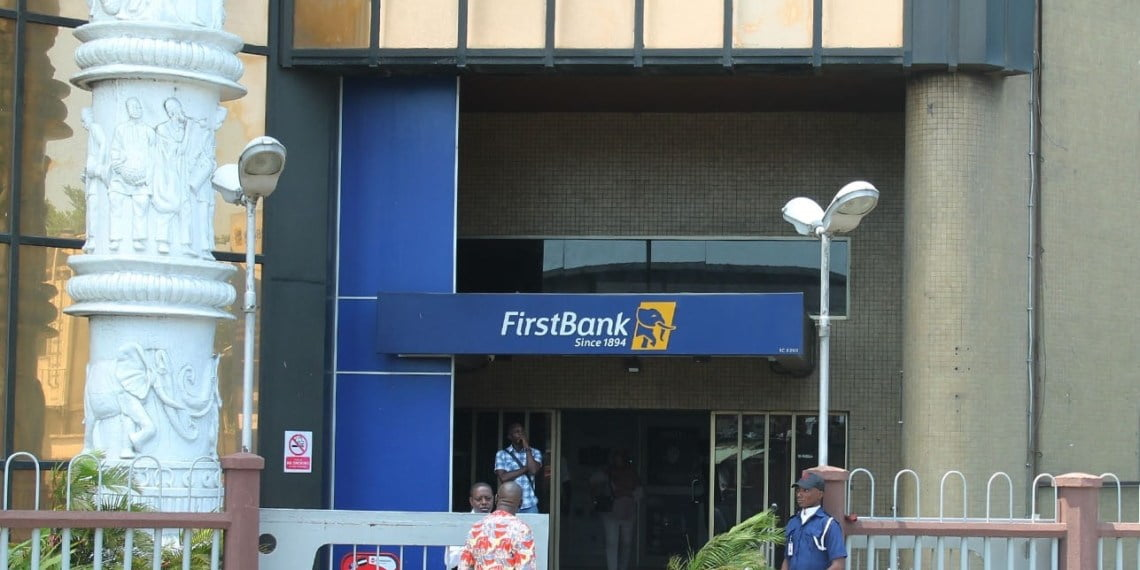
This is becoming what no one had in mind. Yes, after reading the statement from Honeywell Group, you will pity Nigeria on this First Bank redesign. If the company is servicing its loans as agreed, why then is the high voltage searchlight?: “We have serviced all our credit facilities in line with the terms agreed with First Bank and at no point have any of these facilities been non-performing.”

Yet, if you read the full statement, you will understand what is wrong with Nigeria. Privileges everywhere!

Yes, I want to know, according to Nairametrics, how First Bank Holdings (FBH) recorded a total loan impairment of over N565 billion between 2016 and 2020. Note that number because the market cap of FBH is below N250 billion. Yet, in four years, it has that level of impairment.

The CBN believes the bank may have collapsed were it not for its regulatory forbearance, a financial term for softening some of the strict rules that banks must comply with if they are to avoid being taken over by the CBN. Emefiele in his briefing to the media revealed that the CBN had granted “regulatory forbearances to enable the bank work out its non-performing loans through provision for write off of at least N150b from its earning for four consecutive years.” According to data from Nairalytics, FBNH had recorded a total loan impairment of over N565 billion between 2016 and 2020. About N376.4 billion, more than half the total loans impaired, were provided for in 2016 and 2017 alone.

Another major reason why the CBN moved swiftly to sack the board and reinstate Adeduntan was its inability to control Oba Otudeko and since he did not accede to the demand of Emefiele there was no way he could be allowed to keep running the bank without a check like Adeduntan. According to Emefiele, he cannot allow a Shareholder who will not subject himself to regulatory control and authority to remain a director of the bank.

Magic? Yes, big boys are smiling while the minority shareholders continue to pray and fast for the moments to come. Who can save Nigeria from sinking? Yes, when you remember that most people hold the shares of FBH, and before the Central Bank of Nigeria in most parts of Nigeria, there was First Bank. FBN cleared cheques for other banks, serving as the banks’ bank. If First Bank does well, most families especially in South West Nigeria would have improved lives.

 Simply, if those impairments are not there, the Group could be worth at least twice its current value as investors would push it up. But here, we are circling on technicalities instead of regulators hitting bad people harder to send lessons.

The First Bank Saga Gets Messier As Honeywell Issues a Statement Denying Any Wrongdoing