DD
MM
YYYY

PAGES

DD
MM
YYYY

spot_img

PAGES

Home Blog Page 5770

First Robot Traffic Warden Closes in Ibadan as the City Gets Smart Traffic Warden Unit

0

Across the four geographical demarcations of Ibadan city, it is not difficult to know that vehicular movement is impacting people’s mobility and productivity. From Iwo Road to Bodija and University of Ibadan to Dugbe, roadside markets and indiscriminate parking of vehicles are affecting movement, making the work of traffic wardens more cumbersome.

For the University of Ibadan to Dugbe route, University of Ibadan to Secretariat and Sango junctions remain the problem points, according to a recent study and our observation. Dugbe roundabout, Iwo Road interchange and pedestrians crossing express road are the problem points of heavy traffic on Dugbe-Apata, Lagos-Ibadan expressway and Adegbayi-Alakia routes.

When motorbike, motor vehicle and pedestrian crashes occurred information indicates that “the motorbike (MBC) hotspots are mainly concentrated within the metropolitan areas, while motor vehicle crashes (MVC) are common along the major highways (dual carriage road). The Ojoo-Moniya axis of the Lagos-Ibadan express road, Iwo Road interchange, Akinyo street, Bishop Akinyele road, Parliament Road, Queen Elizabeth Road, Oba Salawu Aminu Road, Oba Adebimpe Road, Fajuyi Road are some of the hotspots for the motor vehicle crashes.”

Meanwhile, our analyst notes that the recent production and presentation of a smart traffic warden unit by the Robotics and Artificial Intelligence [RAIN], an Ibadan based company, has indicated that businesses in the city can refine and turn existing data into products that could solve the perennial traffic problem in the city. “We can solve local problems locally,” Dr Olusola Sayeed Ayoola, founder of the centre, says on one of his social media handles.

“Enough of imported expertise which result in abandoned projects after minor faults. This is a traffic warden stand equipped with solar powered traffic lights for use in either Auto-mode or Manual Override. A novel concept because it is the first of its kind globally. This is modular, can be moved from junction to junction when needed. A CSR project by RAIN. I think every busy T-junction in Nigeria needs one.”


Reacting, Bello Adeyemi, a follower on the social medium, notes that “It is a great idea. However, there is a need to consider [putting] a glass that can be opened and closed in form of a window. That will help the traffic personnel in case of rain and sun.” Another follower [Kufirre Ebong] adds that “add something that enables the traffic lights switch based on the intensity of traffic in any of the lanes (making it somewhat intelligent) using computer vision.”

Dr Olusola Sayeed Ayoola and others at the presentation of the Unit to the Nigeria Police in Ibadan

Responding to Ebong’s suggestion, Dr Ayoola points out that “there are certain conditions that call for that, and we won’t need computer vision to aid that either. There are basic obstacle sensors for such. However, in this case we have not sought to demonstrate complicated solutions, hence the option for the manual override.”

When our analyst asked Nurudeen Adesokan, the Head of Partnerships for the centre, why the unit is not called Robot Traffic Warden, he says “Not yet. We want to make it a gradual improvement to full AI, but first understand the challenges with the current smart traffic. This one provides opportunity for override by traffic wardens located there. All these information will be compiled towards the fully autonomous unit.”

Both Dr Ayoola and Mr Adesokan stressed that there are additional challenges that could prevent full deployment of robotic traffic warden in the city. According to them, government needs to fix dilapidated roads across the city. “Though there are roads in Ibadan that could sustain it, but not that Alesinloye junction for now,” Mr Adesokan says.

Tekedia Live Scheduled – Satellite Broadband, SpaceX Starlink and Opportunities in Nigeria, Africa

0

Good People, there are so many things which are coming up in the SpaceX Starlink satellite broadband domain as the company plots its strategy into Nigeria and Africa. By now, we ought to have spent time looking at this redesign and what the future offers. But Tekedia Mini-MBA is not in session; the next edition begins June 7.

But timing is very strategic as we want our members to have the right information. So, on Saturday,  May 22, 2021 at 7pm WAT, we will run Tekedia Live as follows:

  • Topic: Satellite Broadband, SpaceX Starlink and Opportunities Ahead in Nigeria & Africa
  • Speakers: Ndubuisi Ekekwe (Tekedia Institute), John Enoh (Beeptool Satellite), Joseph Ibeh (Northern Sky Research)
  • Date: Saturday,  May 22, 2021 at 7pm WAT
  • Link: https://www.tekedia.com/live/
  • Access: Tekedia Mini-MBA and CollegeBoost

A “Green” Future And As Shell Plots To Exit Nigeria

1

Royal Dutch Shell is opening a playbook which may rattle everyone in Nigeria. The energy giant believes that pumping hydrocarbons from Nigerian swamps may not be part of its green future: “In February, Shell reached an agreement with Amazon to provide renewable power from a subsidy-free offshore wind farm being constructed off the coast of The Netherlands, marking a major step in its quest to go green.”

More so  “The Nigerian government is in talks with Shell and is encouraging the company to keep its onshore operations instead of divesting, said Timipre Sylva, minister of state for petroleum resources.” Yes, Nigeria is now begging Shell to stay!

Royal Dutch Shell Plc has been under increasing pressure from investors to slash emissions and pivot toward cleaner energy, and the tension was on show at its shareholder meeting on Tuesday.

The company’s long-term energy transition plan, laid out to investors for the first time, received overwhelming support, but a competing resolution asking for stricter targets also garnered more votes than ever. Adding to the tension, shareholders were meeting as the International Energy Agency warned that all new oil and gas developments need to stop immediately for climate targets to be met.

Shell also acknowledged its green strategy is complicated by its spill-prone operations in Nigeria, where it has been pumping out oil for half a century.

The Anglo-Dutch company has been gradually selling onshore assets in the West African country for more than a decade, as it sought to put aside chronic problems such as pollution caused by ruptured pipelines and the resulting legal battles with local communities.

The issue has become more acute in the past year after Shell pledged to transform itself into clean energy giant and gradually wind down its oil and gas business to achieve net-zero carbon emissions by 2050.

“The balance of risks and rewards associated with our onshore portfolio is no longer compatible with our strategic ambitions,” Chief Executive Officer Ben van Beurden told investors. “We cannot solve community problems in the Niger Delta” and the company has started discussions with the government on how to move forward, he said.

He didn’t say explicitly that Shell wants to sell the remainder of its oil assets in the Niger Delta, nor did he provide a timetable. Yet a full retreat would be an obvious end point to years of gradual divestment. Shell has reduced its total number of onshore licenses in Nigeria by half over the past decade. It would focus on offshore oil fields and gas operations in the country, van Beurden said.

Yesterday, speaking in a development commission for the northern part of Nigeria, I posited that, in 25 years, some of the most vital natural assets, in Nigeria,  will be north of River Nigeria Benue. Yet, the economies of the future would not be built on deposits of raw materials but mines of knowledge and ingenuity of the citizens. 

Shell, Mobil, Chevron and the oil majors will leave very soon. As that happens, how is Nigeria planning? Yes, As President Biden tobacco-lizes oil, making it an unwelcome toxic product for markets, the next few years will be huge.

Shell Says Nigerian Oil Not Compatible with Plan to Go Green

0
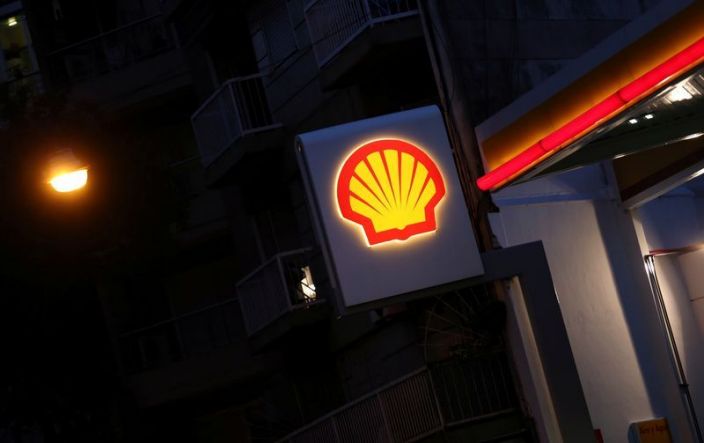
FILE PHOTO: A Shell logo is seen at a gas station in Buenos Aires, Argentina, March 12, 2018. REUTERS/Marcos Brindicci

Royal Dutch Shell Plc is on the verge of leaving Nigeria completely after half a century of pumping oil out of Nigerian swamps. The oil company acknowledged that its spill-prone operations in the West African country aren’t compatible with plans to go green, Bloomberg Reported.

The outbreak of COVID-19 which plummeted global oil revenue and sent oil companies reeling from the impact, spurred Shell and others in the industry to hasten their plan of shifting to green energy.

According to Bloomberg, the Anglo-Dutch company has been gradually selling onshore assets in Nigeria for more than a decade, as it sought to put aside chronic problems such as pollution caused by ruptured pipelines and the resulting legal battles with local communities.

Since 2020, Shell has been pushing harder for transition into green energy as environmental concerns gather momentum, forcing companies caught in the web of carbon emission to take more responsibility for their actions. Shell, in line with the 2050 net-zero carbon emission goal, pledged to transform itself into a clean energy giant and gradually wind down its oil and gas business.

“The balance of risks and rewards associated with our onshore portfolio is no longer compatible with our strategic ambitions,” Chief Executive Officer Ben van Beurden told investors at Shell’s annual general meeting on Tuesday. “We cannot solve community problems in the Niger Delta“ and the company has started discussions with the government on how to move forward, he said.

With heightening environmental challenges that have been compounded by COVID-19-induced oil decline, Shell’s oil business days in Nigeria appear to be numbered.

The report said Van Beurden didn’t say explicitly that Shell wants to sell the remainder of its oil assets in the Niger Delta, nor did he provide a timetable. Yet a full retreat would be an obvious end point to years of gradual divestment. Shell has reduced its total number of onshore licenses in Nigeria by half over the past decade.

The company has been exploring ways to reduce spending on oil and gas production by 30% to 40% for its upstream sector, its largest division. For the downstream sector, the company plans to cut 45,000 service stations, the biggest in the world, from its network. Part of the plan was to limit its oil production to a few key places that include Nigeria, Gulf of Mexico and the North Sea.

With the latest move, Shell Nigeria operations appear to be among the first casualties of its divestment plan.

COVID-19 plummeted oil-based economies, spurring a cleaner energy revolution among oil firms. Shell, BP, Eni, Saudi Aramco etc. are all working to transit from fossil fuel to cleaner energy.

BP and Eni are following the steps of Shell, cutting jobs and shutting down operations to build new low-carbon businesses in the next decade in preparation for the era of cleaner energy.

In February, Shell reached an agreement with Amazon to provide renewable power from a subsidy-free offshore wind farm being constructed off the coast of The Netherlands, marking a major step in its quest to go green.

With these major oil companies pointing to the exit door, oil-based economies, including Saudi Arabia, have been increasing their push to diversify from the crude oil economy. However, among them, Nigeria is still mainly dependent on oil, and is showing no sign that it understands what the 2050 net-zero goal will mean for oil-based economies.

Business Owners: Four Reasons to Never Stop Learning

0

Business owners worldwide understand the need for preparation as the pandemic has left a massive hole in the world economy.

The need for constant education, innovative thoughts, and good mental well-being is always present. Business owners, especially small business owners, have the most to gain by staying informed about market trends. You might want to learn more about the NYSE or insidertrades. Either way, learning is power.

With the COVID vaccine offering new hope to residents, business owners wait with great patience as things return to something normal. As old challenges wane, new ones abound just around the corner. It can feel like a vicious circle to the business owner, pushing and pulling until it becomes too thin to survive the economy.

So, to help, here is a list of four reasons why education is paramount for any business owner.

Mental Health

Knowledge is power. Taking care of one’s person is paramount for tackling the world’s messy problems. For business owners, this is probably one of the most underserved portions of their professional life.

Many new business owners work impossibly long hours, sacrifice sleep to make deadlines, all of which can lead to unhealthy lifestyle choices. For example, stress eating or drinking.

Take a few moments to ensure that stress and anxiety are managed well. Sometimes, the presence of anxiety can be useful as it can point out weak areas of knowledge. In other words, if facing anxiety about the business, try to understand what is causing it.

Usually, anxieties can help reveal something that should be known slightly better.

Technology

Be on the lookout for new technologies that may make a current process more efficient. In other words, never get stuck into a mindset that says, “this is the way it’s always been done.”

Fight the urge to believe that everything is the best it will ever be. In fact, any business owner should be aware of the first rule of economics. Any product sold will have another company producing a comparable product for a lower price.

Technological progress is not a good or bad thing. It is a fact. Take advantage of the new tools being created as they were designed to serve specific needs created in the 21st century.

These needs are constantly changing as the landscape of the world changes, both socially and economically.

Innovation

The pandemic has taught one thing, above all else—the need for innovative thinking is paramount. In order to survive the onslaught of unexpected calamity, it is helpful to be a diverse learner.

Sometimes, the answers to problems are simple but often come from places one might consider random. For example, thinking of how a plumber might fix a sink without shutting off water to the entire house may inspire a creative solution for new employee bonus structures.

While this example may be somewhat outlandish, it is not entirely uncommon. Sometimes innovation is nothing more than seeing a problem from a different perspective. Education provides that perspective, so always be ready to learn something new.

Never stop learning, business owners

Growth

Since the market is constantly changing, growth should always be at the forefront of every business owner’s mind. Before starting a business, a plan must be formed. That plan is likely to change, but growth may be harder to obtain if the owner does not change.

For example, a business owner who opened a business using the same technology from the early 2000s to accept card payments may find themselves outpaced by newer, more efficient businesses. At this point, growth is directly dependent on how educated the owner is on new practices.

Think of education as a necessary condition for growing a healthy and successful business.

There is no magic formula for running a business. The solutions that work for one business are likely to not work for another. This means that every business owner must be of sound mind and think all the time critically.

Remember, running a business, whether small or large, is a marathon. Do not expect immediate returns from the hard work provided, but try to see how the entire process of becoming educated works to grow the business.