DD
MM
YYYY

PAGES

DD
MM
YYYY

spot_img

PAGES

Home Blog Page 5788

How Nigerian Tertiary Institutions Stress Students

0
National-Universities-Commission-NUC

On Tuesday, April 20, 2021, Nigeria was shocked once again by the news of a young undergraduate student of Obafemi Awolowo University (OAU) that committed suicide. This young man, Emmanuel, took his life by drinking the infamous pesticide, Sniper. The reason Emmanuel saw suicide as the best option available to him is unknown but there were claims that he has severally threatened his mother that he will take his life but she ignored him, thinking he was bluffing. It was also claimed that his mother has not been supporting the young man emotionally because she continued to remind him of how hopeless he was. The sad end of yet another young Nigerian has reminded us once again of the dangers posed by ignoring our mental health.

The painful demise of Emmanuel also brings up another issue that needs to be addressed as soon as possible. This time, the issue on the table is the undue stress Nigerian tertiary institutions put their students through. You will agree with me, if you schooled in Nigeria, that our tertiary education system is stressful. The system makes it look as if you need to pass through stress to become a better student. From the time of admission to when you graduate, you are expected to endure sufferings that could easily have been abated by the school. They can stress you through your course loads, lack of mental healthcare facilities, and so many others. Sometimes, people don’t look forward to going back to school for further studies because of the stress they were put through while in school.

Why Nigerian Tertiary Institutions are Stressful

  1. Choice of Course: When you are studying a course of your choice, you will tend to enjoy school the more. But then, many students could not enjoy this privilege because they failed to gain admission into their desired disciplines. Hence, they make do with what they see. The frustrating thing here is that these students have to endure stress for what they have no interest or even know what to do with. This can explain why students drop out of school, especially when they are writing their projects.
  2. Lack of Mental Care Units: Nigerian tertiary institutions do not seem to understand the importance of their students’ mental healthcare. I don’t know if any of our government-owned tertiary institutions have facilities that oversee their students’ mental wellbeing. If this is an oversight, permit me to say that it is a costly one because it is absurd that, despite putting students through stress, these schools do not make provisions for them to seek help when they become overwhelmed. This issue needs to be addressed as soon as possible before we lose another student to suicide.
  3. Banning Students’ Social Activities: Most vice chancellors, rectors, and provosts do not allow students to have social lives while in school. Some see this as trivial while others see them as distractions. Unfortunately, some students misuse opportunities availed them to unwind by causing mayhem. Nevertheless, school administrators should endeavour to help students to strike a balance between their academic and social lives; they are both very necessary.
  4. Delay Tactics: This is commonly seen among lecturers, who deliberately delay the publication of students’ results until it is too late for those that failed those courses to re-write them. Most students have stayed in school longer than necessary because of this wicked act by the lecturers. We also see delay tactics in supervision and defence of thesis/projects. Some school administrations have devised tactics to battle this menace but there still exist loopholes that needs to be filled up.
  5. Heavy Course Load: One of the wrongs done in our tertiary institutions is using the total amount of credit loads to decide the number of courses students will offer in a semester or session. This has caused students to overwork themselves while studying. For instance, the credit load for a semester may be 28 but the courses that made up that amount may be assigned 2 or 3 credit loads, each. Based on this, the courses that will amount to 28 credit loads may be about ten or twelve in number. Note that these students will exact the same amount of energy in each of the courses, irrespective of its credit load. By the end of the day, the students have worked more than they should.
  6. Lack of Parental Support: Many parents are supportive; but some think that once their children enter higher institutions, they are adults that can sort themselves out. Maybe that was obtainable in those days but now that undergraduates are becoming younger by the day, parents should try to become parts and parcels of their children’s lives. Left for me, I will say that parents should still follow up their children during their undergraduate days and provide them with every kind of support they might need.

Finally, lecturers should do their best to make life easier for students. They should understand that stress does not increase people’s skills in any way. Yes, resilience is an important virtue everyone should imbibe but different people have different breaking points. Our tertiary institutions should not be a place of suffering.


Vote for Tekedia At for Mhagic Velocity Prize

0

Tomorrow (Saturday, midnight WAT), the voting for Velocity Mhagic’s $60,000 prize ends. Tekedia Institute, your business school, began with about 400 shortlisted contestants. Today, only 10 remain. One team will win the award. Tekedia will donate 100% of its winning to sponsor 430 young people to Tekedia Mini-MBA. We need your vote to WIN it. Go here

Tekedia Makes Grand Finale of Mhagic Velocity $60,000 Prize; Full Scholarships to 430 Students


The Promise of the Minister on Nigerian Passports

1

Let me thank the Office of the Speaker, House of Representatives Nigeria, Femi Gbajabiamila, and the Minister of Interior, Ogbeni Rauf Aregbesola, for the speed they have started to fix this passport renewal paralysis across Nigerian foreign missions and homeland. The minister has promised to fix this and I want to thank him. Mr. Minister, after my piece, called an emergency meeting with Immigration officers across the nation, and has put out a statement.

“To permanently curb the complaints of difficulty in obtaining Passports from the NIS, today, I held a meeting with the Leadership of the Nigeria Immigration Service and all Passport Control Officers in Nigeria and Immigration Attachés around the world…We are turning round the entire application process in a way that is seamless, transparent and will accord human dignity to applicants and fulfill citizenship integrity.”

To the young people, help is coming.

LinkedIn Notes

Good People, we need help for one of our fellow citizens. He completed his PhD in Europe but his school has refused to release his certificate until he comes with a valid Nigerian passport: “I really need the passport. I completed my PhD in May 2020 (about a year ago) and my certificate has been ready for pickup. But the school requires me to present a valid passport to be able to collect it.”

According to him, he has been trying to renew his Nigerian passport but was told that “there is no booklet” to print one. He had done the biometric capture, etc [I have a copy of the confirmation slip]. This “no booklet” thing is not new; very unfortunate it has not been solved.

The embassy in charge of this is the Embassy of Nigeria in Madrid (Spain). This young man has a job in one of the leading technology firms in Europe where he develops AI for autonomous systems. Without this new passport, even that job is in trouble!

If you can help or know someone who can help, inmail me or email …


Whoever is responsible for the booklets to print Nigerian passports should do his or her job. It turns out that this problem – inability to renew passports – is systemic and widespread across our foreign missions. I just checked my inmails and many others have the same problems: massive delays on renewing passports.

I have followed up and was told that a contract with a supplier is the cause of the problem. I have also received a phone number to call the minister of interior. I will not call – we need to fix this for ALL CITIZENS, not for the few who have access to me.

Last month, I had to call the Nigerian Embassy in Washington DC via my contacts to avoid a couple in the US being messed up due to delays in renewing passports. Please everyone involved should FIX this. Calling for another special treatment is not what I want to do now. Let everyone get help.

Sign whatever contract and make the booklets available to the embassies. Mr. Minister, do your job!

Nigerian Passport Challenge: Minister of Interior Announces New Rules to Eliminate Bottlenecks

Nigerian Passport Challenge: Minister of Interior Announces New Rules to Eliminate Bottlenecks

5

As backlash continues to trail Nigerian Immigration Service’s inability to issue new passports to Nigerians, owing to the excuse that the agency is in short of leaflets, the Minister of Interior, Ogbeni Rauf Aregbesola has outlined a new line of action aimed at putting a permanent end to the challenge.

In a media briefing on Thursday, the Minister said the operation of the NIS will be reviewed to curb the complaints stemming from the difficulty in obtaining a passport.

Nigerians both home and abroad have been complaining that passport offices and embassies are not issuing passports, putting their respective endeavors in jeopardy.

Weeks ago, a viral video on social media showed a Nigerian man lamenting over the bottlenecks he had to face to renew his passport in Switzerland. On Wednesday, Prof. Ndubuisi Ekekwe of Tekedia Institute issued an SOS on behalf of a Nigerian stranded in Spain, due to a Nigerian Embassy’s failure to issue him a passport.

Nigerians have started a petition to compel the government to take remedying action. In response, Aregbesola said the Ministry of Interior is working to remove the bottlenecks and ensure there is timely issuance of passports in and outside Nigeria. He reiterated the Ministry’s promise to open passport offices in each local government in the country, to make it easier to obtain passports.

To curb corrupt practices hindering swift services in passport centers, he said an ombudsman will also be created for members of the public to receive complaints and reports on officers trying to deviate from prescribed guidelines and subversion of the process.

Read the full statement below:

To permanently curb the complaints of difficulty in obtaining Passports from the NIS, today, I held a meeting with the Leadership of the Nigeria Immigration Service and all Passport Control Officers in Nigeria and Immigration Attachés around the world.

It has become imperative that we review our operations and rejig our system, in order to be able to offer excellent services to our clients. We need to review a system from time to time to see if it helps best to serve and realize the objectives.

One, I declared a zero-tolerance stance to all forms of touting. No applicant will be made to pay any illegitimate fees. We are going to embed security operatives – seen and unseen – in all our passport offices. They will wear body cameras.

They will detect and report any form of solicitations, inflation, improper communications, extortion, diversion, hoarding and other corrupt practices. Those caught will be dealt with according to the law.

An ombudsman will also be created for members of the public to receive complaints and reports on officers trying to deviate from prescribed guidelines and subversion of the process.

Two, we have created special centres for expedited services. These special centres will run on public-private partnership basis. This has already taken off in Abuja and 10 more will be opened in coming weeks as more of such centres will be opened all over the country.

Our goal is to have one in each local government area, university campuses, institutions of higher learning and other relevant public places.

Three, a timeline for the collection of passport will be fixed for every application. This will be six weeks. This is to allow for enough time to investigate, verify and validate personal information supplied by the applicants.

What we are driving at is the peace of mind that comes from assurance of certainty. If there are circumstances that will make the date to change, it will be communicated to the applicant one week before the collection date.

Fourth, applicants will have no basis for further communication with officers, other than to complete their application process and leave the venue. The date for the collection of their passports or any challenge to the application, will be communicated to them. The technology for the efficient running of this system has been acquired and will be deployed.

Fifth, we are publishing on our website the list of the backlog of passports that are ready which are yet to be collected by the owners. They will be required to go to the state commands to collect them.

With these changes, it is my firm belief that we will arrive at a new dawn in passport application processing.

We are turning round the entire application process in a way that is seamless, transparent and will accord human dignity to applicants and fulfill citizenship integrity.

How to build high-growth, high-valuation startups like Flutterwave

1
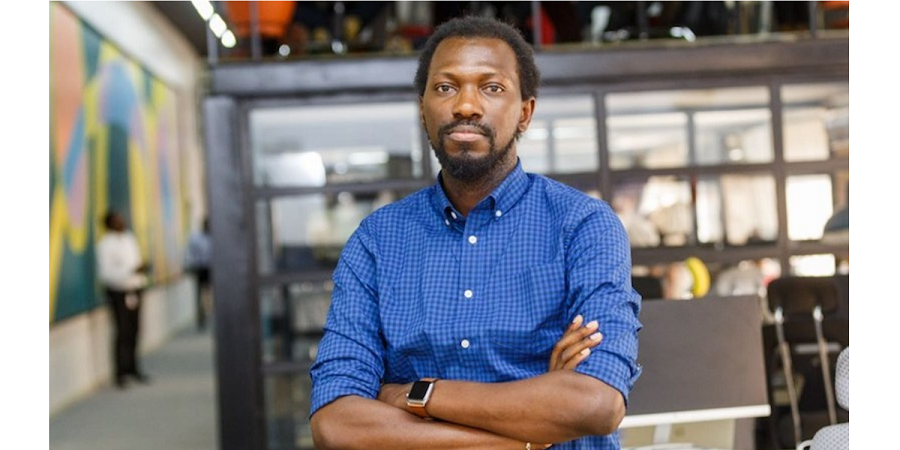
CEO of Flutterwave

Flutterwave is now worth more than some of the biggest banks in Africa as it joins the exclusive league of billion-dollar tech companies after raising its latest series C funding round.

For anyone who might not know, Flutterwave is a payment company that started less than 5 years ago and has now successfully positioned its brand, tech stack, and resources as the single payment API to connect Africa to the rest of the world. Achieving a billion-dollar valuation in Africa is considered a rare feat. Before Flutterwave, only 3 other companies have achieved this valuation (Jumia, Fawry, and Interswitch). 

For founders looking to build high-growth, high-valuation businesses, here are 4 inspiring business lessons and frameworks to learn from Flutterwave.

1. Choose a problem that has a huge impact when solved.

Building a high-growth company is a combination of how big your target market is and how much revenue you can make per user.

Startup scale = Addressable market (market size) +  revenue potential per customer (margin). 

How does this apply to Flutterwave? 

Flutterwave leverages the combination of the big addressable market for payment in Africa with low and high margin revenues by providing key services to both consumers and enterprise customers like banks, telcos, and multinationals that contribute high revenue potentials.

And it is not just Flutterwave.

The opportunity in payment is huge. I know this firsthand as my previous Fintech employer competed with, worked with, and even became a potential acquisition target to some of the most notable players fixing Africa’s payment landscape (Paystack, DPO Group, Flutterwave, and Interswitch). As of today, all of them have announced significant raises and exits in recent years.

Here are some of their numbers:

  • DPO Group: the Kenya-based company was acquired for $288 million.
  • Interswitch: Sold 10% stake to VISA for $200m, worth $1billion.
  • Paystack:  Was bought by Stripe in a deal worth over $200million. 
  • OPAY: Already raised more than $170m through its parent company.

The lesson here is that to build a high-growth company, founders need to be very clear about the market opportunity: its size and average revenue per user (ARPA).

If your goal is to build a business generating at least $100million in revenue, then Christian Janz’s classic published here and updated here is worth your read.

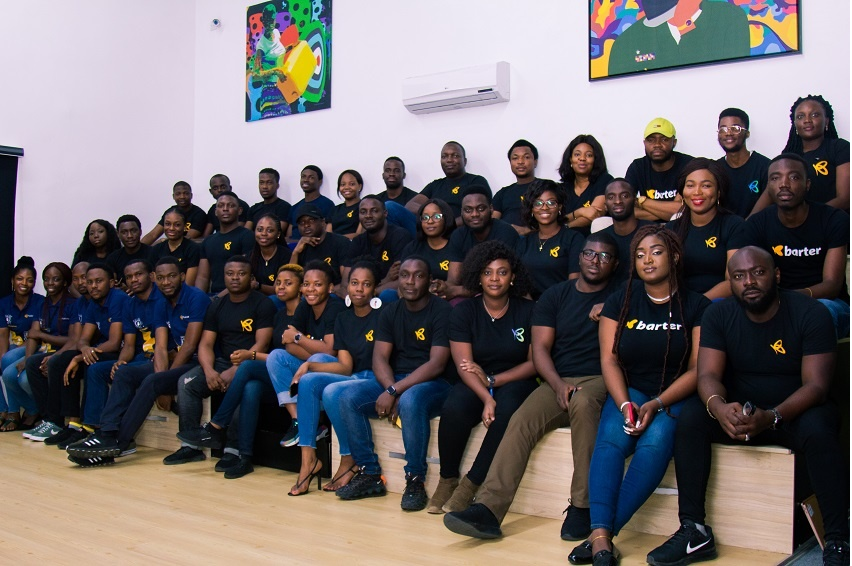
Flutterwave team

2. Make things simple and modern.

Building a great startup is not only about building something new, but also, focusing on making existing things work better together. Flutterwave understood this secret and this sums up why YC invested in the company

“When you look at how payments work in the developing world, you start to realize that it’s a lot more complicated than in the US. There’s a huge number of different payment options and different reasons for people to use each. By making it easy for any merchant, no matter where they are located, to process all of the available payment options, Flutterwave is changing how money moves for an entire continent. That’s a huge idea, E has an incredible team to attack it.” – Aaron Harris, Partner at Y Combinator


According to this Quartz article, Flutterwave says it is doing the plumbing job

To put this in context, Flutterwave bundles together the checkout flows for multiple 3rd party payment providers and offers it in a single API for anyone to send or receive money in Africa and beyond.

What underlines this business model is the aggregation construct

Flutterwave created value by aggregating multiple payment options offered by other providers in Africa into a single API and removing the complexity around payments. By doing this “plumbing job”, it did not have to invest in costly infrastructure in the multiple markets it operates before it can create value. This is similar to how platforms like Google created value by aggregating content and making the web searchable. 

3. Build partnerships to accelerate growth. 

In business, you need to go fast and far to build a business that has scale. Partnership deals unlock big-ticket transactions which translate to more traction for you.

This tweet aptly sums it all up.

https://platform.twitter.com/widgets.js

Here are some of Flutterwave partnerships deals: 

  • – With VISA, it built its consumer business (Barter) to 500,000 users.
  • – It launched channel partnership with MTN, Booking.com, Uber to access enterprise markets that brought significant deal flows
  • – It expanded globally by partnering with payment heavyweights (Alipay, WorldPay by FIS, and recently PayPal) to connect up to 2 billion users.
  • – As a back-office for enterprise businesses, it provided the transaction highways for banks, financial institutions for cross-border processing.

The lesson here is to go for the big deals.

You can’t build your business on the back of consumer growth alone. Building partnerships can take time and resources, that is why you need to be strategic with the type of partnership and the scale it brings to your business. 

Focus on deals that position you as a leader in your market and attract other players to you. 

4. Build Moats to create competitive advantages.

For you to grow and sustain your growth long term, you need to have a moat. A moat is a single (or multiple) competitive advantage that is hard to copy by competitor.

To put this in context, Flutterwave’s moat is its ecosystem of products and platforms. No other payment provider in Africa has this scale and moat. It’s not just a payment company: it is a payment platform powering new business models for others. It has a portfolio of products – consumer products, API, SaaS and enterprise solutions, multiple 3rd party integration (e.g Xero, intuit), and partnerships (Alipay, Paypal) that enable its customers to access global markets. 

All these capabilities are hard to copy and replicate at once.

As the business matures, you continue to build more moats to make it defensible (Flutterwave’s launch of Stores which is one of such double play strategies).  Here is a list of other helpful playbooks to build and sustain the moat for your business.