DD
MM
YYYY

PAGES

DD
MM
YYYY

spot_img

PAGES

Home Blog Page 5795

Nigerians Defy Central Bank, Flock to Bitcoin

0
Bitcoin is soaring

By: Gerelyn Terzo of Sharemoney

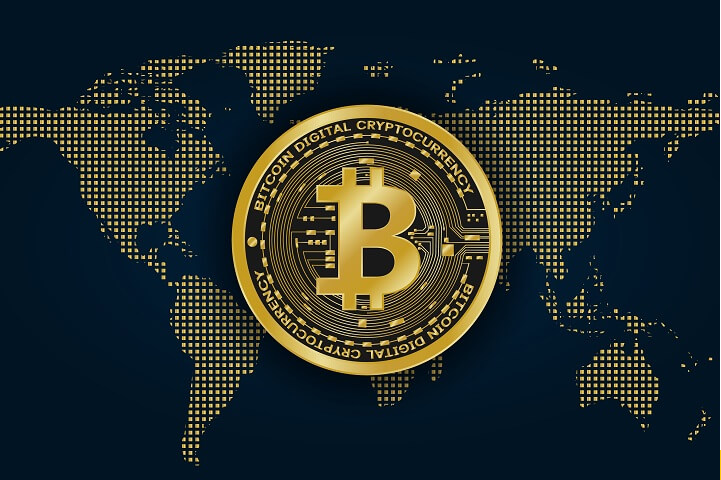
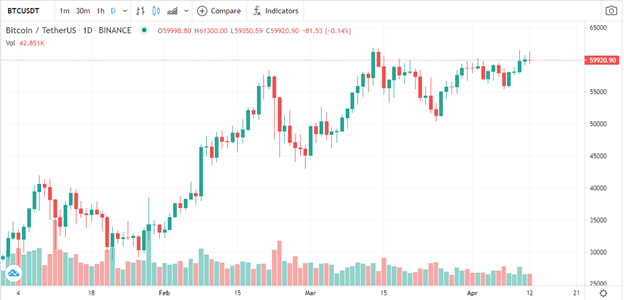
Bitcoin, the leading cryptocurrency, has seen its value balloon by more than 100% year-to-date, soaring to an all-time high of more than USD 60,000.  Nigerians, many of whom are battling poverty, would be hard-pressed to miss out on those gains. This is especially true considering that the unemployment rate in the most populous African nation was 33.3% as of last quarter, with more than 23 million Nigerians out of work.

Enter bitcoin, which has been a safe-haven investment as well as a faster and cheaper payment method for the growing segment of the population that is catching on. In fact, Nigeria last year rose to the top of the heap for bitcoin trading at USD 400 million in volume, surpassing transactional volume in nearly every other jurisdiction — with the exception of the United States and Russia — as traditional asset classes lose their appeal in comparison and the local currency, the naira, remains under pressure. Nearly one-third of Nigerians who participated in a Statista poll said that they used or owned cryptocurrencies, more than any other country represented in the survey.
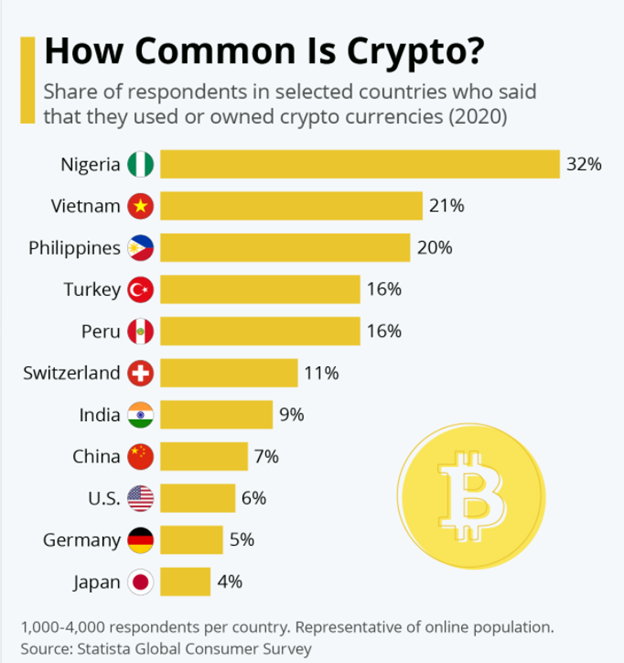
Source: Statista

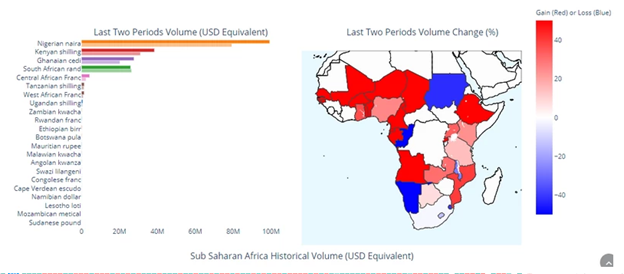
Nigeria also stands out in all of Africa, as the top peer-to-peer bitcoin trading nation on the continent based on bitcoin trading volume. Nigeria’s P2P BTC trading volume surpassed USD 99 million in the first quarter of 2021. Kenya is a distant second at USD 34.8 million followed by Ghana and South Africa at USD 27.4 million and USD 25.8 million, respectively.
Source: Business Insider/Useful Tulips

The robust bitcoin trading activity in Nigeria has earned the country the title of Africa’s Bitcoin Nation. A 27-year-old Nigerian office worker who was spotlighted by the AFP,  Chigoziri Okeke, described how he first invested in cryptocurrencies five years ago with the intention of just making a payment. When his crypto wallet’s value increased by 10% in a few short days, however, he was hooked and started directing a percentage of his salary toward the market. Today, this investor’s crypto portfolio is worth USD 50,000, comprising various digital assets.

In addition, Google searches of bitcoin in Nigeria surpass that of any other jurisdiction, according to Nairametrics.com. Bitcoin appeals especially to the West African nation’s millennial generation, who are looking to the flagship cryptocurrency as a store-of-value asset as well as a way to circumvent the hoops they must jump through to open a traditional investment account.  With the bitcoin price most recently hovering at USD 60,000, Nigerians have reason to be excited. At this price, one bitcoin could reportedly buy someone a three-bedroom apartment in Lagos’ Ajah neighborhood.

Unstable Fiat Currency

A big part of bitcoin’s popularity is due to Nigeria’s unstable naira. The International Monetary Fund (IMF) has drawn a line in the sand, stating that Nigeria’s fiat currency is “overvalued” by more than 18%. The IMF wants Nigeria to devalue its fiat currency, but the African nation’s government has said no way.

Nigerian President Muhammadu Buhari blames “global outflows” triggered by COVID-19 for the unstable naira and believes that devaluing it further after doing so twice in 2020 would only exacerbate the already sky-high inflation rate, which is currently in the double-digits at more than 17%. This would weaken Nigerians’ purchasing power even more. Nigeria’s central bank slashed the naira’s value by close to one-quarter last year.

Meanwhile, not only has bitcoin been generating returns hand over fist, but it has also been thrust into the global spotlight amid the SARS-related protests in Nigeria. According to reports, Nigeria thwarted financial payments toward police brutality protests, which only led the supporters to donate bitcoin instead. Twitter and Square CEO Jack Dorsey backed this movement, which only brought more attention to the country and cryptocurrencies.
Source: CoinGecko/TradingView

Mixed Signals

Nigeria’s central bank has been highly critical of bitcoin, warning as recently as February that “cryptocurrencies are largely speculative, anonymous and untraceable.”

Nonetheless, the Central Bank of Nigeria can’t stop the population from accessing the flagship cryptocurrency, thanks to the peer-to-peer nature of bitcoin, which was inherently designed to circumvent third-party service providers like banks. Bitcoin creator Satoshi Nakamoto, whose real identity remains a mystery, defined the first cryptocurrency in the whitepaper, which was published in 2008, saying:

“A purely peer-to-peer version of electronic cash would allow online payments to be sent directly from one party to another without going through a financial institution.”

The Central Bank of Nigeria has since backtracked from its remarks slightly, maintaining that it has not placed a blanket ban on cryptocurrency trading. It is a tangled web, however. The central bank instead said that it is doubling down on a 2017 law that bans institutions supporting cryptocurrency transactions.

Even though institutions might be banned from supporting cryptocurrency trading, individuals are still free to trade them. The central bank is sending mixed signals, to say the least, as local banks were instructed by the central bank to refrain from doing business with customers who transact in cryptocurrencies.

“The CBN did not place restrictions from use of…cryptocurrencies and we are not discouraging people from trading in it. What we have just done was to prohibit transactions on cryptocurrencies in the banking sector,” stated Adamu Lamtek, according to Decrypt, citing Today NG.

Since the restrictions were imposed on Nigeria’s crypto trading industry, rather than disappearing, the industry has flexed its muscle for its nimble nature. In a few short months, they have been quick to build P2P exchanges that circumvent the crypto ban on financial institutions. The restrictions have funneled more activity to over-the-counter (OTC) venues while a makeshift P2P market is similarly expanding. Danny Oyekan, founder of global social payments application Coins App, is cited by Decrypt as saying,

“So basically, the ban only forced the fiat channels underground.”
Source: Twitter

In Nigeria, cryptocurrencies are regulated by the country’s own Securities and Exchange Commission, which last year stated that it would classify cryptocurrencies as securities unless they are proven otherwise by the asset’s issuer or sponsor. In February, Nigeria’s SEC said that crypto regulation was going to be placed on the back-burner amid the central bank’s crypto crackdown.

Despite the uncertainty, Nigerians are showing no signs of relenting in their pursuit to own bitcoin and are increasingly relying on P2P trading platforms to do just that.

Communication, PR and Design – Tekedia Institute

0

The top feedback on the Board is this: “ I love this week’s lesson”. WE AGREE. Our three faculty members did an amazing job. Grace Akinosun, CEO of smepeaks, explains “Media, Communications, and PR” amazingly. Watch it and understand what matters in modern media. The advertising zen-master, Akachi Ngwu, COO of Luzo Digital Network & Media Limited, deepens our understanding of “Branding and Advertising”.

Then, in her engineering design brilliance,  Kemisola Oloriegbe of Nigerian Breweries Plc, explains “Product Design and Packaging”. The session has been up since Monday.  Kemisola’s work is an industrial design excursion at best.

Tekedia Institute Mini-MBA – learn from the best.

How Nigerian Tertiary Institutions Stress Students

0
National-Universities-Commission-NUC

On Tuesday, April 20, 2021, Nigeria was shocked once again by the news of a young undergraduate student of Obafemi Awolowo University (OAU) that committed suicide. This young man, Emmanuel, took his life by drinking the infamous pesticide, Sniper. The reason Emmanuel saw suicide as the best option available to him is unknown but there were claims that he has severally threatened his mother that he will take his life but she ignored him, thinking he was bluffing. It was also claimed that his mother has not been supporting the young man emotionally because she continued to remind him of how hopeless he was. The sad end of yet another young Nigerian has reminded us once again of the dangers posed by ignoring our mental health.

The painful demise of Emmanuel also brings up another issue that needs to be addressed as soon as possible. This time, the issue on the table is the undue stress Nigerian tertiary institutions put their students through. You will agree with me, if you schooled in Nigeria, that our tertiary education system is stressful. The system makes it look as if you need to pass through stress to become a better student. From the time of admission to when you graduate, you are expected to endure sufferings that could easily have been abated by the school. They can stress you through your course loads, lack of mental healthcare facilities, and so many others. Sometimes, people don’t look forward to going back to school for further studies because of the stress they were put through while in school.

Why Nigerian Tertiary Institutions are Stressful

  1. Choice of Course: When you are studying a course of your choice, you will tend to enjoy school the more. But then, many students could not enjoy this privilege because they failed to gain admission into their desired disciplines. Hence, they make do with what they see. The frustrating thing here is that these students have to endure stress for what they have no interest or even know what to do with. This can explain why students drop out of school, especially when they are writing their projects.
  2. Lack of Mental Care Units: Nigerian tertiary institutions do not seem to understand the importance of their students’ mental healthcare. I don’t know if any of our government-owned tertiary institutions have facilities that oversee their students’ mental wellbeing. If this is an oversight, permit me to say that it is a costly one because it is absurd that, despite putting students through stress, these schools do not make provisions for them to seek help when they become overwhelmed. This issue needs to be addressed as soon as possible before we lose another student to suicide.
  3. Banning Students’ Social Activities: Most vice chancellors, rectors, and provosts do not allow students to have social lives while in school. Some see this as trivial while others see them as distractions. Unfortunately, some students misuse opportunities availed them to unwind by causing mayhem. Nevertheless, school administrators should endeavour to help students to strike a balance between their academic and social lives; they are both very necessary.
  4. Delay Tactics: This is commonly seen among lecturers, who deliberately delay the publication of students’ results until it is too late for those that failed those courses to re-write them. Most students have stayed in school longer than necessary because of this wicked act by the lecturers. We also see delay tactics in supervision and defence of thesis/projects. Some school administrations have devised tactics to battle this menace but there still exist loopholes that needs to be filled up.
  5. Heavy Course Load: One of the wrongs done in our tertiary institutions is using the total amount of credit loads to decide the number of courses students will offer in a semester or session. This has caused students to overwork themselves while studying. For instance, the credit load for a semester may be 28 but the courses that made up that amount may be assigned 2 or 3 credit loads, each. Based on this, the courses that will amount to 28 credit loads may be about ten or twelve in number. Note that these students will exact the same amount of energy in each of the courses, irrespective of its credit load. By the end of the day, the students have worked more than they should.
  6. Lack of Parental Support: Many parents are supportive; but some think that once their children enter higher institutions, they are adults that can sort themselves out. Maybe that was obtainable in those days but now that undergraduates are becoming younger by the day, parents should try to become parts and parcels of their children’s lives. Left for me, I will say that parents should still follow up their children during their undergraduate days and provide them with every kind of support they might need.

Finally, lecturers should do their best to make life easier for students. They should understand that stress does not increase people’s skills in any way. Yes, resilience is an important virtue everyone should imbibe but different people have different breaking points. Our tertiary institutions should not be a place of suffering.

Vote for Tekedia At for Mhagic Velocity Prize

0

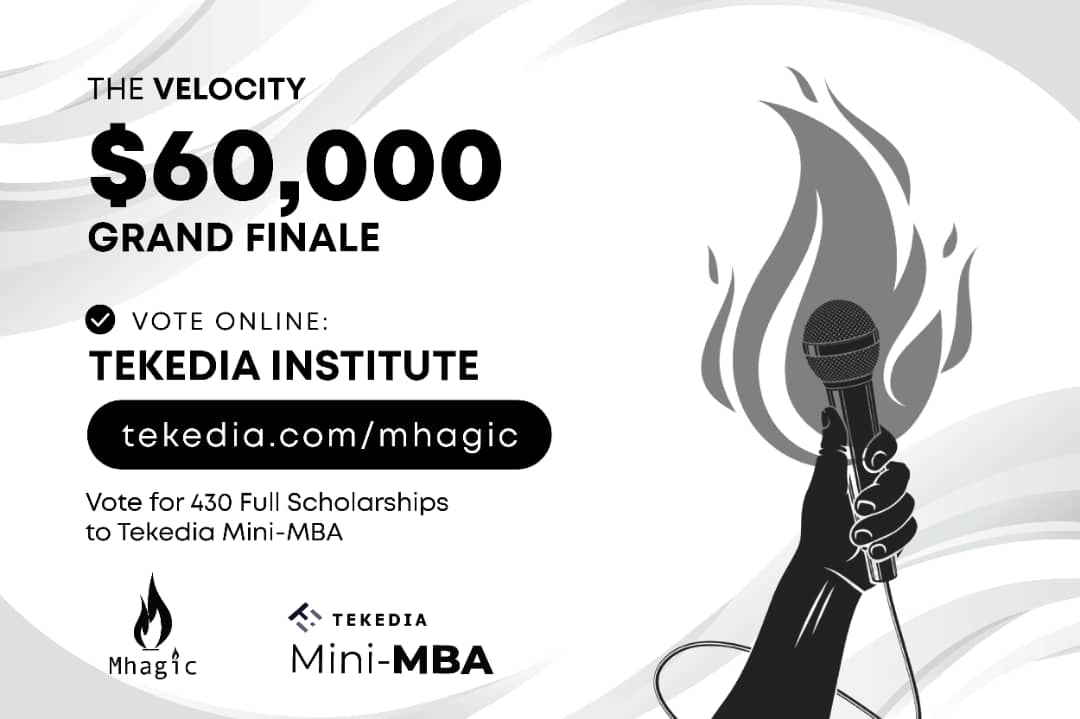
Tomorrow (Saturday, midnight WAT), the voting for Velocity Mhagic’s $60,000 prize ends. Tekedia Institute, your business school, began with about 400 shortlisted contestants. Today, only 10 remain. One team will win the award. Tekedia will donate 100% of its winning to sponsor 430 young people to Tekedia Mini-MBA. We need your vote to WIN it. Go here

Tekedia Makes Grand Finale of Mhagic Velocity $60,000 Prize; Full Scholarships to 430 Students


The Promise of the Minister on Nigerian Passports

1

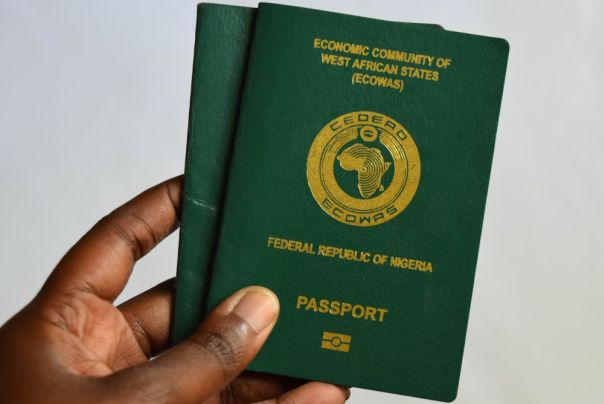
Let me thank the Office of the Speaker, House of Representatives Nigeria, Femi Gbajabiamila, and the Minister of Interior, Ogbeni Rauf Aregbesola, for the speed they have started to fix this passport renewal paralysis across Nigerian foreign missions and homeland. The minister has promised to fix this and I want to thank him. Mr. Minister, after my piece, called an emergency meeting with Immigration officers across the nation, and has put out a statement.

“To permanently curb the complaints of difficulty in obtaining Passports from the NIS, today, I held a meeting with the Leadership of the Nigeria Immigration Service and all Passport Control Officers in Nigeria and Immigration Attachés around the world…We are turning round the entire application process in a way that is seamless, transparent and will accord human dignity to applicants and fulfill citizenship integrity.”

To the young people, help is coming.

LinkedIn Notes

Good People, we need help for one of our fellow citizens. He completed his PhD in Europe but his school has refused to release his certificate until he comes with a valid Nigerian passport: “I really need the passport. I completed my PhD in May 2020 (about a year ago) and my certificate has been ready for pickup. But the school requires me to present a valid passport to be able to collect it.”

According to him, he has been trying to renew his Nigerian passport but was told that “there is no booklet” to print one. He had done the biometric capture, etc [I have a copy of the confirmation slip]. This “no booklet” thing is not new; very unfortunate it has not been solved.

The embassy in charge of this is the Embassy of Nigeria in Madrid (Spain). This young man has a job in one of the leading technology firms in Europe where he develops AI for autonomous systems. Without this new passport, even that job is in trouble!

If you can help or know someone who can help, inmail me or email …


Whoever is responsible for the booklets to print Nigerian passports should do his or her job. It turns out that this problem – inability to renew passports – is systemic and widespread across our foreign missions. I just checked my inmails and many others have the same problems: massive delays on renewing passports.

I have followed up and was told that a contract with a supplier is the cause of the problem. I have also received a phone number to call the minister of interior. I will not call – we need to fix this for ALL CITIZENS, not for the few who have access to me.

Last month, I had to call the Nigerian Embassy in Washington DC via my contacts to avoid a couple in the US being messed up due to delays in renewing passports. Please everyone involved should FIX this. Calling for another special treatment is not what I want to do now. Let everyone get help.

Sign whatever contract and make the booklets available to the embassies. Mr. Minister, do your job!

Nigerian Passport Challenge: Minister of Interior Announces New Rules to Eliminate Bottlenecks