DD
MM
YYYY

PAGES

DD
MM
YYYY

spot_img

PAGES

Home Blog Page 5797

EU Seeks Partnership to Achieve Semiconductor Manufacturing Goals

0

As industries grapple with a global shortage of chips, the European Union is seeing it as a chance to tie up loose ends of the bloc’s chip production. The EU is on a mission to form new alliances with big names in the semiconductor industry to meet its 2030 goals.

COVID-19 pandemic-induced strains threw the world of technology into chip shortage, which has seen the auto, smartphone and internet-based technologies cutting down production. To the European Union, it is an ample opportunity to close the existing wide gap between the bloc and other regions in semiconductor manufacturing.

The bloc is considering creating a semiconductor alliance including STMicroelectronics, NXP, Infineon and ASML to cut dependence on foreign chipmakers amid a global supply chain crunch, Reuters reported, citing four EU officials familiar with the matter.

The plan, which is at a very preliminary stage, may include a pan-European scheme known as an Important Project of Common European Interest (IPCEI), which allows EU governments to pump in funding under easier state aid rules, and companies to work together on the entire project, the sources said.

The report said It would complement or come as an alternative to a possible foreign-funded factory, with the aim to double the EU’s market share in semiconductors to 20% by 2030, a target set out by European internal market chief Thierry Breton.

In March, the EU unveiled a plan named Digital Compass, designed to set the 27 country bloc on the path of making its first quantum computer in five years.

“It is our proposed level of ambition that by 2030 the production of cutting-edge and sustainable semiconductors in Europe including processors is at least 20% of world production in value,” a document from the bloc said in March.

These moves beckon hope of Europe, less dependent on other regions for chips. Compared to other regions, Europe is the least market in the semiconductor industry. The United States, although has recorded a drop to 12% since 1992, still leads the industry, followed by China who recorded over $13 billion in market value last year.

The EU Commissioner had a meeting with Intel CEO Pat Gelsinger on Friday, in an attempt to persuade the leading chipmaker to site a major fabrication plant in the bloc.

Gelsinger said EU leaders needed to invest to ensure a vibrant semiconductor industry to enable competitiveness that will drive a semiconductor industry that will take on Asian rivals, a point Breton admitted after his meetings with semiconductor business heads on Friday.

“To meet current & future semiconductor industry demand, Europe will drastically increase production capacity – both on its own and through selected partnerships to ensure security of supply,” said Breton.

Gelsinger is also prospecting for a location for a plant in Europe that he says would back Breton’s goal of doubling the region’s share of global chip output to 20% over the next decade.

But on the contrary, Taiwan Semiconductor Manufacturing Co (TSMC) is not interested in building a plant in the EU, diplomats and Taiwanese officials said.
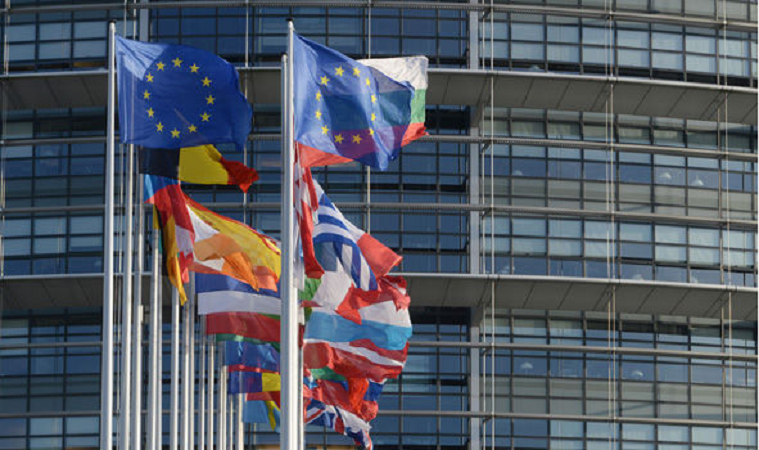
Breton held talks earlier on Friday with TSMC, the world’s No.1 chip maker, as part of the EU’s Commission partnership efforts.

But industry and diplomatic sources say that, of the Big Three chipmakers, Intel is the only one so far to express concrete interest in Breton’s goal of producing the most advanced chips in Europe.

The Commission said Breton would hold further talks on May 4 with the CEOs of two Dutch semiconductor players: ASML, the leading maker of semiconductor lithography tools, and with chipmaker NXP.

On his stop in Germany during his European tour, German Economy Minister Peter Altmaier and Bavarian governor Markus Soeder assured Breton of their support, saying Germany would be a suitable location for a potential European foundry.

“We think of Germany as a good candidate – not the only, but a good candidate – for where we might build our fabrication capabilities,” he said.

Breton and other European leaders believe it’s time for the bloc to exert leadership position in semiconductor manufacturing, a move that will boost the region’s production capacity.

“To be leaders not followers, EU industry requires urgent, ambitious action on digital technologies such as semiconductors, cloud, quantum, space connectivity & batteries,” Breton tweeted on Thursday following his meeting with Altmaier.

Inter Milan Wins Serie A for the First Time in 11 Years

0

Italian giant Inter Milan has won the Seria A, ending the 11-year trophy drought that has seen its rivals, Juventus winning for nine years.

A Saturday win at Crotone put Inter 13 points clear with four games to go,  buoyed by Atalanta’s 1-1 draw at Sassuolo on Sunday.

Since 2010, when Jose Mourinho won both Serie A and the Champions League, Inter has been on the sideline watching the scudetto reside in Turin season after season, under the tutorship of various coaches including Conte himself in 2012, continued by Max Allegri and Maurizio Sarri last term.

The cycle has been broken by Antonio Conte who started it, and probably paves way for a future of intense competition in Serie A.

It has been nine years of struggle for the San Siro side who has, within this period, had Twelve different managers including Claudio Ranieri, Walter Mazzarri and Roberto Mancini. The years saw the club dropped to the ninth place in the league, failing to reach a major final and enduring a six-year absence from the Champions League.

“I’m astonished,” said Conte.

“We’re breaking up a dynasty. Not even in my wildest dreams could I have imagined that we’d make up this much ground on the team that dominated Serie A for nine years in the space of two seasons,” he added.

“This is one of the most important successes of my career,” the 51-year-old told Italian television station Rai.

“Deciding to join Inter was not easy, just when the team was not equipped to win immediately.

“Furthermore, the opponent was Juventus for whom I had worked for a long time, who had dominated for nine years. Today we can say that our sacrifices have paid off,” he said.

It has been a spectacular season for Inter Milan, turning the table after a long streak of failures that put fans in dismay.

Inter lost only two matches in the season, Milan derby in October and at Sampdoria in January. Ever since then, the club has witnessed an ongoing 18-game unbeaten run resulting in 14 wins, 11 of them in a row.

Chinese electronics retailer Suning Holdings Group took a majority stake in 2016, after billionaire Massimo Moratti, whose family controls Italian oil refiner Saras Group, sold to a consortium led by Indonesian business tycoon Erik Thohir in 2013. The decision to sell the club stemmed from an overwhelming financial crisis and has turned the fortune around for the Milan giants. Inter becomes the first Chinese-owned side to win one of Europe’s big five leagues and the first foreign-owned side to win the Italian title.

The city of Milan went up in ecstasy as fans gathered in the main square in front of the cathedral to celebrate.

“We are, yes, we are. Champions of Italy. We can finally scream it, after dreaming of it, after keeping it hidden in the depths of our hearts, after holding on to it like a precious dream that we did not want to waste,” read a lengthy statement on the Inter website.

Club president Steven Zhang, son of Suning owner Zhang Jindong described the win as “emotional” moment and thanked the fans and staff for their support in a lengthy statement.

“It’s emotional, and a special time for everyone involved in this project and who has been with us on this journey,” Zhang said.

“Thanks, first of all, to the fans, to those that work with us and obviously to our coach Antonio Conte and to the players, who have worked so hard to bring this title home.

“Furthermore, I want to thank the employees and directors, the two managing directors, who have supported me this year and the five years previous. All those who have been a part of this project, who have worked with us not only this year but also in the past. I think that they are all part of this Scudetto and that this title belongs to all of them. A massive thank you to all of them.

“A special thank you to my father and to Massimo Moratti, who has guided me throughout the years, supported me from an emotional and mental standpoint and helped me to understand what Inter is,” Zhang said.

Tekedia Mini-MBA Has Scholarships for Teachers And Healthcare Workers

1

We just received an anonymous donation with “20 Rural teachers and health” instruction for Tekedia Mini-MBA beginning June 7. Please tell teachers & healthcare workers in any part of Africa working in rural areas that they could attend Tekedia Mini-MBA free.

The process is easy: ask your school or healthcare center head to write a letter confirming you work therein.  That letter should be sent to Tekedia via this email here.

More than 100 doctors attended Tekedia Mini-MBA last year, from University of Ibadan Teaching Hospital to Lily Hospitals in Warri which sent close to 30 doctors [they made the attendance public, so we can mention them].  They like the flexibility of our program which ensures they continue to do their scientific miracles, and yet can  catch up with modern business frameworks.

To the donor, Thank You. 

Welcome Innovators, Join Tekedia Mini-MBA

0

Welcome to Tekedia Institute. We run an amazing business school which has attracted professionals and students from 36 countries. Our Faculty members come from Microsoft, Shell, Flutterwave, Nigerian Breweries, Jobberman, Coca Cola, and other great organizations. Thrice weekly, I personally coordinate live Zoom sessions on the mechanics of business systems. We bring our Faculty and Guests on those sessions, covering industries and business domains.

Tekedia Mini-MBA Edition 5 (June 7 – Sept 1, 2021) Opens Registration: Self-paced, Online, 12 weeks, $140 or ?50,000.  

REGISTER today to beat our early bird deadline, and get many extra benefits.

The Lessons from Wirecard and Myspace

0

I still believe that Myspace did not collapse because of the rise of Facebook. My call remains that Myspace did not execute on what it wanted to do, and because of that, it froze on its mission. That is typical: most startups do not die because of competition, they die because they are unable to execute on the mission they have been established to pursue. 

Specifically for Myspace, it was stagnant on its product innovation, especially on integrating with 3rd party entities, which Facebook later did, and set a new basis of competition. Yet, even with that, it could have found a niche in a segment with its music nativity if not that it was failing across the board. We later knew what happened!

Yes, a few years later, we realized that Myspace was not backing up when it reported that it had lost years-long data of its users! That type of company was not destined to have impacts in markets. Yes, it was not Facebook that killed it, it would have folded even without Facebook with that culture! You were making $800 million per year but could not find money to do backup!

“As a result of a server migration project, any photos, videos, and audio files you uploaded more than three years ago may no longer be available on or from Myspace. We apologize for the inconvenience.” Myspace.

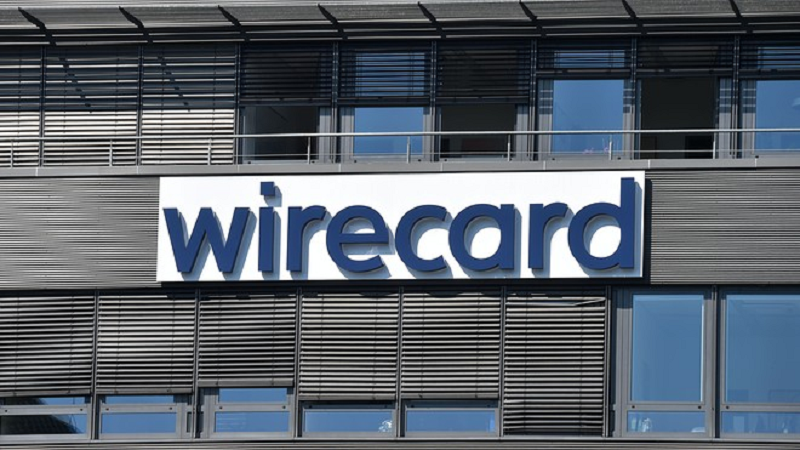
That takes me to Wirecard, an insolvent German fintech which announced in 2020 that €1.9 billion in cash was missing. According to Financial Times, some employees saw some of their colleagues moving cash in plastic bags over a period of years. What do you expect? Simply, collapse. Yes, when staff saw employees go to the vault, load cash in plastic bags, and take home, and no one reported it, the mission was done, competition or no competition!

Wirecard employees hauled millions of euros of cash out of the group’s Munich headquarters in plastic bags over a period of years, according to former employees, suggesting that the payments company was looted even more brazenly than previously known.

The once high-flying fintech, which at its peak was worth €24bn, went bust last summer in one of Germany’s biggest accounting frauds. It collapsed after discovering that €1.9bn of corporate cash did not exist and that parts of its business in Asia were a sham.

Former employees have told Munich police investigating the fraud that staff repeatedly removed large amounts of cash from Wirecard’s head office, people with direct knowledge of the matter told the Financial Times.


MySpace Backup Problem Explains Why Competition Is NOT Your Startup Main Enemy