
DD
MM
YYYY

PAGES

DD
MM
YYYY

spot_img

PAGES

Home Blog Page 582

Geoffrey Hinton Warns AI Will Enrich the Few and Leave Many Jobless, Blaming Capitalism, Not Tech

0

Geoffrey Hinton, the pioneering computer scientist often called the “godfather of AI” and a Nobel laureate, has issued another warning about the future of work in the age of artificial intelligence.

In a wide-ranging interview with the Financial Times, Hinton predicted that AI would trigger mass unemployment alongside soaring profits, enriching a small elite while leaving most people poorer. But crucially, he argued that the fault lies not with the technology itself, but with capitalism.

“What’s actually going to happen is rich people are going to use AI to replace workers,” Hinton said. “It’s going to create massive unemployment and a huge rise in profits. It will make a few people much richer and most people poorer. That’s not AI’s fault, that is the capitalist system.”

His comments echo those he gave to Fortune last month, when he accused AI companies of chasing short-term profits at the expense of preparing for the technology’s long-term societal consequences.

Entry-Level Jobs at Risk

For now, layoffs tied to AI adoption have not spiked, but early signs of disruption are emerging. Evidence is mounting that entry-level opportunities — the first rung for many recent graduates — are shrinking as companies turn to AI for repetitive tasks. A recent survey from the New York Fed found that firms using AI are more likely to retrain existing employees than fire them, but acknowledged that layoffs are expected to rise in the coming months as automation deepens.

Hinton believes that jobs performing mundane or routine tasks are the most vulnerable, while roles requiring highly specialized skills or human judgment may be safer. Healthcare, in particular, is one sector he expects to benefit rather than suffer from AI.

“If you could make doctors five times as efficient, we could all have five times as much health care for the same price,” Hinton said in June during an appearance on the Diary of a CEO YouTube series. “There’s almost no limit to how much health care people can absorb—[patients] always want more health care if there’s no cost to it.”

While some AI leaders, such as OpenAI CEO Sam Altman, have suggested a universal basic income (UBI) to soften the blow of job displacement, Hinton dismissed the idea, saying it “won’t deal with human dignity” or the intrinsic value people derive from having work.

Existential Threats and Regulation Gaps

Hinton has long warned of the dangers of AI without adequate guardrails. He estimates a 10–20% chance that advanced AI could eventually wipe out humanity after the emergence of superintelligence.

He places AI’s risks in two categories: threats inherent in the technology itself — such as runaway intelligence — and threats arising from misuse by malicious actors. For instance, he warned in his FT interview that AI could aid in the creation of bioweapons.

Hinton also criticized the Trump administration for its reluctance to regulate AI more tightly, noting that China is taking the threat more seriously. At the same time, he acknowledged AI’s upside potential, describing the current moment as unprecedented and unpredictable.

“We don’t know what is going to happen, we have no idea, and people who tell you what is going to happen are just being silly,” he said. “We are at a point in history where something amazing is happening, and it may be amazingly good, and it may be amazingly bad. We can make guesses, but things aren’t going to stay like they are.”

An Unexpected Personal Use of AI

Despite his concerns, Hinton is also an active user of AI tools. He told the FT that he uses OpenAI’s ChatGPT mainly for research. In one anecdote, he revealed that a former girlfriend once used the chatbot during their breakup: “She got the chatbot to explain how awful my behavior was and gave it to me. I didn’t think I had been a rat, so it didn’t make me feel too bad?.?.?.?I met somebody I liked more, you know how it goes,” he quipped.

Why He Really Left Google

Hinton also clarified the reasons behind his 2023 departure from Google. Media reports suggested he quit in order to speak more freely about AI’s risks, but he said the truth was more mundane.

“I left because I was 75, I could no longer program as well as I used to, and there’s a lot of stuff on Netflix I haven’t had a chance to watch,” Hinton said. “I had worked very hard for 55 years, and I felt it was time to retire?.?.?.?And I thought, since I am leaving anyway, I could talk about the risks.”

What the evidence says so far about jobs

Actual layoffs tied directly to AI remain limited for now. A recent New York Fed study covering firms in the New York–Northern New Jersey region finds AI adoption rising sharply, and that companies using AI are more likely to retrain workers than to fire them. Still, the survey documents early signs of disruption: some service firms reported scaling back hiring because of AI, and a modest share expect layoffs in the months ahead — effects concentrated at the entry and college-degree levels where recent graduates typically find work. Those patterns are consistent with Hinton’s concern that opportunities at the start of careers are already shrinking.

How other influential voices frame the trade-offs

Hinton’s capitalism critique sits beside a set of alternative — often more technocratic — proposals from other leading figures and institutions. Their responses offer contrasts in diagnosis and remedy.

Sam Altman, CEO of OpenAI, has publicly backed experiments with universal basic income and related pilots as a way to soften disruption while societies adapt. Altman and others in Silicon Valley argue AI could fund broader income supports or other redistributive mechanisms so the gains from automation are shared more widely; proponents frame UBI as a practical bridge while skills, education, and labor markets adjust.

Bloomberg reported on recent UBI experiments backed by groups around Altman and other tech figures, illustrating how the idea has moved from abstract to testable policy.

Bill Gates has emphasized productivity gains from AI while also urging policy responses to manage the distributional effects. Gates has pointed out that AI will make many tasks “cheaper and more accurate,” which will lower costs and boost output, but he has also proposed tools such as taxation or new financing models to ensure society captures part of that value and funds social needs created by the transition. His public discussions of a “robot tax” and other fiscal approaches put the emphasis on using public policy to rebalance gains.

Economic institutions such as the International Monetary Fund frame the issue as a policy design problem: AI can lift productivity and global output substantially, but the benefits will not be automatic or evenly distributed.

The IMF’s work recommends a suite of actions — active labor market policies, retraining at scale, tax and transfer reforms, and stronger governance of AI deployment — to manage transition risks and ensure broader gains. The Fund’s research underlines that policy choices will determine whether AI amplifies inequality or helps raise living standards.

How these views compare with Hinton’s core warning

Hinton’s framing places moral responsibility squarely on economic incentives: the same systems that produce efficiency will, under current rules, concentrate wealth unless governance and institutions change. The technocratic voices — Altman’s experiments with UBI, Gates’ fiscal proposals, the IMF’s policy toolkits — treat the problem as solvable with better policy design and public investment.

They accept automation’s productivity promise and aim to distribute its gains; Hinton accepts the productivity upside too (notably for healthcare) but is far darker on whether market forces will allow a fair outcome without deeper structural change.
Central Bank of Nigeria Hints at Future Rate Cuts, Warns of Political Risks to Economic Stability

0

Governor of the Central Bank of Nigeria (CBN), Olayemi Cardoso, has projected that interest rates could trend downward in the coming months, citing easing inflation and more efficient capital allocation as key factors.

Speaking at the European Business Chamber (Eurocham Nigeria) C-Level Forum in Lagos, Cardoso acknowledged the burden of today’s high lending rates, which range between 32% and 36% on commercial loans, but assured investors and businesses that macroeconomic stabilization would likely bring relief.

“There was a substantial potential for interest rates to decrease in the future,” Cardoso said during a fireside chat moderated by Andreas Voss, Chief Country Representative of Deutsche Bank Nigeria.

The apex bank chief outlined the CBN’s priorities, stressing macroeconomic stability, banking sector recapitalization, and positioning Nigeria as a competitive investment hub.

Although headline inflation remains elevated, Cardoso noted that it is beginning to soften as policy measures take effect.

“It is decreasing as a consequence of collective efforts. It is anticipated that the advantages of the CBN tightening posture will persist. We will protect the stability that has been re-established in the financial system with the utmost zeal,” he said.

Cardoso reaffirmed that the central bank would continue its tight monetary stance to preserve stability, arguing that the resilience of Nigeria’s financial system is critical for lending, corporate expansion, and long-term investment flows.

“Our primary objective is to maintain that stability while simultaneously addressing inflation and ensuring that the financial system is sufficiently resilient to facilitate corporate lending and investment,” he added.

What the Numbers Show

A report by the National Bureau of Statistics (NBS) last month revealed Nigeria’s headline inflation rate eased slightly to 21.88% in July 2025, down from 22.22% the previous month. On a year-on-year basis, the figure was 11.52% lower than the 33.40% recorded in July 2024.

Urban inflation stood at 22.01% in July 2025, a notable 13.76 percentage points lower compared to the 35.77% logged in July 2024.

While these figures suggest a positive trend, analysts caution against premature policy loosening.

Experts Urge Caution

Dr. Paul Alaje, CEO of SPM Professionals, while commending the CBN’s reforms, warned that the current inflation decline may not yet be sustainable.

“I think the central bank is making some very good policy. This time, I only hope that some of those policies will be sustained. For instance, relaxing MPR shouldn’t be now.

“We may need to wait a bit more, especially because some of the inflation numbers we are seeing are outliers. I didn’t say they are lies. I’m saying they are outliers,” he explained on Channels Television’s Politics Today.

Alaje argued that a full-year cycle of consistent inflation data is necessary before considering easing, otherwise Nigeria risks undoing recent gains.

Political Risks Ahead of 2027 Elections

Beyond monetary policy, Alaje flagged looming political risks as a major determinant of Nigeria’s economic trajectory. With the 2027 elections approaching, he cautioned that reckless handling of foreign exchange during campaigns could destabilize the fragile recovery.

“Even the danger starts more with the pre-election year. The behavior of politicians will determine whether we are going to have another great four years or another horrible four years. And this is what I want President Tinubu to do. Warn politicians, all inclusive, from federal to local government, no exchange of foreign currency, to delegate or for whatever,” he said.

He noted that 80% of Nigeria’s final goods are imported, making the naira highly sensitive to foreign exchange scarcity. Any political abuse of forex, he stressed, would wipe out the little progress made.

“The little sign of positivity that we are seeing will evaporate overnight,” Alaje warned.

Strain on Small Businesses

For Nigeria’s small and medium enterprises (SMEs), the prevailing lending environment has become a chokehold. With commercial loan rates hovering between 32% and 36%, many small business owners say borrowing has become nearly impossible. SMEs — often described as the engine of Nigeria’s economy — have been forced to shelve expansion plans, cut staff, or rely on informal lending at great personal risk.

Analysts believe that while the CBN’s tightening stance is necessary to fight inflation, it is also stifling the very businesses expected to drive economic recovery. Cardoso’s assurance of “downward pressure” on rates is therefore being closely watched by entrepreneurs desperate for cheaper credit.

How To Scale, and Not Just Grow: Attain Product Market Fit Before Any Attempt to Scale

1

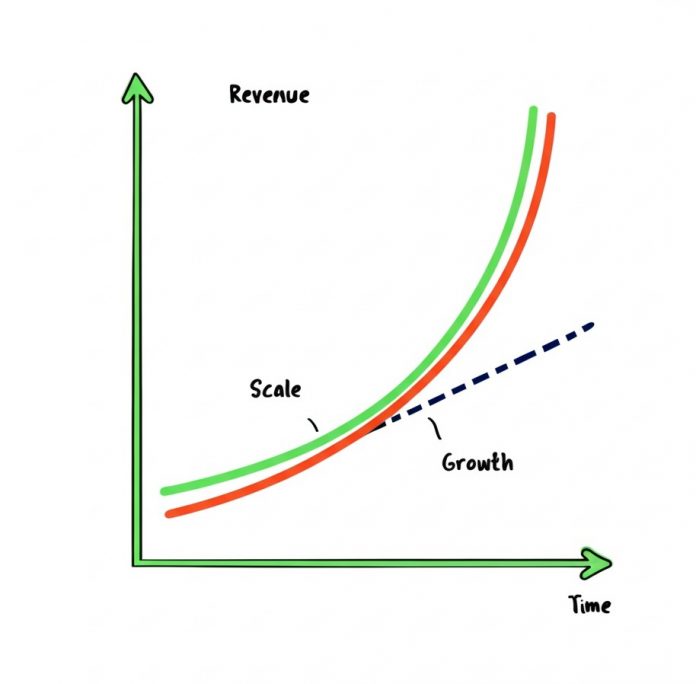
In business, there is a cardinal rule: never scale before you find your product-market fit. Product-market fit is that moment of equilibrium where what you supply is exactly what the market demands. It is when customers are not just buying your product but are also celebrating it. They use it, they love it, and they tell others about it.

Understand this: the first version of your product is rarely the final destination. No matter how brilliant the idea is, customers will expose blind spots. They will test it, complain about it, suggest improvements—and that feedback becomes your most valuable asset. By listening, refining, and iterating, you bring the product closer to their hearts.

But here is the danger: if you bypass this refining process and instead chase growth with heavy media blitz, advertising, and promotions, you might create noise without substance. Yes, people will come because the buzz was loud. But when the music stops, the product must sing its own song. If value is missing, customers will leave. And when customers leave, the vision begins to wobble.

Simply put: find your product-market fit first. Without it, scaling is premature—and as we say in the streets, wahala go dey.

Build. Refine. Attain PMF. Then Scale. You must SCALE, and not just grow.

Join Tekedia SUV by Registering for Tekedia Mini-MBA 18th Edition

0

Tekedia SUV is picking learners, and very soon, the door will shut on registrations for the 18th edition of Tekedia Mini-MBA! If you’ve been planning to join this transformative ONLINE program, now is the time to jump into the SUV by securing your spot. Our program is 100% online.

Classes begin next week Monday, and you don’t want to be left behind. Get your seat here and enjoy the ride to unparalleled knowledge, innovation, and business acumen.

Go here and register https://school.tekedia.com/course/mmba18/


The Future of Luxury Jewelry in a Sustainable World

0

Luxury jewelry has always carried an aura of timelessness. A necklace passed down through a family, a diamond ring marking a life milestone, or a pair of gold earrings worn to celebrate a special moment were never just accessories. They were symbols of status, love, and permanence. Yet in today’s world, permanence means more than craftsmanship alone. Buyers are asking harder questions about where their jewelry comes from, how it was made, and what kind of legacy it leaves behind.

This shift is reshaping an industry that once thrived on sparkle alone. The future of luxury jewelry rests on how responsibly it was sourced, how carefully it was crafted, and how meaningfully it fits into a buyer’s life. It’s about building trust as much as beauty.

A New Understanding of Luxury

The meaning of luxury is not fixed, it evolves with culture and time. For decades, the idea was simple: rare materials combined with exceptional design equaled exclusivity. Owning a piece meant owning something others could not. But the modern consumer no longer sees luxury purely as a display of wealth. Instead, they are searching for depth and pieces that not only look extraordinary but also carry stories of integrity and care.

Transparency is now part of the definition of luxury. Buyers want to know that a sapphire was mined without destroying the landscape around it, or that the gold in a bracelet came from a source where workers were treated fairly. This expectation is not a passing trend. It is becoming a baseline, a new lens through which luxury is judged.

Materials With Meaning

Sourcing is where the transformation is most visible. Leading jewelers are embracing responsible materials to answer growing demand for sustainability. Gold is increasingly being sourced from certified mines that meet strict standards for fair pay and environmental protection. Recycled gold, reclaimed from old pieces and melted down into new creations, is also becoming more common.

Diamonds sit at the center of this discussion. The rise of lab-grown diamonds has changed the conversation entirely. Produced in high-tech facilities that mimic the conditions under which natural diamonds form, they are virtually identical to their mined counterparts. For some buyers, their lower environmental footprint makes them the obvious choice. For others, the romance of a natural diamond formed deep within the earth remains unmatched. The debate is shaping the market, raising important questions about what makes something “luxurious.”

Beyond diamonds, designers are experimenting with unconventional sources. Gemstones reclaimed from antique jewelry are given a second life in modern designs. Some innovators are even creating pieces using metals recovered from electronic waste or materials salvaged from oceans. They represent a commitment to creativity without compromise, proving that sustainability and beauty can coexist at the highest levels of design.

The Power of Craftsmanship

While materials are evolving, the role of craftsmanship has never been more important. Jewelry built to endure across generations naturally resists the culture of disposability.

Heritage houses and skilled artisans know this well. A ring carved with precision, a necklace designed with timeless elegance, are pieces that remain relevant for decades. They are the antidote to short-lived trends. 

In this way, craftsmanship itself becomes a form of sustainability. Jewelry that can be passed down becomes part of a personal story, carrying both emotional and material value into the future.

Diamonds as Symbols and Investments

Among all gemstones, diamonds hold a unique position. They are celebrated for their brilliance, but also for the role they play as investments. A well-chosen diamond can retain its value over time, and in certain cases, increase in worth. Unlike many luxury goods, it does not automatically lose its value once it leaves the store.

That is why diamonds are often considered assets. Life circumstances, however, do not stand still. A couple may upgrade to a larger stone after years of marriage. An heirloom may be sold to a diamond buyer when families decide to reshape their legacy. Sometimes individuals choose to liquidate diamonds to free up capital for other investments.

In those moments, they enter a secondary market where professional buyers evaluate them not only on the traditional “four Cs”—cut, color, clarity, and carat—but also on certification and provenance. 

The story of a diamond increasingly influences how it is priced. Stones that come with a verified ethical background, documented through certificates or even blockchain technology, often hold stronger appeal. Transparency, once viewed as a marketing feature, has become part of financial value.

The best buyers provide clear evaluations and fair offers, making it possible for owners to convert their diamonds into liquid assets when the time feels right. In this way, diamonds bridge the personal and the practical: they are both symbols of love and carriers of financial weight.

The Role of the Consumer

None of these changes happen in isolation. The driving force behind this transformation is the consumer. Millennials and Gen Z, in particular, have shifted expectations dramatically. They want jewelry that reflects who they are, not just what they can afford. They are drawn to personalization, such as unique gemstones, thoughtful engravings, and designs that feel one of a kind.

They are also demanding accountability. Digital tools now allow buyers to trace a piece of jewelry back to its origins, often through a simple scan of a certificate or code. This ability to connect a gemstone or metal to its journey is redefining trust in the luxury market. A generation raised on instant access to information expects nothing less from their jewelry.

For brands, ignoring these expectations is no longer an option. The market is moving toward transparency and sustainability because the buyers themselves are insisting on it.

The Road Ahead

The future demands for heritage and innovation to walk hand in hand. Iconic houses will continue to celebrate artistry, but they will do so with new commitments to responsible sourcing and sustainability. Independent designers will push boundaries, introducing unconventional materials and experimenting with bold, eco-conscious ideas.

Luxury jewelry will always sparkle. But in a sustainable world, its brilliance will carry more meaning. It will shine not only because of its beauty, but because of the responsibility, transparency, and lasting value woven into every facet.