DD
MM
YYYY

PAGES

DD
MM
YYYY

spot_img

PAGES

Home Blog Page 5822

Why Social Media Influencers should be Regulated

0

Nigerians on Twitter would have noticed that the accounts on many Nigerian Twitter “influencers” were recently suspended. The stories surrounding this suspension state that the influencers were paid to obstruct justice by starting an online campaign. These influencers were said to have trended a hashtag as well as topics that will incite public outcry, protests, and demand for the release of Alex Saab, a Venezuelan diplomat, who was arrested and detained in Cape Verde in June 2020 for money laundering allegations. 

Of course, some of these influencers have denied these allegations, some claiming they trended the topic without being paid to do so. Whether these influencers were paid or not, fact remains that this controversial act has revealed how dangerous social media influencers can be if they are not regulated.

You must have noticed that some social media users have a lot of followers even though they do not advertise any products. They are called “influencers” for reasons that are never related to “influencing” people, at least positively. You must have noticed that some of these so-called influencers put up posts that have no positive impacts on their followers’ lives but still, the number of their followers continue to increase.

The time you might see them very active is when there is an “outcry” against an organisation, an individual, or the government. This will make you think that these people truly care about others but if you approach them privately to help you raise a voice for something they cannot gain from, they will ignore you and/or block you. This is to tell you that social media “influencer” is a business outlet and not a humanitarian one.

No one is stopping influencers from making money out of their “business” but lying about it and making money out of people’s expense make their job unacceptable. These people have a large number of followers, who could easily be misled because of the trust they have on the influencers. Because these people believe these influencers look out for them, they are manipulated into performing whatever actions they were directed to do. This was one of the issues with the Alex Saab case, where influencers told their followers to retweet their Alex Saab-related posts to stop oppression. The unsuspecting followers did as they were commanded without questioning the rationale behind the action.

Furthermore, followers see influencers as the voice of reason. They believe the influencers are “omniscient” because they have a large number of followers. So influencers should never be doubted or questioned, especially by people with small numbers of followers. Anyone that challenges the positions or assertions of these influencers is met by uproar, rage, and aggressive reactions/attacks from the influencers’ followers. Today, influencers are like drug lords and their followers are their street fighters, their minions.

The danger of social media influencers can be seen in their abilities to brainwash their followers and release them against their (the influencers’) enemies. They have gradually become so strong that they can raise people against the government, organisations, or private individuals. They have become online terrorists that they are now paid to send their minions to destroy their clients’ enemies. Business owners use them to crush their competitors and politicians employ them to destabilise states and ruin oppositions. They are now the forces to reckon with or to be feared. They are indeed, the online terrorists.

What is most damaging about social media influencers is that most of their followers are gullible youths. Because these influencers want to make money, they feed lies to these young souls, ruining their future. Many young people have been so biased by these influencers that they no longer believe in themselves. Some have lost hope in themselves, while others blame people, organisations, and the government for anything they pass through. Who knows the type of adults these young ones will turn into in the future if care isn’t taken.

There is a need to regulate these influencers and their actions. Some people have discovered the bad eggs amongst them and have stayed away from them. But what about those that still believed in them? How will they be saved from their clutches? Well, Twitter has shown examples of what should be done to bad influencers. This is a step other social media platforms should take. But then, someone has to call the attention of the media police to do the needful. That is where you and I have a role to play.
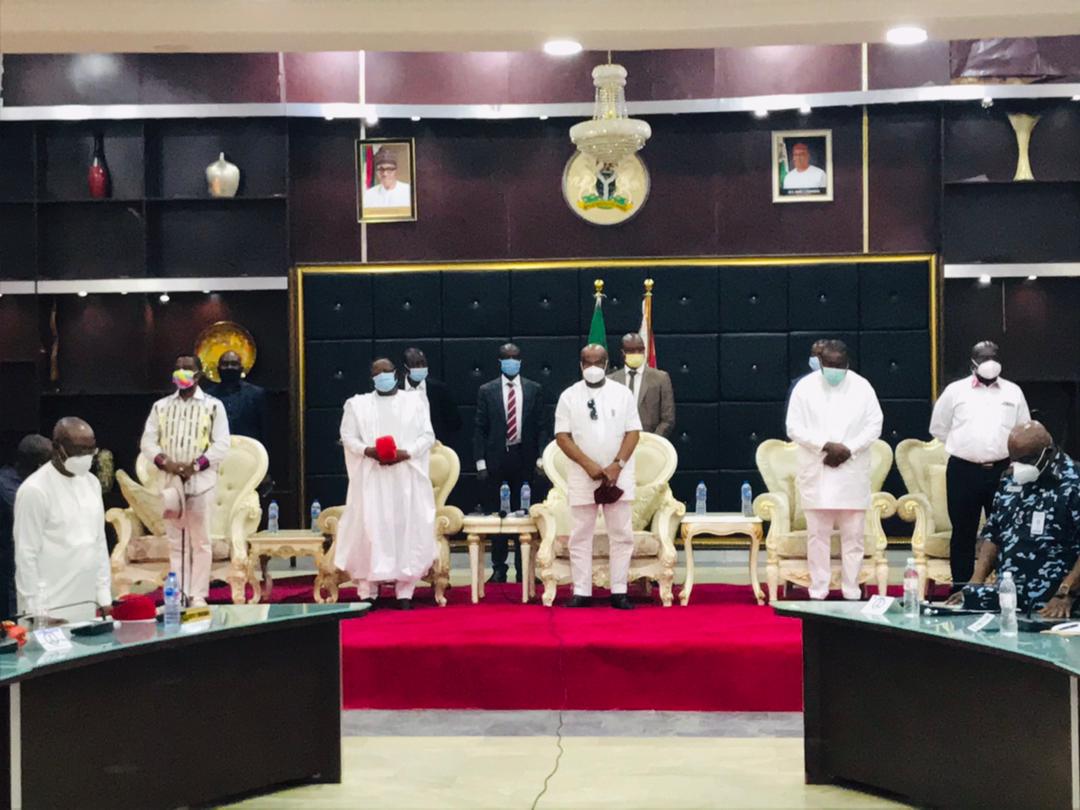
Southeast Nigeria Unveils “Ebube Agu” Joint Security Outfit And Bans Open Grazing

1

Today is a noticeable day and a turning point on the security nexus of Nigeria. Yes, after Southwest Nigeria passed a vote of no confidence on the Nigerian Police by establishing Amotekun ( “one that looks like a leopard,”), the Southeast has established their own version, Ebube Agu (“magnificent and glorious aura of strength and power to defend and protect one’s territory”). I have not used the relational translation but the axiomatic meaning in ancestral Igbo.

Igbos speak via animals but the English translation must not connote the animals. For example “the man acts like a fox” when translated to Igbo should be “the man acts like a tortoise” because what fox is to English, tortoise is to ancient Igbo. So, if you look for the Igbo name for fox – a cunning character- in the translation, you would be mistaken.

Agu is a symbol of strength and has magnificence in Igbo. When a man kills a tiger, he is saluted and initiated to touch the Ikoro, which produces the most recognizable “sound” in Igbo tradition, only heard during emergencies. .

With Ebube Agu, the Southeast has essentially said: Nigerian Police, we have no confidence in you! The Federal Government of Nigeria should be concerned because Nigeria is dissolving daily!

I pity Mr. Buhari whose tenure these things are happening. I wish I could speak with him because history will not be kind to him! He has failed his nation.

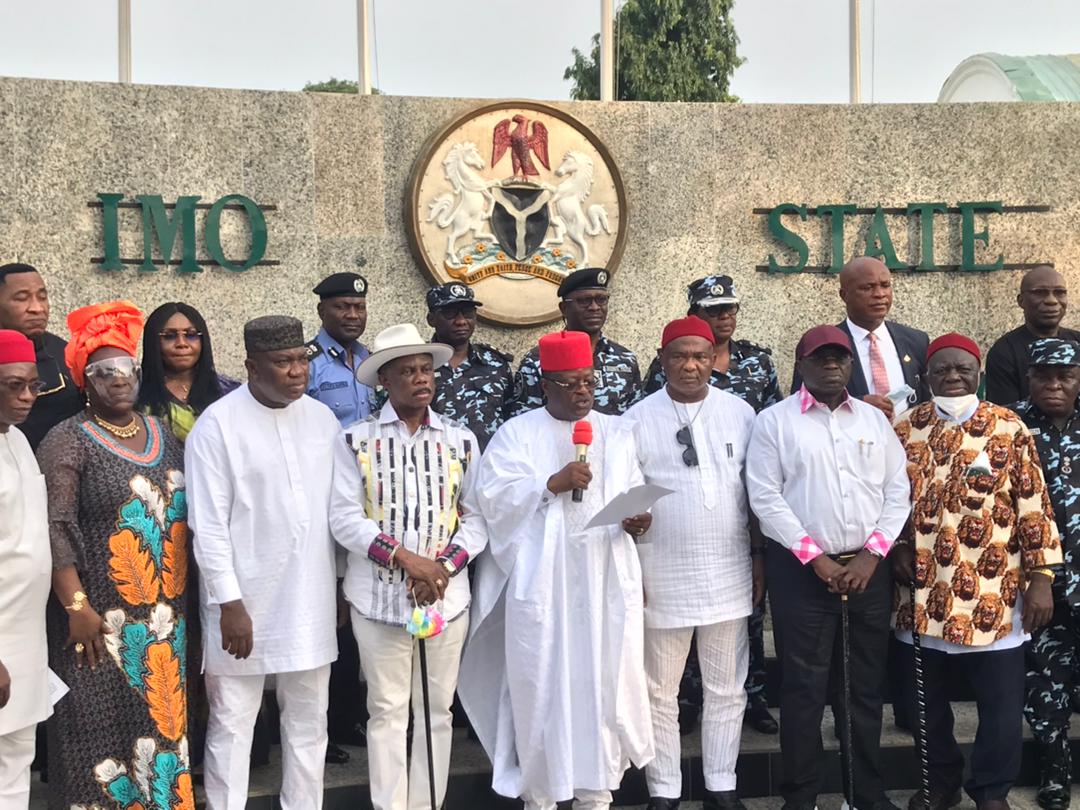
Governors of the South-East states have resolved to maintain a joint security outfit for the code named Ebube Agu (Wonderful Tiger).

The governors made the resolution in a communique during the first south-east security summit held in Owerri on Sunday.

The communique was presented by Dave Umahi, Chairman of the South-East Governors’ Conference and Ebonyi governor.

The governor’s conference said the joint security outfit would have its headquarters in Enugu to coordinate the vigilance groups in the zone.

[…]

They also resolved to set up a committee comprising security personnel, government officials and other relevant stakeholders to coordinate and monitor the implementation of the joint security platform.

[] They also banned open grazing and urged the security agencies to enforce the ban in the states.

Source: NAN

Comments from LinkedIn Feeds

Comment: Prof. Ndubuisi Ekekwe, well done! You did well with the analysis but I could not stop myself laughing out loud when you said you want to speak to Baba Buhari, this will be a total waste of time, energy, and resources! It is dead on arrival. He has gone down with history on his great and vital achievements…. I am so sorry Prof, na wasted effort… Hold your peace for next person that will seek you… No vex oooo

My Response: I want to be on record to have told him how bad things are. I personally think no one tells him what is happening. I do not want him in 4 years to say ” I was not aware”.

The Paused Effervescence of Nigeria’s Development

0

In the early 1960s, Norway wrote that Nigeria was an emerging nation with an extremely pragmatic agricultural program which must be watched, as it could become  a leading powerhouse in global markets. Despite the vagaries of civil war which paused the effervescence, Nigeria began to rise again. The Naira was stronger than the US dollars and airlines were putting travel visas on Nigerian passports with no requirements to visit any embassy.

Men flew from Lagos to watch Liverpool and then reconnected to the United States for the Yankees. Tuskegee University alone had hundreds of Nigerian students on scholarship, paid by the Nigeria people. Because the nation had better promises, well ahead of what America offered then, most returned home.

Factories, companies, etc, were opening up – and civil engineering rose to its pinnacle. Everywhere was a construction site! From Bata to PAN to Michelin, to anything you could imagine, Nigeria was rising to the mountaintop.

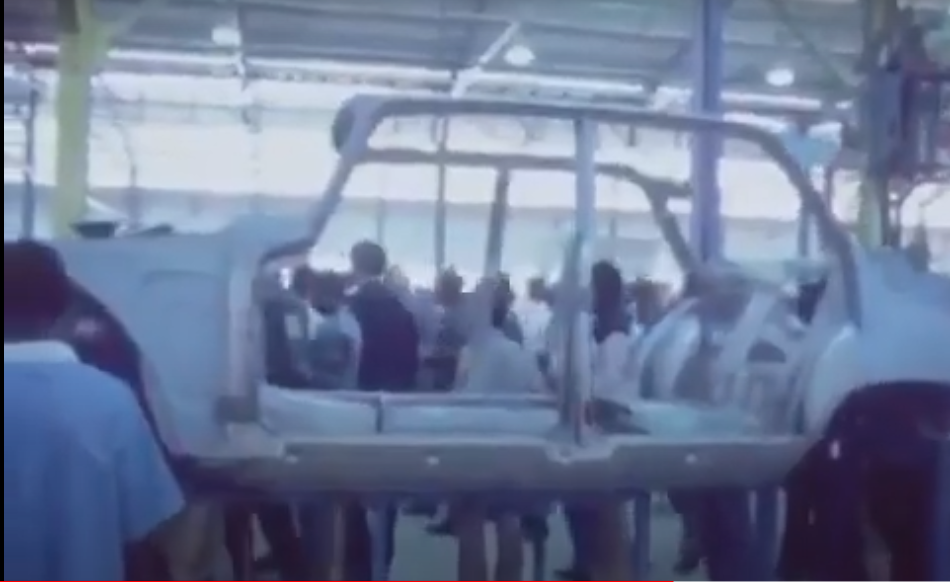
Then, we froze and began a descent. In this video, the world saw us as a place for opportunity, not a place looking for liberation. And they came. How can we return back to the beginning where things are MADE IN Nigeria?

Regulatory Evolutions in Nigeria – Way forward for Fintech and Other Tech Sectors

2

On February 1 2020, Lagos State Government (LASG) , riding on the Lagos State Transport Sector Reform Law of 2018, re-enacted the ban of motorcycles, tricycles and others from operating in most parts of Lagos State (the State). While the initiative was termed by LASG as a move to secure the property and lives of people within the State, the ban however led to the fall of major technology companies such as GoKada, Opay, Max.ng etc. who were deepening the capacities of their motorcycle ride-hailing businesses.

Recall that earlier in May 2019, GoKada which was founded by Fahim Saleh, had raised about US$5.3 million in a series A funding round led by Rise Capital. According to the CEO, as captured by TechCrunch, Gokada intended to use the financing to increase its fleet and ride volume. Opay on the other hand, in August 2018, had benefited from a series A and series B funding of US$50 million and US$120 million respectively. According to Opay’s CEO, Zhou Yahui, as captured by Techpoint, Opay’s rides had tripled and the company made over US$10 million in daily revenues after putting the Series A fund to good use.

Similarly, the Central Bank of Nigeria (CBN) announced the re-enactment of the ban of cryptocurrency trading in Nigeria using the official banking system. This move was indeed targeted at start-ups involved in cryptocurrency. CBN in a circular dated 7 February 2021, reiterated that CBN circular of February 5, 2021 did not place any new restrictions on cryptocurrencies but rather all banks in Nigeria had been earlier forbidden from using, holding, trading and/or transacting in cryptocurrencies, through a circular dated 12 January 2018.

In a recent move by Securities and Exchange Commission (SEC), in a circular dated 8 April 2021, SEC noted that all capital market operators (CMOs) involved with online trading platforms that give Nigerians the opportunity to invest in foreign traded equities, should desist and put an end to it. Citing the provisions of Sections 67-70 of the Investments and Securities Act (ISA), 2007 and Rules 414 and 415 of the SEC Rules and Regulations, SEC noted that only foreign securities listed on any Exchange registered in Nigeria may be issued, sold or offered for sale or subscription to the Nigerian public. Again, this move was targeted at the likes of Bamboo, Trove, Chaka etc. It should be noted that Bamboo had raised about US$150,000 in funding since commencing business in 2019 as documented by Crunchbase.

SEC Nigeria

Worthy of mention is the fact that CBN in a recent move, banned all Fintechs and third-party partners from accessing the BVN validation service. This was aptly put in Paystack’s communication to its customers which said “We’ve recently been made aware of a regulatory directive from the primary custodian of Nigeria’s BVN service to all their partners to suspend the provision of the BVN validation service to their third-party partners. In light of this news, we’re hereby informing you that the BVN Resolve service will be temporarily unavailable starting at midnight, April 8”. Given the onerous nature of the KYC requirements for financial institutions, this suggests that Fintechs may be unable to fulfil the KYC requirements imposed on them by the regulators.

The way forward for Fintechs and other techs:

In the light of the recent turn of events occasioned by the regulators in Nigeria, one could clearly see that the biggest challenge to Fintechs and other technology companies in Nigeria is not necessarily access to finance but regulations. While there seems to be a perfect product-market fit for the services churned out by techs, product-regulation fit appears to be largely non-existent. Consequently, the following are recommended:

  1. Increased need for regulatory modelling and forecasting: An examination of the moves made by regulatory authorities reveal that they rely on existing laws and regulations to squash the activities of these tech companies. Seeing that laws already in place cannot be wished away, it is therefore pertinent that techs, as part of their market research efforts, invest in understanding the existing laws that may disrupt their activities, and take steps ahead of the regulatory authorities to ensure that they are better able to withstand any re-enactment or regulatory blow. The result of these would be a “What-if analysis” with respect to the technology regulatory universe in Nigeria.
  2. Increased need for ‘co-opetition’ amongst tech companies: As described by Harvard Business Review (HBR) in its article titled “the rules of co-opetition”, HBR noted that co-opetition is simply the mix of competition and cooperation. Hence, co-opetition is the act of cooperating or collaborating with a competitor to achieve a common goal. For techs, particularly Fintechs, more than ever before, they need to come together in a common front, to engage the regulators either through legal means or roundtable discussions, in a bid to resolve the issues that may be fuelling the activities of the regulators which are eroding their businesses.
  3. Increased need for lobbying and presence of political heavy-weights on their Boards: A clinical look at the outcomes of the recent regulatory quagmire suggests that these may be the result of lobbying by various interest groups whose businesses are being challenged by Fintechs. Thus, it is important that Fintechs respond appropriately by employing the services of political lobbyists who would be able to influence political and regulatory decisions in their favor. This technique has been historically employed in business and proven to be very effective especially in climes like Nigeria. The appointment of political heavy-weights to their Boards would give them leverage to influence the lawmakers to update old laws, and enact new laws that would favor their course.

There are several arguments that suggest that regulation stiffens innovation. As this gradually appears to be the case in Nigeria, there is now a heightened need for Fintechs to approach things differently. Paul Tudor Jones noted that we must adapt, evolve, compete, or die. I expect that these few recommendations put forward would enable the Fintechs to adapt, evolve, and compete but not die.

The Governor Obaseki’s N60 Billion Revelation – And Nigeria’s Challenge [with Video]

2

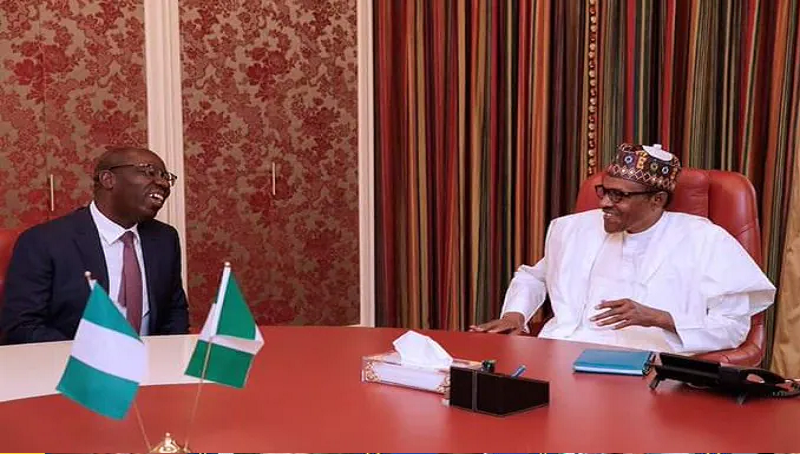
Nigeria is in financial trouble, and the Federal Government of Nigeria printed N60bn to share in March, according to a hard to watch video (below) by Edo State governor, Godwin Obaseki. This is not really news because we know that Nigeria has been printing money recklessly. After the freeze on bank dormant accounts, and unclaimed dividends, the only option was printing since the lenders are getting stricter.

Everyone prints, including the United States. But the difference here is that the US has a roadmap on how to cover the flanks while Nigeria is still digging. As the governor noted in the video, you are like a family which keeps expanding spending even when your source of income has diminished, pretending that everything is fine. Certainly, that playbook will not work in the long-term as one day the system will collapse.

Nigeria’s biggest challenge today is that our government is not communicating very well to the citizens. We continue to create the impression of abundance when scarcity has hit the land. In the days of Sam Mbakwe, ex-governor of Imo State, he might have printed a document and showed the citizens on the state TV, making a case why he needed help. He did those things many times and the citizens responded. 

As primary school kids, we contributed money to help him on building palm plantations, poultry, power plants, etc for the state. He never borrowed money from any foreign government. Mbakwe was like: if you need it, you have to fund it – and from the sincerity of his heart, Imolites responded. You pay school fees for your kids and you also send government money to fund developments.

I am still expecting President Buhari to come out clean and speak to his fellow citizens on the way forward. He needs help and now is the time to ask for it. 

In a speech last week, with eminent Northern Nigeria leaders, I presented a template on how Southeast leaders, post-war, rebuilt and positioned the region,  that 40 years after the war, from real estate holding to business to education, not many would remember that every family in Southeast began to rebuild with 20 pounds, from 1970. 

Yes, that Imo state records more than 96% literacy rate today, and a former FCT Minister noting that Southeast real estate investors control more than 70% of Abuja’s real estate, are strong data points to show that Nigeria has winning models. Across all domains, Southeast from the zero-ing which happened in 1970 should be exceedingly poor,  but they turned it around.

In 2007, the Minister for FCT,Mallam Nasir el-Rufai declared that “Igbos have acquired about 73 percent of landed property in Abuja”. He was addressing a gathering of South East elected officials, he also revealed how the National Chairman of the Peoples Democratic Party, PDP, Senator Ahmadu Ali abused him for demolishing his house in Asokoro District in Abuja.On a lighter mood, el-Rufai called on the Igbos to take Abuja as the sixth state of the South East in view of their dominance of the real estate sector of the FCT.

People write of Bitcoin wealth, but I tell them that the fastest accumulation of wealth in human history was done by Southeast Nigeria where in less than 40 years, men and women turned 20 pounds into empires! That is a Nigerian story and one we need to scale!

I have taken time to understand what happened and how they did it – Nigeria needs to use it to rebuild the nation. In a document I have titled “Readiness for Fly of the Eagle”, I have articulated everything in case the moment comes.

People, be hopeful – Nigeria will be fine.

Daily Trust has a piece on it  and I am producing below. 

 Speaking at a programme in the state on Thursday, the governor said the federal allocation for March was insufficient, forcing the Federal Government to print between N50 billion and N60 billion for states to share.

“When we got FAAC for March, the federal government printed additional N50-N60 billion to top-up for us to share.

“This April, we will go to Abuja and share. By the end of this year, our total borrowings is going to be within N15-N16 trillion. Imagine a family that is just borrowing without any means to pay back and nobody is looking at that, everybody is looking at 2023, everybody is blaming Mr. President as if he is a magician,” he said.

Lamenting the overdependence on crude oil, Obaseki said the rising debt profile is worrisome.

He said oil companies are shutting down in the country, challenging the government to come up with other means of revenue generation.

“Nigeria has changed. The economy of Nigeria is not the same again whether we like it or not. Since the civil war, we have been managing, saying money is not our problem as long as we are pumping crude oil everyday.

“So we have run a very strange economy and strange presidential system where the local, state and federal government, at the end of the month, go and earn salary. We are the only country in the world that does that.

“Everywhere else, government rely on the people to produce taxes and that is what they use to run the local government, state and the federation.

“But with the way we run Nigeria, the country can go to sleep. At the end of the month, we just go to Abuja, collect money and we come back to spend. We are in trouble, huge financial trouble.

“The current price of crude oil is only a mirage. The major oil companies who are the ones producing are no longer investing much in oil. Shell is pulling out of Nigeria and Chevron is now one of the world’s largest investors in alternative fuel, so in another year or so, where will we find this money that we go to share in Abuja?” he asked.