DD
MM
YYYY

PAGES

DD
MM
YYYY

spot_img

PAGES

Home Blog Page 5824

Beat Tekedia Mini-MBA Early Bird Registration and Unlock HUGE Benefits

0

Beat the early bird registration deadline this weekend for Tekedia Mini-MBA (June 7 – Sept 1, 2021) – and unlock the huge benefits. Do not imagine Tekedia Mini-MBA; experience it. By the time you are done, you will see a transformation even on the ways you communicate on business issues!

A medical doctor at the University of Ibadan Teaching Hospital testified in our Zoom session that after the management saw her confidence on the use of business terms, they appointed her to lead an important industry project. The Governor of Anambra state hired his innovation guy from our school.

Good People, experience 12 weeks of career transformation. It is online, self-paced, and goes for $140 or N50k. Register soon to beat the early bird.

Paypal to Accept Bitcoin Payment At Millions of Its Online Merchants Globally

0

PayPal Holdings Inc will announce later on Tuesday that it has started allowing U.S. consumers to use their cryptocurrency holdings to pay at millions of its online merchants globally, a move that could significantly boost use of digital assets in everyday commerce, Reuters reported.

Customers who hold bitcoin, ether, bitcoin cash and litecoin in PayPal digital wallets will now be able to convert their holdings into fiat currencies at checkouts to make purchases, the company said.

The service, which PayPal revealed it was working on late last year, will be available at all of its 29 million merchants in the coming months, the company said.

“This is the first time you can seamlessly use cryptocurrencies in the same way as a credit card or a debit card inside your PayPal wallet,” President and CEO Dan Schulman told Reuters ahead of a formal announcement.

Checkout with Crypto builds on the ability for PayPal users to buy, sell and hold cryptocurrencies, which the San Jose, California-based payments company launched in October.

The offering made PayPal one of the largest mainstream financial companies to open its network to cryptocurrencies and helped fuel a rally in virtual coin prices.

Bitcoin has nearly doubled in value since the start of this year, boosted by increased interest from larger financial firms that are betting on greater adoption and see it as a hedge against inflation.

PayPal’s launch comes less than a week after Tesla Inc said it would start accepting bitcoin payments for its cars. Unlike PayPal transactions where merchants will be receiving fiat currency, Tesla said it will hold the bitcoin used as payment.

Still, while the nascent asset is gaining traction among mainstream investors, it has yet to become a widespread form of payment, due in part to its continued volatility.

PayPal hopes its service can change that, as by settling the transaction in fiat currency, merchants will not take on the volatility risk.

“We think it is a transitional point where cryptocurrencies move from being predominantly an asset class that you buy, hold and or sell to now becoming a legitimate funding source to make transactions in the real world at millions of merchants,” Schulman said.

The company will charge no transaction fee to checkout with crypto and only one type of coin can be used for each purchase, it said.

Visa, another payment giant said on Monday it will allow the use of the cryptocurrency USD Coin to settle transactions on its payment network, an indication of growing acceptance of bitcoin in mainstream financial industry, despite its volatility.

The decision to accept cryptos by financial institutions and firms is as a result of increasing demand from consumers around.

The growing acceptance thus spells economic misfortune for countries like Nigeria that have forbidden regulated financial institutions from participating in the boom. Nigeria’s decision on cryptocurrency means the largest economy in Africa will be sidelined by multinational firms adopting the blockchain payment system.

Cryptocurrency has a market valued at more than $1 trillion. With technology suitable for the booming fintech sector, experts have advised the Nigerian government to work out regulatory framework for the emerging market.

As of December, Nigeria has the second largest crypto market that is increasingly being threatened by the ban. If the decision is not rescinded soon, the large market share will be lost, sending a wrong message about the country’s tech economy mindset and sending many promising blockchain startups out of business.

Facebook and Google Are Funding New Undersea Internet Cables Between US and Southeast Asia

0

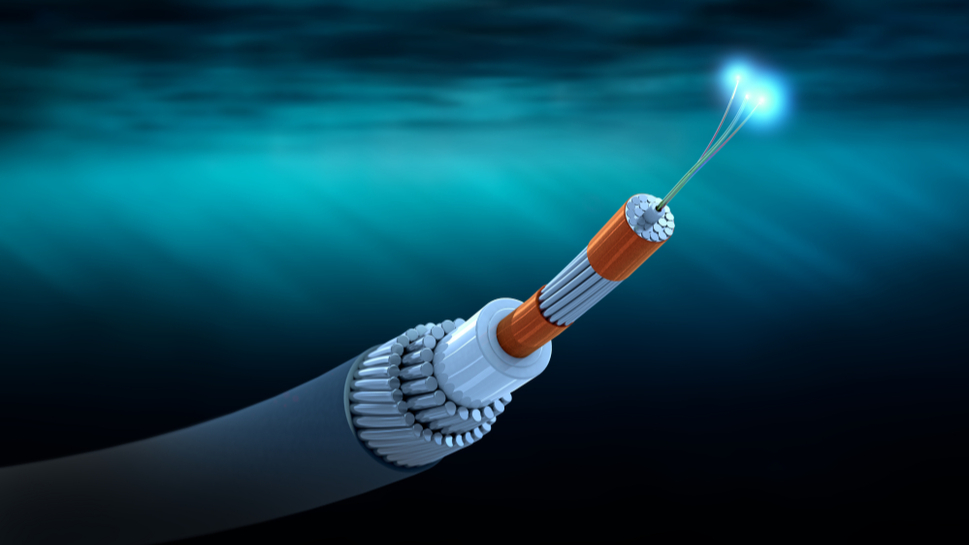
Facebook and Google have continued their push to install undersea cable internet that will power cross-border efficient internet.

Facebook announced on Monday it planned two new undersea cables to connect Singapore, Indonesia and North America in a project with Google and regional telecommunication companies to boost internet connection capacity between the regions.

“We are announcing two vital new subsea cables to connect Singapore, Indonesia, and North America,” Facebook said in a blog post on Sunday. “We are committed to bringing more people online to a faster internet. As part of this effort, we’re proud to announce that we have partnered with leading regional and global partners to build two new subsea cables – Echo and Bitfrost – that will provide vital new connections between Asia-Pacific region and North America.”

It will be the first transpacific cables through a new diverse route crossing the Java Sea and will increase overall transpacific capacity by 70 percent, the statement said.

The need for reliable internet was highlighted by COVID-19 pandemic as the world shifts to digital life, increasing demand for 4G and 5G broadband access, significantly in the Asia-Pacific region.

Facebook said Echo and Bitfrost will support further growth for hundreds of millions of people and millions of businesses.

“We Know that economies flourish when there is widely accessible internet for people and businesses,” the social media firm said.

Facebook Vice President of Network Investments, Kevin Salvadori, told Reuters that the cables will be the first to directly connect North America to some of the main parts of Indonesia, and will increase connectivity for the central and eastern provinces of the world’s fourth most populous country.

Salvadori said “Echo” is being built in partnership with Alphabet’s Google and Indonesian telecommunications’ company XL Axiata and should be completed by 2023.

Bifrost, which is being done in partnership with Telin, a subsidiary of Indonesia’s Telkom, and Singaporean conglomerate Keppel is due to be completed by 2024.

The two cables, which will need regulatory approval, follow previous investments by Facebook to build up connectivity in Indonesia, one of its top five markets globally.

While 73% of Indonesia’s population of 270 million are online, the majority access the web through mobile data, with less than 10 percent using a broadband connection, according to a 2020 survey by the Indonesian Internet Providers Association.

Swathes of the country, remain without any internet access.

Facebook said last year it would deploy 3,000 km (1,8641 miles) of fibre in Indonesia across twenty cities in addition to a previous deal to develop public Wi-Fi hot spots.

Aside from the Southeast Asian cables, Facebook was continuing with its broader subsea plans in Asia and globally, including with the Pacific Light Cable Network (PLCN), Salvadori said.

“We are working with partners and regulators to meet all of the concerns that people have, and we look forward to that cable being a valuable, productive transpacific cable going forward in the near future,” he said.

Reuter reported that the 12,800 km PLCN, which is being funded by Facebook and Alphabet, had met U.S government resistance over plans for a Hong Kong conduit. It was originally intended to link the United States, Taiwan, Hong Kong and the Philippines.

Facebook said earlier this month it would drop efforts to connect the cable between California and Hong Kong called “the Hong Kong-Americas project,” due to “ongoing concerns from the U.S. government about direct communication links between the United States and Hong Kong”.

Trump administration’s security concerns about laying cables to China forced Facebook to drop a joint cable project it had with Google in September.

But other undersea cable projects have continued. Facebook is also laying network cables around Africa, while Google is working on cables that will link the US and Europe as well as Europe with the west coast of Africa.

The projects, named 2Africa and Equiano are expected to go live in 2023 or 2024

At 37,000km long, 2Africa will be one of the world’s largest subsea cable projects and will interconnect Europe (eastward via Egypt), the Middle East (via Saudi Arabia),and 21 landings in 16 countries in Africa.

The Equaino will start in Western Europe and run along the West Coast of Africa, between Portugal and South Africa with branching units along the way that can be used to extend connectivity to additional African countries. The first branch is expected to land in Nigeria.

It is now a race between American big tech to control internet service. With SpaceX’s Starlink already having 1200 satellites in space and Amazon’s satellite project known as Kuiper, planning to launch 3,236 satellites into low Earth orbit, future internet service is gradually drifting from the grip of telecom service providers.

TLG Capital, Fidelity Bank Partner For $20 Million SMEs Fund in Nigeria

0

It is a very good one, TLG Capital, a UK-based investment institution is partnering with Fidelity Bank Plc to invest in SMEs in Nigeria. The ticket size is $20 million and it is largely agnostic of sectors with education, consumer businesses, healthcare, logistics and transportation represented. TLG Capital will be represented by TLG Africa Growth Impact Fund (ADIF), its Africa investment vehicle.

Fidelity is the name and we are hoping it makes it flexible for SMEs by demanding  limited collateral. If that cannot happen, nothing big will happen.

Private Equity firm, TLG Capital has announced that it would be investing together with Fidelity Bank Plc, an amount to the tune of $20 million on SMEs in Nigeria.

The funds will be channelled through TLG’s Africa Growth Impact Fund (ADIF), towards the development of SMEs in the country. Notably, the fund will be directed to SMEs that are focused on healthcare, education, consumer sectors, amongst others.


Is your business on speed or velocity? Go with velocity, it is speed with a direction!

1

Is your business on speed or velocity? The most important decision a business can make is committing to a business model. You can be an efficient operator but if you are operating at the wrong section of the curve, you will not thrive. But someone, who is just average, but operating at the correct section will capture value. Go with velocity, it is speed with a direction! Velocity brings a new basis of competition and makes fandom possible. Blessed is that company whose customers are fans! Innovate and make fans by discovering your path to the purses and hearts of your customers.

More than two-fifths of businesses around the world have increased their innovation budgets in the last year, according to the second edition of the Mastercard-sponsored Become Index, a long-term research initiative carried out by Harvard Business Review Analytic Services (HBR-AS).

The latest survey found 42% of businesses are spending more on innovation due to the inexorable pull of digitization. Interestingly, though, only 53% of executives surveyed said their organizations place a high priority on innovation—and nearly two-thirds said the uncertain economic outlook was a challenge for their innovation plans.

“Many organizations have proven they can be fast, agile, and emerge stronger to whatever awaits next, but there are some gaps in what businesses saw important and what consumers need during and after the pandemic,” said HBR-AS managing director Alex Clemente. “I believe business and society are now forced to redefine what it means to be innovative. And businesses everywhere should re-evaluate if the new-found velocity and pace of change can be sustained.” (Fortune Newsletter)

But remember, innovation must not be just from technology. Yes, it could come via branding and other means. Think “Intel Inside” and how it changed the perception of customers on laptops and desktops. And we are learning a rumoured “Voltswagen”, for Volkswagen, to make the point that the European car brand is all for volts (yes, electric vehicle).

Volkswagen plans to change its brand name in the United States to “Voltswagen” as its shifts its production increasingly toward electric vehicles and tries to distance itself from an emissions cheating scandal.

A person briefed on the plan said a formal announcement is planned for Tuesday. The person didn’t want to be identified because the plans had not been made public.

The company had briefly posted a press release on its website early Monday announcing the brand name change. The press release was noticed by a reporter from USA Today before it was removed. The release was dated April 29.

Note: The New York Times noted that the company is not changing its name

Contrary to what you may have read, Volkswagen has not changed its name. The company’s U.S. operation caused a stir with an announcement on its website that it planned to call itself Voltswagen to emphasize its push into electric vehicles as it rolls out its first electric sport-utility vehicle in the United States — the ID.4. The change came ahead of April Fool’s day — a favorite time of year for companies to try to grab a share of the social media conversation, such as when IHOP tried to convince the world it was changing its last letter to B, as in burgers.