DD
MM
YYYY

PAGES

DD
MM
YYYY

spot_img

PAGES

Home Blog Page 5828

Nigerian Banks, Telcos, Cement Firms – Consider Umunneoma Economics Over Adam Smith Economics

1

Many of my former colleagues in banking have surprisingly responded positively to the debate which I started, when I posted that some sectors must play deeper catalytic roles in the Nigerian economy. I used the banks, and suggested that even though they could sell airtime, and make university portals, they should leave such opportunities for others. In the about 37 private messages I have glanced through, even the bankers like the debate. This is a sample:

“… It’s basically to share ideas. No strings attached. We need more of those debates to enlighten us on topical issues. There is this perception that banks are ripping people off and our people need to know that this is wrong. 

Banks are increasingly innovating as margins are thinning down. Obviously, banks capture 360 degree value from customers riding on technology. Airtime vending is one of them. They are only conveniently providing this service to their customers. Telcos are also delving into financial services though regulated by CBN. Imagine what mobile money would have been in Nigeria if it was not a bank led model. 

So the debate shines light on some of these issues.”

Certainly, I want banks, telcos and everyone to do well. And that will mean adopting the spirit of Umunneoma Economics, not full-play Adam Smith Economics. Simply, Umunneoma Economics is an economic philosophy that is central to African culture where you share so that no one is left behind. Why? If we do not address this, soon  Nigeria will have a super class of three sectors with extremely profitable companies, and others largely nothing. The sectors for super-profits would be telcos, fintechs/banks and cement companies. 

In my 2019 convocation lecture in FUTO (Federal University of Technology, Owerri Nigeria), I spoke on economic opportunities in Nigeria – and The Umunneoma Economics. (Umunneoma means “good brethren” in Igbo). In my postulation, I explained how that economic philosophy is the pillar that drives the Igbo Apprenticeship System. The new global capitalist manifesto which is working to go beyond fixated focus on shareholders, to consider ALL stakeholders, is something the Umunneoma Economics is doing already.

The core  tenet of the Igbo Apprenticeship System could be likened to the U.S. Federal Reserve which largely works to keep the U.S. dollars stable (by reducing inflation) and maximize employment through interest rates. So, the Reserve has defined main focus areas even though it can use its systems to do other things. Consequently, the U.S. Congress uses those two main factors to ascertain the effectiveness of the Reserve policy.

So, the challenge would be how we can get them to ensure we build for the future. That is where the Umunneoma Economics comes into play. Yes, Adam Smith economics, while good, is lagging behind as we see the evolution of the stakeholder capitalism over shareholder capitalism.

The future of Nigeria is now largely in the hands of corporate Nigeria since our political system continues to see fractures. Those changes we hope to see in Nigeria will likely come via markets because political leadership seems unperturbed. And if markets do not address those challenges, opportunities of the future will not emerge. So, building economic pipelines would be critical, and I call on the banks, telcos and cement companies to see higher purposes beyond the pure fiduciary ones. If we do not have that mentality, we will fail to create the future and that means we cannot predict it!

The Umunneoma Economics

Kenya Joins South Africa in 5G Roll Out, As Nigeria Watches From A Distance

0

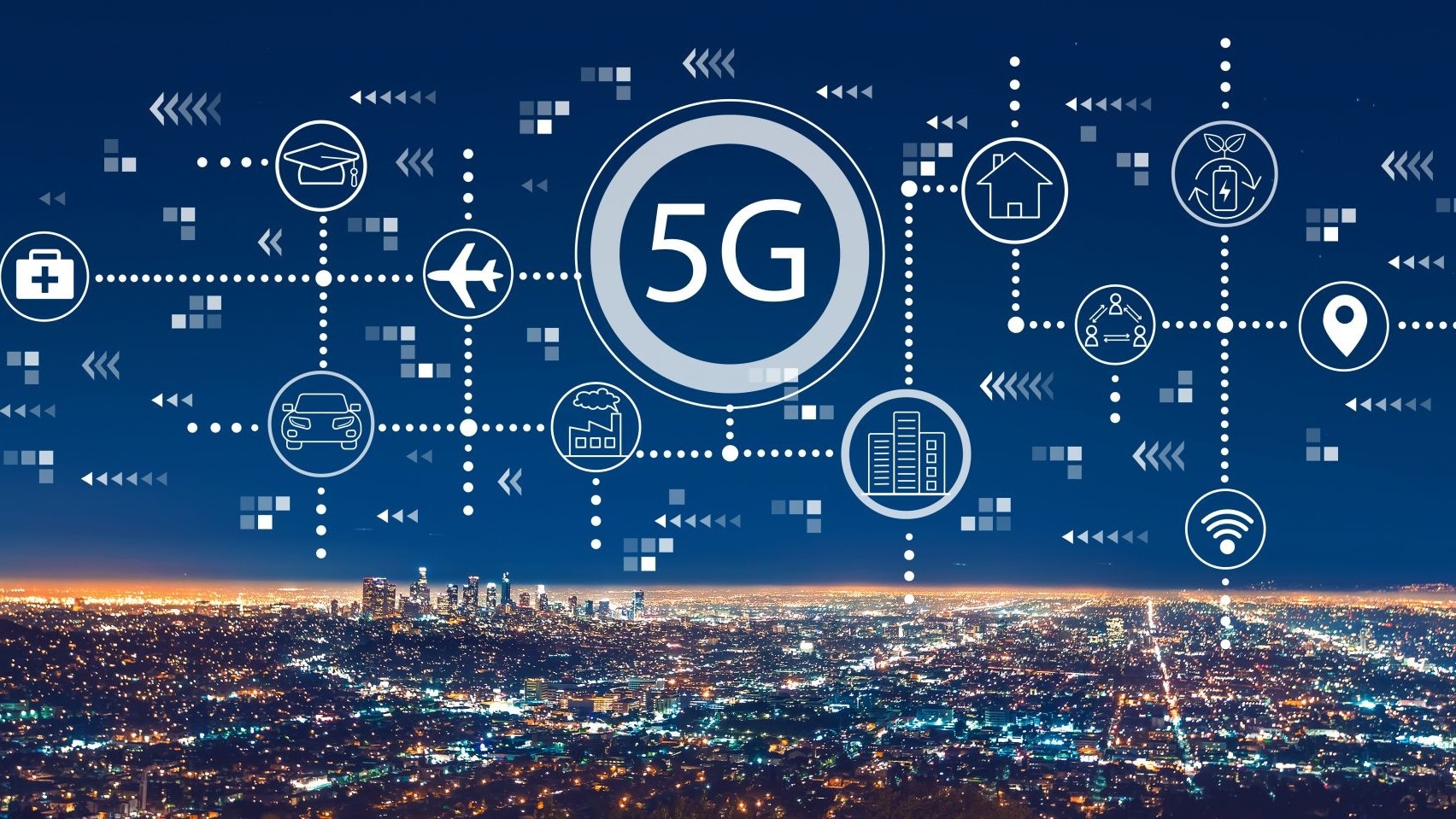
As the world races to upgrade to the five generation internet spectrum, African countries have been dragging feet. The situation is set to widen the gap of poor internet speed in the continent, even though a couple of African countries have moved from observing to participating.

Mid-last year, MTN announced it’s 5G roll out in South Africa. The South African operator said the launch will kick off with the deployment of 100 5G sites.

The network currently covers areas of Johannesburg and Cape Town, as well as Bloemfontein and Port Elizabeth.

Quartz reported that Mobile network operator Safaricom has launched a 5G network in Kenya. This makes it the second country in Africa to roll out the technology to customers, according to GSMA, an organization representing mobile network operators worldwide. The company is trialing the technology in four towns, and expects to expand it to nine over the next year.

Safaricom’s introduction of the technology in Kenya is “an important step in Africa’s 5G journey,” says Kenechi Okeleke, the lead author of a 2019 report on 5G in sub-Saharan Africa by GSMA . “This move will draw a lot of attention to the potential of 5G in the region and the benefits it can bring to society,” he told Quartz.

5G is the fifth generation technology standard for broadband cellular networks which offers data speeds up to 100 times faster than 4G and lower latency (the delay an instruction for a data transfer and its actual transfer). It can also support up to 1 million connected devices per square kilometer, compared to up to 100,000 for 4G.

While more African countries have trialed the 5G spectrum, there has been little or no move from most of them to develop the infrastructure.

Nigeria, the largest economy in the continent was early to the 5G trial. The West African country was the first in the region to trial 5G on Nov. 25, 2019. Ever since then, the 5G spectrum has faced and overcame many objections. However, as the concerns of safety trailing the 5G roll out got laid to rest,  Nigeria has been watching from a distance and there has been uncomfortable silence by telecom operators.

The silence bears economic consequences for Nigeria as 5G is projected by GSMA to yield $1.1 trillion economy by 2025. This means that Nigeria’s lukewarm attitude toward the roll out is sidelining her from grabbing a huge share of the emerging market using her booming population.

The COVID-19 pandemic has exposed the world to unprecedented digital life, highlighting the need for faster internet.

Consumers are expected to embrace IoT and use it in new areas of everyday living such as; energy efficiency, home security and fitness and well-being monitoring. With the number of new activities expected to be powered by IoT, the connections are projected to double to 11.4 billion in the same time frame, GSMA said in 2020 report.

Apart from the pandemic-induced necessities, Africa is experiencing a tech boom that cuts across many sectors, particularly fintech. With startups popping up here and there, the continent will need more reliable internet to sustain the economic growth.

5G thus becomes not just a choice for African countries, but a necessity for future economic sustainability.

5G-based internet will hit 1.8 billion connections by 2025, covering a staggering number of the world’s population that could be evenly shared, if every region plays its card well.

Over the next five years, operators are expected to invest around $1.1 trillion in mobile capex globally, and about 80% of it will be in 5G networks, GSMA remarked.

Out of the 1.8 billion 5G connections expected by 2025, developed Asia is projected to have 50%, North America, 48%, Europe 34%, developing Asia, 22%, GCC Arab States 21%, Russia & CIS 12%, Latin America 7%, rest of Middle East and North Africa (MENA) 4% and Sub-Saharan Africa 3%.

“Sub-Saharan Africa will remain the fastest growing region, with a CAGR of 4.6% and an additional 167 million subscribers over the period to 2025. This will take the total subscribers over the period to over 600 million, representing around half the population,” GSMA report said

Read: Sub-Saharan Africa Missing Out on $2.2 Trillion 5G Economy

Safaricom CEO Peter Ndegwa described Kenya’s 5G launch last week as “a major milestone for the country.” The telco is implementing the project using technology from the Finnish company Nokia and the Chinese company Huawei.

The initial focus will be on how 5G will enhance broadband connectivity for Safaricom, says Okeleke, director at GSMA’s research arm, GSMA Intelligence. However, he adds, given the company’s track record in tech innovation, many observers will be on the lookout for potential new use cases that Safaricom could develop for Africa’s unique challenges and customer needs.

With existing 3G and 4G infrastructure download speed of 1.56 megabytes per second (Mbps), Africa’s economic future undoubtedly needs the 5G speed.

5G’s faster speeds bring fiber optic-like connectivity to homes—a broadband connection that can reach speeds of up to 940 megabits per second. This would be a game changer for African businesses and schools that do not have access to fiber-optic internet, especially in a post-Covid-19 world where activities including work, learning, and entertainment are increasingly happening online, Okeleke said.

He added that the technology could enable new and existing technologies such as artificial intelligence and the internet of things—the interconnection via the internet of computing devices embedded in everyday objects—to have a transformative impact on business processes, helping drive productivity and efficiency.  “This has the potential to spark innovative solutions, particularly in extractive sectors such as mining and oil and gas, and help financial services and logistics sectors in the continent,” he said.

There have been concerns over Africa’s ability to keep up with the needed infrastructure to keep 5G network running, including its devices that are currently limited.

“The investment outlay for 5G is very high for mobile phone networks,” Okeleke said. “Phones that can connect to 5G are also very expensive for consumers—the average selling price for 5G phones in the US last year was $730.”

Currently, Africa’s mobile phone market is dominated by 3G and 4G networks. GSMA Intelligence believes that it will remain dominant, with 5G connections making up only 3% of total mobile connections in Africa by 2025. South Africa’s 5G connections account for less than 1% currently. Uptake of 5G may also be slow, since 4G is enough to meet people’s data needs for day-to-day use.

Despite the concerns about investor and market readiness for the 5G technology in Africa, Okeleke expects that the need for 5G will grow quickly as events unfold to create more rooms for internet activities.

“As these things become more commonplace in the region, then we are likely to see that stronger demand for 5G services in a way that saw that strong demand for 2G services in the early 2000s. And it is that demand for 5G services that will improve the economics of investments into 5G networks,” he said.

However, Nigeria’s lax attitude means that South Africa and Kenya will lead Africa’s 5G market.

Tekedia Makes Week 10 of Mhagic Velocity $60,000 Competition; Full Scholarships to 430 Students

0

Tekedia Institute has made it up to  the 10th week of Mhagic Velocity, a talent competition with a reward of N25 million naira ($60,000). Hundreds of people and groups began this competition, and today only few are remaining. Mhagic Velocity is a 13-week in-app show. It features videos or pictorial upload of talents & skills, tasks, and weekly the most promising progress. Our talent: we make learning uncommon so that everyone understands!

Why Tekedia Institute Is Competing

Tekedia Institute wants to win the N25 million to offer full scholarships to Tekedia Mini-MBA for 430 African students. Tekedia Institute offers an innovation management 12-week program, optimized for business execution and growth, with digital operational overlay. It runs 100% online. The theme is Innovation, Growth & Digital Execution – Techniques for Building Category-King Companies. All contents are self-paced, recorded and archived which means participants do not have to be at any scheduled time to consume contents.

How To Support Tekedia To Win

  • Go here and register a free account, and then login – https://mhagic.com/login
  • Go here – https://mhagic.com/profile/tekedia . Do the following:
    • (1) Vote; 10 Naira for one vote or $1 for 30 votes
    • (2) Watch the 3 videos (only those count for the week)
    • (3) follow Tekedia
  • If you prefer mobile app; download Mhagic app, and find Tekedia by searching on the app Home with @tekedia 

NB: If for any reason you find paying with the options hard, make a payment via any of the options here –https://tekedia.com/pay  and put in description and your Mhagic registered username. Once we receive, we will ask the Mhagic team to credit  that username to enable you to vote.

Contact: 

Our contact: tekedia@fasmicro.com

Website: school.tekedia.com

The Strength and Beauty in Nigeria’s Diversity

0

The Igbo culture believes that the home of a great man, a dike, is filled with people of all sorts. In such a home, you can find the hardworking, the lazy, church-goers, traditionalists, thieves, businessmen, the sane and the insane… All kinds of individuals – the good, the bad, the ugly – are found there. It is expected that such a home should be a complete one by being diverse. It needs no outsiders to solve its internal issues because all the help it needs is obtained from within. Outsiders also stay out of their way because finding its trouble means seeking the troubles of the “bad” members of the family. Such a home has everything it wanted. So long as the members don’t destroy themselves from inside, that home grows to become great. Look around you, think of the big names you hear today, trace the family history and you will find out they are connected to the house of a great man, a dike.

A country that is self-sufficient grows and expands the same way a self-sufficient home does. In such a country, the citizens, like the members of the great man’s home, have all it takes to move the country to greater heights. People of different characters, talents, skills, knowledge, and aspirations are found there. In addition to those, several cultures, ethnicities, religions, and languages exist in such a country. You can also speak of several climates, resources, and topographies as the features of the country. This means that whatever the country wants, it can obtain it from within. Even if it needs external help, it will not be as much as that of those that lack diversity. This is the beauty of diversity. That is the strength and beauty of Nigeria.

Many have heard “our strength lies in our diversity” but do not really understand every bit and piece of it. When Nigerians talk of diversity in the country, they only envision its multicultural, multiethnic, multi-tribal, multi-religious, and multilingual nature. These aspects make Nigeria an exotic place to visit and live in but they are not the only things diverse in Nigeria. Many people do not realise how exciting it is to discover new cultures – foods, songs, dances, languages, dressing, etc. – within the country. Nigeria would have been boring if all the citizens have the same religion, language, and culture. But here we are, enjoying what people pay dearly to see but failing to value it.

Anyway, this essay isn’t centred on the above-mentioned features of Nigeria; they have been overanalyzed that everyone must have known about them by now. This piece will consider how diversity in the country’s mineral resources, climate, and citizens’ occupation benefits the country and its citizens.

Some weeks ago, the prices of food items suddenly went up in the southern part of Nigeria because farmers in the northern parts stopped moving their food crops south. It took that act to make many Nigerians realise the parts of the country that provide the majority of the staple foods in the country. The differences in soil textures and structures, landmass, mineral resources, occupational preferences, and climates have made different areas of the country produce different types of food. This means that if more interest is given to farming, Nigeria will have enough food for its citizens, and they will come in different varieties.

Speaking of occupation, have you noticed that different regions of the country specialise in different types of occupations and businesses? For instance, you can go to Aba for your clothes and shoes, Ibadan for further education, Onitsha for trading, and Benue for yam farming. Furthermore, within a town, people from different regions partake in different specialised occupations. For instance, Suya business belongs to the north, motor spare parts shops belong to the Igbos, and ‘agbo’ selling is for the Yorubas. This does not mean other tribes cannot handle these jobs but it feels out of place because there is an accepted code on the jobs for different persons based on tribe.

Furthermore, Nigeria is blessed with many mineral resources because different states have their own resources. These resources make Nigeria look like a big supermarket with varieties of wares displayed on its shelves. Supermarkets like this attract lots of customers, just the way Nigeria should attract a lot of local and foreign investments.

It is unfortunate that many Nigerians fail to see the beauty in the composition of the country. Hate for people of different cultures, religions, and languages has become the greatest threat to the country. Cases of tribal clashes, religious killings, and segregation are witnessed daily in the country because hate for diversity is preached daily. Well, it’s high time Nigerians understand what it truly means to find strength and beauty in diversity.

Tekedia Live On Exponential Technologies, Singularity and Opportunities

0

We have posted the schedule for Tekedia Institute Mini-MBA Live for the week of April 5. It begins  with the team from Transdisciplinary Agora for Future Discussions Inc. ( TAFFD’s ), Georgia, United States on Tuesday. Four eminent thought-leaders will discuss exponential technologies, singularity and opportunities, over two hours.

Date: Tue, April 6

Time: 7 – 9 pm WAT

Broad topic: Exponential Technologies, Singularity and Opportunities

  • – Exponential Technologies & Business Opportunities in the Age of Singularity – Edward Hudgins, PH.D
  • – Singularities, Transhumanism, and Entrepreneurship – Gennady Stolyarov II
  • -Singularity, Exponential Growth and Technology – Chogwu Abdul, PhD
  • – Futurism, Malleability, and Category King Companies – Brent Ellman
  • Zoom link is in the Board.